Stop Ignoring the Standing Water in Your Floorboards
The intersection of precision engineering and environmental reality often manifests in the most mundane places: the sunroof drains. Professional vehicle diagnostics frequently overlook moisture intrusion until a high-value electronic component fails. When a client reports a mysterious musty odor or a damp carpet, an expert technician looks beyond the seals. Most sunroof leaks aren’t caused by failing gaskets but by debris-clogged drainage tubes that route water through the A and C pillars. Ignoring this simple drainage issue often leads to “ghost” electrical problems that mimic complex vehicle diagnostics errors. By failing to clear these channels, you allow water to bypass the exterior and settle into the chassis floor, where it can remain trapped for months.
Why Does Water Always Find the Most Expensive Control Module First?
Modern automotive architecture places sensitive Body Control Modules (BCMs) and amplifier units in low-lying chassis pockets. According to technical documentation from the Society of Automotive Engineers (SAE), while modules are rated for specific humidity levels, they are rarely designed for full submersion. A blocked drain turns your cabin floor into a reservoir; capillary action then draws moisture into harness connectors, leading to rapid terminal corrosion. This is a primary reason why proactive auto repair strategies focus on preventative cleaning rather than reactive component replacement. If you have noticed odd behavior, like interior lights that won’t turn off, moisture in the BCM is a prime suspect that requires immediate attention before permanent circuit damage occurs.
The $12 Maintenance Routine That Saves Your Headliner
You do not need a professional car service appointment to address this vulnerability. A 10-foot length of heavy-duty weed whacker line or a flexible speedo cable—costing roughly $12—is the ultimate diagnostic tool for this job. By carefully threading this line through the four corners of the sunroof tray, you can mechanically clear biological sludge and leaf litter that has solidified over time. This simple intervention prevents water from overflowing the tray and soaking the headliner, which often results in sagging fabric and expensive upholstery restoration. Mastering these top auto repair techniques distinguishes a savvy owner from one who is constantly surprised by dealership bills.
Diagnostics Go Beyond the OBD-II Port
While many technicians rely solely on digital scan tools, true car service expertise involves recognizing the physical symptoms of mechanical failure before they trigger a trouble code. Whether it is a leaky sunroof causing a parasitic drain or a transmission that is beginning to hesitate due to moisture in the electrical connectors, sensory data is vital. If your car will not shift out of park, the root cause might be an electrical interlock fault triggered by the very moisture we are discussing. Proactive maintenance is always more cost-effective than catastrophic repair. If you want to dive deeper into how small tools can solve big problems, check out our guide on the $20 scan tool that rivals dealership rigs to further enhance your diagnostic toolkit and stay ahead of potential failures.
Stop Chasing Ghosts with Proper Terminal Inspections
Environmental moisture does not just pool on floorboards; it migrates through the cabin air as humidity. When high humidity stays trapped in the interior, it accelerates the oxidation of copper terminals within the dash. This is where many owners encounter a situation where their car remote start stopped working suddenly or the dashboard begins to strobe intermittently. These ‘ghost’ issues often lead back to high-resistance connections caused by the very moisture we have been discussing. While the $20 scan tool that does more than the dealership rig can pinpoint which module is reporting a loss of communication, it cannot always tell you why the physical signal is failing. That is where a manual inspection of chassis ground points becomes mandatory for professional-grade vehicle diagnostics.
How Do You Distinguish Between a Faulty Module and a $5 Ground Wire Issue?
Expert technicians utilize a ‘voltage drop’ test to determine if electricity is struggling to return to the battery through the chassis. If you have ever wondered how to spot a bad ground wire before it kills your new battery, you must look for the characteristic greenish crust of copper oxide at the frame attachment point. A bad ground can cause enough electrical ‘noise’ to confuse the Engine Control Unit (ECU), leading to symptoms as severe as a transmission slipping or a the hidden fuse that kills your fuel pump signal appearing blown when it is perfectly intact. The Car Care Council emphasizes that consistent inspection of these critical electrical junctions can prevent the ‘parts cannon’ approach to repair, where expensive sensors are replaced needlessly. #IMAGE_PLACE_HOLDER_B#
Look Behind the Dash for Hidden Electrical Parasites
Beyond the primary harnesses, small drain-related leaks can reach the secondary fuse box. This creates a ‘bridge’ for current to leak across circuits that should be isolated. If you find your car alarm goes off for no reason at night, it is rarely a thief and more often a moisture-induced short circuit in the door latch sensor or the Body Control Module. Identifying these faults requires more than just reading codes; it requires understanding how humidity changes the conductivity of your car’s interior environment. You can often identify a bad ground wire without a multimeter simply by observing how other components react when a high-draw item like the cooling fan kicks in. If your headlights dim significantly or the radio cuts out, you are looking at an infrastructure failure.
Dry the Evaporator Core to Prevent Mold and Circuit Failures
The HVAC housing is another collection point for moisture that mirrors the sunroof drain failure. If the evaporator drain tube is clogged, water backs up into the heater box, often spilling directly onto the passenger side floorboard or into the blower motor resistor. This localized humidity can cause your car interior lights to flicker or the blower motor to fail entirely. Auto repair experts recommend running the fan without the A/C compressor for the last mile of your drive to dry out the core. This prevents the fungal growth that causes that ‘old gym bag’ smell and protects the sensitive electronics mounted nearby. Have you ever dealt with a ‘ghost’ electrical issue that turned out to be something simple? Share your diagnostic wins in the comments below or read our guide on the simple trick to find a parasitic battery drain to master your vehicle’s electrical health.
Don’t Let Your Door Panels Turn Into Fish Tanks
While the HVAC system and sunroof are primary suspects, the door’s internal vapor barrier is the silent failure point often missed during routine car service. These thin plastic or foam sheets are bonded to the inner door frame with a butyl sealant that can degrade over time due to heat and vibration. When the seal fails, rainwater bypasses the internal door drains and runs down the back of the interior door card, soaking the carpet from the side. This is particularly dangerous because the water path often leads directly over the power window motors and master switch assemblies. Modern auto repair professionals know that a window that ‘ghosts’—moving up or down without input—is rarely a switch failure and more often a saturated connector inside the door cavity. 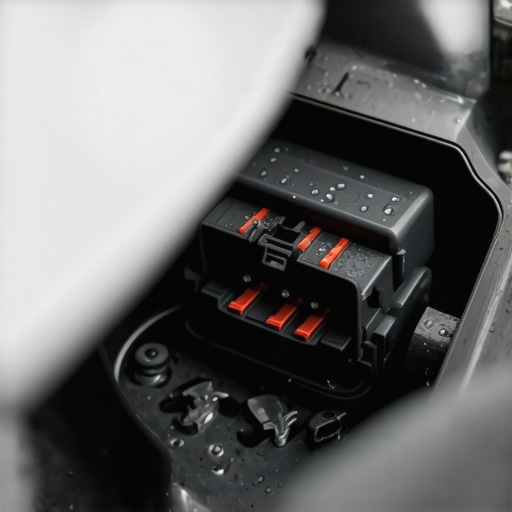
Does a Little Water in the Door Really Matter for Your Car’s Computer?
Many owners assume the door is a sealed environment, but it is actually a ‘wet zone’ designed to handle water flow. However, the electronics inside are only protected if the vapor barrier directs that flow correctly. If you find yourself asking why your power locks cycle randomly or why your vehicle diagnostics tool shows a ‘lost communication with door module’ code, you are likely looking at terminal fretting caused by moisture-induced micro-corrosion. According to corrosion research from NACE International, even slight atmospheric humidity trapped behind a door panel can trigger galvanic corrosion between dissimilar metals in the wiring harness. This creates high-resistance paths that confuse the Controller Area Network (CAN-bus), leading to errors that look like hardware failures but are actually just poor signal integrity.
The Invisible Killer That Eats Your Wiring From the Inside Out
When moisture enters a wiring harness, it doesn’t just sit there; it travels through the wire strands via capillary action, a process often called ‘wicking.’ This means a leak at the sunroof can eventually cause green crusty corrosion at a connector located three feet away under the dashboard. This phenomenon makes vehicle diagnostics incredibly challenging because the source of the leak and the electrical symptom are physically distant. High-level auto repair involves peeling back the harness tape to inspect for ‘black wire disease,’ where the copper core has oxidized so heavily it can no longer carry the necessary amperage to power sensitive modules. If you are struggling to trace a signal, our deep dive into identifying bad ground wires offers a manual shortcut before you invest in expensive diagnostic software.
Stop the Cycle of Corrosion Before It Hits Your Transmission Sensors
The most catastrophic destination for migrating moisture is the transmission control harness. Many modern gearboxes use external sensors that are exposed to road spray and debris. If the protective loom is nicked or the weather-pack seal is compromised, water can reach the pins that control shift solenoids. This leads to harsh shifting, ‘limp mode’ engagement, or a complete refusal to engage gears. When a car service technician sees a transmission code, they must first verify the harness integrity. Replacing the entire unit when the issue is merely a $40 pigtail connector is a common and expensive mistake in the industry. Environmental sealing is not just about comfort; it is about protecting the logic-level signals that keep your drivetrain synchronized. As we look closer at the specific pin-out configurations of these sensors, the importance of dielectric grease and proper connector seating becomes the focal point of advanced maintenance.
Protect the Eyes of Your Car Near the Rearview Mirror
While we have established how water settles in the floorboards, its upward migration is equally devastating for modern vehicle diagnostics. The sophisticated camera arrays used for Lane Keep Assist and Forward Collision Warning are typically housed in a plastic cowling right against the windshield, often mere inches from the sunroof’s front drainage channel. When these drains fail, the resulting humidity doesn’t just sit; it condenses inside the camera housing. This causes “blindness” in the ADAS (Advanced Driver Assistance Systems), triggering a cascade of dashboard warnings that most owners mistake for a software glitch. Professional auto repair for these systems involves more than just wiping the lens; if moisture has reached the ribbon cables, the high-frequency signals are often attenuated by mineral deposits left behind as the water evaporates.
How Does Latent Humidity Sabotage Modern Driver Assistance Systems?
The logic-level voltages used by ADAS sensors are incredibly low, often operating on 3.3V or 5V architecture. According to technical standards from I-CAR (Inter-Industry Conference on Auto Collision Repair), even a microscopic layer of oxidation on these pins can change the resistance enough to cause a ‘signal-out-of-range’ error. This is why a simple sunroof leak can lead to a $1,500 bill for a new camera and subsequent recalibration. If you notice your adaptive cruise control behaving erratically after a heavy rain, do not wait for a full failure. The car service professional must inspect the overhead console for any signs of staining or “sweating” that indicates the sunroof’s secondary seal—the one meant to catch overflow—has been overwhelmed.
The High-Tech Solution of Pressurized Smoke Detection
When a visual inspection and a garden hose test fail to replicate a leak, elite technicians turn to ultrasonic or pressurized smoke testing. By sealing the cabin and slightly over-pressurizing the interior with a dedicated machine, they can use a smoke wand around the exterior of the sunroof and door seals. Where smoke escapes, water can enter. This method is the gold standard for vehicle diagnostics when chasing “ghost” leaks that only appear during high-speed driving or specific wind angles. It identifies microscopic gaps in the weatherstripping that the naked eye would never catch. 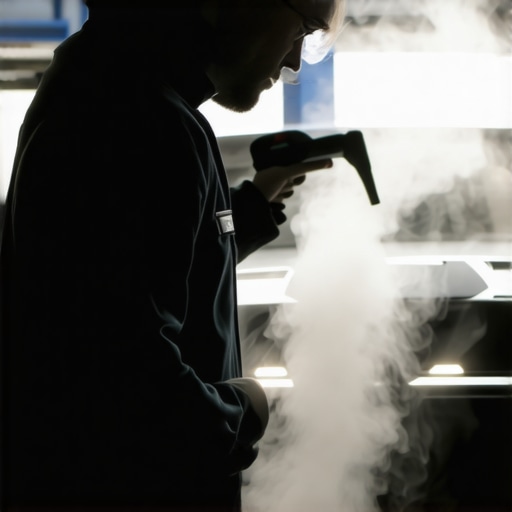
Stop the Salt Before It Corrodes Your CAN-bus
In regions where road salt is prevalent, the risk of moisture intrusion is multiplied. Salt acts as an electrolyte, turning a simple damp spot into a high-conductivity bridge that can short out the entire Controller Area Network (CAN-bus). Once salt-laden water reaches a junction block, it creates a permanent path for current to leak even after the water has dried. This is why auto repair in the “Salt Belt” requires a much more aggressive approach to environmental sealing. Utilizing a high-quality dielectric grease on every exposed connector near the floor or A-pillars is a mandatory preventative step during any car service. It creates a hydrophobic barrier that prevents the wicking we discussed earlier. Have you noticed a white, powdery residue on any of your electrical connectors? This is a sign that the clock is ticking on your electronics. Share your photos of mystery leaks in our community forum or read our breakdown on identifying bad ground wires to see if your “broken” sensor is just a victim of bad chemistry.
Expert Insights and Advanced Considerations
How Heat Turns Every Wire Into a Thirsty Straw
Engine bay heat cycles create a vacuum effect that actively pulls moisture into your wiring harnesses. This capillary wicking can transport water from a leaky sunroof drain all the way to the vehicle diagnostics port under your dash. When a technician sees “green crust” on a pin, the actual leak might be six feet away. To prevent this, always ensure your protective looms are intact and haven’t become brittle from age.
Why Environmental Factors Laugh at Lifetime Fluid Claims
Many manufacturers market components as “maintenance-free,” but real-world humidity and road salt ignore these labels. If you have fallen for the truth about lifetime transmission fluid claims, you know that external contamination is the ultimate equalizer. Moisture intrusion into the vent tube of a transmission can emulsify the fluid, causing internal wear that no software update can fix. High-level auto repair starts with acknowledging that no seal is permanent in a high-corrosion environment.
Fix the Foundation Before You Chase the Logic Gates
Before condemning a $2,000 Body Control Module, professional technicians must verify the physical integrity of the chassis grounds. A single loose bolt on the floorboard can create a hidden electrical drain killing your battery. If the ground signal is “noisy” due to moisture, every digital sensor on that circuit will report false data, turning your car service appointment into a frustrating scavenger hunt.
Curated Expert Resources
SAE International: This organization sets the technical standards for automotive engineering and provides deep-dive research into how corrosion affects logic-level signals. It is the essential resource for understanding the physics behind vehicle failure.
I-CAR Training Portals: Specifically designed for structural and electronic restoration, I-CAR offers the most specific guidance on restoring the environmental integrity of a vehicle after a leak has occurred.
NACE International: For those who want to master the chemistry of corrosion, NACE provides specialized insights into how dissimilar metals react in the presence of road salt and humidity, which is vital for long-term auto repair success.
Final Expert Perspective
Effective vehicle diagnostics require a dual-mindset: you must be a digital detective and a physical plumber. Whether you are dealing with a sunroof drain that has turned your carpet into a reservoir or a simple move to prevent your brake lines from rusting out, the goal is always environmental isolation. By managing moisture today, you prevent the “ghost” electrical failures of tomorrow. We invite you to dive deeper into our technical library or share your most difficult diagnostic challenges in the comments below. For those seeking precision care, choosing the right car service for seamless vehicle maintenance is the first step in ensuring your car’s longevity in an unpredictable world.