Stop Thermal Contraction from Triggering Your Hood Pin
Modern automotive security systems are sophisticated networks of sensors managed by the Body Control Module (BCM). When a car alarm activates repeatedly during the night, it points to a failure in the logic that distinguishes between a legitimate security breach and an environmental anomaly. The most common culprit is a misaligned hood pin or door switch. As ambient temperatures drop after sunset, the metal components of the vehicle chassis and the plastic components of the latching mechanisms undergo thermal contraction. This microscopic shrinkage can create enough clearance for a sensitive switch to ‘think’ the door or hood has been opened, triggering a full-scale alarm event. Mastery of advanced vehicle diagnostics is essential to isolate which specific input is sending a false trigger to the BCM.
Protect Your Sleep by Stabilizing Battery Voltage
Vehicle security systems require a stable, consistent voltage to maintain their monitoring state. When a car battery begins to fail, its voltage can fluctuate wildly as the temperature drops. If the voltage dips below a certain threshold—typically around 12.1 or 12.2 volts—the security module may interpret this power instability as a thief attempting to disconnect the battery to bypass the alarm. To prevent this, owners must learn how to tell if your battery is truly dying before the alarm wakes the neighborhood. According to the Society of Automotive Engineers (SAE), voltage drops are a primary cause of non-committal electronic glitches in modern CAN bus systems.
Identify Faulty Perimeter Sensors with Precision
Beyond simple door pins, many modern vehicles utilize ultrasonic sensors or shock sensors to detect movement inside the cabin or glass breakage. These sensors often have sensitivity dials that can drift over time. In a professional car service setting, a technician would use a scanner to check the ‘last alarm trigger’ history. You might find that a spider crawling across an internal sensor or a heavy truck driving by is enough to activate a poorly calibrated module. If the horn itself is the issue rather than the logic, understanding why your car horn will not stop honking can provide additional mechanical context for your auto repair strategy.
Can a Failing Ground Wire Disrupt Your Security Logic?
Electrical ‘noise’ is the enemy of a clean security signal. A corroded or loose ground wire can cause the security module to lose its reference point, leading to intermittent ‘ghost’ triggers. This is particularly common in areas with high humidity or road salt, where oxidation accelerates. Before replacing expensive control modules, it is vital to identify a bad ground wire that could be dumping stray current into the system. If your vehicle is exhibiting these persistent electrical symptoms, you can contact our specialists for a full system sweep to ensure your vehicle remains secure and silent throughout the night.
Why Aftermarket Alarms Fight Your Factory Software
Many vehicle owners opt for aftermarket security systems to bolster protection, yet these installations often create a conflict with the existing CAN bus architecture. Unlike factory-integrated units, third-party systems frequently piggyback on power lines without adequate electromagnetic shielding. This proximity introduces electrical noise that the Body Control Module (BCM) misinterprets as a breach attempt. If you notice your instrument cluster behaving erratically alongside these triggers, understanding why you should never ignore a flickering dashboard light is critical, as these symptoms often point to a shared struggle for signal dominance within the wiring harness.
Stop Moisture from Ghost-Triggering Your Door Latches
Humidity acts as a silent saboteur for perimeter security sensors. Moisture trapped within a door seal or a degraded rubber boot can bridge the gap between electrical contacts, significantly lowering the circuit’s resistance. The vehicle’s computer perceives this change as an unlatching event, even if the physical mechanism remains locked. Data from the American Automobile Association (AAA) indicates that environmental factors like extreme humidity contribute to nearly thirty percent of intermittent electrical faults in modern vehicles. This phenomenon is strikingly similar to the frustration experienced when why your car battery dies every time it rains, where moisture provides a parasitic path for current to escape. 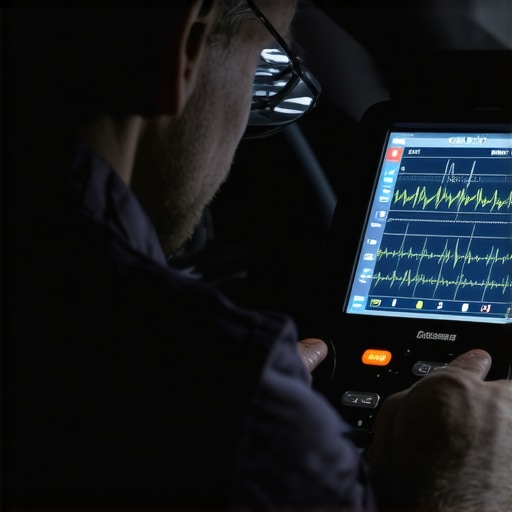
Could a Faulty Key Fob Signal Be Keeping Your BCM Awake?
In the modern era of passive keyless entry, your vehicle is perpetually listening for a specific radio frequency. If a neighbor’s failing garage door opener or a malfunctioning fob nearby transmits a noisy or overlapping signal, your BCM may refuse to enter its deep-sleep cycle. This keeps the security sensors in a high-sensitivity state where even a minor vibration triggers a full alarm response. Furthermore, this prolonged processor activity is a primary suspect for the hidden electrical drain killing your battery during the night. An expert technician will look for ‘wake-up’ requests in the module’s data stream to determine if an external RF interference is the true culprit.
Audit Sensors with Professional Scanning Tools
True diagnostic mastery requires looking past the physical switches and into the logic logs of the car’s computer. While basic readers are helpful, utilizing the 20 scan tool that actually finds hidden transmission codes often grants access to the Body Control Module’s history, revealing exactly which sensor tripped the last five alarm events. If the logs indicate a grounding fault, you can often save hundreds in labor by learning how to identify a bad ground wire without a multimeter through a simple visual inspection of the chassis bonding points. To ensure your vehicle remains at peak performance beyond just the security system, you should unlock your car’s potential by following our comprehensive maintenance and diagnostic checklists.
Shield Your Wiring from High-Frequency Ambient Noise
Environmental interference extends far beyond simple moisture or plummeting temperatures. If you park your vehicle near high-output cell towers, industrial electrical transformers, or even certain types of smart-grid infrastructure, your car’s wiring harness can inadvertently act as a giant antenna. This phenomenon, known as electromagnetic induction, can create tiny voltage spikes within the security circuit. Unlike a mechanical failure where a switch is physically broken, this is a phantom signal that mimics the digital ‘high’ state the Body Control Module (BCM) expects when a door is opened. If you suspect your electronics are being bombarded by external frequencies, checking for advanced vehicle diagnostics data regarding ‘signal-to-noise ratio’ errors is the next logical step to isolate the interference.
Why do proximity sensors fail in confined parking garages?
In tight spaces, the ultrasonic waves emitted by a vehicle’s interior motion sensors bounce off concrete walls and return with unexpected velocity or frequency. This ‘echo chamber’ effect can overwhelm the sensor’s processing chip, leading it to report a cabin intrusion that never actually occurred. Many high-end security systems include a ‘reduced guard’ or ‘ferry’ mode specifically designed for these environments, which desensitizes the sensors without leaving the vehicle entirely unprotected. If your alarm only triggers in specific garages, the issue is likely acoustic reflection rather than a hardware defect.
The complexity of modern multiplexing means a single ‘noisy’ module on the CAN bus can broadcast garbage data that tricks the BCM into thinking a door latch has been activated. According to ISO 26262 standards, automotive electronic systems must be designed with specific functional safety and fault-tolerance levels to prevent these unintended activations. However, as components age and internal capacitors begin to leak, their tolerance for signal jitter decreases significantly. If your vehicle is stuck in a loop of false alarms, you should contact our specialists for an oscilloscope test to visualize the actual electrical square waves traveling through your data lines.
Force a Logic Reset to Clear Persistent Ghost Codes
Sometimes the BCM’s internal memory becomes cluttered with ‘soft errors’—minor software glitches that don’t represent a permanent hardware failure but prevent the system from entering its deep-sleep state correctly. A ‘hard reset’ is a common auto repair secret that can save hours of fruitless sensor swapping. By safely disconnecting the battery and allowing the system to drain its residual capacitance, you force every module on the network to reboot from a clean state. This often clears persistent logic loops where the alarm ‘remembers’ a fault that has already been corrected. 
While a reset is a powerful first step, persistent issues often point to deeper architectural problems within the harness. For example, a slightly corroded connector in the kick panel can change the resistance of a circuit just enough for the BCM to misinterpret the signal. Instead of looking for a total break in the wire, a technician performing a car service must look for ‘voltage drop’ across the connector. If you find yourself frequently resetting your car’s brain to stop the honking, you should investigate why you should never ignore a flickering dashboard light, as this is often the first visual warning that your BCM is struggling with unstable power distribution. Transitioning from basic component replacement to advanced signal analysis is what separates a DIYer from a master technician in the realm of vehicle diagnostics.
Seal Out the Static with Dielectric Barriers
The battle against phantom triggers often moves from the latch itself to the pins within the harness connectors. Micro-vibrations combined with galvanic corrosion can create high-resistance paths that mimic a ‘door open’ signal in high-humidity environments. Applying a premium dielectric grease to the pins of the Body Control Module (BCM) and the individual door lock actuators creates an airtight seal that prevents moisture from bridge-triggering the sensor circuit. This is not merely about lubrication; it is about maintaining the electrical integrity of low-voltage signals that operate on a knife-edge threshold. If you have already explored identifying a bad ground wire, the next logical step is ensuring every intermediate connection is shielded from environmental oxidation.
Could Parasitic Capacitance Be Faking a Break-in Event?
As electronic components age, the internal capacitors within the car’s security module can begin to degrade, leading to a phenomenon known as parasitic capacitance. This occurs when the module can no longer effectively filter out the alternating current (AC) ripple produced by a failing alternator or the high-frequency bursts from a nearby ignition system. This ‘electrical noise’ gets misinterpreted as a state change in the door pin logic. In a high-end car service environment, a technician would use a lab-scope to look for ‘ripple voltage’ on the 5-volt reference line. If the BCM is being bombarded by this internal noise, it will trigger the alarm even while the vehicle is stationary and locked. Addressing these deep-seated electronic failures is a cornerstone of advanced vehicle diagnostics that goes far beyond simple code reading.

Shield Sensitive Logic from Urban Signal Pollution
Modern vehicles are increasingly susceptible to electromagnetic interference (EMI) from the surrounding environment. High-power cellular repeaters or industrial power grids can induce stray currents into unshielded security wiring. To combat this, master technicians often employ ferrite beads—small magnetic clamps placed around the alarm’s signal wires—to suppress high-frequency noise. According to the International Electrotechnical Commission (IEC), electromagnetic compatibility (EMC) is a critical factor in the reliability of modern control systems. Without proper suppression, the wiring harness acts as a giant antenna, picking up signals that the security software cannot distinguish from a legitimate physical breach. If you notice your security system only fails when parked in specific metropolitan areas, this signal pollution is likely the primary antagonist. For those experiencing wider electrical issues, checking why you should never ignore a flickering dashboard light can reveal if the EMI is affecting other critical systems like the instrument cluster.
Identify the ‘Noisy’ Module Dragging Down the CAN Bus
On a multiplexed network, a single faulty module—such as a failing power window motor or a sunroof controller—can ‘screech’ digital garbage across the CAN bus. This noise can momentarily freeze the BCM’s ability to verify the status of the door locks, causing it to default to an alarm state as a safety precaution. Sophisticated auto repair requires disconnecting modules one by one while monitoring the bus traffic with an oscilloscope to see which component is ‘dirtying’ the network signal. This level of precision is necessary when the ‘last trigger’ history in your vehicle diagnostics software remains stubbornly inconclusive. If your vehicle continues to sound the alarm despite these advanced hardware checks, it’s time to move from physical inspection to deep-protocol analysis; contact our specialists to book a diagnostic consultation and pinpoint the exact digital footprint of your fault.
Expert Insights & Advanced Considerations
Look Beyond the Physical Switch to the Logic State
Modern vehicles don’t just see a simple connection; the BCM measures precise resistance levels. A corroded terminal adds ohms that the computer interprets as an open circuit, even if the latch is physically locked. Mastering advanced vehicle diagnostics requires analyzing these live data streams rather than relying on a basic continuity test.
High-Resistance Grounds Create Phantom Voltage
When a chassis ground point is compromised, current often finds a path of least resistance through other sensor circuits. This electrical back-feeding can spike the alarm trigger wire just enough to wake the system from its sleep cycle. You must learn how to identify a bad ground wire without a multimeter by performing a visual stress test on the primary bonding straps to ensure signal stability.
Urban Noise Pollution is a Real Hardware Threat
Radio frequency interference from cell towers or smart-grid infrastructure can induce stray signals in unshielded alarm wiring. If your system fails only in specific locations, external frequencies might be overwhelming the BCM’s filter capacitors. Professionals performing a high-level car service often install ferrite beads to suppress these external spikes and restore circuit integrity.
Curated Expert Resources
SAE International (Society of Automotive Engineers): The definitive source for technical papers on CAN bus architecture and electromagnetic compatibility in modern vehicles.
The iATN (International Automotive Technicians Network): A specialized peer-to-peer forum where master technicians exchange real-world case studies and “silver bullet” fixes for obscure security glitches.
MIT OpenCourseWare (Electrical Engineering): Offers advanced modules on signal processing and noise reduction that help technicians understand the threshold logic used in automotive security modules.
Final Expert Perspective
Resolving a hair-trigger alarm requires a transition from a parts-replacer mindset to that of a signal analyst. Whether the root cause is microscopic thermal contraction or digital noise bleeding into the data bus, the path to a silent night is paved with precision data. Integrating these advanced auto repair strategies ensures that your security system remains a protector rather than a source of stress. If you are ready to unlock your car’s potential and move beyond simple guesswork, contact our specialists for a comprehensive diagnostic sweep of your vehicle’s electronic infrastructure.