In the world of advanced vehicle diagnostics, rain is far more than a weather event; it acts as a chemical and electrical catalyst that exposes the latent vulnerabilities of an aging electrical system. While most drivers view a non-starting vehicle as a simple matter of a ‘dead’ battery, seasoned technicians recognize that high humidity and liquid water create unique conditions that can drain even a healthy battery overnight. When moisture infiltrates the engine bay, it effectively turns existing surface contaminants into a conductive film, allowing current to bridge the gap between terminals. This analytical exploration will dissect how environmental factors bypass standard insulation and why your car service routine must include electrical weatherproofing.
Humidity Transforms Surface Grime into an Active Circuit
One of the most frequent yet overlooked causes of rain-related battery death is ‘surface discharge.’ Over months of operation, a fine layer of road salt, dirt, and battery acid residue accumulates on top of the battery casing. In dry weather, this layer is relatively non-conductive. However, once the humidity spikes or rain enters the compartment, this grime absorbs moisture and becomes a semiconductor. This creates a parasitic path that allows voltage to slowly leak from the positive post to the negative post or the hold-down bracket. To diagnose this, you can find a parasitic battery drain with a $15 multimeter by touching the probes to the plastic casing itself. If you see a voltage reading, your battery is essentially ‘shorting out’ across its own surface.
The Hidden Impact of Rain on Alternator Efficiency
The charging system faces its greatest challenge during a downpour. High-demand components such as windshield wipers, heavy-duty defrosters, and fog lights put a massive strain on the alternator. According to technical standards from the Society of Automotive Engineers (SAE), the introduction of moisture can also lead to momentary belt slippage. Even if you don’t hear a squeal, a damp serpentine belt may not provide the friction necessary to spin the alternator at peak efficiency under heavy load. This results in a ‘net-negative’ charge state, where the battery is being depleted faster than it can be replenished. If you’ve noticed that your ABS light comes on every time it rains, it is a primary indicator that your system voltage is dropping below critical thresholds due to these environmental loads.
Is Your Engine Bay Seal Leaking onto the Fuse Box?
In many modern vehicles, the placement of the Integrated Power Module (IPM) or fuse box makes it susceptible to water intrusion if the hood seals are compromised. Rainwater can track along the wiring harness—a phenomenon known as capillary action—and enter the fuse box, causing micro-shorts that don’t always blow a fuse but do keep the vehicle’s computers ‘awake.’ When these modules fail to enter sleep mode, they consume several amperes of current. This is a common culprit when a battery dies every morning only after a storm. Expert auto repair requires a thermal imaging camera to see which circuits are staying warm (active) while the car is supposedly off.
Capillary Action and the Threat to Wiring Harnesses
The integrity of your wiring is the last line of defense against the elements. Cracked wire insulation or brittle plastic connectors allow moisture to reach the copper core. Once inside, the water travels under the insulation, corroding the wire from the inside out and increasing resistance. This resistance generates heat and further drains the battery during the starting cycle, as the starter motor has to fight for every milliamp. This electrical drag can even mimic transmission sensor errors, as the control module receives ‘noisy’ data due to poor grounding. To stay ahead of these complex failures, reviewing our expert auto repair tips for 2025 can provide deeper insights into preventative shielding for your vehicle’s sensitive electronics. If your vehicle struggles with damp starts, a professional deep-clean of the battery terminals and an application of dielectric grease is the first step in restoring electrical reliability.
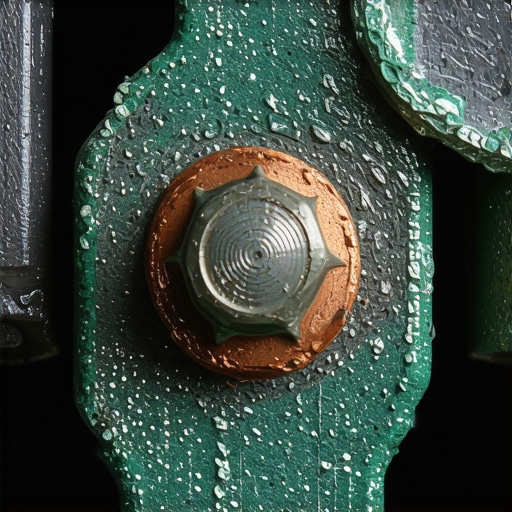
When moisture levels rise, the chemical reality of your engine bay shifts toward an environment of accelerated oxidation. This is particularly evident in the microscopic gaps of electrical connectors, where galvanic corrosion—the process by which one metal corrodes another through an electrolyte like rainwater—can sever communication between vital modules. If you have ever wondered why your dashboard lights flicker when you hit a bump, it is often because rain has weakened the mechanical tension of these pins, allowing tiny air gaps to fluctuate under vibration. Expert vehicle diagnostics requires looking beyond the obvious ‘blown fuse’ to identify where these micro-climates of moisture are causing resistance spikes in the Controller Area Network (CAN-bus).
Moisture Accelerates Galvanic Corrosion in Critical Connectors
The presence of salt-heavy mist from coastal areas or winter roads acts as a powerful electrolyte. When this liquid finds its way into unsealed connectors, it triggers a battery-like reaction between the different metal alloys used in pins and sockets. This creates a high-resistance barrier of metal oxide that impedes low-voltage signals used by the engine’s sensors. Often, this resistance is just enough to confuse the computer without triggering a hard failure, leading to a situation where the car bogs down when you turn on the air conditioner or other heavy electrical loads. Precision auto repair necessitates the use of specialized contact cleaners followed by a vacuum-sealed application of dielectric grease to prevent the recurrence of these environmental bottlenecks.
Could a Faulty Ground Wire Be Spoiling Your Rainy Day?
Grounding points are the unsung heroes of the automotive electrical system, yet they are the most exposed to the elements. A chassis ground that is slightly loose or partially oxidized may function perfectly in dry weather. However, once water enters the threads, it creates an intermittent connection that can cause a massive parasitic drain as the system struggles to find a path back to the negative terminal. Locating the hidden ground wire that is failing can save hours of labor and prevent unnecessary battery replacements. Technicians should use a voltage drop test during a simulated ‘wet’ state to ensure the chassis integrity remains within the manufacturer’s specified millivolt range.
Why High Humidity Triggers Ghost Codes in the ECM
Sensors that rely on high-impedance signals, such as Oxygen (O2) sensors or Mass Air Flow (MAF) sensors, are particularly sensitive to humidity. According to technical documentation from Delphi Technologies, moisture on a sensor’s reference wire can shift the perceived voltage enough to trick the Engine Control Module (ECM) into adjusting the fuel trim incorrectly. This often results in ‘ghost codes’—trouble codes that appear during a storm and vanish once the engine bay dries out. To combat this, advanced shops utilize the $5 tool for finding electrical shorts to trace leakage current before it can compromise sensor data integrity. Understanding these nuances is what separates a standard car service from a master-level diagnostic evaluation.
Shielding Your Sensors from Environmental Interference
Prevention is always more cost-effective than reactive repair, especially concerning transmission control solenoids and sensors located underneath the vehicle. These components are constantly bombarded by road spray, making them prime targets for water intrusion. A routine part of any high-tier maintenance schedule should include a visual inspection of the harness boots. If you are performing your own maintenance, learning the best way to clean your engine bay without saturating these sensitive zones is crucial. Have you ever dealt with a mysterious electrical issue that only happens during a downpour? Share your experiences in the comments below, or let us know if you’ve found a specific weatherproofing trick that saved your vehicle from a tow truck.
Phantom Loads in the Body Control Module
While most diagnostic efforts focus on the engine bay, the interior cabin often hides the most insidious sources of moisture-related battery failure. The Body Control Module (BCM) acts as the central hub for non-engine functions, and in many vehicle architectures, it is situated dangerously close to potential leak paths. When door seals fail or window gaskets degrade, moisture doesn’t just dampen the carpet; it migrates toward these sensitive silicon chips. A microscopic bridge of water across the BCM’s pins can simulate a ‘door open’ signal or a ‘key-in-ignition’ state. This forces the entire vehicle network to stay ‘awake,’ consuming power that should be reserved for the next cold start. Detecting these phantom loads requires a nuanced approach, often involving monitoring the CAN-bus for activity long after the vehicle has been locked.

Stop the Leak Before Your Footwell Becomes a Conductive Bath
Clogged sunroof drains are a notorious but frequently ignored catalyst for electrical havoc. When these small drainage tubes become obstructed by organic debris, rainwater backs up and overflows into the A-pillar and kick panels. This is where the primary wiring harnesses meet the cabin’s electronic modules. The resulting corrosion is often invisible from the outside but creates a high-resistance path that trickles energy away. To verify this, seasoned mechanics use a sensitive ammeter in series with the battery negative terminal, pulling fuses one by one to isolate the offending circuit. If you’ve struggled with recurring issues, checking our guide on diagnosing automotive electrical problems like a pro can help you master the voltage drop method across the fuses without breaking the circuit.
Can high humidity increase the internal self-discharge rate of a lead-acid battery?
Technically, yes, though the mechanism is more indirect than a simple short circuit. According to research published by the Battery Council International (BCI), high ambient humidity combined with temperature fluctuations can lead to ‘sweating’ on the battery casing. This condensation, when mixed with trace amounts of sulfuric acid mist naturally vented from the battery, creates an electrolyte film. This film effectively bridges the terminal posts, accelerating the internal self-discharge rate far beyond the standard 1% to 3% per month. In tropical or high-rain environments, this ‘chemical bridge’ can lead to a significant loss of Cold Cranking Amps (CCA) in just a few days of inactivity. Maintaining a clean, dry battery top is not just about aesthetics; it is a vital step in chemical preservation.
The Critical Role of Vapor Barriers in Door Electronics
Modern door panels are equipped with thin plastic sheets known as vapor barriers, designed to keep moisture away from the power window motors, lock actuators, and side-impact sensors. Over time, the adhesive holding these barriers can fail, particularly in humid climates. Once moisture enters the inner door cavity, it can settle on the electrical connectors for the window switches. Because these switches are often ‘live’ to allow for one-touch operation, the moisture creates a path for current to flow even when the car is off. This is a primary reason why a bad door lock actuator can sometimes be a symptom of a larger water intrusion issue that is simultaneously draining your battery.
Pinpointing Parasitic Draw with Thermal Imaging
When traditional multimeters fail to reveal the source of a damp-weather drain, thermal imaging becomes the technician’s greatest ally. Since current flow generates heat—even in very small amounts—an infrared camera can ‘see’ a module that is staying warm when it should be at ambient temperature. This technique is particularly effective for identifying shorts in the heated mirror circuits or the rear window defroster, which are often the first victims of rainwater ingress. If your car feels like it has a ‘mind of its own’ during a storm, it’s likely that water has turned a simple switch into a complex resistor. Taking the time to reseal these external components is a foundational part of auto repair that prevents the cycle of constant battery jumping.
The vulnerability of the drivetrain extends far beyond mechanical wear. During heavy rain, the transmission control module (TCM) and its associated solenoids are subjected to a pressurized barrage of road spray. If the harness connector seals have aged or become brittle, moisture forces its way into the pin housing. This doesn’t just cause a short; it alters the resistance of the shift solenoids, leading to erratic gear hunting or ‘limp mode’ activation. For those performing a professional car service, inspecting the ‘boot’ of the transmission harness is a non-negotiable step to prevent what many mistake for a mechanical failure.
Don’t Let Your ECU Succumb to Micro-Cracking
While we often think of control units as sealed boxes, the potting compounds used to protect internal circuitry eventually develop microscopic fissures. These cracks are invisible to the naked eye but act as reservoirs for atmospheric moisture. When the humidity hits 90%, these fissures fill with condensation, creating conductive bridges between surface-mount components. According to technical documentation from Bosch Mobility, even a few micro-amps of diverted current can trigger ‘checksum errors’ in the processor’s logic. In high-level vehicle diagnostics, this manifests as a car that runs perfectly on a crisp autumn day but develops a ‘stutter’ during a humid summer evening.
How Does High Humidity Warp Oxygen Sensor Reference Air?
Most technicians forget that an O2 sensor needs a reference of ‘outside air’ to function. In some designs, this air is pulled through the wiring harness itself. When the air is saturated with water vapor, the sensor’s ability to compare oxygen concentrations is compromised. This results in a skewed voltage output that tells the computer the engine is running lean when it is actually rich. If you are performing auto repair on a vehicle with consistent fuel-trim codes during rainy months, check the sensor’s pigtail for moisture before replacing the expensive hardware.
Stop Chasing Ghosts in Your Dashboard Logic
The modern instrument cluster is more than just a display; it is a node on a high-speed data network. Rainwater that leaks through the windshield cowl can drip directly onto the back of the cluster or the interior junction block. This moisture creates high-resistance paths between pins that were never meant to communicate. You might see the high-beam indicator flicker when you turn on the wipers or the clock reset when the brake is applied. This isn’t a ‘haunting’; it is the result of water acting as an unintended resistor in a complex voltage-divider circuit. The phenomenon of ‘bus-sleep’ failure is perhaps the most difficult moisture issue to track. In a dry state, the vehicle’s modules ‘talk’ to each other and then shut down to a low-power mode. However, moisture in a single door-latch sensor can send a constant stream of ‘noise’ onto the CAN-bus. This noise prevents the Gateway Module from entering sleep mode, keeping the entire electrical architecture energized. To solve this, a specialist must use an oscilloscope to look for a ‘clean’ square-wave signal versus the jagged, distorted waves caused by water interference.
Your Footwell Might Be a Conductive Bath
Think your vehicle is weather-ready? Take a flashlight to your footwell after the next storm and check for even the slightest dampness under the floor mats. If you spot moisture, you are on the clock before the green crust of oxidation claims your wiring. High humidity trapped in the carpet acts like a humidor for your BCM, accelerating the decay of every copper trace. Have you ever seen a car act like it was possessed during a thunderstorm? Tell us the weirdest ‘rain symptom’ you’ve encountered in the comments—your experience might be the key to someone else’s diagnostic mystery.
Expert Insights & Advanced Considerations
The Chemical Bridge of Surface Discharge
One of the most persistent issues in vehicle diagnostics is the “creeping” discharge that occurs when moisture binds with battery acid mist. Even if the terminals look clean, a thin, acidic film can span the top of the battery, creating a micro-pathway for current. If you suspect this, you should learn how to find a parasitic battery drain with a $15 multimeter to confirm if the casing itself is live.
Why Resistance Kills Systems Faster Than a Dead Short
Most people look for a blown fuse, but in a wet environment, the real enemy is high resistance caused by partial corrosion. This does not stop the circuit; it just weakens it, causing modules to behave erratically. This is why a comprehensive car service must include a voltage drop test on all major grounds to ensure the return path is clean. For those dealing with more than just electrical issues, understanding transmission failures decoded can help distinguish between a shift solenoid failure and a moisture-induced signal error.
The High-Impedance Sensor Trap
Modern ECU systems rely on incredibly low voltage references for sensors like the Mass Air Flow (MAF). When humidity levels spike, even the tiniest amount of moisture on a connector can shift that reference by 0.2V, which is enough to cause a “lean” condition or a rough idle. Mastering auto repair in the modern era requires using the $5 tool for finding electrical shorts to trace these minute leakages before they lead to expensive component replacements.
#IMAGE_PLACEHOLDER_E#
Curated Expert Resources
SAE International Technical Papers: The gold standard for understanding how automotive wiring insulation responds to environmental stressors and chemical exposure.
Battery Council International (BCI) Manuals: Essential reading for the chemical properties of lead-acid and AGM batteries under varying humidity conditions.
I-CAR Repairability Technical Support: Provides deep-dive data on how moisture intrusion affects the high-speed communication networks (CAN-bus) in modern vehicle frames.
Final Expert Perspective
Successful vehicle diagnostics during wet weather requires a shift in perspective—from seeing components in isolation to seeing the engine bay as a dynamic chemical environment. When rain enters the equation, the rules of electrical resistance change, turning minor grime into a conductor and tight seals into capillary traps. A professional auto repair strategy should never just swap the battery; it must address the environment that killed it. We invite you to explore the hidden world of vehicle diagnostics to better understand how these systems interact. Do you have a specific moisture-related electrical “ghost” you can’t seem to bust? Reach out to our team or share your diagnostic hurdles in our professional community forums.