Modern vehicle diagnostics often feel like chasing ghosts within a complex web of interconnected control modules. When a vehicle’s battery repeatedly fails overnight despite a healthy alternator, the technician enters the realm of parasitic draw—a persistent electrical siphoning that bypasses the ignition switch. Unlike simple circuit failures, these drains are frequently the result of a ‘non-sleeping’ module on the CAN bus or a micro-short within a legacy system. Mastering the use of a $15 multimeter to isolate these issues requires a disciplined approach to current measurement and a deep understanding of quiescent state specifications. Successfully resolving these issues is a hallmark of professional car service in an era of software-heavy automotive architecture.
Why Modern Vehicle Electronics Refuse to Go to Sleep
In contemporary vehicles, turning the key to ‘off’ does not immediately shut down the electrical system. Various modules—ranging from the Engine Control Unit (ECU) to the infotainment system—undergo a shutdown phase that can last anywhere from ten minutes to an hour. A parasitic drain occurs when a specific component fails to enter this low-power sleep mode, maintaining a current draw that exceeds the typical 50-milliamp threshold. This is particularly common when aftermarket accessories or faulty door latches keep the vehicle diagnostics network in a state of high-alert. Identifying these stubborn circuits is the first step in preventing a recurring dead battery scenario.
Setup Your Multimeter Without Blowing the Internal Fuse
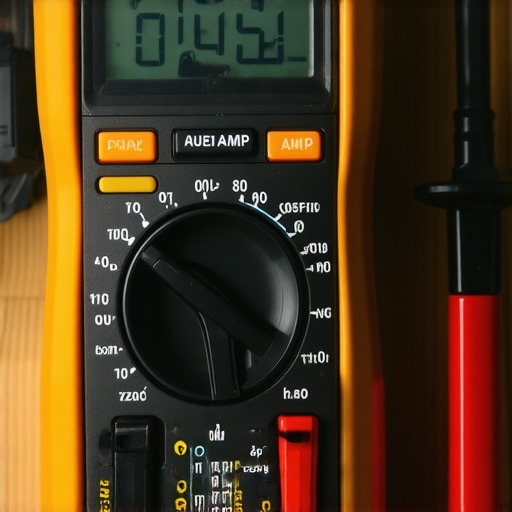
Before connecting your meter, you must understand the risk of high-amperage surges. Most entry-level multimeters have a dedicated 10A port; using the lower-amperage ‘mA’ port during the initial connection will almost certainly blow the meter’s internal fuse the moment a door light activates. To perform a series test, you must disconnect the negative battery terminal and bridge the gap with your multimeter probes. This forces all current through the meter, providing a real-time snapshot of the drain. If your testing indicates a sudden surge when you attempt to start the car or open a door, you risk damaging your tools. For those dealing with more than just battery issues, such as drivetrain hesitations, you might also want to investigate transmission failures decoded to ensure the electrical glitches aren’t affecting shift solenoids.
Is Your Multimeter Reading MilliAmps or Just Ghost Voltage?
Technicians often struggle with fluctuating readings that appear to be drains but are actually just the ‘settling’ period of the vehicle’s network. Professional-grade diagnostics require patience. According to the Society of Automotive Engineers (SAE), quiescent current draw should ideally remain below 0.050 amps (50mA) for most passenger vehicles. If your meter shows 0.500 amps or higher after thirty minutes of inactivity, you have a definitive parasitic drain. The challenge lies in distinguishing between a faulty module and a simple physical short. If you find that your electrical issues coincide with mechanical grinding, it may be time to consider how transmission troubles can sometimes manifest as electrical interference in the harness.
The Voltage Drop Method Saves Your Control Module Settings
The traditional method of pulling fuses one by one is increasingly discouraged by master technicians because it can ‘wake up’ the vehicle’s computer, resetting the very drain you are trying to find. Instead, the ‘voltage drop across fuses’ method is superior. By settting your multimeter to the millivolt (mV) scale and touching the probes to the two small test points on the back of a plugged-in fuse, you can calculate the current flow without breaking the circuit. This non-intrusive technique preserves the vehicle’s current state and is a staple in high-end auto repair environments. If your diagnostics reveal that the drain is coming from the charging system itself, learn how to identify a dying alternator before it strands you again.
If your diagnostic process uncovers complex electrical faults that seem beyond the scope of a simple multimeter, we encourage you to contact our expert team for a comprehensive electrical system audit.
Weak Grounds Create Ghost Problems Your Meter Might Miss
Besides the fuse-protected circuits, the chassis ground system is the most overlooked component in electrical troubleshooting. A corroded ground wire creates high resistance, forcing current to find alternative, often higher-load paths to complete the circuit. This can manifest as ‘phantom’ draws where a module stays awake simply because it cannot see a clean zero-volt reference. If your electrical glitches are accompanied by strange mechanical noises, like a chirp during takeoff, you should investigate why your car chirps when you accelerate from a stop to rule out belt slippage dragging down the alternator output before diving into the wiring harness. Mastering ground-side voltage drop tests is often the difference between a successful repair and an expensive, unnecessary part replacement.
Can a Tiny Relay Really Drain a 700-CCA Battery?
The short answer is a resounding yes. A stuck relay—where the internal contacts have effectively welded themselves together—keeps the component it controls, such as a fuel pump or cooling fan, powered on even after the ignition is killed. This is a classic ‘silent killer’ because the component might not be loud enough to hear in a busy garage. Using your multimeter to check for continuity across the relay’s load pins while the car is off is a definitive test. If you’ve ever dealt with a car that won’t fire up despite having power, you might find that a simple starter relay hack can save you from an expensive tow and a long afternoon at the dealership.

Stop Relying on Fuse Pulling and Start Measuring Millivolts
Expert technicians know that pulling fuses to find a drain is a legacy tactic that can cause modern networks to ‘re-wake,’ resetting the diagnostic clock. The professional approach involves measuring the millivolt drop across the top of the fuse while it is still in the holder. Since every fuse has a small internal resistance, any current flowing through it will create a tiny voltage drop. By using a standard lookup chart, you can convert those millivolts directly into milliamps of draw. This technique is particularly useful for sensitive ignition systems; for instance, if you suspect a weak spark is actually an electrical load issue, you can learn how to test a coil pack with a simple spark plug tool to verify the secondary ignition health while your multimeter monitors the primary circuit. The National Institute for Automotive Service Excellence (ASE) emphasizes that over 70% of electrical failures in older vehicles stem from connection issues rather than actual component failure, underscoring the need for precision over guesswork.
Why Corroded Terminals Mimic a Dead Control Module
Corrosion acts like a sponge for voltage, especially in the high-amperage cables running to the starter and alternator. A green or white crust on a terminal can look like a minor cosmetic issue, but it can drop three or four volts under load, causing control modules to crash or misreport data. This often leads to dashboard warning lights that seem unrelated. If you are seeing an ABS light but your brakes feel fine, try to identify why your ABS light is on without a scan tool by checking the basics first. If your engine hunts for a stable RPM while your lights flicker, you might be fighting an idle air control issue triggered by poor voltage, so check how to stop your engine from surging at idle with this 12-cleaning trick. If you are struggling to pinpoint which specific module is stealing your battery’s life, leave a comment below with your vehicle’s make and model, and our community can help narrow down the common failure points.
Gateway Modules That Won’t Say Goodnight
The most frustrating scenario in professional diagnostics involves a ‘gateway’ module that refuses to enter sleep mode because it is constantly being ‘pinged’ by a peripheral component. In a modern multiplexed system, a single faulty door handle sensor or a malfunctioning window switch can send a constant stream of data across the Controller Area Network (CAN). This chatter forces the Body Control Module (BCM) or the Gateway Module to remain in an active state, consuming significantly more power than the standard 50mA limit. Unlike a direct short to ground, these logic-based drains don’t always blow fuses; they simply keep the vehicle’s brain awake until the battery is depleted. Identifying this requires a logic analyzer or an oscilloscope to observe the physical layer of the CAN bus, ensuring the signal voltage drops to a recessive state when the ignition is off.
Thermal Imaging Detects Shorts Your Multimeter Might Miss
While the voltage drop method is incredibly accurate, it is time-consuming when you are dealing with multiple fuse boxes located in the engine bay, the trunk, and under the dashboard. Many master technicians now utilize high-resolution thermal imaging cameras to ‘see’ the heat generated by electrical current. Even a tiny 200mA draw produces a localized thermal signature on a fuse or a relay that is visible against the cooler ambient temperature of the surrounding components. By scanning the fuse block with a thermal imager after the vehicle has sat for an hour, you can instantly pinpoint the ‘hot’ circuit without ever touching a probe to a terminal. This visual confirmation is a game-changer for finding intermittent shorts in buried wire harnesses that are notoriously difficult to reach.

Will a 100mA Draw Actually Leave You Stranded?
To understand the severity of a drain, you have to look at the Reserve Capacity (RC) of your specific battery. A 100mA draw might seem insignificant, but over a 48-hour period, it will pull 4.8 Amp-hours from the battery. If your vehicle is equipped with a smaller Group 51R battery common in compact cars, this constant siphoning can lower the state of charge enough to prevent the starter solenoid from engaging on a cold morning. According to the technical specifications outlined in the Bosch CAN Specification 2.0, network stability is predicated on every node entering a low-power mode; failure to do so doesn’t just drain the battery—it can also lead to data corruption within the EEPROM of sensitive modules over time.
Aftermarket Accessories Are the Usual Suspects
Before you begin tearing apart the factory wiring, look for the ‘extra’ wires tucked under the steering column. Aftermarket remote starters, GPS trackers, and high-end dash cams are frequently tapped into ‘always-on’ power sources rather than ‘switched’ ignition sources. A poorly configured dash cam with a ‘parking mode’ that lacks a low-voltage cutoff is a leading cause of premature battery failure in luxury vehicles. If your car is exhibiting strange behavior after a recent tech upgrade, it is vital to verify the installer’s work. Often, the ‘vampire’ draw is nothing more than a cheap relay in a security system that has stayed energized. If you’ve recently added new lighting or audio gear, check out our guide on top auto repair techniques to see how to properly isolate these accessories from the main starting circuit.
Why the ‘Key-Off’ Timer Is Your Biggest Enemy
Patience is the most difficult tool to master in electrical diagnostics. Modern European and Domestic vehicles often have a tiered shutdown process. Stage one might happen at five minutes, stage two at fifteen, and the final ‘deep sleep’ might not occur until thirty minutes have passed. If you begin pulling fuses or checking millivolts too early, you are measuring the natural operation of the car’s computers rather than a fault. This is why connecting your multimeter in series and then routing the leads outside a closed hood or door latch is essential; it allows you to observe the drop-off in current from a distance without disturbing the vehicle’s state. If you find the draw remains high after an hour, the problem likely lies in a module that is being ‘woken up’ by an external signal.
Stop Blaming the Battery for Alternator Diode Leakage
When the usual suspects—like trunk lights or glove box lamps—fail to explain a 400mA draw, the diagnostic spotlight must shift to the alternator. While an alternator’s primary job is to generate current, it relies on a bridge rectifier consisting of several diodes to ensure that current only flows in one direction. If a single diode fails in a ‘leaky’ state, it permits electricity to flow backward from the battery into the alternator’s stator windings when the engine is off. This creates a significant parasitic load that doesn’t pass through the fuse box, rendering the fuse-pulling method completely useless. Experienced technicians identify this by measuring for AC ripple voltage while the engine is running or by checking for a warm alternator casing on a cold morning. If your vehicle struggles with charging efficiency alongside these drains, you should evaluate how to identify a dying alternator before the internal short causes permanent damage to the regulator.
How Can a Blown Diode Kill Your Battery Overnight?
In a healthy system, diodes act as one-way check valves. A blown or partially shorted diode becomes a two-way street, effectively turning your alternator into a small heater that slowly consumes the battery’s reserve capacity. According to detailed technical bulletins from Delphi Technologies, even a microscopic breach in a diode’s semiconductor material can allow several hundred milliamps to flow back toward the stator coils, often bypassing standard diagnostic checks. This phantom load can be confirmed by disconnecting the heavy-gauge B+ cable from the alternator and observing if the total vehicle draw immediately drops to a normal quiescent level.
Silence the LIN Bus Chatter Keeping Your Modules Awake
Modern electrical architecture is not limited to the high-speed CAN bus; it also utilizes the Local Interconnect Network (LIN) for sub-systems like rain sensors, mirror motors, and climate control flaps. A common but complex cause of parasitic draw occurs when a ‘slave’ module on the LIN bus fails to send a sleep-confirmation signal to the ‘master’ Body Control Module (BCM). This lack of communication forces the BCM to stay in a high-power state, waiting for a response that never comes. Unlike a hard short, this is a software-driven drain. Using a multimeter in series might show a fluctuating draw as the BCM periodically tries to re-establish contact. If your electrical issues seem to coincide with mechanical symptoms like stiff steering or odd sensor readings, it may be worth investigating vehicle diagnostics at the protocol level to see which specific node is refusing to enter standby mode.
Why New Cars Need a BMS Reset After Every Battery Swap
Precision charging in 2025 is managed by the Intelligent Battery Sensor (IBS) or Battery Management System (BMS). This module tracks the internal resistance and State of Health (SoH) of the battery over thousands of cycles. If you replace a dead battery without performing a ‘BMS Reset’ via a scan tool, the car’s computer may still treat the new battery as if it were the old, degraded unit. This leads to improper charging voltages and, in some cases, prevents the vehicle from entering deep sleep because the BMS is constantly trying to ‘re-calibrate’ to a failing cell that no longer exists. If your vehicle is throwing mysterious codes or failing to maintain a charge after a replacement, you might need a professional car service to re-index the power management software. Think your vehicle’s electrical architecture is playing mind games with your diagnostic tools? Reach out to our specialists for a deep-dive analysis into your car’s digital power grid.
Modern vehicle diagnostics often feel like chasing ghosts within a complex web of interconnected control modules. When a vehicle’s battery repeatedly fails overnight despite a healthy alternator, the technician enters the realm of parasitic draw—a persistent electrical siphoning that bypasses the ignition switch. Unlike simple circuit failures, these drains are frequently the result of a ‘non-sleeping’ module on the CAN bus or a micro-short within a legacy system. Mastering the use of a $15 multimeter to isolate these issues requires a disciplined approach to current measurement and a deep understanding of quiescent state specifications. Successfully resolving these issues is a hallmark of professional car service in an era of software-heavy automotive architecture.
Why Modern Vehicle Electronics Refuse to Go to Sleep
In contemporary vehicles, turning the key to ‘off’ does not immediately shut down the electrical system. Various modules—ranging from the Engine Control Unit (ECU) to the infotainment system—undergo a shutdown phase that can last anywhere from ten minutes to an hour. A parasitic drain occurs when a specific component fails to enter this low-power sleep mode, maintaining a current draw that exceeds the typical 50-milliamp threshold. This is particularly common when aftermarket accessories or faulty door latches keep the vehicle diagnostics network in a state of high-alert. Identifying these stubborn circuits is the first step in preventing a recurring dead battery scenario.
Setup Your Multimeter Without Blowing the Internal Fuse
Before connecting your meter, you must understand the risk of high-amperage surges. Most entry-level multimeters have a dedicated 10A port; using the lower-amperage ‘mA’ port during the initial connection will almost certainly blow the meter’s internal fuse the moment a door light activates. To perform a series test, you must disconnect the negative battery terminal and bridge the gap with your multimeter probes. This forces all current through the meter, providing a real-time snapshot of the drain. If your testing indicates a sudden surge when you attempt to start the car or open a door, you risk damaging your tools. For those dealing with more than just battery issues, such as drivetrain hesitations, you might also want to investigate transmission failures decoded to ensure the electrical glitches aren’t affecting shift solenoids.
Is Your Multimeter Reading MilliAmps or Just Ghost Voltage?
Technicians often struggle with fluctuating readings that appear to be drains but are actually just the ‘settling’ period of the vehicle’s network. Professional-grade diagnostics require patience. According to the Society of Automotive Engineers (SAE), quiescent current draw should ideally remain below 0.050 amps (50mA) for most passenger vehicles. If your meter shows 0.500 amps or higher after thirty minutes of inactivity, you have a definitive parasitic drain. The challenge lies in distinguishing between a faulty module and a simple physical short. If you find that your electrical issues coincide with mechanical grinding, it may be time to consider how transmission troubles can sometimes manifest as electrical interference in the harness.
The Voltage Drop Method Saves Your Control Module Settings
The traditional method of pulling fuses one by one is increasingly discouraged by master technicians because it can ‘wake up’ the vehicle’s computer, resetting the very drain you are trying to find. Instead, the ‘voltage drop across fuses’ method is superior. By settting your multimeter to the millivolt (mV) scale and touching the probes to the two small test points on the back of a plugged-in fuse, you can calculate the current flow without breaking the circuit. This non-intrusive technique preserves the vehicle’s current state and is a staple in high-end auto repair environments. If your diagnostics reveal that the drain is coming from the charging system itself, learn how to identify a dying alternator before it strands you again.
If your diagnostic process uncovers complex electrical faults that seem beyond the scope of a simple multimeter, we encourage you to contact our expert team for a comprehensive electrical system audit.
Weak Grounds Create Ghost Problems Your Meter Might Miss
Besides the fuse-protected circuits, the chassis ground system is the most overlooked component in electrical troubleshooting. A corroded ground wire creates high resistance, forcing current to find alternative, often higher-load paths to complete the circuit. This can manifest as ‘phantom’ draws where a module stays awake simply because it cannot see a clean zero-volt reference. If your electrical glitches are accompanied by strange mechanical noises, like a chirp during takeoff, you should investigate why your car chirps when you accelerate from a stop to rule out belt slippage dragging down the alternator output before diving into the wiring harness. Mastering ground-side voltage drop tests is often the difference between a successful repair and an expensive, unnecessary part replacement.
Can a Tiny Relay Really Drain a 700-CCA Battery?
The short answer is a resounding yes. A stuck relay—where the internal contacts have effectively welded themselves together—keeps the component it controls, such as a fuel pump or cooling fan, powered on even after the ignition is killed. This is a classic ‘silent killer’ because the component might not be loud enough to hear in a busy garage. Using your multimeter to check for continuity across the relay’s load pins while the car is off is a definitive test. If you’ve ever dealt with a car that won’t fire up despite having power, you might find that a simple starter relay hack can save you from an expensive tow and a long afternoon at the dealership.
Stop Relying on Fuse Pulling and Start Measuring Millivolts
Expert technicians know that pulling fuses to find a drain is a legacy tactic that can cause modern networks to ‘re-wake,’ resetting the diagnostic clock. The professional approach involves measuring the millivolt drop across the top of the fuse while it is still in the holder. Since every fuse has a small internal resistance, any current flowing through it will create a tiny voltage drop. By using a standard lookup chart, you can convert those millivolts directly into milliamps of draw. This technique is particularly useful for sensitive ignition systems; for instance, if you suspect a weak spark is actually an electrical load issue, you can learn how to test a coil pack with a simple spark plug tool to verify the secondary ignition health while your multimeter monitors the primary circuit. The National Institute for Automotive Service Excellence (ASE) emphasizes that over 70% of electrical failures in older vehicles stem from connection issues rather than actual component failure, underscoring the need for precision over guesswork.
Why Corroded Terminals Mimic a Dead Control Module
Corrosion acts like a sponge for voltage, especially in the high-amperage cables running to the starter and alternator. A green or white crust on a terminal can look like a minor cosmetic issue, but it can drop three or four volts under load, causing control modules to crash or misreport data. This often leads to dashboard warning lights that seem unrelated. If you are seeing an ABS light but your brakes feel fine, try to identify why your ABS light is on without a scan tool by checking the basics first. If your engine hunts for a stable RPM while your lights flicker, you might be fighting an idle air control issue triggered by poor voltage, so check how to stop your engine from surging at idle with this 12-cleaning trick. If you are struggling to pinpoint which specific module is stealing your battery’s life, leave a comment below with your vehicle’s make and model, and our community can help narrow down the common failure points.
Gateway Modules That Won’t Say Goodnight
The most frustrating scenario in professional diagnostics involves a ‘gateway’ module that refuses to enter sleep mode because it is constantly being ‘pinged’ by a peripheral component. In a modern multiplexed system, a single faulty door handle sensor or a malfunctioning window switch can send a constant stream of data across the Controller Area Network (CAN). This chatter forces the Body Control Module (BCM) or the Gateway Module to remain in an active state, consuming significantly more power than the standard 50mA limit. Unlike a direct short to ground, these logic-based drains don’t always blow fuses; they simply keep the vehicle’s brain awake until the battery is depleted. Identifying this requires a logic analyzer or an oscilloscope to observe the physical layer of the CAN bus, ensuring the signal voltage drops to a recessive state when the ignition is off.
Thermal Imaging Detects Shorts Your Multimeter Might Miss
While the voltage drop method is incredibly accurate, it is time-consuming when you are dealing with multiple fuse boxes located in the engine bay, the trunk, and under the dashboard. Many master technicians now utilize high-resolution thermal imaging cameras to ‘see’ the heat generated by electrical current. Even a tiny 200mA draw produces a localized thermal signature on a fuse or a relay that is visible against the cooler ambient temperature of the surrounding components. By scanning the fuse block with a thermal imager after the vehicle has sat for an hour, you can instantly pinpoint the ‘hot’ circuit without ever touching a probe to a terminal. This visual confirmation is a game-changer for finding intermittent shorts in buried wire harnesses that are notoriously difficult to reach.
Will a 100mA Draw Actually Leave You Stranded?
To understand the severity of a drain, you have to look at the Reserve Capacity (RC) of your specific battery. A 100mA draw might seem insignificant, but over a 48-hour period, it will pull 4.8 Amp-hours from the battery. If your vehicle is equipped with a smaller Group 51R battery common in compact cars, this constant siphoning can lower the state of charge enough to prevent the starter solenoid from engaging on a cold morning. According to the technical specifications outlined in the Bosch CAN Specification 2.0, network stability is predicated on every node entering a low-power mode; failure to do so doesn’t just drain the battery—it can also lead to data corruption within the EEPROM of sensitive modules over time.
Aftermarket Accessories Are the Usual Suspects
Before you begin tearing apart the factory wiring, look for the ‘extra’ wires tucked under the steering column. Aftermarket remote starters, GPS trackers, and high-end dash cams are frequently tapped into ‘always-on’ power sources rather than ‘switched’ ignition sources. A poorly configured dash cam with a ‘parking mode’ that lacks a low-voltage cutoff is a leading cause of premature battery failure in luxury vehicles. If your car is exhibiting strange behavior after a recent tech upgrade, it is vital to verify the installer’s work. Often, the ‘vampire’ draw is nothing more than a cheap relay in a security system that has stayed energized. If you’ve recently added new lighting or audio gear, check out our guide on top auto repair techniques to see how to properly isolate these accessories from the main starting circuit.
Why the ‘Key-Off’ Timer Is Your Biggest Enemy
Patience is the most difficult tool to master in electrical diagnostics. Modern European and Domestic vehicles often have a tiered shutdown process. Stage one might happen at five minutes, stage two at fifteen, and the final ‘deep sleep’ might not occur until thirty minutes have passed. If you begin pulling fuses or checking millivolts too early, you are measuring the natural operation of the car’s computers rather than a fault. This is why connecting your multimeter in series and then routing the leads outside a closed hood or door latch is essential; it allows you to observe the drop-off in current from a distance without disturbing the vehicle’s state. If you find the draw remains high after an hour, the problem likely lies in a module that is being ‘woken up’ by an external signal.
Stop Blaming the Battery for Alternator Diode Leakage
When the usual suspects—like trunk lights or glove box lamps—fail to explain a 400mA draw, the diagnostic spotlight must shift to the alternator. While an alternator’s primary job is to generate current, it relies on a bridge rectifier consisting of several diodes to ensure that current only flows in one direction. If a single diode fails in a ‘leaky’ state, it permits electricity to flow backward from the battery into the alternator’s stator windings when the engine is off. This creates a significant parasitic load that doesn’t pass through the fuse box, rendering the fuse-pulling method completely useless. Experienced technicians identify this by measuring for AC ripple voltage while the engine is running or by checking for a warm alternator casing on a cold morning. If your vehicle struggles with charging efficiency alongside these drains, you should evaluate how to identify a dying alternator before the internal short causes permanent damage to the regulator.
How Can a Blown Diode Kill Your Battery Overnight?
In a healthy system, diodes act as one-way check valves. A blown or partially shorted diode becomes a two-way street, effectively turning your alternator into a small heater that slowly consumes the battery’s reserve capacity. According to detailed technical bulletins from Delphi Technologies, even a microscopic breach in a diode’s semiconductor material can allow several hundred milliamps to flow back toward the stator coils, often bypassing standard diagnostic checks. This phantom load can be confirmed by disconnecting the heavy-gauge B+ cable from the alternator and observing if the total vehicle draw immediately drops to a normal quiescent level.
Silence the LIN Bus Chatter Keeping Your Modules Awake
Modern electrical architecture is not limited to the high-speed CAN bus; it also utilizes the Local Interconnect Network (LIN) for sub-systems like rain sensors, mirror motors, and climate control flaps. A common but complex cause of parasitic draw occurs when a ‘slave’ module on the LIN bus fails to send a sleep-confirmation signal to the ‘master’ Body Control Module (BCM). This lack of communication forces the BCM to stay in a high-power state, waiting for a response that never comes. Unlike a hard short, this is a software-driven drain. Using a multimeter in series might show a fluctuating draw as the BCM periodically tries to re-establish contact. If your electrical issues seem to coincide with mechanical symptoms like stiff steering or odd sensor readings, it may be worth investigating vehicle diagnostics at the protocol level to see which specific node is refusing to enter standby mode.
Why New Cars Need a BMS Reset After Every Battery Swap
Precision charging in 2025 is managed by the Intelligent Battery Sensor (IBS) or Battery Management System (BMS). This module tracks the internal resistance and State of Health (SoH) of the battery over thousands of cycles. If you replace a dead battery without performing a ‘BMS Reset’ via a scan tool, the car’s computer may still treat the new battery as if it were the old, degraded unit. This leads to improper charging voltages and, in some cases, prevents the vehicle from entering deep sleep because the BMS is constantly trying to ‘re-calibrate’ to a failing cell that no longer exists. If your vehicle is throwing mysterious codes or failing to maintain a charge after a replacement, you might need a professional car service to re-index the power management software. Think your vehicle’s electrical architecture is playing mind games with your diagnostic tools? Reach out to our specialists for a deep-dive analysis into your car’s digital power grid.
Expert Insights & Advanced Considerations
Wait for the Network to Enter Deep Sleep
Modern diagnostic logic suggests that a 30-minute timer is only the baseline. Some luxury European vehicles can take up to 75 minutes to fully power down their entertainment and telematics suites. Rushing the probe connection during this phase will only result in inaccurate data and unnecessary component replacements. Always monitor the current drop-off in stages to confirm the vehicle is following its programmed shutdown curve.
See the Heat Signature of a Phantom Draw
Integrating a thermal imager into your workflow allows you to bypass the intrusive nature of back-probing. Even a microscopic 150mA draw generates a distinct thermal plume on a fuse or relay that is visible when compared to adjacent, cold circuits. This high-level technique is rapidly becoming the standard in advanced vehicle diagnostics for locating shorts in unreachable harnesses.
Verify the Alternator Diode Leakage Directly
When the fuse box reveals no anomalies, the technician must look at the path of least resistance: the main battery cable to the alternator. A leaky diode can drain a battery without throwing a single fault code. By measuring the AC ripple voltage at the battery terminals while the engine is running, you can find internal rectifier failures before they manifest as a dead-overnight scenario.
Curated Expert Resources
SAE International Technical Standards
Essential for understanding the architectural limits of 12V and 48V systems, these standards provide the math behind quiescent current limits for modern multiplexed networks.
Diagnostic News Technical Archives
A deep-dive resource that offers case studies on specific ‘logic-lock’ scenarios where software bugs, rather than hardware shorts, cause persistent parasitic drains.
ScannerDanner Premium Electrical Manuals
Genuinely authoritative guides for technicians who want to master the relationship between Ohm’s Law and real-world voltage drop testing on live circuits.
Final Expert Perspective
Successfully conquering parasitic draws in 2025 requires a shift from mechanical wrenching to digital forensic analysis. By moving beyond the antiquated fuse-pulling method and embracing millivolt drop testing and thermal imaging, you protect the delicate software integrity of the modern vehicle. Identifying a vampire drain is a hallmark of professional car service, ensuring your battery maintains its reserve capacity for when you truly need it. If your electrical issues are preventing a reliable start, try the starter relay hack for a temporary bypass, or contact our team for a professional audit. We invite you to share your most difficult electrical ‘ghost’ stories in the comments below to help our community sharpen their diagnostic edge.