Modern vehicle diagnostics have shifted from mechanical assessment to complex network analysis. A car parked in a driveway is rarely truly off. With dozens of Electronic Control Units (ECUs) maintaining volatile memory, the threshold between acceptable parasitic draw and a terminal electrical drain is razor-thin. This silent consumption, often referred to as a parasitic load, is the primary reason car owners face unexpected non-start conditions. Understanding the hidden world of vehicle diagnostics is essential for anyone trying to decipher why a healthy alternator and a new battery still result in a dead vehicle after forty-eight hours of inactivity. This phenomenon is not merely an inconvenience; it represents a failure in the vehicle’s ability to enter a low-power quiescent state.
The Myth of the Off Switch in Automotive Circuits
In the era of interconnected vehicle modules, the ignition key—or start button—is merely a request sent to a Body Control Module (BCM). Even when the vehicle is locked, modules such as the alarm system, keyless entry receivers, and telematics units remain active. Expertise in transmission auto repair and engine management often reveals that electrical gremlins are frequently caused by modules that refuse to sleep. If a single module stays awake on the CAN-Bus, it can keep the entire network active, drawing several amps of current instead of the expected milliamps. This constant communication loop is a silent killer of lead-acid and AGM batteries alike.
Why Your Battery Dies Every Morning Even if It’s Brand New?
This common frustration often points to a parasitic drain rather than a defective component. When a battery is replaced, the symptom is temporarily masked by the fresh charge, but the underlying drain remains. To identify the culprit, professional technicians use voltage drop testing across fuses. If you are struggling with recurring power loss, you must learn why your battery dies every morning even if it’s brand new to stop the cycle of unnecessary replacements. Before condemning the battery, it is vital to assess how to tell if your battery is truly dying or just has dirty terminals, as high resistance can mimic the symptoms of a deep discharge.
Quiescent Current and the Fifty Milliamp Threshold
The industry standard for a healthy parked vehicle is a draw of less than 50 milliamps. According to technical documentation from organizations like the Society of Automotive Engineers (SAE), exceeding this limit significantly accelerates the sulfation process within the battery plates. When a car service professional approaches a parasitic drain, they aren’t just looking for a light left on; they are looking for internal shorts in alternators or stuck relays that remain energized. Using the 5-dollar tool for finding electrical shorts in minutes can often be more effective than high-end scanners for localized circuit testing. Identifying which specific circuit is failing to shut down requires a methodical approach of isolation and measurement.
The Risk of Destructive Testing in Modern Electronics
A common mistake in DIY auto repair is pulling fuses while a multimeter is in series with the battery. In modern cars, this can actually wake up modules, leading to false readings or even data corruption. Professional diagnostics prioritize non-intrusive testing to ensure the vehicle remains in its natural sleep state. If your vehicle is exhibiting strange electrical behavior or transmission hesitation, it may be time for a professional evaluation. Contact our expert technicians today to schedule a comprehensive diagnostic session and save your battery from terminal failure.
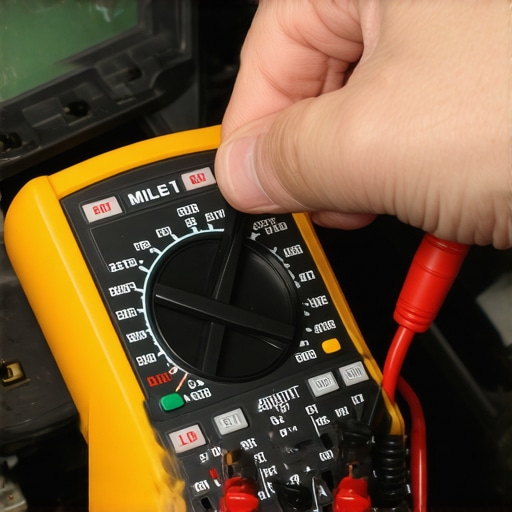
The antiquated method of pulling fuses to find a parasitic drain is increasingly dangerous for modern vehicle electronics. When you break a circuit by removing a fuse, you aren’t just cutting power; you are resetting the Body Control Module (BCM) or the Gateway, which can inadvertently clear the fault memory or cause the module to re-initialize upon reconnection. This ‘waking up’ of the vehicle’s data bus can lead to inaccurate readings that persist for up to sixty minutes while the network attempts to fall back into its quiescent state. Instead, expert diagnostics favor the voltage drop method, where a digital multimeter measures millivolts across the test points on the back of a fuse. This non-intrusive technique allows you to identify exactly which circuit is drawing current without ever waking up the car’s sensitive computers.
Stop Pulling Fuses and Start Measuring Voltage Drop
By keeping the circuit closed, you ensure the vehicle remains in its natural ‘sleep’ mode. If you find a circuit that refuses to settle, the source is rarely a mystery; it is often a stuck relay or an aftermarket accessory poorly integrated into the factory harness. However, sometimes the issue isn’t what is active, but how the power returns to the battery. Learning how to spot a bad ground wire before it kills your new battery is a fundamental skill for any owner. A corroded ground creates high resistance, forcing electricity to seek alternative, unintended paths through lower-power circuits, which can lead to catastrophic module failure over time.
Could a Single Bad Ground Be Sabotaging Your Entire System?
The ground strap is the most vital yet most ignored component in the engine bay. It serves as the primary return path for every electron moving through your vehicle. When corrosion builds up at the chassis mounting point, the resulting voltage ‘float’ causes sensors to report erroneous data to the ECU. This is frequently the hidden ground wire that causes intermittent starting issues that many DIYers misdiagnose as a failing starter motor. Without a solid, clean connection to the frame, your vehicle’s electrical architecture loses its reference point, leading to erratic idling, flickering displays, and unexplained sensor codes.
How Rain and Humidity Trigger Ghost Faults in Your Sensors
Environmental factors play a massive role in electrical health. Moisture acts as a bridge, allowing current to bypass insulation and create micro-shorts that don’t always blow a fuse but do distort digital signals. If you have noticed that why your abs light comes on every time it rains, the culprit is often a hairline crack in a sensor housing or a compromised weather seal on a wiring connector. These intermittent faults are the hardest to track because they disappear once the vehicle dries out, leaving no physical evidence for the technician to find unless they know where to look for ‘green crusties’—the telltale copper corrosion inside a harness.
The Direct Line Between Low Voltage and Poor Transmission Performance
It is a common misconception that transmission problems are always mechanical. In reality, modern automatic transmissions rely on high-frequency pulse-width modulated (PWM) signals to control shift solenoids. If the electrical system is unstable—perhaps signaled by the real reason your headlights dim when you hit the brakes—the transmission computer may not have enough ‘clean’ power to fully seat a solenoid. This often results in the hidden reason your automatic transmission hesitates on hills. The National Institute for Automotive Service Excellence (ASE) emphasizes that a significant percentage of transmission-related complaints can be resolved by simply cleaning battery terminals and ensuring the charging system is free of AC ripple voltage. For those dealing with a non-start situation that feels like a fueling issue, I highly suggest checking the hidden fuse that controls your fuel pump before assuming the pump itself has failed.
Beyond the fuel system, the charging system often masks deeper electronic failures that standard testing misses. Most drivers believe that if the dashboard battery symbol is dark, the charging system is healthy. However, professional diagnostics look far beyond simple voltage levels. An alternator is responsible for converting three-phase Alternating Current (AC) into the Direct Current (DC) your car requires. If the internal diode bridge fails, it doesn’t always stop the charging process; instead, it begins to ‘leak’ AC ripple into the DC bus. This creates a chaotic electrical environment that acts as high-frequency ‘noise,’ causing the Engine Control Unit (ECU) to misinterpret signals from critical sensors. This interference can lead to ghost codes that suggest mechanical failures when the reality is simply ‘dirty’ electricity.
Does a Bad Alternator Diode Drain the Battery Overnight?
A compromised diode doesn’t just create electrical noise; it can actually turn the alternator into a parasitic heater while the engine is off. Normally, a diode acts as a one-way valve, allowing current to flow to the battery but preventing it from flowing back. When a diode fails in a ‘shorted’ state, it allows the battery’s energy to flow back into the alternator windings. This creates a significant parasitic drain that can easily exceed 2 or 3 amps, flattening a battery in just a few hours. This specific failure is why some owners find their alternators are physically warm to the touch even after the car has been sitting in a cold garage. To diagnose this, a technician won’t just check the battery; they will use an oscilloscope to look for the characteristic ‘sawtooth’ pattern of a failing diode bridge, ensuring the charging system is truly clean.
Find Hidden Heat With a Thermal Camera
When a parasitic drain is present, every milliamp of current generates a tiny, measurable amount of thermal energy. In the past, finding a 200-milliamp drain required an hour of painstaking voltage drop tests across every single fuse. Today, expert diagnostic shops utilize high-resolution thermal imaging cameras to bypass the manual labor. By scanning the fuse block of a vehicle that has been in a ‘sleep’ mode for at least forty-five minutes, a technician can see a literal ‘hot spot’ glowing on the screen. #IMAGE_PLACE_HOLDER_C# This thermal signature identifies exactly which circuit is still drawing power. Whether it is a stuck power seat motor relay or a faulty telematics module, the heat provides undeniable proof of activity without the risk of waking the car’s network by pulling fuses. If your vehicle is suffering from these phantom issues, you should consider whether the 5-dollar tool for finding electrical shorts in minutes is sufficient, or if you need the precision of infrared diagnostics to see what the naked eye cannot.
Stop the Digital Noise Killing Your CAN-Bus
The Controller Area Network, or CAN-Bus, is the nervous system of the modern vehicle. According to the ISO 11898 standard, these networks rely on precise differential voltages to communicate between modules. When a component—often an aftermarket alarm or a poorly shielded phone charger—introduces electromagnetic noise into this system, it can prevent modules from entering their low-power quiescent state. This is why a simple accessory installation can lead to a car that won’t start three days later. The accessory isn’t ‘on,’ but its communication chip is ‘chattering’ on the bus, keeping the entire car’s computer network awake and draining the battery. If you’ve noticed your car’s electronics acting possessed or erratic, it’s time to stop guessing and start measuring. Contact our expert technicians today for a deep-dive network analysis to restore your vehicle’s electrical integrity and stop the cycle of battery replacements.
Why Remote Software Updates Might Be Your New Worst Enemy
The evolution of the ‘connected car’ has introduced a new variable in the parasitic drain equation: Over-the-Air (OTA) updates. While the convenience of a vehicle that improves overnight is undeniable, the background processes required for these updates can be treacherous for a battery’s state of charge. If a telematics control unit (TCU) initiates a handshake with a remote server but encounters a weak cellular signal, it may enter a loop of repeated attempts, preventing the vehicle from ever reaching its quiescent state. This ‘zombie’ module behavior is increasingly common in luxury marques where the expectation of constant connectivity outweighs the traditional logic of power conservation.
Can a Failing Door Latch Really Prevent Your BCM From Sleeping?
Often, the most elusive drains aren’t caused by a failed computer but by a simple mechanical switch gone rogue. Modern Body Control Modules (BCMs) rely on a network of micro-switches embedded in door latches, hood pins, and trunk strikers to determine if the vehicle is ready to ‘sleep.’ A single compromised latch that fails to report a ‘closed’ status can keep the interior CAN-Bus active for hours, as the vehicle anticipates an occupant entering or exiting. This is particularly prevalent in climates where road salt or excessive moisture penetrates the door shell, corroding the delicate gold-plated contacts. #IMAGE_PLACE_HOLDER_D# Identifying these failures requires a scan tool capable of viewing live data pids in real-time, allowing a technician to see what the BCM sees without having to tear apart the upholstery.
Master the Art of Bi-Directional Stress Testing
To truly conquer complex electrical failures, a technician must move beyond passive observation and into active interrogation. Bi-directional control allows the diagnostic tool to command a module to perform a specific task—such as cycling a cooling fan or pulsing a shift solenoid—while simultaneously monitoring the amperage draw. This method is the gold standard for finding intermittent ‘open’ circuits that only fail under load. According to research by the Institute of Electrical and Electronics Engineers (IEEE), the move toward automotive Ethernet and higher-bandwidth gateways means that traditional multi-meter testing is becoming less effective at catching micro-second voltage spikes. Sophisticated technicians now rely on high-speed data logging to capture these transients before they can cascade into a full system shutdown.
The High Price of Ignoring Gold-Plated Terminals
In the high-stakes world of modern vehicle electronics, the quality of a connection is just as important as the health of the component itself. Fretting corrosion—a microscopic movement between terminals—can create a layer of non-conductive oxidation that interferes with low-voltage sensor signals. When this happens, the ECU may ramp up its processing power to compensate for ‘noisy’ data, inadvertently increasing the current draw even when the vehicle is supposedly at rest. Using specialized contact cleaners and ensuring terminal tension is within factory specifications can solve ‘unfixable’ electrical gremlins that have baffled other shops for weeks. If your vehicle feels like an unsolvable puzzle, do not settle for a ‘parts cannon’ approach. Reach out to our diagnostic specialists today to pinpoint the exact failure point and restore your vehicle’s factory-spec reliability.
Expert Insights & Advanced Considerations
How Software-Defined Vehicles Rewrite the Diagnostic Playbook
Modern ECUs do not simply shut off; they navigate complex, tiered power-down sequences. A vehicle that fails to reach its quiescent state is often the victim of ‘digital chatter’ where an unrelated component, like a faulty telematics gateway, prevents the entire network from sleeping. This transforms modern vehicle diagnostics into a task of packet analysis rather than just measuring amperage. If your network remains active, you are not just losing battery capacity; you are subjecting every module on the bus to unnecessary thermal wear.
The Hidden Cost of Signal Noise in Aftermarket Accessories
Even high-quality aftermarket dashcams or remote starters can introduce enough electromagnetic interference to disrupt the sensitive voltage thresholds of a Body Control Module. While many enthusiasts search for the 30-dollar tool that lets you see inside your engine to solve mechanical issues, the electronic reality requires a clean, ripple-free DC signal. Signal noise acts as a constant wake-up call to the vehicle’s gateway, keeping the alternator diode bridge under perpetual load.
Why High-Resistance Grounds Are the Ultimate Diagnostic Deception
Just as the truth about lifetime transmission fluid why it is a lie exposes the myth of maintenance-free mechanicals, the idea that electrical grounds remain perfect forever is equally false. A ground strap with even 0.5 ohms of resistance can cause a ‘voltage float’ that tricks the ECU into sensing a sensor failure. This leads to the ‘parts cannon’ approach where sensors are replaced repeatedly, while the actual culprit is a simple corroded chassis bolt.
#IMAGE_PLACEHOLDER_E#
Curated Expert Resources
SAE International Technical Standards
The Society of Automotive Engineers provides the foundational engineering papers for J1939 and CAN-Bus protocols. Accessing these documents allows a technician to understand the exact millivolt tolerances required for modern digital communication.
Mitchell 1 ProDemand Diagnostic Suites
This resource is the industry gold standard for accessing specific ‘sleep’ transition times for different makes and models, ensuring you do not begin testing before the vehicle has actually attempted to shut down.
IEEE Xplore Automotive Electronics Series
For those looking to understand the future of 48V systems and automotive Ethernet, the IEEE offers peer-reviewed research on how higher voltage architectures manage parasitic loads and transient voltage spikes.
Final Expert Perspective
True mastery of modern vehicle diagnostics requires a fundamental shift from mechanical intuition to rigorous data analysis. We have seen how a single ‘chattering’ module can simulate a catastrophic battery failure and how environmental moisture can trigger ghost faults that disappear by noon. Success in the modern workshop relies on respecting the vehicle’s quiescent state and employing non-intrusive testing methods. Choosing the right car service for seamless vehicle maintenance is the definitive step in protecting your vehicle’s sensitive electronic architecture. If your vehicle continues to exhibit unexplained electrical behavior, do not settle for guesswork. Contact our expert technicians today to perform a deep-level network interrogation and restore your vehicle’s factory-spec reliability.