The era of the ‘grease monkey’ relying solely on auditory cues and tactile intuition has been superseded by a paradigm where digital telemetry defines the precision of modern car care. For decades, deep-level engine analysis was a black box reserved for dealership technicians armed with proprietary equipment costing thousands. Today, a fundamental shift has occurred: the democratized access to the vehicle’s internal nervous system via affordable OBD-II hardware. This $30 entry point into the hidden world of vehicle diagnostics allows even the most casual enthusiast to bypass the guesswork and engage with the same raw data streams used by professionals.
Your Engine Speaks in Data Not Just Noises
When an engine stumbles or a gearbox hesitates, the mechanical symptoms are often late-stage indicators of a deeper electronic or sensor-based discrepancy. An affordable diagnostic tool serves as a bridge between these physical manifestations and the Engine Control Unit (ECU). By monitoring Short Term Fuel Trim (STFT) and Long Term Fuel Trim (LTFT) in real-time, you can identify vacuum leaks or failing injectors long before they cause a catastrophic breakdown. This proactive approach is the cornerstone of high-level expert auto repair tips that prioritize longevity over reactive fixes. These tools don’t just clear codes; they provide a window into the stoichiometric ratio and timing advance, variables that determine the health of your combustion cycle.
Can a budget scanner detect complex transmission failures?
While many assume that basic tools are limited to the engine, high-quality Bluetooth dongles utilizing advanced protocols can often query the Transmission Control Module (TCM). This is critical because transmission failures decoded often reveal that what feels like a mechanical slip is actually a faulty solenoid or a line pressure sensor error. According to the Society of Automotive Engineers (SAE), the standardization of diagnostic trouble codes (DTCs) has paved the way for cross-system transparency, though professional-grade bi-directional control remains the boundary between DIY tools and shop-level scanners.
Stop Guessing and Start Validating Sensor Outputs
The true power of modern diagnostics lies in ‘Live Data’ graphing rather than static code reading. A $30 tool paired with the right software allows you to graph the voltage of your upstream O2 sensors, revealing a ‘lazy’ sensor that is technically within operating range but slow to respond, thus killing your fuel economy. This level of granular detail is exactly what you should expect from a high-quality car service. By identifying these marginal failures early, you prevent the poisoning of catalytic converters—a repair that can easily exceed the value of an older vehicle. If you encounter codes that suggest an intermittent electrical fault, consider using professional techniques like how to pull engine fault codes as a secondary verification of system integrity.
If your diagnostic tool reveals a persistent P0300 or a specific cylinder misfire, do not wait for the vehicle to enter ‘limp mode.’ Contribute your diagnostic findings to our community forum or book a professional auto repair consultation to interpret the underlying data before mechanical damage occurs.
Fix the Stumble Before Your Wallet Takes the Hit
Identifying a fault code is merely the entry point to a successful repair; the real expertise lies in knowing which components to revive rather than replace. A common oversight involves the Mass Air Flow (MAF) sensor, where a microscopic layer of dust can skew air-to-fuel ratios, leading to a frustratingly erratic idle. Instead of rushing to purchase a replacement, savvy owners often how to clean your mass air flow sensor to restore factory-spec performance for the price of a specialized aerosol can. This type of surgical maintenance prevents the ECU from overcompensating with excess fuel, which eventually clogs catalytic converters and soot-fouls spark plugs. If your why your engine stumbles at red lights despite a clean sensor, you may be dealing with a vacuum leak that bypasses the intake monitoring system entirely.

Why does your engine bog down the moment the compressor engages?
An engine that performs perfectly until the air conditioning is switched on points toward a failure in the Idle Air Control (IAC) logic or a mechanical drag issue. When the AC clutch engages, it places a significant parasitic load on the crankshaft. A healthy system should instantly bump the RPMs to compensate. If you find why your car bogs down when you turn on the air conditioner, the culprit is often a gummed-up throttle body or an IAC valve that cannot react fast enough to the increased demand. According to the Car Care Council, neglected maintenance in these small bypass channels accounts for a staggering percentage of driveability complaints that are misdiagnosed as major mechanical failures. Expert technicians utilize smoke machines to find the pinhole leaks that digital scanners often miss, ensuring the intake tract is truly airtight.
Stop Chasing Ghosts in Your Electrical System
Modern vehicles are essentially rolling computer networks, making them susceptible to ‘phantom’ issues that can flatten a battery overnight. Before you assume your alternator is shot, you must rule out a how to find a parasitic battery drain using a basic multimeter. By measuring the millivolt drop across fuses while the car is ‘asleep,’ you can pinpoint exactly which module—be it a stuck relay or a faulty infotainment screen—is siphoning power. This methodical isolation is the hallmark of professional diagnostics. Similarly, nuanced mechanical issues like why your transmission shudders when cold and the 12-solution demonstrate that many ‘catastrophic’ symptoms are actually solved by addressing fluid viscosity or minor sensor drift rather than a full rebuild. If you found these technical insights helpful, share this guide with a fellow gearhead or leave a comment below with your most challenging diagnostic mystery.
When Your Modules Stop Talking to Each Other
The complexity of modern vehicle architecture means that a single point of failure in the communication network can manifest as a dozen unrelated trouble codes. This is the domain of the Controller Area Network (CAN-bus), a high-speed data highway that allows the ABS, ECM, and Body Control Module to exchange information in milliseconds. If you encounter ‘U’ prefix codes, you aren’t looking at a mechanical failure; you’re looking at a linguistic breakdown. Diagnosing these requires a shift from measuring voltage to measuring resistance and signal integrity across the bus. A common culprit in high-mileage vehicles is corrosion at the gateway module or a pinched wire in a door harness that grounds the entire data stream, effectively ‘silencing’ critical components.
Why Your Scanner Might Be Lying About That Misfire
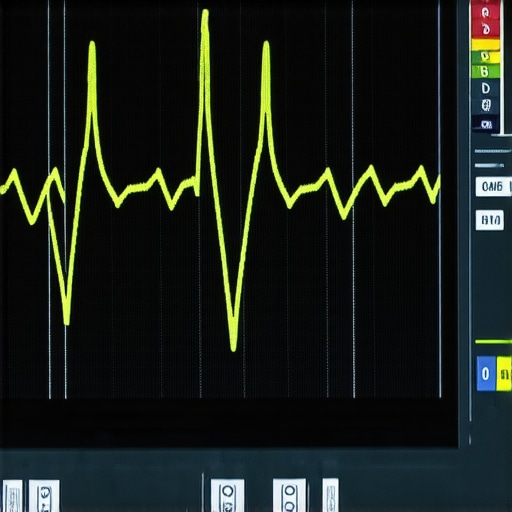
While OBD-II scanners provide a snapshot of what the ECU thinks is happening, an oscilloscope provides the ground truth. When a crankshaft position sensor starts to fail, it may not trigger a hard code immediately. Instead, it might skip a single pulse—a micro-event that occurs too fast for a standard handheld scanner to register. By back-probing the sensor connector with a lab scope, you can visualize the waveform directly. A missing tooth on the reluctor wheel or a weak magnetic field becomes instantly visible as a drop in the wave’s amplitude. This level of forensic analysis is what separates a parts-changer from a true diagnostic technician.
Can a failing wheel speed sensor trigger a total transmission shutdown?
Modern integrated stability control systems rely heavily on wheel speed data for more than just anti-lock braking. If a sensor fails or provides an erratic signal, the Transmission Control Module (TCM) may lose its ability to calculate the correct shift timing or torque converter lock-up schedule. This often results in a ‘limp home’ mode where the vehicle is locked into a single gear to prevent mechanical damage. Understanding transmission failures decoded requires looking at these peripheral sensors that dictate the gearbox’s behavior. If you notice your speedometer jumping while the car stumbles, you aren’t looking at a transmission rebuild; you’re looking at a $50 sensor and a dirty tone ring.
High-Pressure Fuel Systems Demand More Than a Visual Check
As we transition into the era of Gasoline Direct Injection (GDI), the traditional fuel pressure gauge has become nearly obsolete. These systems operate at extreme pressures that can be lethal if mishandled. According to technical documentation from Robert Bosch GmbH, GDI pumps can reach pressures exceeding 2,000 PSI, requiring the ECU to modulate the pump’s solenoid with extreme precision. If you’re seeing erratic pressure readings on your live data feed, it’s time to perform a dedicated fuel trim cell analysis before the high-pressure pump sustains permanent damage. A lean condition at high RPM is rarely a clogged filter anymore; it’s often a sign that the high-pressure pump’s internal piston is scoring the camshaft lobe. You should always cross-reference your high-side pressure with the low-side lift pump output to ensure the entire delivery chain is robust.
Don’t Let Adaptive Learning Hide Growing Problems
Modern ECUs are remarkably good at masking mechanical wear through ‘Adaptive Learning.’ The computer will slowly adjust fuel maps and ignition timing to compensate for a stretching timing chain or a leaking intake gasket. This is why a car might feel ‘fine’ until you disconnect the battery, at which point the cleared adaptations cause the engine to stall. This ‘reset’ actually reveals the true mechanical state of the engine. When evaluating a used vehicle, or performing a deep car service, checking the ‘Long Term Fuel Trim’ values is essential. If those values are consistently above 10%, the engine is working overtime to correct a lean condition that hasn’t yet triggered a check engine light. This hidden struggle is particularly evident when the engine is under load, such as when towing or climbing steep grades…
While fuel trims offer a reactive look at combustion, calculating Volumetric Efficiency (VE) provides a proactive assessment of an engine’s breathing capacity. VE measures how well an engine fills its cylinders with air compared to its theoretical displacement, and a drop in this percentage often signals an obstruction that no simple sensor swap will fix. If your live data shows a calculated VE significantly lower than the manufacturer’s specification at wide-open throttle, you might be battling a restricted exhaust, a clogged catalytic converter, or even worn camshaft lobes that are no longer providing the necessary valve lift. This level of analysis transcends basic code reading and enters the realm of professional performance tuning.
Why Volumetric Efficiency Is the Ultimate Engine Health Metric
Identifying a breathing restriction requires correlating Mass Air Flow (MAF) readings with Engine Load and RPM. If the air mass entering the engine does not scale linearly with the load, the mechanical integrity of the intake and exhaust tracts must be questioned. Expert technicians utilize this data to identify carbon buildup on intake valves—a chronic issue in direct-injected engines—before it triggers a hard misfire. By monitoring the relationship between manifold pressure and actual air ingestion, you can detect the early stages of a failing turbocharger or a leaking intercooler long before the vehicle’s dashboard warns of a boost deviation. These insights are vital for anyone seeking expert auto repair tips for 2025 that focus on maintaining peak efficiency in forced-induction powertrains.

How does a skewed coolant temperature signal affect closed-loop transition?
An often-overlooked diagnostic variable is the ‘thermal hysteresis’ of the Engine Coolant Temperature (ECT) sensor. If a sensor fails ‘rationally’—meaning it stays within a normal operating range but reports 140°F when the engine is actually at 190°F—the ECU will never transition into the most efficient closed-loop fueling strategy. This results in a perpetually rich mixture that kills fuel economy and accelerates wear on the cylinder walls via fuel wash. Unlike a total sensor failure that triggers a P0118 code, a skewed sensor requires comparing the ECT data against the Intake Air Temperature (IAT) sensor after a long cold soak. If they don’t match, you’ve found a ‘silent’ fault that a basic scan would miss.
Stop Swapping Parts and Start Checking for Software Updates
The modern technician’s most valuable tool is often not a wrench, but a laptop capable of accessing manufacturer-specific Technical Service Bulletins (TSBs). Many recurring driveability issues, such as harsh shifting or erratic idling, are actually software bugs rather than hardware failures. According to the National Highway Traffic Safety Administration (NHTSA), modern vehicles frequently receive ‘over-the-air’ or dealership-level software flashes to correct logic errors in the Transmission Control Module or the fuel injection timing maps. Before you invest in expensive transmission repairs, verify that your vehicle’s modules are running the latest calibration; a twenty-minute software update can often solve what looks like a multi-thousand-dollar mechanical breakdown.
Mastering the Evaporative Emission Mystery
The EVAP system remains one of the most misunderstood components of modern car care, often resulting in a ‘parts cannon’ approach where owners replace gas caps and purge valves in vain. Professional diagnostics involve using a bi-directional tool to seal the vent solenoid and then monitoring the pressure drop using the fuel tank pressure sensor. This methodology allows you to distinguish between a small leak (P0456) and a gross leak (P0455) without guessing. If you’re struggling with persistent emission codes, exploring the hidden world of vehicle diagnostics will reveal that the charcoal canister itself often becomes saturated with liquid fuel due to ‘topping off’ the tank, leading to complex vacuum issues that mirror a failing fuel pump. Don’t let a minor sensor drift dictate your vehicle’s lifespan; join our technical community today to share your data logs and get precision feedback on your most challenging diagnostic mysteries.
Expert Insights & Advanced Considerations
Deep-Dive into Mode $06 Before the Light Flashes
Seasoned diagnosticians know that the ‘Check Engine’ light is often the final stage of a long-term failure profile. By accessing Mode $06 data, you can view the results of non-continuous monitoring tests for systems like the oxygen sensor heater or the EVAP leak detection. This allows you to spot a failing component that is technically passing its ‘on-board’ test but is hovering dangerously close to the failure threshold. Mastering this data is a key step in the hidden world of vehicle diagnostics, shifting your strategy from reactive repair to proactive prevention.
Don’t Trust the Average Value on Your Screen
Basic scanners often use ‘smoothed’ data streams to prevent the user from being overwhelmed by fluctuating numbers. However, when you are chasing a high-speed misfire or a glitchy throttle position sensor, these averages hide the truth. An oscilloscope is the only way to see the raw ‘noise’ on a 5-volt reference line or a dropping signal in a hall-effect sensor. This level of forensic detail is what separates a true expert from someone just reading codes off a screen.
Check the Backbone When Everything Goes Dark
When multiple modules lose communication simultaneously, the problem is rarely the modules themselves but rather the physical layer of the Controller Area Network (CAN-bus). Experts prioritize measuring the resistance across the bus—typically looking for 60 ohms—to ensure the termination resistors are intact. If your scanner cannot ‘see’ the vehicle, the first move is verifying the integrity of this digital backbone before suspecting expensive hardware modules.
#IMAGE_PLACEHOLDER_E#
Curated Expert Resources
SAE International (Society of Automotive Engineers): This is the definitive global source for the J1979 standards that govern OBD-II protocols. For those looking to understand the engineering logic behind data transmission, their technical library is indispensable.
iATN (International Automotive Technicians Network): A high-level professional forum where master technicians share real-world waveforms and diagnostic case studies that cover rare, complex failures not found in standard manuals.
Bosch Mobility Technical Archive: As the primary architects of modern Gasoline Direct Injection and stability control hardware, Bosch provides documentation that offers a deeper look into sensor tolerances and high-pressure system safety.
Final Expert Perspective
The transition from mechanical intuition to digital telemetry represents the most significant evolution in automotive history. To truly succeed in modern car care, one must move beyond simple code-clearing and embrace the nuances of live data graphing and volumetric efficiency. Whether you are navigating transmission failures decoded or simply trying to optimize fuel trims, the goal is always the same: let the data guide the wrench. By applying these expert auto repair tips for 2025, you ensure your vehicle operates at peak performance while avoiding the expensive ‘parts-cannon’ approach. If you have encountered a diagnostic mystery that defied standard logic, we invite you to reach out for a professional auto repair consultation or share your findings with our technical community to refine our collective understanding.