For decades, the automotive industry has shifted toward a maintenance-free philosophy designed to lower the perceived total cost of ownership for new car buyers. However, for those of us operating in the high-stakes world of vehicle diagnostics, the term lifetime fluid is often viewed as a calculated risk by manufacturers rather than a mechanical reality. This marketing-driven designation suggests that the factory-fill transmission fluid will last the entire life of the car, but what is often omitted is that manufacturers define a lifetime as only 60,000 to 100,000 miles—essentially the duration of the powertrain warranty. Beyond this threshold, the internal components face a steep decline in protection as the fluid’s chemical integrity fails.
Your Gearbox is Dying Under the Guise of Maintenance-Free Claims
In a professional car service setting, we see the aftermath of these claims daily. Automatic transmission fluid (ATF) is arguably the most complex lubricant in any vehicle, functioning as a hydraulic medium, a coolant, and a friction-modifier for clutch engagement. Over time, the shearing forces within planetary gearsets and the extreme heat generated in the torque converter cause long-chain polymers to fracture. When you encounter transmission failures decoded by expert technicians, the root cause is almost always oxidized fluid that has lost its ability to manage heat and prevent wear. This degradation leads to varnish buildup on sensitive valve body components, causing the hesitation or harsh shifting many owners ignore until it is too late.
Can Your Gearbox Really Survive 200,000 Miles Without a Fluid Change?
The short answer is a resounding no, especially under modern driving conditions like stop-and-go traffic or towing. Research published by the Society of Automotive Engineers (SAE) indicates that the rate of fluid oxidation doubles for every 20-degree increase in operating temperature above 175°F. Since many modern transmissions regularly exceed 200°F during normal operation, the lifetime fluid is under constant thermal assault. Relying on a scan tool that actually finds hidden transmission codes can reveal early signs of slippage or solenoid issues that are direct symptoms of fluid thinning and additive depletion.
Thermal Degradation and the Chemical Reality of High-Mileage ATF
As the fluid ages, it loses its ability to suspend metallic particles and friction material. This leads to a gritty slurry that acts more like an abrasive than a lubricant. You might find that the surprising reason your transmission overheats while driving uphill is actually a clogged internal filter or degraded fluid that no longer carries heat effectively to the cooling system. Proactive auto repair strategies should prioritize fluid exchange over manufacturer marketing claims to ensure long-term reliability. If you are starting to notice erratic shifting patterns, do not wait for a total breakdown; explore how to save time and money with proven transmission repairs before a full rebuild becomes necessary. Proper maintenance is the only way to counteract the planned obsolescence inherent in lifetime fluid marketing.
When you ignore the warning signs of fluid degradation, the physical consequences manifest in very specific, often predictable patterns. Many drivers notice that their vehicle’s behavior changes based on ambient temperature or even the direction of a turn. This isn’t just a quirk of the machine; it’s a direct result of fluid physics and internal hydraulic pressure failing to meet the demands of the gearbox. Understanding the truth about lifetime transmission fluid why it is a lie is the first step toward preventing a total mechanical shutdown.
Stop Your Gearbox from Shifting Hard When the Mercury Drops
Cold starts are the ultimate stress test for any lubricant, and ATF is no exception. If you have ever wondered why your automatic transmission shifts hard when the engine is cold, the answer lies in the fluid’s viscosity and its interaction with the electronic solenoids. As fluid ages, it thickens significantly at low temperatures, making it difficult for the pump to maintain the precise pressure needed to move internal valves. This often results in a scenario where your transmission slips when cold but runs fine when warm. Once the fluid reaches operating temperature, it thins out enough to flow through the gummed-up passages, but the damage from those initial hard shifts—the metal-to-metal contact in the clutch packs—is cumulative and irreversible.
Is Your Transmission Slipping Because of Chemistry or Simple Gravity?
It is a common diagnostic frustration: the car drives perfectly on flat ground, but starts to struggle the moment the road tilts. We often see clients puzzled by the hidden reason your automatic transmission hesitates on hills. When fluid levels are even slightly low due to a slow leak, or when the fluid is so old it has lost its surface tension, gravity causes it to pull away from the pickup tube during an incline. A similar phenomenon occurs during lateral movement; the real reason your transmission slips during sharp left turns is often a combination of fluid aeration and a clogged internal filter. These moments of starvation cause the clutches to briefly disengage and then ‘slam’ back into place, creating that unsettling thud or jerk that signals impending failure.
Fix the Small Leaks Before They Kill the Whole System
According to the Automatic Transmission Rebuilders Association (ATRA), more than 90% of all transmission failures are caused by overheating, which is directly linked to the chemical breakdown of old fluid or insufficient fluid levels. You don’t always need a $4,000 rebuild to save your vehicle. Sometimes, identifying the $10 gasket that stops your transmission from leaking overnight can restore the hydraulic pressure necessary for smooth operation. Similarly, addressing a delay when shifting from reverse to drive early on can often be resolved with a professional fluid flush and a software reset rather than mechanical hardware replacement. If your gearbox is acting up, drop a comment below describing the exact speed and gear where it happens—often, it’s a symptom we can help you diagnose before you head to a shop. Proactive maintenance remains the only shield against the astronomical costs of modern drivetrain replacement.
Why Your Car’s Brain is Compensating for Bad Fluid
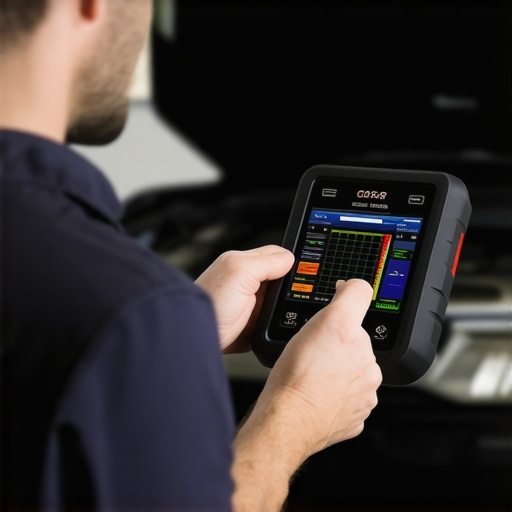
Modern vehicles are equipped with sophisticated Transmission Control Modules (TCM) that act as a buffer between mechanical wear and your driving experience. As the transmission fluid loses its viscosity and frictional properties, the TCM uses ‘adaptive learning’ to compensate for the lag in gear engagement. It accomplishes this by incrementally increasing line pressure and adjusting solenoid timing to ensure shifts still feel smooth to the driver. However, this is a double-edged sword; you might not feel the mechanical distress until the TCM has reached its maximum adaptive limit. When the software can no longer bridge the gap created by chemical degradation, the transmission often fails seemingly ‘overnight,’ though the damage has been accumulating for years. This is why professional vehicle diagnostics go beyond just reading codes—they involve looking at shift-time data pids to see how hard the computer is working to save the hardware.
Does a ‘dirty’ fluid change actually cause transmission failure?
One of the most persistent myths in auto repair is that changing the fluid in a high-mileage transmission will cause it to slip. There is a grain of truth here, but it is often misunderstood. In a severely neglected gearbox, the only thing providing enough friction for worn clutch packs to grab might be the suspended metallic debris and friction material ‘grit’ within the old, burnt fluid. When you introduce fresh, highly detergent-rich ATF, it cleans away these deposits. If the clutch material is already gone, the new, ‘slippery’ fluid reveals the mechanical reality that the transmission was already dead. This is why a chemical analysis of the fluid, often measuring the Total Acid Number (TAN) as per ASTM D664 standards, is more valuable than a simple visual check of the dipstick. High acidity indicates that the fluid’s antioxidant package is exhausted, leading to the rapid corrosion of yellow metals like brass and bronze found in bushings.
For those managing high-performance or heavy-duty vehicles, the health of the fluid is synonymous with the health of the torque converter clutch (TCC). When the fluid’s friction modifiers break down, the TCC can experience a ‘micro-slip’ phenomenon. This isn’t always enough to trigger a Check Engine Light, but it generates localized hotspots on the converter’s friction surface that can reach temperatures exceeding 600°F in milliseconds. This localized boiling of the fluid creates carbon deposits that eventually find their way into the valve body, sticking the very valves responsible for smooth gear transitions. If you’ve noticed a slight shudder when cruising at highway speeds, you are likely experiencing the beginning of this cycle. Have you noticed a vibration that feels like you’re driving over rumble strips? Share your vehicle’s make and mileage in the comments—this specific symptom often points to a failing TCC due to fluid depletion.
Stop Trusting the Dipstick Alone for Modern Fluid Health
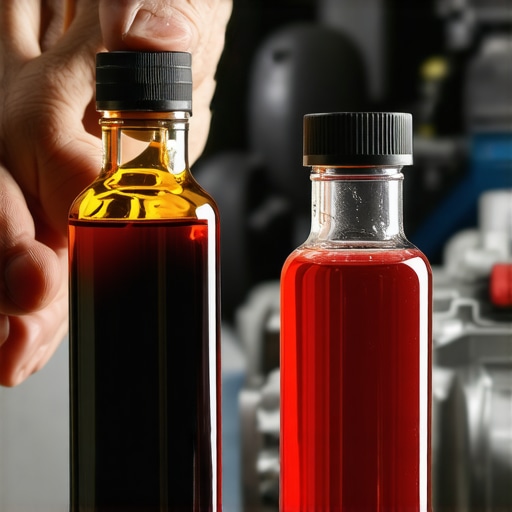
The days of ‘bright red is good, brown is bad’ are largely over due to the advent of synthetic and semi-synthetic fluids that darken naturally within the first few thousand miles without losing their protective qualities. Real expertise requires looking at the fluid’s ability to maintain its shear stability. Under the microscopic shear forces of a planetary gearset, the long-chain molecules that give a fluid its multi-grade properties are literally chopped into smaller pieces. This results in a permanent loss of viscosity that no amount of cooling can fix. When you invest in a car service, ensure the technician is checking for ‘glitter’ or a heavy pungent odor, which are indicators of catastrophic internal shearing. Understanding the nuances of fluid chemistry is the difference between a simple maintenance task and an unnecessary $5,000 replacement. Even the most advanced scan tool that actually finds hidden transmission codes cannot replace the physical evidence found at the bottom of a transmission pan.
When Your Solenoids Battle Thick Sludge
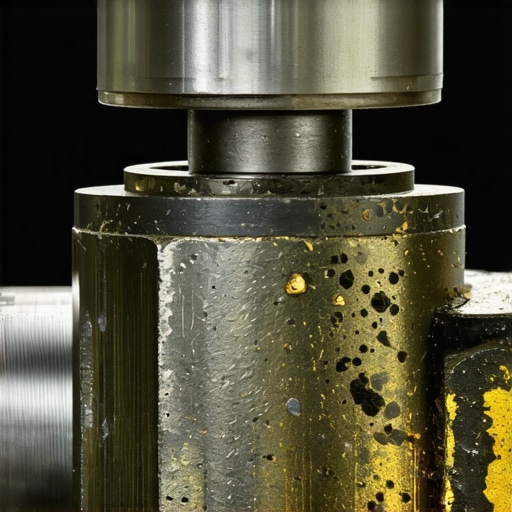
The precision of modern shifting relies on Pulse-Width Modulation (PWM) solenoids, which cycle dozens of times per second to meter hydraulic pressure with surgical accuracy. As transmission fluid shears down, it leaves behind microscopic varnish that coats these electromagnetic plungers. In a professional vehicle diagnostics workflow, we often see solenoids that are electrically sound but mechanically sluggish. This “stiction” prevents the valve from seating correctly, leading to flared shifts or a complete loss of specific gears. Unlike older hydraulic systems, modern units have tolerances measured in microns; a single piece of debris smaller than a human hair can jam a shift valve, rendering the entire assembly useless despite the electronic “brain” functioning perfectly.
Why does your gear swap feel like a physical punch?
When a driver experiences a “harsh” shift, they are feeling the TCM attempting to compensate for low friction coefficients. If the fluid’s additives have depleted, the clutch packs don’t grab smoothly—they slip and then suddenly “bite.” This creates a torque spike that ripples through the entire drivetrain. During a comprehensive car service, we look for high “clutch volume indices” in the scanner, which indicate that the computer is pushing more fluid than intended to fill the gaps. According to the International Organization for Standardization (ISO) 4406, the cleanliness level of hydraulic fluid is critical to component longevity; even “clean-looking” fluid can harbor thousands of particles per milliliter that act as a grinding paste on soft brass bushings.
Bypass Valves are the Secret Killers of Modern Gearboxes
Many owners aren’t aware that their vehicle likely contains a Thermal Bypass Valve (TBV) located near the transmission cooler. This component is designed to keep fluid inside the gearbox until it reaches a specific temperature to aid in fuel economy. However, if this valve fails in the closed position, your ATF will never reach the external cooler, leading to a silent overheat scenario. This is a common culprit in auto repair cases where the transmission fails even though the engine temperature remains normal. The fluid effectively cooks itself within the casing, accelerating the oxidation process exponentially. If you’ve noticed your car feels sluggish only after an hour of highway driving, your cooling circuit might be compromised by a stuck $50 valve.
To truly protect your investment, consider sending a sample of your ATF to a professional analysis lab like Blackstone Laboratories. This goes beyond the capabilities of a standard shop, revealing the exact parts-per-million of aluminum, lead, and copper in your oil, providing a “weather forecast” for your transmission’s future. Don’t let a manufacturer’s marketing term dictate the lifespan of your vehicle. Have you checked your transmission fluid level since you bought the car? Let us know in the comments if your dipstick—if you even have one—shows any sign of “glitter” or a burnt-toast smell.
Real-World Strategies for Long-Haul Reliability
Don’t Let Your TCM Mask Internal Damage
Modern Transmission Control Modules are incredibly efficient at hiding mechanical wear. By using adaptive learning to increase hydraulic pressure, the car compensates for thinning fluid and worn clutch packs without the driver ever feeling a shudder. However, this silent compensation has a ceiling. Advanced vehicle diagnostics provide the necessary window into these adaptation values, allowing you to see how hard the computer is working to save the hardware before it finally gives up. When you see shift-time data trending upward, it is a definitive signal that the fluid has lost its chemical integrity, regardless of what the manufacturer’s ‘lifetime’ label suggests.
Stop Relying on the Visual Dipstick Test
The old-school method of checking for bright red fluid is no longer a reliable indicator of health for synthetic ATF. Many high-performance fluids are designed to darken quickly under normal thermal cycles, yet they retain their friction-modifying properties. Conversely, fluid that looks ‘clean’ can be suffering from shear-down, where the polymer chains have been physically cut at a microscopic level, leading to a loss of load-bearing capacity. A professional car service will focus on the odor and the presence of micro-particulates rather than just the hue. If you smell burnt toast, the chemistry has failed, and no amount of software adaptation can prevent the eventual metal-on-metal contact.
#IMAGE_PLACEHOLDER_E#
The Thermal Bypass Valve is a Silent Gearbox Killer
A significant number of modern transmissions fail not because of gear wear, but because the thermal bypass valve (TBV) sticks in the closed position. This component is meant to speed up warm-up times for fuel efficiency, but when it fails, it prevents fluid from reaching the cooling circuit. This creates a localized oven effect inside the transmission casing. Monitoring your transmission temperatures during a long drive can reveal this issue. Staying ahead with expert auto repair tips for 2025 involves verifying these cooling circuits during every major inspection to ensure your ATF isn’t being cooked alive while the dashboard stays silent.
Where the Pros Get Their Technical Data
ATRA (Automatic Transmission Rebuilders Association): This is the gold standard for technical bulletins and real-world failure data. Their records on transmission failures decoded for specific makes and models are essential for anyone looking to understand why certain gearboxes fail prematurely despite ‘proper’ maintenance.
SAE Technical Papers: For those who want to dive into the physics of lubricant oxidation and shear stability, the Society of Automotive Engineers provides peer-reviewed research that debunked the ‘lifetime fluid’ marketing long ago.
Blackstone Laboratories: Instead of guessing based on appearance, sending a sample for fluid analysis provides a chemical breakdown of wear metals. This data-driven approach is the only way to accurately determine the health of your internal bushings and clutch material without cracking the case open.
The Bottom Line on Drivetrain Survival
True longevity in modern vehicles requires rejecting the ‘maintenance-free’ philosophy that dominates current marketing. The reality is that mechanical components obey the laws of physics, not the timelines of a marketing department. To prevent catastrophic failure, prioritize proactive fluid exchanges and utilize a scan tool that actually finds hidden transmission codes to monitor your system’s health. Integrating these practices into your standard car service routine is the only way to ensure your transmission survives long past the 100,000-mile mark. What is the highest mileage you have achieved on an original transmission? Share your maintenance secrets or your most frustrating diagnostic stories in the comments below—let’s swap some real-world shop talk.