Beyond the Visual Check: Why Your Fuse Might Be Lying
In the realm of advanced vehicle diagnostics, few things are as frustrating as a car that cranks but won’t start despite every fuse appearing intact. As a seasoned technician, I have seen countless DIYers and even novice mechanics replace perfectly functional fuel pumps because they assumed the electrical signal was present simply because a fuse looked good. Modern auto repair requires a deeper understanding of circuit integrity. A fuse can maintain visual continuity while harboring microscopic cracks or oxidation that introduces enough resistance to drop the voltage below the threshold required to trigger the fuel pump relay. This is where vehicle diagnostics evolves from a hobby into a specialized craft. To truly verify a fuel pump signal, you must perform a voltage drop test under load, as static voltage readings can be profoundly misleading.
The Ghost in the Machine: Totally Integrated Power Modules
Many modern vehicles, particularly those from domestic manufacturers over the last fifteen years, have moved away from traditional fuse boxes toward the Totally Integrated Power Module (TIPM). In these systems, the ‘hidden fuse’ isn’t a replaceable plastic plug; it is an internal, non-serviceable relay soldered directly onto the circuit board. When this internal component fails, it effectively kills the fuel pump signal, yet every external fuse will test positive for power. Navigating these complex electronic architectures is a cornerstone of professional car service today. If you find yourself struggling with a vehicle that randomly stalls, it is worth investigating whether you are dealing with an internal TIPM failure rather than a mechanical pump issue. This specific failure mode is a common reason for how to fix a car that dies while driving, as the internal relay heat-soaks and loses contact.
Does Your Multimeter Show Voltage That Disappears Under Load?
This is a classic ‘phantom voltage’ scenario. You probe the fuel pump connector and see 12.6 volts, yet the pump remains silent. This occurs because a single strand of wire or a corroded terminal is enough to carry the voltage for a high-impedance multimeter, but cannot carry the amperage required to drive the pump motor. According to technical bulletins from Delphi Technologies, diagnosing these ‘ghost’ signals requires a test light or a load-pro tool to ensure the circuit can actually do work. Professionals don’t just look for voltage; they look for current capacity. If your fuel system isn’t the only thing acting up, you might want to review our guide on transmission failures to see if your vehicle is suffering from broader electrical interference.
Stop Swapping Parts and Start Testing Ground Paths
The fuel pump signal is a complete loop; if the ground side is compromised, the ‘hot’ side signal is effectively dead. In many transmission and engine bay layouts, ground straps are exposed to road salt and vibration, leading to high-resistance junctions. An expert-level diagnostic involves checking the ground potential at the pump while the circuit is keyed on. If you see more than 0.1 or 0.2 volts on the ground side, you’ve found your ‘hidden fuse’—a bad ground. If you are a professional looking to sharpen your diagnostic toolkit, we encourage you to share your most difficult ‘no-start’ case studies in our community forums to help others master these complex electrical puzzles.
The Missing Link: Why No RPM Signal Means No Fuel
One of the most overlooked safety features in modern engine management is the tachometric fuel cut-off. If your engine control module (ECM) does not receive a valid signal from the crankshaft position sensor, it will intentionally withhold the ground signal to the fuel pump relay. This is designed to prevent a high-pressure fuel fire in the event of a collision where the engine stalls. Often, technicians spend hours chasing electrical ‘ghosts’ in the trunk when the actual culprit is the one sensor that ruins your gas mileage or prevents starting entirely without ever throwing a specific fault code. To diagnose this, monitor your RPM data stream while cranking; if the digital needle stays at zero, your fuel signal isn’t missing because of a fuse, but because the computer doesn’t know the engine is turning. Expert-level how to diagnose a misfire without a code reader logic applies here: always verify the primary inputs before blaming the final output.
Corrosion’s Favorite Hideout: The Fuel Pump Driver Module
As vehicles have become more efficient, manufacturers have replaced simple on/off relays with Fuel Pump Driver Modules (FPDMs). These are often mounted in high-exposure areas, such as on the rear crossmember or above the spare tire. Because these modules are frequently made of aluminum and bolted directly to steel frames, galvanic corrosion eventually eats through the housing, allowing moisture to penetrate the circuitry. This creates a high-resistance path that can mimic a failing pump or a blown fuse. 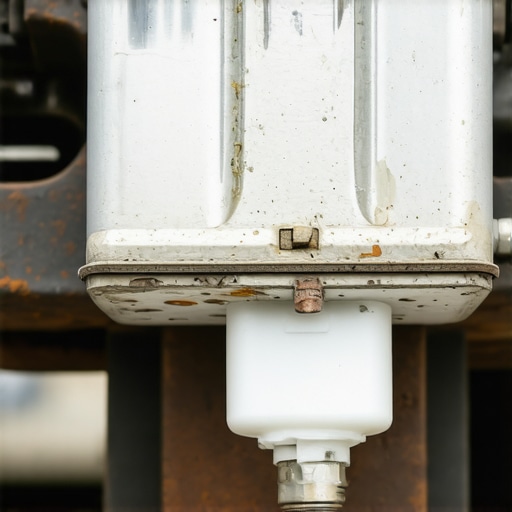 According to professional technical insights from Motor Magazine, the duty cycle signals used by these modules cannot be accurately read with a standard voltmeter. If you suspect an FPDM failure, you need a tool like the $20 scan tool that does more than the dealership rig to check for communication codes or use an oscilloscope to verify the Pulse Width Modulation (PWM) signal. Have you ever encountered a module that looked perfect on the outside but was filled with water? Share your diagnostic ‘horror stories’ in the comments to help fellow gearheads spot these hidden traps.
Is Your Anti-Theft System Sabotaging Your Fuel Signal?
Passive Anti-Theft Systems (PATS) and immobilizers are notorious for causing ‘crank-no-start’ conditions by silently disabling the fuel pump signal. If the transceiver ring in your steering column fails to recognize the chip in your key, it may allow the engine to fire for one second and then immediately kill the fuel signal. This is a nuance often missed during unlocking your car’s potential via DIY repairs. Look for a rapidly flashing security light on the dashboard; if it’s blinking erratically, your ‘no signal’ problem is a software handshake issue, not a mechanical failure.
Pulse Width Modulation Changes the Rules of Diagnosis
In the era of returnless fuel systems, the pump no longer runs at 100% capacity at all times. Instead, the ECM sends a PWM signal to vary the pump speed based on engine load. This means that back-probing a connector might show you a fluctuating voltage that looks like a bad connection to the untrained eye, but is actually a perfectly healthy variable signal. Understanding this distinction is vital for modern transmission troubles and engine performance diagnostics alike. Using a traditional test light on a PWM circuit can actually damage the driver module by drawing too much current, so always stick to high-impedance digital tools. If you are serious about mastering these systems, we suggest reading up on the hidden world of vehicle diagnostics to stay ahead of the curve.
Why High Resistance Hides in Warm Wiring Harnesses
Thermal expansion is a silent killer of electrical continuity in modern auto repair. I have seen many scenarios where a car runs beautifully for twenty minutes, only to die and refuse to restart until the engine bay cools. This isn’t a ‘hidden fuse’ in the traditional sense, but a physical widening of a microscopic fracture in a wire or a loose crimp terminal. As temperature rises, resistance increases—a fundamental law of physics that dictates how your fuel pump receives power. If your fuel pump signal disappears only when the engine is at operating temperature, stop looking at the fuse and start looking for a harness that is routed too close to the exhaust manifold or a heat-stressed connector. Professional vehicle diagnostics require a heat gun or a can of freeze spray to artificially simulate these thermal conditions and pinpoint the exact failure point without guessing.
Inspect the Underside of Your Power Distribution Center
The Power Distribution Center (PDC) itself can harbor failures that no visual fuse inspection will ever reveal. Over time, the female terminals inside the box can lose their ‘terminal tension,’ the spring-like grip they have on the fuse or relay pins. According to technical standards from SAE International regarding electrical connector reliability, even a minor reduction in contact pressure can lead to localized arcing and significant voltage drop. This arcing creates a layer of non-conductive carbon or ‘fretting corrosion’ that blocks the signal. 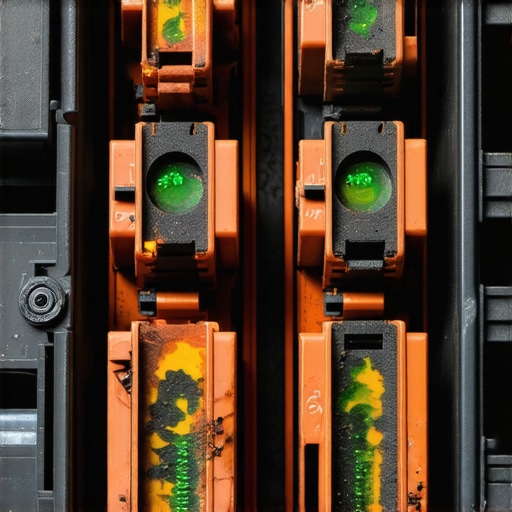 To diagnose this effectively, you must perform a ‘drag test’ using a spare fuse to feel if the terminal is tight. If the fuse or relay slides in with zero resistance, you have found your culprit. This is a common oversight during routine car service that leads to thousands of dollars in unnecessary parts replacement when the real issue is simply a loose metal tab.
Can a Glitchy Data Bus Stop Your Fuel Pump from Priming?
In the world of modern multiplexing, the fuel pump signal isn’t always a simple 12V wire from the ignition switch. In many 2018 and newer vehicles, the pump is activated via a high-speed CAN bus command sent from the Body Control Module to the Fuel Pump Driver Module. If another module on that same network—perhaps a faulty blind-spot monitor or a flooded transmission control module—is ‘screaming’ data onto the bus, it can drown out the ‘turn on’ command for the fuel pump. This creates a scenario where the wiring is perfect, the pump is new, and the fuses are fine, but the software handshake never occurs. To master this, you need to understand how to use a logic probe or an oscilloscope to see if the data lines are toggling correctly between 1.5 and 3.5 volts. Checking network health is now just as important as checking a fuse.
Stop Blindly Replacing Pumps and Check the Feedback Loop
Modern fuel systems often operate in a ‘closed-loop’ fashion using a Fuel Pressure Sensor (FPS) to provide real-time feedback to the engine control module. If the sensor’s internal calibration shifts—a condition known as ‘sensor skew’—it might report that the fuel rail pressure is at 70 PSI even when the engine is off. The ECM, believing the rail is already pressurized, will skip the initial ‘prime’ pulse to the pump to prevent over-pressurization. This creates a hard-start condition that feels exactly like a failing check valve or a blown fuse. If you find yourself struggling with these complex interactions, our guide on how to fix a car that dies while driving offers deeper insights into sensor-related stalls. Always cross-reference your scan tool’s pressure PIDs with a mechanical gauge to ensure the computer isn’t being lied to by a failing sensor that refuses to trigger a check engine light.
Why Jumping Your Fuel Relay Pins Often Leads to Expensive ECM Failures
When a technician suspects a ‘hidden fuse’ or a relay failure, the most common instinct is to bridge the load-side pins with a jumper wire to force the pump to run. While this confirms the pump’s mechanical health, it can be a catastrophic mistake for the auto repair process if the system utilizes a high-side driver controlled directly by the engine control module. If you accidentally bridge the constant power to the control circuit instead of the load circuit, you risk sending a massive amperage spike backward into the ECM’s sensitive microprocessors. This “back-feed” can instantly burn out the internal traces of the computer, turning a simple diagnostic task into a multi-thousand-dollar replacement. Experienced pros in vehicle diagnostics know that using a fused jumper lead—specifically one with a lower amperage than the circuit’s actual fuse—is the only way to safely bypass these electronic gates without risking the vehicle’s ‘brain.’
How Terminal Fretting Destroys Continuity Without Breaking the Wire
We often assume that if a connector is plugged in, it’s making a solid connection. However, a phenomenon known as fretting corrosion—tiny microscopic movements between two contact surfaces—creates a layer of oxidized metal that acts as an insulator. This is particularly prevalent in car service involving late-model vehicles where vibrations from high-mileage engines slowly degrade the fuel pump harness pins. Unlike a blown fuse, this resistance doesn’t stop the signal entirely but restricts it enough that the pump cannot generate the torque needed to overcome internal friction. 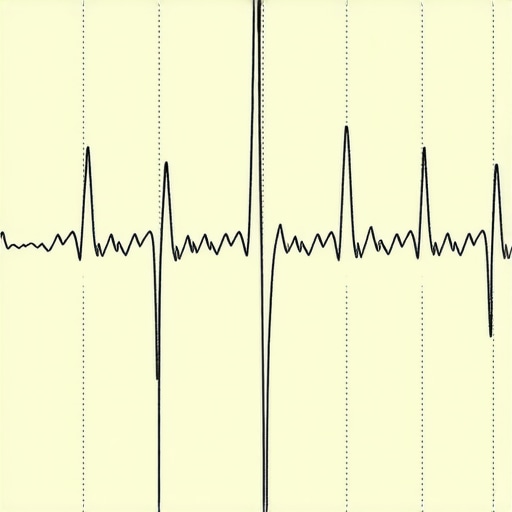 You might see 12 volts with your meter, but the moment the pump tries to pull 10 amps, the voltage collapses across that microscopic layer of rust. Identifying this requires a ‘pin drag test,’ where you manually check the tension of each female terminal to ensure it hasn’t stretched or oxidized beyond its functional limit.
Is Your Fuel Pump Signal Hiding Behind a High-Side Switch?
In traditional automotive electrical theory, we expect the switch or relay to be on the ‘hot’ side of the circuit, while the component is permanently grounded. But modern engineers have flipped the script. Many manufacturers now use high-side switching where the ECM provides the power while the pump is constantly grounded, or low-side switching where the pump has constant power and the ECM pulses the ground. If you are searching for a missing power signal when the computer is actually looking for a ground, you’ll be chasing your tail for hours. Professional standards from organizations like the National Institute for Automotive Service Excellence (ASE) suggest that verifying the ‘switching logic’ via a wiring diagram is the first step before even opening the fuse box. Mastering these polarities is what separates a parts-changer from a true diagnostic technician.
Ethanol Blends Can Corrode Your Fuel Signal Pins From the Inside Out
With the increasing prevalence of high-ethanol fuels, we are seeing a rise in ‘wicking corrosion.’ Ethanol is hygroscopic, meaning it pulls moisture from the air. If the fuel pump’s electrical seal is even slightly compromised, the fuel can actually travel up the copper strands inside the wiring harness via capillary action. This ‘wicking’ introduces moisture and corrosive elements directly into the pins of the fuel pump driver module, often located feet away from the tank. By the time the signal fails, the pins may look green and crusty, yet the external fuse remains perfectly healthy. This is a common reason for transmission-adjacent wiring failures as well, where fluids migrate through harnesses and create phantom shorts. Don’t let these invisible electrical gremlins defeat your diagnostic process. If you’ve encountered a case where a harness looked perfect but failed a load test, share your story below; your insights help the entire community refine their vehicle diagnostics toolkit and prevent the next ‘unsolvable’ no-start condition.
Expert Insights & Advanced Considerations
The Drag Test You’re Probably Skipping
Terminal tension is the most frequently overlooked failure point in professional auto repair. Even if a fuse appears intact and a relay clicks, a loose female terminal in the power distribution center can create high resistance that drops voltage under the actual load of a pump. Perform a pin drag test using a spare fuse to ensure the metal tabs provide adequate grip. This mechanical failure is a common reason why a pump might fail intermittently even after a standard car service. #IMAGE_PLACEHOLDER_E#
Ethanol is Wicking Your Wiring From the Tank Up
Capillary action is a silent diagnostic killer. High-ethanol fuels are hygroscopic and can migrate through the internal copper strands of a pump harness. This moisture eventually reaches the fuel pump driver module, causing ‘green’ oxidation on pins that otherwise look sealed. Knowing how to spot a bad ground wire before it kills your new battery is important, but checking for harness wicking is vital for long-term fuel system health. If you find corrosion inside a weather-packed connector, the harness has likely become a conduit for fluid.
Software Logic Trumps Mechanical Flow
On vehicles manufactured after 2018, the fuel pump signal is often a software handshake across a multiplexed network rather than a simple 12V wire. If a secondary module, such as a flooded transmission controller, begins ‘screaming’ data onto the CAN bus, it can drown out the ECM command to prime the fuel system. Utilizing the $20 scan tool that does more than the dealership rig to verify network communication health is now a mandatory step in high-level vehicle diagnostics. If the digital handshake fails, the physical pump will never receive power.
Where Pro Techs Go to Deepen Their Knowledge
SAE International Technical Papers: These documents provide the engineering foundation for understanding electrical connector reliability and the physics of fretting corrosion in automotive environments.
ASE Advanced Engine Performance (L1) Standards: The definitive guide for technicians mastering the intersection of software logic, pulse-width modulation, and complex fuel delivery systems.
Delphi Technologies Resource Center: An excellent repository for OEM technical bulletins that explain the nuances of modern returnless fuel systems and the proper load-testing procedures for driver modules.
Mastering the Modern Fuel Loop
True expertise in vehicle diagnostics requires a shift in perspective: stop looking for a broken part and start looking for a broken loop. A ‘hidden fuse’ is rarely a piece of plastic; it is more often a software conflict, a thermal fracture in a warm harness, or a loss of terminal tension. By integrating load testing and network analysis into your auto repair workflow, you eliminate the guesswork that leads to unnecessary pump replacements. If you are struggling with a persistent ‘no-start’ condition, we encourage you to explore the hidden world of vehicle diagnostics to refine your strategy. We invite you to contact us with your specific diagnostic cases or share your professional findings to help the community tackle these evolving electrical challenges.