Mastering the Diagnostics of Modern Fuel Delivery Systems
In the realm of high-performance automotive engineering, the fuel delivery system represents a critical intersection of electrical precision and mechanical endurance. As a seasoned technician, I have observed that failures in this system rarely present as binary events. Instead, they often manifest as subtle performance regressions that can baffle even experienced car owners. The fuel pump, which serves as the heart of this architecture, must maintain a specific flow rate and pressure to ensure the internal combustion engine operates within its designed stoichiometric parameters. When the pump begins to falter, the resulting lean air-fuel mixture leads to overheating, power loss, and potential long-term engine damage. Effective vehicle diagnostics require a methodical approach to differentiate between a failing pump, a clogged filter, or a faulty pressure regulator.
Run the 120-Second Diagnostic for Fuel Pressure Health
One of the most efficient ways to verify the integrity of your fuel system is a quick pressure check. Unlike modern digital scans that might only provide indirect data, a physical pressure test offers immediate confirmation of the pump’s mechanical output. To perform this, you will need access to the fuel rail’s Schrader valve—a common feature in most port-injection engines. By attaching a specialized gauge, you can observe if the system reaches its target PSI (pounds per square inch) instantly upon keying the ignition. Professional standards, such as those maintained by SAE International, emphasize that fuel pressure must remain stable not just at idle, but also under load. If you lack professional tools, you can even learn how to test your car fuel pressure using a tire gauge in emergency scenarios to verify if the pump is even engaging. A pump that fails to hold pressure after the engine is turned off often points to a faulty check valve, a niche insight that saves hours of guesswork during an auto repair session.
Can a Failing Fuel Pump Mimic Serious Transmission Slippage?
It is a common professional scenario: a driver complains of a ‘thudder’ or ‘slipping’ sensation at highway speeds, immediately assuming they need a car service for transmission repair. However, an expert eye looks at the fuel trims. When a fuel pump struggles to provide enough volume under high demand (such as 60-70 mph), the engine will stutter or hesitate. This rhythmic hesitation can feel remarkably similar to a transmission struggle. Before committing to expensive gearbox teardowns, verify the fuel delivery under load. If the engine dies during these maneuvers, you may need to investigate how to fix a car that dies while driving specifically focusing on the electrical supply to the pump. In many cases, the culprit is not even the pump itself but the hidden fuse that kills your fuel pump signal, often caused by excessive amperage draw from a worn motor.
Why You Should Always Listen for the Fuel Pump Prime Before Cranking
Experience teaches us that the simplest diagnostic tool is often our own hearing. In a quiet environment, turning the key to the ‘on’ position should trigger a distinct 2-second hum from the rear of the vehicle. This is the Electronic Control Module (ECM) priming the system. The absence of this sound, or a gritty, grinding noise, is a definitive indicator of impending mechanical seizure. For those looking to deepen their mechanical literacy, I recommend exploring our comprehensive guide on expert auto repair tips for 2025 to stay ahead of these subtle warning signs. Identifying these issues early prevents the high cost of towing and the frustration of being stranded due to a preventable component failure.
Stop Overlooking the Ground Wire During Fuel Pump Replacements
While most car owners focus on the pump itself, a seasoned technician knows that the delivery system is only as strong as its electrical return path. High resistance in a ground wire can throttle a fuel pump’s performance, causing it to run at a lower RPM and fail to meet high-load demands. This often leads to a perplexing situation where the pump tests ‘good’ in a driveway but fails on a steep incline. If you suspect an electrical bottleneck, learning how to identify a bad ground wire without a multimeter can be a game-changer. A poor connection often manifests as a voltage drop that generates heat, eventually melting connectors or blowing fuses. This is frequently linked to broader issues like the hidden electrical drain killing your battery while the car is parked, as corroded grounds can cause various modules to stay ‘awake’ or hunt for a reference signal, further stressing the entire vehicle’s charging system.
Is Your Engine Misfire Actually a Fuel Delivery Ghost?
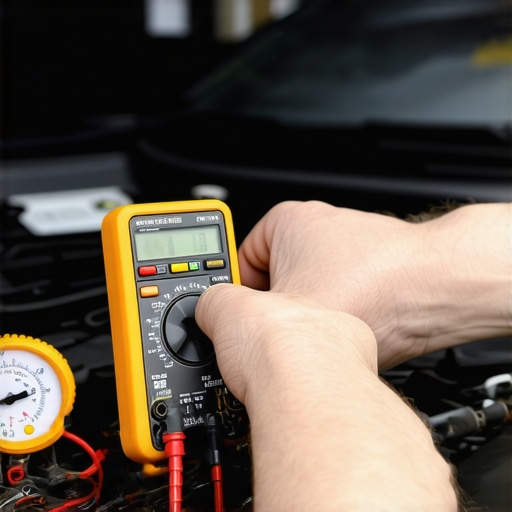
A common mistake in modern auto repair is replacing ignition coils and spark plugs the moment a misfire occurs. However, a lean misfire—caused by a lack of fuel rather than a lack of spark—presents identical symptoms on a standard OBD-II scanner. To differentiate these, you need to look at the long-term fuel trims. If the computer is adding 20% or more fuel to compensate, the issue is likely a clogged injector or a weak pump. You can often perform a preliminary check by learning how to diagnose a misfire without a code reader using a technique called ‘cylinder drop testing.’ According to technical standards from the National Highway Traffic Safety Administration (NHTSA), fuel delivery integrity is paramount not just for performance, but for preventing catastrophic engine stalls in high-speed traffic. If you find your car struggling at mid-range speeds, it might be worth investigating why your car stutters at 40mph and it is not the spark plugs, which frequently points back to the fuel pressure regulator failing to keep up with the engine’s volumetric efficiency.
The Tiny Sensor That Trashes Gas Mileage Without a Warning Light
The relationship between the fuel pump and the oxygen sensor is a feedback loop that determines your daily operating costs. An aging O2 sensor might not be ‘dead’ enough to trigger a Check Engine Light, but it can become ‘lazy,’ responding slowly to changes in exhaust oxygen content. This lag causes the ECM to over-deliver fuel, resulting in poor gas mileage and a carbon-fouled engine. If you suspect your efficiency has plummeted, check the one sensor that ruins your gas mileage without triggering a warning light. Furthermore, understanding how to tell if your oxygen sensor is actually bad requires more than a simple visual inspection; it requires monitoring live data. I always recommend using the $20 scan tool that does more than the dealership rig to graph the sensor’s voltage in real-time. If the wave pattern is flat-lined or erratic, your fuel pump is working harder than it needs to, essentially throwing money out of the tailpipe. Have you noticed a sudden drop in your fuel economy? Share your symptoms in the comments below, or read our guide on diagnosing catalytic converter issues to see if your fuel system is causing downstream damage.
Why Modern Cars Ditched the Return Line for Pulse Width Modulation
The evolution of fuel management has moved away from the traditional mechanical regulator towards high-precision Pulse Width Modulation (PWM). In older configurations, the fuel pump ran at a constant maximum speed, with a return line carrying excess fuel back to the tank. Modern systems, however, employ a Fuel Pump Driver Module (FPDM) that receives instructions from the ECM to vary the pump’s speed based on real-time demand. This transition significantly reduces the electrical load on the vehicle’s alternator and extends the life of the pump by preventing unnecessary high-speed operation. However, when the PWM signal becomes corrupted due to electromagnetic interference or a failing driver module, the vehicle may experience intermittent stalling or a strange ‘surging’ sensation that feels like a vacuum leak. Identifying these issues requires an oscilloscope or a high-end scan tool capable of reading the duty cycle percentage.
Ethanol Blends are Secretly Eating Your Fuel Line Seals
While modern engines are built to handle various fuel grades, owners of classic or early-2000s vehicles face a growing threat from ethanol-blended gasoline. Ethanol is highly hygroscopic, meaning it actively attracts moisture from the atmosphere. This moisture can lead to phase separation in the fuel tank, resulting in a layer of corrosive water-ethanol mix at the bottom—exactly where the pump intake is located. Over time, this mixture degrades the nitrile rubber components used in older fuel systems, leading to internal pressure leaks or ‘black goo’ that eventually clogs the fuel injectors. If you notice a drop in performance after your car has sat for a few weeks, you might be dealing with the chemical breakdown of your fuel supply rather than a mechanical failure of the pump hardware itself.
Can a Clogged Fuel Filter Cause Your Engine to Overheat?
The short answer is a resounding yes. A restricted fuel filter reduces the volume of fuel reaching the combustion chamber, which forces the engine to run lean. Because fuel also acts as a cooling agent during the intake stroke, a lean mixture significantly increases combustion temperatures. According to the Automotive Service Excellence (ASE) L1 Advanced Engine Performance guidelines, these elevated temperatures can lead to pre-ignition or ‘knock,’ which eventually damages the piston crowns and cylinder walls. If you find your temperature gauge climbing only during highway acceleration, it is a classic sign that your fuel system cannot maintain the volume required for high-load cooling. Before you flush your radiator, verify that your fuel filter isn’t acting as a bottleneck for your engine’s thermal stability.
Heat Soak is the Silent Killer of In-Tank Fuel Pumps
A common mistake among drivers is the habit of running the fuel tank down to the ‘E’ light. In-tank fuel pumps are submerged for a reason: the gasoline surrounding the motor acts as a heat sink. When the fuel level is low, the pump motor is exposed to air and loses its primary cooling source. During a ‘heat soak’ event—such as sitting in gridlock traffic on a blistering summer afternoon—the internal windings of the pump can expand, increasing resistance and decreasing output. This thermal stress is cumulative. A pump that survives one heat wave may fail three months later during a cold snap because its internal tolerances have been permanently compromised. If you’ve ever experienced a car that won’t start after a short trip to the store but fires up perfectly after cooling down for an hour, your fuel pump’s internal thermal protection is likely triggering an emergency shutdown.
The Dangers of Neglected Fuel Tank Sediment and Baffle Movement
Over decades of service, every fuel tank accumulates a layer of fine sediment and microscopic debris. While the primary fuel strainer—often called the ‘sock’—is designed to catch these particles, aggressive cornering or steep inclines can stir this sludge into a suspension. In older vehicles, the internal baffles designed to keep fuel near the pickup can sometimes break loose due to corrosion, causing the fuel to slosh away from the pump during hard braking or acceleration. This momentarily starves the system of pressure, creating a ‘hiccup’ in power that many drivers mistake for a spark plug misfire. If you suspect your tank is contaminated, the only permanent solution is to drop the tank for a manual cleaning, a process that is often overlooked in standard car service intervals but remains vital for long-term reliability. Have you experienced stalling during sharp turns? It might be time to look deeper into the physical condition of your fuel reservoir.
Stop Relying on Static Pressure Readings
While a digital gauge provides a snapshot of pressure, it fails to capture the ‘noise’ within the electrical circuit of the pump motor. For the elite diagnostic technician, a lab scope is the weapon of choice to perform a current ramp test. By observing the amperage draw over time, one can identify individual worn commutator segments or a binding pump impeller before it leads to a total stall. This level of vehicle diagnostics ensures that we are not just treating symptoms but predicting component expiration. Current ramping allows us to see the internal health of the motor windings without ever cracking the fuel lines open.
The Camshaft Follower Failure Every GDI Owner Should Fear
The modern shift toward Gasoline Direct Injection (GDI) has introduced the High-Pressure Fuel Pump (HPFP), a mechanical beast driven directly by the engine’s camshaft. According to technical documentation from Robert Bosch GmbH, the tolerances within these pumps are measured in microns, making them incredibly sensitive to fuel lubrication quality and oil maintenance. If the cam follower—the interface between the lobe and the pump—wears down due to poor oil film strength, it can send metal shrapnel through the cylinder head. This turns a simple fuel delivery issue into a catastrophic mechanical failure. Professional auto repair strategies now include regular inspection of these followers every 50,000 miles to prevent a total engine teardown.
Why does your engine stumble only during a warm restart?
This phenomenon, often dismissed as ‘bad gas,’ is frequently a symptom of vapor lock in modern returnless fuel systems. In older systems, fuel was constantly circulated, keeping it cool. In a returnless setup, the fuel sits stagnant in the rail after the engine is shut off. Heat from the block soaks into the rail, causing the fuel to boil and turn into vapor. When you attempt a restart, the injectors spray gas vapor instead of liquid, causing a lean stumble or a ‘no-start’ condition. Advanced car service techniques involve checking the check valve in the pump assembly to ensure the system remains pressurized after shutdown, which raises the boiling point of the fuel and prevents this thermal transition.
Reset Your Adaptive Strategy or Risk a Comeback
One of the most common mistakes after replacing a weak fuel pump is failing to clear the Keep Alive Memory (KAM) or reset the Fuel Trim Adaptations. Your car’s computer is highly intelligent; if it has spent months compensating for a weak pump by staying in ‘rich’ mode, it will continue to over-fuel even after the new pump is installed. This results in a rich misfire and potential damage to the catalytic converter. Using the $20 scan tool that does more than the dealership rig, you must perform a ‘reset adaptives’ command. This forces the ECM to start with a clean slate and relearn the fueling requirements based on the healthy output of the new hardware. Have you ever replaced a part only to have the car run worse? It is likely the adaptive memory fighting the new reality. Tell us about your most frustrating ‘ghost in the machine’ diagnostic experience in the comments below.
Expert Insights & Advanced Considerations
Stop Killing Your HPFP During Filter Changes
A critical mistake in GDI maintenance is failing to prime the low-pressure side before the first start after a component replacement. Running a High-Pressure Fuel Pump (HPFP) dry for even three seconds can cause microscopic scoring on the internal piston. Always use a bi-directional scan tool to run the lift pump for 30 seconds before firing the engine to ensure the mechanical pump is fully lubricated. If you find yourself stranded after a botched DIY attempt, you may need to learn how to get your car out of limp mode without a tow truck to reset the pressure safety defaults.
Why Your Multimeter Lies to You About Fuel Signals
In a Pulse Width Modulation (PWM) environment, a standard multimeter averages the voltage, giving you a reading of 6-9V that looks stable. However, a lab scope might reveal a jagged, noisy signal or a collapsed ground that prevents the pump from reaching peak RPM. To master high-level vehicle diagnostics, you must visualize the square wave. A noisy signal often points to EMI (Electromagnetic Interference) from a failing alternator, another niche diagnostic link often missed by general shops.
High Octane is a Band-Aid for Lean Conditions
While many drivers use premium fuel to mask engine pinging, an expert knows this is frequently hiding a failing pump. The higher octane prevents pre-detonation caused by a lean air-fuel ratio, but it won’t stop the internal cylinder temperatures from climbing to dangerous levels. If your vehicle only runs smoothly on 93 octane, you likely have a delivery volume issue rather than an ignition problem. You can often confirm this by learning how to test a fuel injector with a long screwdriver to listen for the consistent mechanical ‘clack’ of an injector struggling with low pressure.
Where the Pros Go to Verify Data
SAE International Technical Papers
This is the gold standard for automotive engineering specifications. Use their repository to find exact flow-rate requirements for specific injector designs when troubleshooting complex flow imbalances that a standard scan tool cannot detect.
Bosch Mobility Solutions Portals
As the primary OEM for many modern fuel systems, their documentation on GDI pressure thresholds is indispensable for technicians dealing with European or domestic high-performance builds where precision is measured in microns.
NHTSA TSB Database
Before you tear apart a fuel rail, check for Technical Service Bulletins. Many ‘ghost’ fuel delivery issues are actually software calibration errors or known wiring harness defects that the manufacturer has already documented. This is a core step in any professional auto repair workflow.
The Real Truth About Fuel Reliability
Modern fuel delivery is no longer a simple mechanical task; it is an intricate dance of electrical duty cycles and high-pressure metallurgy. To keep your vehicle at peak performance, you must look beyond the simple pump replacement and analyze the system as a whole. Integrating advanced vehicle diagnostics with a proactive maintenance mindset—knowing when to seek a specialized car service—is what separates a hobbyist from an expert. If you are currently battling a performance stumble that refuses to throw a code, reach out through our contact page or share your fuel trim data in the comments below for an expert peer review.