Modern internal combustion engines are precision instruments where the ratio of air to fuel must be maintained with surgical accuracy. A variance of even a few pounds per square inch (PSI) can lead to catastrophic performance degradation or a complete failure to ignite. While professional technicians rely on dedicated fuel pressure test kits, there are specific scenarios in the field where an expert must improvise using the tools at hand. Understanding the physics of the Schrader valve—the same interface used in pneumatic tires—allows for a temporary diagnostic bridge using a high-quality tire pressure gauge.
The Mechanics of Fuel Delivery and the Criticality of the Schrader Valve
The fuel rail in a multi-port fuel injection system acts as a pressurized reservoir for the injectors. Most manufacturers include a service port that is identical in thread pitch and pin configuration to a standard tire valve. This design choice is intended for professional gauges, but it creates a unique opportunity for emergency triage. When you are trying to determine if a car feels sluggish due to a 15-dollar filter or a failing pump, knowing the exact pressure at the rail is the first step in a logical diagnostic path.
Can a standard tire gauge provide the accuracy needed for modern EFI systems?
Technically, an analog tire gauge functions on the same Bourdon tube or piston-spring principle as a fuel gauge. However, the internal seals in a standard tire tool are typically made of rubber or neoprene, which may degrade when exposed to the aromatic hydrocarbons and ethanol found in modern gasoline. For a one-time diagnostic check to see if the pump is even operational, it serves the purpose, but it should never be used for long-term monitoring. If your readings are consistently low, you might be dealing with a hidden filter killing your fuel economy or a regulator that has lost its tension.
Why Chemical Compatibility Matters More Than You Think
Professional-grade equipment uses Viton seals specifically designed to withstand the corrosive nature of fuel. Using a tire gauge is a ‘MacGyver’ tactic that requires immediate cleaning of the tool afterward to prevent the seals from swelling or melting. Expert-level vehicle diagnostics require an awareness of these material limitations. According to technical safety standards from SAE International, any tool introduced to the fuel system must be verified for spark resistance and chemical stability to avoid localized fires or system contamination.
Master the Process of Safely Extracting a Field Reading
To perform this test, first, locate the Schrader valve on the fuel rail. It often looks like a small brass nipple with a plastic cap. Before connecting your gauge, you must relieve the residual pressure to avoid a spray of fuel. Once the gauge is firmly pressed onto the valve, cycle the ignition to the ‘On’ position without cranking the engine to prime the pump. If you find the pressure is absent, you may need to test the fuel pump using a screwdriver and a friend to listen for motor activation. If you find that your pressure is within spec but the car still hesitates, you might want to explore our guide on decoding transmission failures to see if the issue lies elsewhere in the drivetrain.
This method is a high-level diagnostic shortcut, not a replacement for specialized auto repair techniques. Always prioritize safety by keeping a fire extinguisher nearby and wearing eye protection, as fuel under 40-60 PSI can easily cause injury if a seal fails during your improvised test.
While a static reading provides a snapshot of the system at rest, the real story is told during the leak-down phase. An expert diagnostic path doesn’t just stop at seeing the needle move; it analyzes how the pressure behaves once the fuel pump stops priming. If you find the pressure holds steady, your check valves and injector seats are likely intact. However, many technicians overlook the importance of ‘rest pressure’—the ability of the system to maintain a specific PSI over a fifteen-minute window to prevent fuel vaporization in the lines. 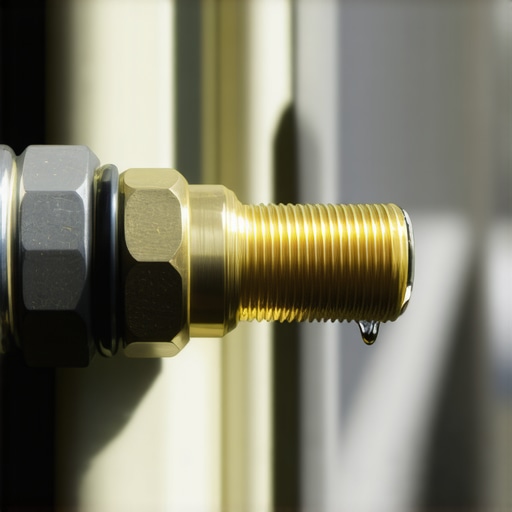
Does your pressure drop immediately after the pump cycles off?
If the needle on your improvised gauge plummets the moment the ignition is cut, you are looking at a loss of system integrity that can manifest as long cranking times or a ‘hard start’ condition. In this scenario, you must determine if the leak is external or internal. An internal leak often points to a ruptured fuel pressure regulator diaphragm or a weeping injector. To narrow this down, you can test a fuel injector with a long screwdriver to listen for the distinct rhythmic clicking that signifies mechanical operation versus a stuck-open pintle. If the injectors sound healthy, the culprit is likely the check valve located inside the fuel pump assembly itself.
Diagnose the Hidden Leak-Down that Kills Your Cold Starts
When a vehicle struggles to start after sitting for an hour but fires up perfectly when hot, the fuel system is likely losing its prime. This is where the one sensor that ruins your gas mileage without triggering a warning light—the coolant temperature sensor—can sometimes be falsely blamed. By using the tire gauge method, you can confirm that the ‘rest pressure’ is falling below the manufacturer’s threshold. According to technical specifications from Delphi Technologies, most modern EFI systems should retain at least 20-30 PSI for twenty minutes after shutdown to ensure a clean immediate restart. If your field test shows a drop to zero in under five minutes, you have confirmed a mechanical failure that no software update can fix.
Separate Electrical Gremlins from Mechanical Pump Failure
Sometimes the gauge reads zero not because the pump is dead, but because it isn’t receiving the command to fire. Before you condemn the hardware, you must verify the electrical side of the equation. If you are stuck on the shoulder, you might need to how to diagnose a misfire without a code reader by checking for spark and fuel delivery simultaneously. A lack of pressure often leads to a lean misfire, which can cause the computer to throw various codes. Understanding why your check engine light stays on after you fixed the problem is often about clearing these ‘ghost’ codes that were triggered during your low-pressure events. Have you ever been stranded and forced to use a creative tool to get back on the road? Share your best field-fix stories in the comments below, or check out our latest guide to unlocking your car’s potential for more advanced maintenance insights.
Go Beyond the Idle to Stress-Test Your Fuel Rail Under Load
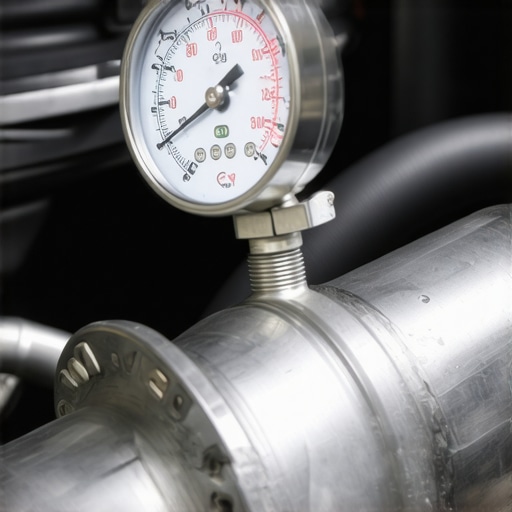
A static fuel pressure reading at the rail while the engine is idling tells only half the story. To truly verify the health of the fuel pump and the integrity of the delivery lines, you must observe how the system reacts under load. If you are using a tire gauge for this, it becomes a two-person operation: one to monitor the gauge and another to snap the throttle. In a healthy system, the pressure should hold steady or even slightly increase as the vacuum-operated regulator compensates for the sudden drop in manifold vacuum. If the needle on your gauge dips significantly when you blip the throttle, your pump might be able to provide pressure but lacks the volume—the ‘gallons per hour’ (GPH)—required to sustain the combustion cycle during acceleration.
Can an over-pressurized fuel rail cause more damage than a failing pump?
While most enthusiasts worry about low pressure, an over-pressurized system is a silent killer of components. A blocked return line or a stuck-closed pressure regulator can spike the PSI far beyond the design limits of the fuel injectors. When this happens, the injector pintles may fail to seat correctly, or the spray pattern may become so distorted that it ‘washes’ the cylinder walls of oil, leading to premature ring wear. If your improvised gauge shows a reading 15-20 PSI above the manufacturer’s spec, you are likely dealing with a restriction in the return side of the loop. According to technical documentation from Bosch Mobility Solutions, even a minor deviation in operating pressure can fundamentally alter the atomization efficiency of the fuel, leading to soot buildup and catalytic converter failure.
Bridge the Gap Between Mechanical Readings and Digital Fuel Trims
To truly reach an expert level of diagnostics, you must correlate the physical PSI on your tire gauge with the data coming from the Engine Control Unit (ECU). When a fuel pump begins to tire, the ECU will attempt to compensate for the lower pressure by increasing the ‘injector pulse width’—essentially holding the injectors open longer to get the required fuel into the chamber. This shows up as a positive percentage in your Long-Term Fuel Trims (LTFT). If your gauge shows 30 PSI (when it should be 45) and your scan tool shows an LTFT of +20%, you have confirmed a mechanical lean condition. If you haven’t yet mastered the digital side of things, it is worth learning how to diagnose a misfire without a code reader to sharpen your tactile troubleshooting skills. This synergy between physical tools and digital data is what separates a parts-changer from a master technician.
Why Sizzling Pavement Changes the Math on Your Pressure Readings
Ambient temperature plays a massive, often overlooked role in fuel system physics. On a blistering summer day, fuel inside the rail can reach temperatures that approach its boiling point, especially once the engine is shut off and ‘heat soak’ sets in. This is why many modern vehicles utilize a ‘returnless’ fuel system design, which minimizes the amount of heat the fuel absorbs by keeping it in the tank longer. If you are testing on a hot day, a tire gauge might show fluctuating or ‘fluttering’ needles. This isn’t necessarily a sign of a bad pump, but rather the early stages of vapor lock, where fuel is turning into gas bubbles within the rail. Understanding these nuances helps you avoid misdiagnosing a perfectly functional pump during a heatwave. If the heat is making your car act up, you might also want to check if your car feels sluggish due to a 15-dollar filter before assuming the pump has succumbed to the temperature.
Returnless systems present a unique challenge for the field technician because they lack a traditional vacuum regulator on the rail. Instead, the ECU controls the pump speed via a Pulse Width Modulation (PWM) signal based on a pressure sensor located on the rail itself. In these systems, the pressure should remain remarkably constant regardless of engine load, as the computer is constantly adjusting the pump’s output in real-time. If you see significant variance on your gauge in a returnless system, you are likely looking at a failing fuel pressure sensor or a degraded pump driver module rather than a simple mechanical leak. This brings us to the complexity of the internal pulsation damper, a small diaphragm located on the rail that exists solely to soak up the ‘hammer’ effect caused by injectors opening and closing rapidly…
When this tiny diaphragm fails, you might notice a strange vibrating hum from the fuel rail or even premature wear on the injector seals. If your tire gauge needle bounces so fast it becomes a blur, you have likely identified a damper that can no longer manage the harmonic frequencies of the system. This subtle failure often mimics a rough idle, but the ‘fingerprint’ on the gauge is unmistakable to a seasoned eye.
How does excessive fuel aeration impact your field diagnosis?
When air enters the fuel loop—whether through a pinhole leak on the suction side or through extreme turbulence—it changes the compressibility of the fluid. Fuel, being a liquid, is largely incompressible, which allows the pump to build pressure almost instantly. Air, however, is a gas that squeezes under load. If your field test reveals a ‘spongy’ response when you cycle the key, or if the pressure takes three or four cycles to reach operating spec, you aren’t just fighting a weak pump. You are likely fighting aeration that could eventually lead to cavitation, a process where microscopic bubbles implode against the pump’s internal vanes with enough force to pit the metal.
The GDI Danger Zone where Tire Gauges Turn Lethal
Before you attempt to use a tire gauge on any vehicle manufactured in the last decade, you must verify if it utilizes Gasoline Direct Injection (GDI). While port injection systems operate in the 40-70 PSI range—safely within the limits of a standard gauge—the high-pressure side of a GDI system can exceed 2,000 PSI. Attempting to tap into a high-pressure GDI rail with an improvised tool is not just an error; it is a critical safety risk that will result in immediate tool failure and potential fuel injection injury. For these systems, your field diagnosis must strictly limit itself to the low-pressure ‘lift pump’ side located before the mechanical high-pressure pump.  According to technical safety briefs from Stanadyne, the specialized seals and heavy-duty rails required for GDI are under such extreme tension that even a minor breach can lead to atomized fuel clouds that are highly flammable.
Kill the Cavitation Before It Destroys Your New Pump
A pump that produces pressure but lacks volume is like a heart that beats but doesn’t move enough blood. If you’ve confirmed that your PSI is correct but the vehicle still stumbles during wide-open throttle transitions, the problem is likely ‘starvation’ caused by a restricted inlet strainer. This ‘sock’ filter inside the tank is the most neglected component in the fuel system. When it clogs, the pump has to work twice as hard to pull fuel through the blockage, creating a vacuum that lowers the boiling point of the gasoline. This leads to the aforementioned cavitation, which can destroy a brand-new pump in a matter of weeks. If you suspect volume is the issue, you may need to test the fuel pump using a screwdriver and a friend to verify the motor’s ‘voice’ changes under stress, indicating it is laboring against a restriction. Are you ready to stop guessing and start diagnosing like a master? Sign up for our exclusive technical newsletter to receive deep-dive breakdowns of complex EFI failures and other auto repair techniques that the dealerships won’t tell you.
Expert Insights & Advanced Considerations
Thermal Variance Isn’t a Failed Component
When you are performing a fuel pressure test in extreme temperatures, remember that fuel density changes with heat. A reading that appears slightly out of spec on a 100-degree afternoon might normalize once the engine bay cools. This is especially true in returnless systems where the fuel lacks a cooling loop back to the tank. Before you assume the pump is failing, consider the environmental variables that affect liquid expansion. If the car still feels sluggish, you might want to see why your car feels sluggish due to a 15-dollar filter before pulling the tank.
PWM Signals Mask Mechanical Weakness
Modern Engine Control Units (ECUs) are incredibly good at compensating for a dying fuel pump by increasing the duty cycle. You might see a perfect 50 PSI on your gauge, but the pump is actually running at 90% capacity just to maintain that level. This ‘hidden’ failure is why a manual gauge must be paired with digital data. An expert technician uses the 20-dollar scan tool that does more than the dealership rig to check the Fuel Pump Driver Module (FPDM) percentages alongside the physical pressure reading.
The Pulsation Damper’s Hidden Signature
If your gauge needle vibrates rapidly during a field diagnosis, do not immediately blame the pump motor. Often, the internal pulsation damper has ruptured. This component is designed to absorb the pressure waves created by the injectors opening and closing. When it fails, it creates hydraulic ‘noise’ that can interfere with the ECU’s pressure sensor readings, leading to erratic idling. This is one of those hidden world of vehicle diagnostics secrets that separates master mechanics from novices.
Curated Expert Resources
ASE Advanced Engine Performance (L1) Study Guide
This resource provides the high-level theoretical framework required to understand closed-loop fuel control. It moves beyond simple PSI readings and dives into the chemistry of combustion and the electronics of injector timing.
Delphi Technologies Technical Portal
For those seeking manufacturer-specific tolerances, Delphi offers deep-dive technical bulletins on fuel delivery systems. It is an essential resource for verifying ‘rest pressure’ durations and GPH (gallons per hour) flow rates for various vehicle platforms.
Bosch Mobility Solutions Fuel Injection Database
Bosch is the gold standard for EFI hardware. Their technical documentation explains the physics of atomization and how subtle pressure drops can lead to carbon buildup and long-term engine damage. If you need to fix a car that will not rev past 3000 RPM, this database is where you start your research.
#IMAGE_PLACEHOLDER_E#
Final Expert Perspective
Successfully performing a fuel pressure test using improvised tools like a tire gauge is a testament to a technician’s resourcefulness, but it is only the starting point of a professional diagnostic journey. True expertise lies in the ability to synthesize the physical PSI with digital fuel trims and an understanding of fluid dynamics. Whether you are dealing with a simple clog or a complex PWM electrical fault, always verify the mechanical integrity before chasing electronic ghosts. If you have encountered a fuel system mystery that defied standard logic, or if you have perfected your own auto repair techniques for field-testing, we invite you to share your findings with our community of professionals below.