Why Physical Feedback Trumps Digital Scanners in Modern Auto Repair
In the era of high-speed CAN bus systems and complex vehicle diagnostics, it is easy to overlook the fundamental mechanical properties of internal combustion engines. While an OBD-II scanner can reveal a P0300 code, it often fails to distinguish between an electrical circuit failure and a mechanical pintle seizure. Professional technicians understand that the hidden world of vehicle diagnostics often requires a tactile approach. Using a long screwdriver as a makeshift stethoscope is not a ‘backyard’ hack; it is an application of acoustic wave propagation through solid mediums to verify the solenoid’s operational integrity. This method allows you to isolate the rapid clicking of a firing injector from the ambient mechanical noise of the valvetrain, providing immediate confirmation of whether an injector is receiving and acting upon its pulse width modulation signal.
Is Your Engine Misfiring Due to a Dead Solenoid or a Clogged Tip?
One of the most common dilemmas in a car service environment is determining if a misfire is caused by a complete component failure or a degradation in spray pattern. When you place the tip of a long screwdriver firmly against the body of the injector and press your ear against the handle, you are listening for a crisp, rhythmic ‘clacking.’ If you hear a rhythmic pulse, the solenoid is likely functional, suggesting that any misfire might be due to carbon buildup on the tip or a lack of fuel pressure. Conversely, a silent injector indicates a dead solenoid or a break in the wiring harness. This level of insight helps you diagnose a misfire without a code reader by relying on your senses and mechanical logic. [image_placeholder_1]
Acoustic Verification Prevents Costly Parts-Cannon Tactics
The primary goal of expert auto repair is to achieve a first-time fix without unnecessarily replacing expensive components. In many cases, a technician might be tempted to replace a whole set of injectors when only one is failing. By using the acoustic method, you can precisely identify the outlier. This process is documented in various engineering studies, such as those found in the SAE International Technical Papers, which highlight how vibration signatures can reveal the internal state of high-pressure fluid components. If you find that the fuel system is healthy but the vehicle still exhibits strange behavior under load, you may need to look deeper into the drivetrain, perhaps by reviewing transmission failures decoded to rule out torque converter issues.
Precision Placement on the Fuel Rail
To perform this test effectively, ensure the screwdriver is long enough to reach past the intake manifold without contacting moving parts like the cooling fan or serpentine belt. The tip must make solid contact with the metal casing of the injector, as plastic covers can dampen the high-frequency vibrations needed for a clear diagnosis. This manual vehicle diagnostics technique provides a baseline that even the most expensive transmission and engine scanners cannot replicate: the raw, unfiltered proof of mechanical movement. By mastering these old-school diagnostic arts, you elevate your professional capabilities and ensure every repair is backed by empirical evidence.
Don’t Let a Tiny Air Leak Sabotage Your Fuel Trim
Moving beyond the fuel delivery system, the physical interaction between atmospheric pressure and engine vacuum remains a primary source of diagnostic confusion. A digital scanner might report an ‘unmetered air’ condition through soaring long-term fuel trims, yet it cannot pinpoint the hairline fracture in a plastic intake plenum or a degraded throttle body gasket. To avoid the frustration of replacing sensors unnecessarily, masters of auto repair often employ the ‘carburetor cleaner’ method or a simple soapy water solution. This tactile approach identifies exactly where the engine is pulling in extra air, causing that characteristic surge or ‘hunting’ sensation at stoplights. If you are tired of chasing lean codes, learning the 15-way to find a vacuum leak without a smoke machine can save you hours of guesswork. By observing the immediate change in RPM when a combustible fluid is introduced to a suspected leak site, you gain empirical proof that no software algorithm can provide. 
Can Your Multimeter Lie to You During a High-Load Electrical Test?
One of the most nuanced aspects of vehicle diagnostics involves electrical grounding and voltage drops. A common mistake is testing a circuit while it is static; a wire might show a perfect 12.6 volts when the car is off, but fail miserably under the load of a starter motor or headlights. Professional standards, such as those established by the National Institute for Automotive Service Excellence (ASE), emphasize that ‘voltage drop’ testing is the only way to verify the integrity of a high-current circuit. If you notice that your headlights dim when you turn the steering wheel, you aren’t just seeing a battery issue; you are likely witnessing a grounding point that has succumbed to hidden corrosion. These subtle physical clues are the ‘tells’ of a failing electrical system that a simple code scan might completely ignore.
When Your Transmission Thinks for Itself
Physical feedback is perhaps most critical when evaluating a modern transmission. While the TCM (Transmission Control Module) manages shift points via solenoids, the mechanical reality of fluid pressure and friction plates often tells a different story. A hesitation during gear changes isn’t always a software glitch; it can be a symptom of fluid cavitation or a restricted internal filter. Technicians often look for the hidden reason your automatic transmission hesitates on hills, which often relates to the physical level and temperature of the ATF rather than a electronic failure. Experience teaches us that the way a vehicle ‘creeps’ forward when you release the brake in ‘Drive’ provides more information about the torque converter’s health than a data stream ever could. This deep mechanical intuition is what separates a true expert from a parts-changer. Have you ever encountered a mechanical ‘ghost’ that a scanner simply couldn’t see? We would love to hear your most challenging diagnostic stories in the comments below or share this guide with a fellow DIYer to help them stop their engine from hunting at idle effectively.
Why Your Brake Pedal Tells a Better Story Than the ABS Module
The interaction between the driver’s foot and the master cylinder is a high-fidelity communication channel that a vehicle’s computer often ignores. While an ABS sensor is designed to detect wheel speed differentials, it remains blissfully unaware of a ‘spongy’ sensation caused by moisture-contaminated fluid or internal seal bypass. This is where professional car service transitions from simple data analysis to high-level physical intuition. When you perform a brake bleed, you aren’t just moving fluid; you are verifying the hydraulic integrity of the entire system. According to the SAE J1703 standard, the boiling point of motor vehicle brake fluid significantly drops as it absorbs atmospheric moisture, leading to a compressible ‘vapor lock’ that no scanner can predict. If you have noticed your stopping power diminishing during spirited driving or under heavy loads, you might be experiencing thermal fade, a condition that demands a hands-on inspection of the friction surfaces rather than a software update. 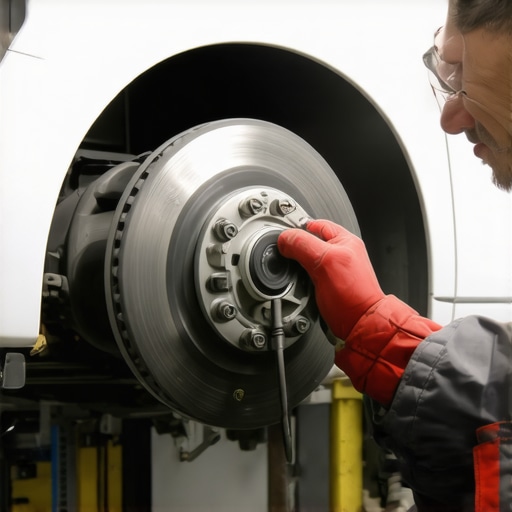
Catching Cooling System Gremlins Before the Temp Gauge Moves
The cooling system relies on a delicate balance of pressure and thermal exchange that can be monitored through simple touch. A technician’s hand placed carefully on the upper and lower radiator hoses can confirm thermostat operation long before the dashboard needle climbs into the red. If the upper hose is searingly hot while the lower remains lukewarm, you have likely identified a flow restriction or a failing water pump impeller that a coolant temperature sensor might misinterpret as a normal operating variable. This type of manual vehicle diagnostics is essential for preventing the ‘overheat-and-warp’ catastrophe common in modern aluminum cylinder heads. By physically squeezing the hoses, you can also feel for the internal ‘crunch’ of degraded rubber or the lack of pressure that indicates a failing radiator cap seal.
Does a Spongy Brake Pedal Always Mean Air in the Lines?
While air is the usual suspect, advanced technicians also look for mechanical ‘give’ within the assembly. A seized caliper slide pin or a poorly adjusted drum brake can create excess pedal travel that mimics the elastic feel of air bubbles. By using a brake pressure gauge at each corner, you can distinguish between a hydraulic failure and mechanical deflection. This level of granular detail is vital when performing a complex transmission or powertrain overhaul where every subsystem must be perfectly synchronized to ensure safety and performance.
Feel the Rhythm of a Failing Drivetrain
Drivetrain harmonics are the silent language of mechanical wear. When a U-joint or a constant velocity (CV) joint begins to fail, it does not always scream; sometimes it just hums at specific speeds, a phenomenon known as second-order vibration. To accurately diagnose these issues, you must drive the vehicle and ‘listen’ through the seat of your pants. A vibration that disappears when you lift off the throttle often points to a worn differential pinion or a transmission output shaft bearing, whereas a constant shudder suggests an unbalanced tire or a bent rim. If you’re looking to sharpen your diagnostic eye, check out our guide on how to diagnose a bad wheel bearing by ear to master the art of acoustic troubleshooting.
The Subtle Shiver of a Misfiring Torque Converter
Modern auto repair often involves differentiating between engine-related stumbles and drivetrain-related shudders. A torque converter clutch (TCC) that is struggling to lock up can create a ‘rumble strip’ sensation that many drivers mistake for an engine misfire. By monitoring the slip-ratio data while simultaneously feeling for the shudder, you can determine if the issue is hydraulic or electronic. This physical feedback is often influenced by the viscosity and health of the transmission fluid, which degrades over time due to thermal cycling. If you suspect your gears aren’t engaging as smoothly as they should, exploring the physical properties of your ATF is a necessary first step.
How Your Steering Rack Whispers Its Final Warnings
In the pursuit of precision auto repair, the steering system remains one of the most communicative yet misunderstood components. While a scan tool might monitor the steering angle sensor for stability control, it cannot feel the subtle ‘notchiness’ that indicates a failing pinion bearing or internal spool valve leakage. When you experience a momentary loss of power assist during a rapid lane change, you are feeling a hydraulic bypass that software often ignores. This tactile feedback is the first indicator that the rack and pinion assembly is succumbing to internal seal wear. By placing a hand on the steering shaft while an assistant cycles the wheel, you can detect the minute vibrations of a binding universal joint before it evolves into a catastrophic seizure. This level of physical vehicle diagnostics ensures that you address the mechanical root cause rather than simply recalibrating a sensor to mask a deeper hydraulic deficiency. 
Why Does Your Steering Wheel Kick Back When the Pump Is Silent?
This phenomenon often points to an air ingress issue or a collapsing high-pressure hose that restricts flow without triggering a dashboard warning. When air bubbles enter the fluid, they create a compressible pocket that results in a ‘shutter’ or kickback sensation under load. This is a classic example of where mechanical logic outpaces digital monitoring; a pump might produce adequate pressure on a bench test but fail to maintain laminar flow under the dynamic loads of a car service road test. Expert technicians rely on the International Automotive Technicians Network (iATN) to cross-reference these specific vibration signatures with real-world repair data, ensuring that the diagnosis is grounded in empirical field experience.
Read the Porcelain Like a Forensic Map
The spark plug is perhaps the most vital physical document of an engine’s internal health, providing a narrative that an O2 sensor’s oscillating voltage simply cannot replicate. A digital scanner provides a snapshot of current fuel trims, but the physical state of the insulator nose reveals the history of the combustion chamber. A ‘glazed’ appearance indicates high-speed glazing from excessive temperatures, while a peppered soot pattern might suggest pre-ignition that hasn’t yet triggered a knock sensor code. This forensic approach to vehicle diagnostics allows you to see if a cylinder is running lean due to a localized vacuum leak or if it is being drowned by a leaking injector. By meticulously inspecting the gap and the coloration of the electrode, you gain the ‘why’ behind the ‘what’ of the trouble code.
Smell the Sulfur and Feel the Flow
Exhaust backpressure is a silent performance killer that often masquerades as a transmission slip or a lack of engine power. If a vehicle feels ‘corked’ under heavy acceleration, the physical check of exhaust flow at the tailpipe provides immediate clues. By using an infrared thermometer to measure the temperature differential between the inlet and outlet of the catalytic converter, you can physically verify its efficiency. A healthy converter should be hotter at the outlet; if it is cooler, the chemical reaction has ceased or the substrate has melted. This hands-on method bypasses the ambiguity of a P0420 code and provides definitive proof of a hardware failure. Have you ever been misled by a sensor when your gut told you it was a mechanical failure? Share your most complex ‘ghost in the machine’ stories in the comments and help others fix a hesitating engine under acceleration by trusting their senses.
Expert Insights & Advanced Considerations
Check the Oil for Metal Flakes Before Pulling the Pan
A true professional starts with a visual inspection of the fluid’s clarity and particulate content. If you find silver streaks or “glitter” in the reservoir, no software update will fix the internal mechanical erosion. This is especially true when investigating the truth about lifetime transmission fluid, as physical degradation often precedes sensor-detected errors.
Why a Clean Ground Wire Beats a New Alternator Every Time
High-end vehicle diagnostics often reveal “ghost” codes that disappear once you clean a corroded chassis ground. Learning how to identify a bad ground wire without a multimeter by looking for heat discoloration or brittle insulation can save you hundreds in unneeded electrical components. A sensor is only as accurate as its reference voltage, and that voltage depends on physical connectivity.
Don’t Trust a Tool That Thinks for You
Automated scanners are excellent for speed, but they lack the ability to feel a “soft” failure like a pinhole leak in a vacuum line. Mastering auto repair requires you to verify the scanner’s data against physical reality. If the computer says the fuel pressure is within spec but the engine is starving, trust your pressure gauge over the digital readout every single time. [image_placeholder_E]
Identify the Ghost in the Hub Before It Seizes
Acoustic signatures are your early warning system for rotational failures. Before a wheel bearing triggers an ABS fault, it will sing a distinct song that changes with the vehicle’s speed and load. Recognizing the specific noise your wheel bearing makes before it fails allows for a controlled car service intervention rather than an emergency roadside breakdown.
Curated Expert Resources
The International Automotive Technicians Network (iATN)
This is the premiere community for working professionals to share real-world repair data and obscure case studies that you won’t find in any standard shop manual.
Factory Service Manuals (FSM)
Unlike generic repair guides, an FSM contains the exact electrical schematics and hydraulic flow diagrams used by the engineers who designed the vehicle, making it indispensable for complex transmission work.
SAE International Technical Papers
For those who want to understand the “why” behind component failure, these papers offer deep dives into metallurgy, fluid dynamics, and electronic signal processing.
Final Expert Perspective
True mastery of auto repair is a blend of high-tech data analysis and old-school mechanical intuition. While digital vehicle diagnostics provide the map, your senses provide the terrain. Whether you are chasing a phantom transmission shudder or a subtle engine misfire, the physical clues left by the machine are your most reliable witnesses. We encourage you to look past the screen and get your hands on the components. Do you have a diagnostic trick that has never failed you? Reach out via our contact us page or explore more about unlocking your car’s potential with our advanced maintenance strategies.