Modern engine management systems operate on a knife-edge of efficiency, where even a microscopic deviation in air intake can trigger a frustrating oscillation known as “hunting.” When your RPM needle bounces at a red light, it isn’t just an annoyance; it’s a symptom of the Engine Control Unit (ECU) struggling to maintain the stoichiometric 14.7:1 air-fuel ratio. This phenomenon usually stems from unmetered air entering the system or a sensor providing lagged data to the processor. While many shops might jump to recommending a new Idle Air Control (IAC) valve or a complete throttle body assembly, professional-grade vehicle diagnostics often reveal that the culprit is far less expensive to rectify. Understanding the relationship between manifold absolute pressure and fuel delivery is the first step in moving beyond basic parts swapping toward true mechanical mastery.
The Hidden Chaos Behind a Pulsing Engine Idle
In a closed-loop system, the ECU relies heavily on the Mass Air Flow (MAF) sensor and Oxygen (O2) sensors to adjust fuel delivery in real-time. When a “hunting” idle occurs, the system is typically caught in a correction loop: the engine runs lean due to extra air, the ECU dumps fuel to compensate, the RPM climbs, the ECU pulls fuel back, and the cycle repeats indefinitely. This is frequently caused by carbon buildup around the throttle plate or a minuscule vacuum leak that eludes visual inspection. Identifying these issues early is a hallmark of high-quality car service, as it prevents the catalytic converter from being poisoned by overly rich exhaust gases or the ignition system from overworking due to lean-misfire conditions.
Is Your Vehicle Diagnostics Tool Misleading You on Fuel Trims?
Standard OBD-II readers often show Short Term Fuel Trim (STFT) jumping wildly during a hunting idle, which can confuse an inexperienced technician. However, the real secret lies in analyzing the Long Term Fuel Trim (LTFT) at different engine speeds and loads. If the LTFT is significantly positive at idle but normalizes as you increase RPM, you are almost certainly dealing with a vacuum leak rather than a failing fuel pump or injector. You can utilize the $12 tool that finds every vacuum leak to pinpoint the exact breach in your intake manifold gaskets or vacuum lines without paying for expensive shop hours.
Why a Simple Chemical Cleaning Outperforms Expensive Part Replacement
The legendary “$12 intake trick” involves using a specialized solvent to remove the microscopic “coke” deposits that accumulate on the MAF sensor’s delicate platinum hot wire. Because this sensor measures air mass by calculating the current required to maintain a specific temperature on that wire, even a thin film of oil or dust can insulate the sensor, causing it to report less air than is actually entering the cylinders. Learning how to clean your mass air flow sensor to fix a rough idle is perhaps the most cost-effective skill a car owner can acquire. According to technical standards established by SAE International, maintaining sensor accuracy is paramount for maintaining low emissions and optimal fuel economy over the vehicle’s lifespan.
Integrating Precision Maintenance into Your Routine
Beyond the MAF, the throttle body itself requires periodic attention to maintain airflow laminarity. A sticky butterfly valve or carbon-caked bore can prevent the engine from returning to its base idle smoothly after deceleration. By applying a dedicated throttle body cleaner, you restore the precise clearance required for air to bypass the plate at idle. This is a critical step in any comprehensive auto repair regimen. If you find your car still struggles with stability after fixing the idle, it may be time to investigate transmission troubles that could be placing an unusual parasitic load on the engine. Are you ready to dive deeper into the technical nuances of your vehicle’s performance? Explore our expert guides to master the art of DIY diagnostics and keep your car running at its peak potential.While air and fuel are the physical components of combustion, electricity is the language through which your ECU speaks to the hardware. A common mistake is ignoring the quality of the 5-volt reference signal that powers most of your sensors. If the ground strap is corroded or the battery terminals have developed high resistance, the electrical noise in the system can cause sensors like the TPS to send erratic signals. Before you dismantle the intake, learning how to tell if your battery is truly dying or just has dirty terminals can save hours of troubleshooting. Even a slight fluctuation in voltage can mimic a vacuum leak by causing the ECU to constantly recalibrate the fuel trim in response to phantom data.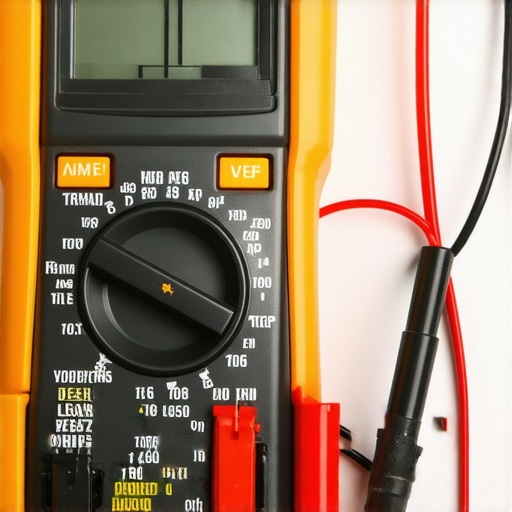
Could Your Alternator Be the Secret Culprit Behind That RPM Surge?
An often-overlooked factor in idle stability is the ripple current produced by a failing alternator diode. When a diode leaks, it sends AC voltage into a DC system, which wreaks havoc on sensitive microprocessor-controlled components. This electrical interference creates a shudder that feels mechanical but is actually the ignition timing jumping around. You can perform a preliminary check by learning how to test an alternator using only a screwdriver. Expert data from Delphi Technologies emphasizes that modern fuel injectors require a stable current to maintain precise spray patterns; any deviation in supply voltage directly impacts the volume of fuel delivered during the millisecond-long pulse widths at idle.
Stop Chasing Ghosts by Testing Real-World Mechanical Resistance
Sometimes the engine isn’t fighting itself, but rather an external drag. If your car struggles to find its rhythm only when it is stopped, you must evaluate the parasitic load from the drivetrain. A classic example is why your engine runs perfectly until you put it in gear. This is frequently linked to a torque converter clutch that isn’t fully disengaging, effectively trying to stall the engine while the brakes are applied. The ECU tries to compensate by bumping the RPM, leading to that characteristic hunting sensation. Similarly, inspecting the combustion chamber for physical signs of inefficiency is vital. Knowing how to tell if your spark plugs are fouled just by looking at them can reveal if one cylinder is contributing less than the others, forcing the IAC to work overtime to keep the crank spinning. When the idle remains stubborn, you might be facing the hidden reason your automatic transmission hesitates on hills, suggesting the issue is systemic rather than isolated to the engine block. Have you managed to stabilize a rough idle with a simple electrical fix? Share your experience in the comments or read our other guides to keep your vehicle in peak condition.Beyond the battery, the Engine Coolant Temperature (ECT) sensor acts as the primary conductor for the engine’s ‘cold-start’ symphony. If this thermistor fails or reports skewed data—perhaps suggesting the engine is perpetually at freezing temperatures—the ECU will maintain an ‘open-loop’ enrichment phase. This introduces excessive fuel into a warm combustion chamber, leading to a rich-misfire and the subsequent RPM surge as the system attempts to clear the flood. Unlike a vacuum leak, which is constant, a failing ECT sensor often creates an idle that hunts only once the engine has reached a specific thermal threshold.
Why do my RPMs drop every time I turn the steering wheel at a stop?
This frustrating dip is usually caused by a faulty Power Steering Pressure Switch (PSPS). The ECU is programmed to bump the idle speed to compensate for the high hydraulic load generated by the steering pump at low speeds. When this switch fails to communicate the load, the engine’s torque is momentarily overwhelmed, causing the RPM needle to dive before the IAC valve can reactively catch it. It is a classic case of the ECU being ‘reactive’ rather than ‘proactive’ due to a communication breakdown.
Stop the Stealthy Air Leaks Hiding in Your Brake Booster
One of the most difficult vacuum leaks to diagnose is the internal diaphragm of the power brake booster. Because this component is physically separated from the engine block, many DIYers overlook it during a smoke test. If you hear a faint ‘hissing’ sound only when the brake pedal is depressed, or if the idle stabilizes as soon as you let off the brakes, the booster is likely drawing unmetered air directly into the intake manifold. According to technical bulletins from Denso Aftermarket, these intermittent air intrusions can bypass the MAF sensor entirely, forcing the ECU to rely on the O2 sensors’ lagging response to adjust fuel trims. 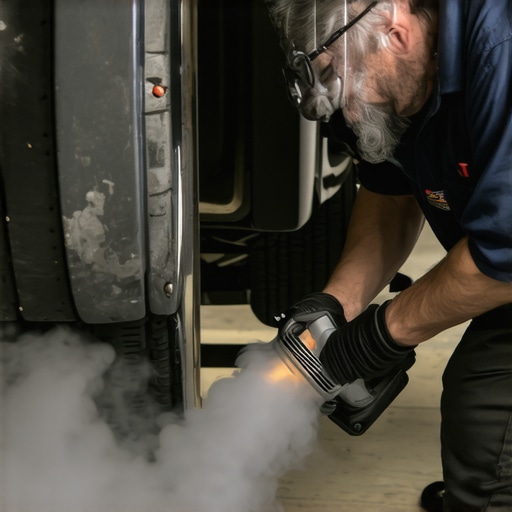 This delay is the primary engine behind the ‘hunting’ phenomenon. Another silent culprit is the Evaporative Emission (EVAP) purge valve. This solenoid is designed to stay closed during idle, preventing fuel vapors from the charcoal canister from entering the intake. However, if the internal seal has degraded, it becomes a ‘ghost’ vacuum leak. The ECU suddenly finds itself dealing with an unexpected slug of fuel vapor, causing a momentary rich condition that it must then correct by pulling fuel. The result is a rhythmic oscillation that can be incredibly difficult to track without a bi-directional scan tool that can command the valve to close. Have you ever considered that your fuel tank’s ventilation could be the reason your engine stumbles at a red light? Investigating the purge line is a crucial step in any high-level vehicle diagnostics procedure.
How VVT Solenoids Create Mechanical Phantom Leaks
The complexity increases further in vehicles equipped with Variable Valve Timing (VVT). These systems use oil pressure to adjust camshaft phasing, and a sticky or clogged VVT solenoid can prevent the cams from returning to their ‘base’ idle position. If the intake valves stay open slightly longer than intended at 800 RPM, the volumetric efficiency changes, and the ECU struggles to match fuel delivery to the unexpected air volume. This mechanical ‘hang’ mimics a vacuum leak but is actually a failure of hydraulic timing control. Ensuring you are using the correct oil viscosity is not just about lubrication; it is about maintaining the ‘hydraulic logic’ that your engine depends on for a smooth idle. If you have recently changed your oil and noticed a change in idle quality, the two are likely linked through the VVT system’s sensitivity to fluid pressure and thecleanness of the lubrication. Beyond the VVT system, the Positive Crankcase Ventilation (PCV) valve acts as a ‘calibrated vacuum leak’ that many technicians overlook. If the internal spring of the PCV valve weakens, it may draw an excessive volume of crankcase gases during high-vacuum conditions (like idling), effectively leaning out the mixture beyond the ECU’s threshold for compensation. This often leads to a subtle but persistent hunting that vanishes as soon as the throttle is cracked. Expert analysis from Bosch Mobility confirms that even a 5% deviation in air bypass through the crankcase can trigger significant long-term fuel trim adjustments.
Stop Ignoring the Crankcase Pressure that Sabotages Your Idle
High-mileage engines are particularly susceptible to this ‘ghost’ air intrusion. When the PCV system fails, it doesn’t just affect emissions; it alters the manifold pressure that the MAP sensor relies on. If you notice an oily residue inside your intake plenum, it’s a red flag that your engine is literally ‘choking’ on its own blow-by. By performing a simple ‘click test’ on the PCV valve or monitoring the crankcase pressure with a sensitive manometer, you can rule out this mechanical variable before diving into more expensive electronic repairs. 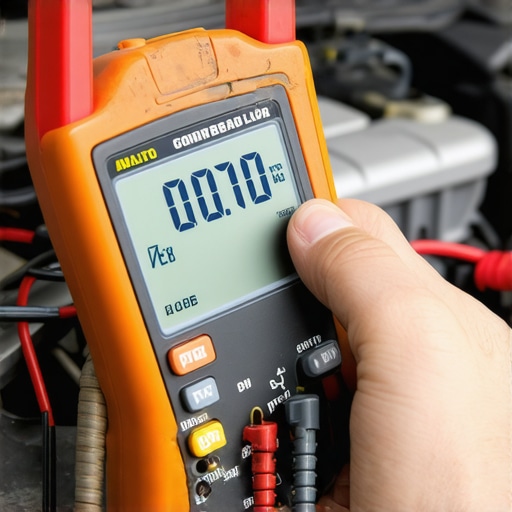
Can a Frayed Engine Ground Wire Actually Cause a Lean Code?
The answer is a resounding yes, though the physics are often misunderstood. Most engine sensors, including the O2 and MAF, operate on a very low-voltage scale where even 100 millivolts of ‘noise’ can skew the data. If the engine block ground strap has developed high resistance due to corrosion, the sensor’s return path to the ECU is compromised. This phenomenon, known as ‘ground loop interference,’ is particularly insidious because it won’t always trigger a dedicated circuit code. Instead, the ECU assumes the skewed sensor data is valid and attempts to ‘fix’ a non-existent air-fuel imbalance. To find these gremlins, a master tech won’t just look for a loose wire; they will perform a dynamic voltage drop test using a high-impedance multimeter while the engine is under load.
The Invisible Fuel Leak Hiding Inside Your Vacuum Lines
In vehicles equipped with a vacuum-referenced fuel pressure regulator (FPR), a ruptured internal diaphragm can turn a vacuum line into a secondary fuel injector. Instead of just sensing manifold pressure to adjust the rail pressure, the regulator begins leaking raw fuel directly into the intake manifold. This creates a rich condition that worsens as the engine warms up. To diagnose this, simply pull the vacuum hose off the regulator while the engine is running; if there is even a hint of liquid fuel in that line, the regulator is toast. This is the kind of high-level vehicle diagnostics that separates parts-changers from master technicians. Identifying a failing FPR requires a keen eye for detail—if the idle stabilizes immediately after pinching the vacuum reference line, you have found your culprit.
Why Heat Soak is the Enemy of Idle Consistency
When an engine is first started, it operates in ‘open loop,’ ignoring the oxygen sensors. As it reaches operating temperature, the ECU begins trusting these sensors. However, a sensor that is aged or partially fouled can suffer from thermal lag. It might work fine at highway speeds where exhaust flow is high, but at a stoplight, the sensor cools down just enough to lose accuracy. This creates a hunting effect as the ECU cycles between leaning out the mix and enriching it. Ensuring your heat shields are intact and your sensor heaters are functioning correctly is vital for preventing this specific thermal-induced instability. Do you suspect your car’s electrical health is impacting its performance? Check out our guide on diagnosing battery and ground issues to ensure your ECU is getting the clean data it needs to maintain a rock-solid idle.
Advanced Diagnostics and Expert Insights
Resetting the ECU’s Adaptive Memory After a Repair
A common pitfall in high-level vehicle diagnostics is assuming a mechanical fix will instantly stabilize the idle. Modern ECUs store ‘adaptive fuel trims’—learned behaviors based on old, faulty sensor data. If you clean a MAF sensor but don’t perform a keep-alive memory (KAM) reset, the car may continue to hunt as it applies old compensation values to a now-clean signal. Always perform a hard reset or an ‘idle relearn’ procedure to clear the slate for your new parts.
Why Traditional Smoke Tests Fail on One-Way Valves
While utilizing the $12 tool that finds every vacuum leak is effective for most hoses, it can struggle with components like the PCV or brake booster check valves. These parts are designed to flow in one direction only. If the internal diaphragm is failing under high vacuum but seals under the low pressure of a smoke machine, you’ll get a false negative. Mastering the use of a handheld vacuum pump is the only way to verify these ‘ghost’ leaks with 100% certainty.
The Oscilloscope Advantage for Intermittent Stumbles
Standard scan tools often update at a rate of 10-20 times per second, which is far too slow to catch a micro-second drop-out in a Crankshaft Position Sensor signal. Using a digital storage oscilloscope allows you to see the actual voltage square waves. If you see ‘noise’ or a missing tooth on the waveform, you’ve found the reason for your RPM oscillation. This level of precision is what differentiates a top-tier car service from a shop that simply clears codes and hopes for the best.
#IMAGE_PLACEHOLDER_E#
Essential Resources for Professional Technicians
SAE International Technical Papers: For those who want to understand the fluid dynamics of intake air and the algorithmic logic behind fuel trim strategies, the SAE library is the gold standard for engineering-grade data.
Bosch Mobility Training: As the original equipment manufacturer for a vast majority of sensor technology, Bosch provides the most accurate specifications for testing resistance and voltage curves on idle-critical components.
Delphi Technologies Resource Center: An excellent source for troubleshooting fuel delivery systems and understanding the electrical requirements of high-frequency injectors.
Synthesizing the Diagnostics Journey
Stabilizing a hunting idle is rarely about finding a single ‘magic’ part; it is an exercise in systemic verification. By methodically ruling out unmetered air, verifying electrical ground integrity, and ensuring your ECU isn’t operating on outdated adaptive data, you move from guesswork to professional-grade auto repair. Remember that every fluctuation in the tachometer is a data point—your job is simply to translate what the engine is trying to tell you through its sensors. Do you have a specific diagnostic challenge or a success story where a simple electrical fix solved a complex idle issue? Join the conversation below and share your professional insights with our community.