Why Your Fuel Gauge Is Actually a Diagnostic Tool
Experienced technicians recognize that a sudden drop in fuel economy is rarely a localized failure. Instead, it is the cumulative result of drivetrain inefficiencies and sensor degradation that forces the Powertrain Control Module (PCM) to overcompensate. While the average driver might suspect low tire pressure, an analytical approach reveals that parasitic losses within the transmission or skewed air-fuel ratios are more likely to blame for a 2-5 MPG plummet overnight. When efficiency dips, the vehicle is effectively working against its own internal friction, transforming expensive fuel into wasted heat rather than kinetic energy.
How Invisible Transmission Slips Drain Your Tank
Internal transmission health is inextricably linked to fuel economy. If the torque converter clutch (TCC) fails to engage fully, the engine operates at a higher RPM than necessary for a given road speed. This slip generates heat rather than forward momentum. Even if you aren’t experiencing harsh shifts, the hidden reason your automatic transmission hesitates on hills could be a precursor to catastrophic efficiency loss. High-viscosity or degraded fluid increases internal friction, forcing the engine to work harder. In fact, many manufacturers make claims about lifetime transmission fluid that can lead to long-term efficiency degradation if taken literally by the vehicle owner.
Does Your Engine Temperature Actually Reach Operating Range?
Thermal management is a critical yet overlooked component of vehicle diagnostics. If a thermostat fails in the open position, the engine may never reach the “closed-loop” operating state. In this mode, the PCM continues to dump excess fuel into the cylinders to “warm up” the engine, significantly increasing consumption. According to technical documentation from the Society of Automotive Engineers (SAE), engines operating outside their optimal thermal window can see an efficiency drop of up to 12%. Monitoring your temperature gauge is vital; if you notice engine temperature spikes only in stop-and-go traffic, your cooling system might be fighting an mechanical battle that affects your wallet at the pump.
Stop Chasing Codes and Start Analyzing Live Data
Modern auto repair has shifted from simple parts swapping to advanced data interpretation. A “silent” failure occurs when a sensor—like the Mass Air Flow (MAF) or Oxygen (O2) sensor—stays within its logical range but “drifts” from accuracy. This doesn’t trigger a Check Engine Light but causes a rich-running condition. This is why the hidden world of vehicle diagnostics relies so heavily on live data streaming. If your car feels sluggish, you might find that one specific sensor is ruining your gas mileage by misreporting air density. Professional car service should always include a look at Long Term Fuel Trims (LTFT) to identify these trends before they lead to permanent engine wear.
Refine your maintenance strategy by consulting our expert guide on choosing the right car service to ensure your vehicle is being analyzed with precision tools, not just guesswork.
Is Your Transmission Fluid Level Deceiving You?
Hydraulic pressure is the lifeblood of gear engagement. Low fluid levels cause the pump to cavitate, leading to erratic pressure and efficiency-killing slippage. Even if you don’t see a visible leak on your driveway, you must know the simple way to check transmission fluid without a dipstick on modern sealed units. Identifying signs of transmission failures early is the only way to prevent a minor MPG dip from becoming a multi-thousand-dollar overhaul that could have been avoided with a simple fluid exchange.
Why a Clogged Exhaust Kills More Than Just Your Performance
Engineers often describe the internal combustion engine as a giant air pump; if the pump cannot exhale, it cannot draw in a fresh charge efficiently. A restricted catalytic converter creates excessive backpressure, which forces the engine to expend energy just to push exhaust gases out of the combustion chamber. Identifying how to tell if your catalytic converter is actually clogged is essential for maintaining the delicate balance of engine vacuum and pressure. When the exhaust path is blocked, the engine retains more heat, which can degrade the oil faster and lead to pre-ignition. If you have recently noticed why your car smells like rotten eggs, it is a definitive sign that the chemical substrate within your exhaust is failing, likely due to an unburnt fuel condition that has overloaded the converter. Data from the Car Care Council indicates that nearly 80% of vehicles on the road require some form of maintenance that directly impacts fuel economy, with exhaust health being a top contender for neglected repairs.
Could a Five-Dollar Cigar Save Your Engine From Shaking?
Unmetered air is the nemesis of a smooth idle. When air enters the intake manifold through a crack in a hose or a failed gasket, it bypasses the Mass Air Flow sensor, leading to a ‘lean’ condition that causes stumbles and poor mileage. While professional smoke machines cost hundreds, many savvy DIYers have discovered how to find a vacuum leak using a 5-dollar cigar by blowing smoke into the intake and watching where it escapes. This low-cost diagnostic can pinpoint a leak in seconds, allowing you to stop your engine from hunting at idle with a simple gasket or hose replacement.  Identifying these leaks early prevents the PCM from excessively adding fuel to compensate, which would otherwise wash the protective oil film off your cylinder walls.
The Invisible Resistance Killing Your Battery and Gas Mileage
Electrical resistance is often overlooked in auto repair, yet it plays a massive role in drivetrain efficiency. A corroded ground wire creates a ‘bottleneck’ for the entire electrical system, forcing the alternator to work significantly harder to maintain the system voltage. This extra effort puts a parasitic load on the engine via the serpentine belt, much like running an air conditioning compressor. You can often identify a bad ground wire without a multimeter by looking for subtle signs like dimming headlights when the cooling fans kick on. Furthermore, if your charging system is compromised, you should investigate how to tell if your alternator is killing your new battery before you find yourself stranded. Efficient electrical paths ensure that sensors provide accurate data to the engine computer, preventing the ‘rich’ fuel maps that tank your MPG.
How Hidden Rolling Resistance Steals Your Fuel Economy
Mechanical drag outside the engine can be just as detrimental as internal friction. A dragging brake caliper or a hub assembly with dried-out grease acts as a constant brake on your momentum. Learning to recognize the specific noise your wheel bearing makes—often a low-frequency growl that changes with steering angle—is a vital skill for any owner. This friction isn’t just a safety hazard; it is an economic drain. If you ever detect a faint burning odor after a highway drive, the specific smell that tells you your brakes are dragging should be your immediate cue to inspect the calipers. By eliminating these sources of resistance, you ensure that every drop of fuel is used for propulsion rather than generating heat in your wheel wells. Have you ever struggled with a mystery drop in gas mileage that turned out to be a simple mechanical drag? Share your diagnostic stories in the comments below, or visit our contact page if you need help decoding your vehicle’s behavior.
Gear Oil is the Forgotten Efficiency Killer
While most enthusiasts obsess over engine oil weights, the lubrication within your differentials and transfer case often remains untouched for decades. Over time, gear oil shears down and loses its ability to minimize metal-on-metal friction under load. In extreme cases, the fluid becomes a thick, sludge-like paste that creates immense rotational resistance. This parasitic drag means your engine must produce more torque just to maintain cruising speed. Switching to a high-quality synthetic gear oil can reduce these internal losses, especially in cold climates where conventional lubricants take miles to reach a functional viscosity. If you have noticed a heavy feeling in your drivetrain during the first ten minutes of driving, the hidden signs your differential is failing might actually be a cry for fresh lubrication that could restore 1-2 MPG almost instantly.
Why the EVAP System Is Not Just for Emissions
The Evaporative Emission Control (EVAP) system is frequently dismissed as a purely environmental component, but its impact on vehicle diagnostics and fuel stability is profound. This system is designed to trap fuel vapors from the tank and purge them into the engine to be burned. However, a malfunctioning purge valve or a saturated charcoal canister can cause a significant shift in the air-fuel ratio. If the purge valve sticks open, it allows a constant stream of raw fuel vapors into the intake manifold, essentially creating an unmetered ‘rich’ condition. This forces the PCM to pull fuel from the primary injectors, often leading to a stumble at idle or hard-start conditions after refueling. According to research from the Oak Ridge National Laboratory, managing fuel vapor pressure effectively is critical for maximizing the energy density of the liquid fuel remaining in your tank. 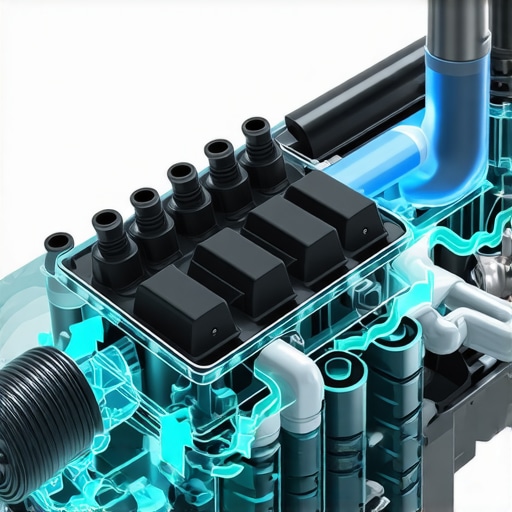 Identifying these leaks early prevents the ‘check gas cap’ light from becoming the precursor to a ruined catalytic converter.
Does a Stuck Open Purge Valve Affect Your Fuel Economy?
A stuck open purge valve acts like a continuous, unregulated fuel leak into your combustion chamber. This nuanced failure often bypasses standard auto repair logic because it doesn’t always trigger a lean or rich code immediately. Instead, the driver experiences ‘fuel trim wandering,’ where the computer constantly fights to balance the excess vapor. This leads to erratic throttle response and a noticeable drop in efficiency during city driving where vacuum levels fluctuate. If your car struggles to start only after you leave the gas station, you are likely dealing with a flooded intake manifold caused by a failed purge solenoid. Diving into the mechanics of testing an EVAP purge valve can save you from replacing expensive oxygen sensors that are simply reacting to the EVAP system’s failure.
Reset the PCM Adaptive Memory to Lock in Your Gains
One of the most common mistakes in professional car service is performing a major repair—like replacing a clogged MAF sensor or fixing a vacuum leak—without resetting the Powertrain Control Module’s (PCM) adaptive memory. Your car’s computer learns to compensate for worn parts over thousands of miles by adjusting ‘Fuel Trims.’ If you fix a ‘lean’ condition but don’t clear the adaptive tables, the computer will continue to dump extra fuel into the engine based on its old, ‘learned’ habits. This can result in poor mileage and even spark plug fouling for several driving cycles until the computer slowly relearns the new, healthy parameters. Utilizing a professional-grade scan tool to perform a ‘Keep Alive Memory’ (KAM) reset ensures that the vehicle starts its new life with a clean slate. Check out our deep dive into what a KAM reset is and why your car needs it to ensure your recent repairs actually translate to savings at the pump. This digital ‘reboot’ is the final step in any comprehensive vehicle diagnostics workflow, bridging the gap between mechanical hardware and software logic.
The Critical Relationship Between Tire Circumference and All-Wheel Drive
In modern AWD and 4WD vehicles, tire health isn’t just about tread depth; it’s about the mathematical precision of the tire’s outer circumference. If you replace only two tires instead of four, the slight difference in diameter forces the center differential or transfer case clutches to slip constantly to accommodate the different wheel speeds. This creates a massive amount of internal friction and heat, which the engine must overcome. This ‘driveline bind’ is a silent fuel thief that many drivers ignore until the transfer case begins to groan. Understanding why mismatched tires destroy AWD systems is vital for long-term vehicle health. Even a 2/32-inch difference in tread depth can be enough to trigger stability control interventions that pulse the brakes, further killing your momentum. Maintaining identical rolling radii is a non-negotiable aspect of high-level auto repair for any modern platform.
Aerodynamic Drag Lurking Beneath the Chassis
While most enthusiasts focus on spoilers and wing profiles, the most significant aerodynamic impact often occurs where you cannot see it: the undercarriage. Manufacturers spend thousands of hours in wind tunnels designing plastic under-trays and splash shields that smooth the airflow beneath the car, reducing the ‘parachute’ effect. If these shields are sagging, cracked, or missing after a rough winter or a botched oil change, the resulting turbulence creates a massive increase in drag that forces the engine to burn more fuel just to maintain cruising speed. Maintaining the integrity of your vehicle’s belly pans is a core aspect of professional auto repair that directly influences your long-term cost of ownership.
Can a Loose Splash Shield Actually Sabotage Your Fuel Economy?
At highway speeds, air pressure is a formidable force. A loose shield doesn’t just rattle; it vibrates and catches the wind, creating a fluctuating load that your engine must constantly overcome. This is especially prevalent in modern eco-focused sedans where the drag coefficient is tuned to a razor’s edge. Replacing missing clips or damaged panels is one of the most cost-effective ways to restore lost MPG.  Identifying these structural ‘flaps’ early prevents them from eventually catching enough air to tear away entirely, potentially damaging more expensive components like the AC condenser or radiator fans.
The High-Frequency Precision of Fuel Injector Pulse Width
In the realm of vehicle diagnostics, simply checking if an injector sprays is no longer sufficient. Precision matters at the millisecond level. Modern Gasoline Direct Injection (GDI) systems rely on ‘pulse width’—the exact duration an injector remains open—to deliver a precisely metered fuel charge. Over time, internal varnish or electrical resistance can cause ‘injector latency,’ where the injector takes a fraction of a second longer to react to the PCM’s command. This delay ruins the homogenization of the air-fuel mixture, leading to incomplete combustion and wasted fuel. Technical specifications from Bosch Mobility Solutions indicate that modern GDI systems operate at pressures exceeding 200 bar, where even a microsecond of injector latency can disrupt the stratified charge required for lean-burn efficiency.
Why Your Alternator Decoupler Pulley is a Silent Efficiency Thief
The serpentine belt system does more than just drive accessories; it is a source of constant parasitic load. Many modern engines utilize an Overrunning Alternator Decoupler (OAD) or an Alternator Pulley (OAP) to dampen the rotational vibrations of the crankshaft. When these pulleys seize, they lose their ability to ‘freewheel,’ forcing the alternator to absorb every tiny speed fluctuation of the engine. This adds an unnecessary physical strain to the belt, increasing the torque required from the engine to keep the accessories spinning. A failed decoupler pulley often presents as a subtle growl or a slight belt flutter at idle, but its impact on car service intervals and fuel economy is significant due to the increased mechanical friction within the belt drive system. Is your vehicle suffering from a ‘ghost’ mechanical drag that no one can find? Book an advanced diagnostic session today to uncover the hidden inefficiencies that standard inspections miss, and stop letting small mechanical failures drain your bank account at the pump.
Expert Insights & Advanced Considerations
The Mathematical Danger of Mismatched Tires
In all-wheel-drive systems, the precision of tire circumference is a hidden efficiency factor. A 2/32-inch difference in tread depth creates internal drag that forces the transmission and differentials to work against each other. This parasitic loss is a common target during high-level auto repair to restore lost MPG. Maintaining identical rolling radii across all axles prevents the all-wheel-drive clutches from overworking and generating unnecessary heat.
Stop Letting Your Alternator Fight Your Engine
Electrical resistance in corroded ground wires increases the torque load on the engine via the alternator. Utilizing the 20-dollar scan tool that does more than the dealership rig allows you to monitor voltage drops and prevent the charging system from becoming a fuel-draining weight. This is a critical step in modern vehicle diagnostics that often reveals why an engine feels sluggish even when no error codes are present.
Precision Fueling Requires More Than Just Clean Filters
Injector latency—the millisecond delay in fuel delivery—can result in incomplete combustion even without a check engine light. If you notice a stumble, learning how to diagnose a misfire without a code reader can help you identify these mechanical drifts before they require an expensive car service overhaul. Accurate pulse-width modulation is the difference between a lean-burn success and a rich-running failure. #IMAGE_PLACEHOLDER_E#
Curated Expert Resources
SAE International Technical Standards: The definitive source for automotive engineering papers that define modern fuel management and thermal efficiency protocols used by manufacturers worldwide.
Bosch Mobility Solutions Engineering Hub: Offers specialized data on gasoline direct injection (GDI) and sensor precision for high-efficiency engines, ideal for understanding component-level failures.
Oak Ridge National Laboratory Energy Efficiency Research: Provides peer-reviewed research on the impact of vehicle maintenance on real-world fuel economy and energy loss under varying loads.
A Strategic Path to Maximum Efficiency
Realizing peak performance requires moving beyond basic maintenance into the realm of advanced vehicle diagnostics. By addressing hidden drag in the transmission and optimizing sensor accuracy, you ensure every drop of fuel is converted into motion rather than wasted heat. Integrating top auto repair techniques into your routine stops minor inefficiencies from becoming major financial drains. For specialized assistance with your drivetrain health, visit our contact page to connect with technicians who prioritize precision over guesswork.