Modern Engine Management and the Illusion of Precision
In the contemporary landscape of auto repair, technicians frequently rely on high-fidelity scanners to interpret fuel trim data. However, there is a fundamental disconnect between digital data and physical reality when dealing with unmetered air. A vacuum leak introduces oxygen that bypasses the mass air flow sensor, forcing the Engine Control Unit (ECU) to compensate by increasing the injector pulse width. While you might see a high positive number on your Long Term Fuel Trim (LTFT), the data doesn’t tell you where the air is entering. This is where advanced vehicle diagnostics requires a pivot from digital screens to analog ingenuity. By understanding the volumetric efficiency of the internal combustion engine, we recognize that even a microscopic breach in a manifold gasket or a brittle vacuum line can disrupt the entire stoichiometric balance, leading to symptoms that mimic more expensive transmission or sensor failures.
The Physics of Smoke and why the Cigar Method Works
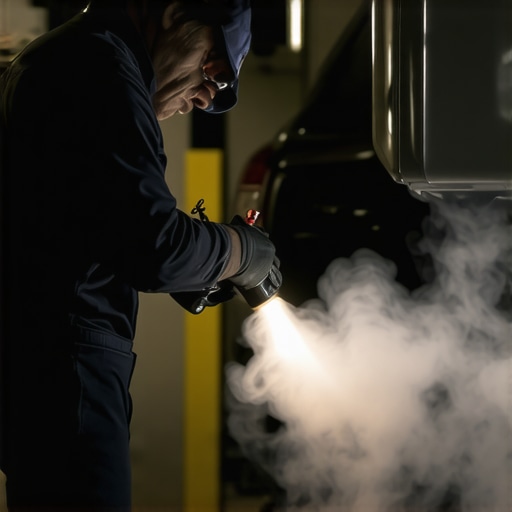
Professional smoke machines used in car service facilities are essentially heaters that vaporize mineral oil. While effective, the density of the smoke can sometimes be insufficient to identify pinhole leaks in daylight or cramped engine bays. A high-quality cigar produces a much denser, more particulate-heavy smoke that hangs in the air longer, making the point of exit highly visible under a simple shop light. This technique is more than just a ‘hack’; it is a localized pressure test. By sealing the intake and blowing smoke into a vacuum port, you create a low-pressure environment that forces smoke out of any structural compromise. If you have already tried the 15-dollar way to find a vacuum leak and need more visual confirmation, the cigar method provides the necessary contrast. This approach is particularly useful for identifying the small gaskets and seals that often escape a cursory visual inspection.
How Do You Differentiate a Real Vacuum Leak from a Faulty MAF Sensor?
Distinguishing between these two issues is a common hurdle in professional diagnostics. A vacuum leak usually has its most significant impact at idle when the throttle plate is closed and vacuum is at its peak. As engine RPM increases and the throttle opens, the ratio of leaked air to metered air decreases, often causing the engine to smooth out. Conversely, a failing Mass Air Flow sensor typically displays worsening performance as load increases. If your vehicle exhibits a rough idle but performs adequately at highway speeds, you are likely dealing with unmetered air. Research published by organizations like SAE International emphasizes that lean conditions caused by vacuum leaks can lead to increased combustion temperatures, which eventually degrade exhaust valves and catalytic converters if left unaddressed. Before you spend hundreds on new sensors, clean your mass air flow sensor to rule out contamination as the primary cause of your lean codes.
The Surprising Link Between Vacuum Integrity and Transmission Health
Many drivers are surprised to learn that a simple vacuum leak can cause significant transmission shifting issues. Modern automatic transmissions rely on engine load data to determine shift timing and line pressure. If the ECU perceives a different load than what is actually occurring due to unmetered air, it may command harsh or delayed shifts. This is frequently misdiagnosed as internal mechanical failure. We often see cases where hard shifting when cold is actually rooted in a vacuum-related air-fuel imbalance that stabilizes as components expand with heat. Maintaining the pneumatic integrity of your engine is a critical component of expert transmission care. If you find yourself struggling with a car that starts and then immediately dies, do not assume the worst; a five-dollar cigar and ten minutes of your time might save you from a multi-thousand dollar repair bill. Take the time to inspect every plastic T-fitting and rubber boot for the dry rot that silently kills fuel economy and performance.
Stop Chasing Ghosts in the Brake Booster
A frequent error in auto repair is the assumption that unmetered air only enters through the intake manifold or cracked rubber boots. In reality, the vacuum-assisted brake booster acts as a massive potential reservoir for leaks that are invisible to the naked eye. Because the booster’s internal diaphragm is isolated within a metal housing, smoke may not readily escape during a static test. If you have noticed that your brake pedal feels like spongy cake or the engine stumble only occurs when your foot is on the brake, the internal seal has likely failed. Expert vehicle diagnostics requires isolating this component by clamping the vacuum supply line; if the fuel trims suddenly normalize, you have identified your culprit without turning a single bolt on the engine itself.
Why Does the Idle Surge Specifically When You Press the Brake?
This phenomenon is a classic sign of a ruptured booster diaphragm. When you depress the pedal, you are moving a piston that should maintain a pressure differential. If that seal is compromised, you are essentially opening a massive vacuum port directly to the intake. This sudden rush of air causes the ECU to scramble, often leading to a lean misfire. Technical insights from Motor Magazine suggest that even a minor leak in this circuit can skew the volumetric efficiency calculations by as much as 15%, leading to the one sensor that ruins your gas mileage without ever triggering a dedicated ‘booster’ fault code. It is a subtle, cascading failure that demands a methodical approach to eliminate.
The HVAC System and Defrost Slot Symptoms
Many modern vehicles still use vacuum-actuated doors within the HVAC plenum to redirect airflow. If you find that your vents only blow air from the defrost slots during hard acceleration, you are experiencing a loss of vacuum. Under heavy load, engine vacuum naturally drops; a healthy system uses check valves and canisters to maintain the position of these doors. A leak in this tiny, plastic network is enough to lean out the engine just enough to cause a ‘hunting’ idle. Using the cigar method on the main vacuum tree and then cycling the dash controls can help you see smoke emerging from behind the glovebox or near the firewall. This is a prime example of why car service is an interconnected discipline—the air conditioning issue is actually an engine performance issue in disguise.
Building a Controlled Pressure Tester for Better Visualization
While blowing smoke manually is effective, you can increase your diagnostic accuracy by building a simple rig using a one-way check valve and a small air pump. By regulating the pressure to no more than 1-2 PSI, you can mimic the engine’s natural vacuum state without blowing out sensitive gaskets like the transmission gaskets or oil seals. This controlled flow allows the smoke to permeate the entire system, reaching the hidden filters and EVAP lines that often hide underneath the chassis. If you have successfully used this method to find a stubborn leak, or if you have a unique diagnostic tip of your own, leave a comment below to help the community refine their skills. True expertise is built through shared mechanical wisdom and the refusal to accept ‘good enough’ when a car is running lean.
Trace the EVAP Lines to Solve Intermittent Lean Codes
When the usual suspects like intake boots and vacuum trees check out, the diagnostic path must extend into the EVAP system. The evaporative emission control system is designed to trap gasoline vapors and feed them back into the engine, but it is also a notorious source of ‘ghost’ leaks. A purge valve that fails to seat fully acts as a constant, unmetered air source. Unlike a static manifold leak, an EVAP failure often presents as a fluctuating fuel trim that changes specifically when the ECU commands a purge cycle. Expert vehicle diagnostics involve monitoring the duty cycle of the purge solenoid while watching the short-term fuel trims. If the trims spike into the positive double digits the moment the valve cycles, you have moved beyond a simple air leak into a component failure. Technical data from Delphi Technologies suggests that solenoid sticking is frequently caused by charcoal canister degradation, where small bits of carbon migrate through the lines and prevent the valve from closing. This creates a vacuum leak that no amount of visual inspection will ever uncover.
Can a Failing PCV Valve Act Like a Vacuum Leak?
Yes, and it is perhaps the most overlooked ‘mechanical’ vacuum leak in auto repair. The Positive Crankcase Ventilation (PCV) valve is essentially a calibrated vacuum leak designed to pull blow-by gases out of the crankcase. Inside the valve, a spring-loaded plunger balances manifold vacuum against crankcase pressure. If that spring weakens or the plunger becomes gummed up with oil deposits, the valve may stay wide open at idle. This allows a massive volume of air to bypass the throttle plate, causing a lean condition that mimics a cracked intake manifold. To test this without specialized tools, simply pinch the rubber hose leading to the PCV valve while the engine is idling. If the idle smooths out and your fuel trims drop back to near zero, the valve is the culprit. This is a critical step in car service because replacing a perfectly good intake gasket when the PCV valve is at fault is a common and expensive misdiagnosis. Maintaining this system is as vital as your regular oil leak prevention routines.
Stop Ignoring the Plastic Intake Manifold Hairline Fractures
Modern engines have traded cast iron and aluminum for composite plastic intake manifolds to save weight and reduce heat soak. However, these materials are subject to the laws of thermal expansion and contraction. Over thousands of heat cycles, the plastic can develop hairline fractures that only open up when the engine reaches operating temperature. This creates a scenario where the car runs perfectly when cold but develops a mysterious ‘hunting’ idle or a lean code once it has been driven for twenty minutes. When performing a car service on these units, the cigar smoke method is most effective when the engine is warm. If you notice smoke wafting from the underside of a plastic runner or near the fuel injector bungs, the structural integrity of the manifold is compromised. We often see these issues mislabeled as transmission problems because the resulting engine surge can feel like a slipping torque converter clutch. Addressing these fractures early prevents the lean-burn condition from damaging your spark plugs or causing the engine to stall at stoplights. High-level diagnostics require looking at the manifold not just as a part, but as a dynamic component that changes shape under load.
The Critical Role of Fuel Injector O-Rings in Air Management
While we focus on large hoses and manifolds, the humble fuel injector O-ring is a frequent source of unmetered air. These small rubber seals sit directly in the intake port, and if they become brittle or flattened, air will suck past them directly into the combustion chamber. Because this leak happens at the very end of the intake path, it often affects a single cylinder more than others, leading to a specific P030X misfire code alongside a general P0171 lean code. You can identify this by spraying a small amount of non-chlorinated brake cleaner around the base of each injector while monitoring the engine’s RPM. If the idle rises momentarily, the seal is broken. This level of detail is what separates basic auto repair from expert vehicle diagnostics. If you are already deep enough into the engine to check these, it is a perfect time to ensure you are not dealing with clogged fuel filters that could be compounding the lean condition. A holistic approach ensures that once the leak is plugged, the fuel delivery system is actually capable of maintaining the correct ratio. The physics of the intake stroke means that even the smallest gap at the injector seat can disrupt the swirl pattern of the air-fuel mixture, leading to incomplete combustion and a lack of power that many drivers simply accept as ‘old age’ for the vehicle.
Why the Throttle Body Shaft is a Silent Performance Killer
While many technicians focus on the large perimeter gasket of the throttle body, they often overlook the internal shaft seals. Over hundreds of thousands of cycles, the physical movement of the butterfly valve wears down the small rubber or Teflon seals surrounding the throttle shaft. This creates a parasitic leak that is notoriously difficult to find because it may only manifest at specific throttle positions or during deceleration. In high-mileage auto repair scenarios, these leaks introduce just enough unmetered air to cause a ‘hanging idle’ where the engine stays at 1,100 RPM for several seconds before settling. This specific failure mode is common in older Japanese and European vehicles where the throttle body was designed for longevity but the internal seals were never intended to survive decades of heat-cycling. If you suspect this, a quick application of smoke directly into the intake with the throttle plate held partially open will reveal if the smoke is escaping from the side of the housing where the linkage or electronic actuator resides.
Does Variable Valve Timing Mask the Symptoms of a Dying Manifold?
Variable Valve Timing (VVT) systems can inadvertently compensate for vacuum leaks by adjusting cam overlap to stabilize manifold pressure. The ECU monitors the Manifold Absolute Pressure (MAP) sensor and, if it detects a drop in vacuum due to a leak, it may advance or retard the cams to maintain a steady idle. This digital ‘patch’ often hides the physical reality of a vacuum leak until the solenoid reaches its adjustment limit. According to technical documentation from Bosch Mobility, the integration of VVT and electronic throttle control has made the traditional ‘vacuum gauge’ diagnostic less reliable. You must look at the VVT duty cycle; if the car is working overtime to maintain idle vacuum, you likely have a physical breach that is taxing the vehicle diagnostics system’s ability to self-correct.
The Double-Edged Sword of Turbocharged Intake Seals
For vehicles equipped with forced induction, a breach in the intake tract is a schizophrenic problem. Under vacuum (idle or cruising), the crack acts as a standard vacuum leak, pulling in unmetered air and causing lean codes. However, once the turbocharger builds boost, that same crack becomes a boost leak, venting pressurized, metered air out of the system. This creates a ‘lean at idle, rich under load’ condition that leaves many car service professionals scratching their heads. Standard smoke testing is often insufficient here because the pressure used in the test (typically 1 PSI) doesn’t replicate the 15-20 PSI the engine sees under load. Maintaining these seals is a core part of auto repair for performance vehicles, as even a minor boost leak can overwork the turbocharger, leading to premature bearing failure and catastrophic oil seal leaks. Using a dedicated boost leak tester that seals the turbo inlet is the only way to ensure the intercooler and associated piping can hold the pressure required for peak performance.
When Ignition Timing Becomes a Diagnostic Clue
When the ECU cannot fix a lean condition through fuel trim adjustment alone, it will often begin to oscillate ignition timing to prevent the engine from stalling. This is why a vacuum leak often feels like a subtle ‘hunt’ or vibration through the steering wheel. Expert vehicle diagnostics involves watching the spark advance on a live data stream. If the timing is jumping rapidly between 5 and 20 degrees at a steady idle, the computer is fighting an air-fuel imbalance. Before you commit to a transmission tear-down or an expensive sensor replacement, check the integrity of the brake booster check valve and the secondary air injection system. These auxiliary vacuum circuits are often the source of ‘ghost’ leaks that only appear during specific drive cycles. Are you dealing with a stubborn lean code that refuses to clear? Drop a comment below with your scan tool data, and let’s break down the physics of your specific engine fault together.
Expert Insights & Advanced Considerations
Why Heat-Cycling Reveals Hidden Manifold Fractures
Composite intake manifolds are notorious for developing structural weaknesses that only manifest at operating temperature. When you are performing auto repair, a cold smoke test might show a perfectly sealed system, yet the car continues to throw lean codes during long commutes. This is due to the thermal expansion of plastic, which can pull a hairline fracture wide enough to admit unmetered air only once the material has softened. Always perform your final vehicle diagnostics check while the engine is at full operating temperature to ensure the integrity of the manifold runners.
Modern VVT Systems Often Mask Mechanical Breaches
Technicians must realize that Variable Valve Timing (VVT) is a double-edged sword in modern car service. The ECU will often adjust cam overlap to compensate for a drop in manifold vacuum, effectively hiding a physical leak from the driver’s perception. If you notice your fuel trims are high but the idle is suspiciously smooth, look at the VVT solenoid duty cycle. A car fighting its own timing to maintain a steady vacuum is a car with an underlying air-fuel imbalance. You can often stop your engine from hunting at idle by identifying these subtle compensations before they lead to hard component failure.
Isolate Your Brake Booster Before Pulling the Intake
One of the most efficient diagnostic shortcuts involves the brake booster. Before assuming the intake gasket is shot, use a pair of hose-pinching pliers to isolate the vacuum line going to the booster. If the short-term fuel trims drop immediately, you have confirmed an internal diaphragm leak without a single minute of disassembly. This methodical isolation is the hallmark of expert vehicle diagnostics and prevents the common mistake of replacing expensive sensors when a rubber seal has simply reached its end of life.
Curated Expert Resources
SAE International Technical Papers: This remains the gold standard for understanding the fluid dynamics of intake systems and the stoichiometric limits of modern internal combustion. It is essential for those looking to move beyond basic part-swapping.
Bosch Mobility Engine Management Systems: As the OEM provider for many European and domestic systems, Bosch’s documentation provides the deepest look into how lean-burn conditions affect long-term catalytic converter health and transmission shift logic.
Delphi Technologies Resource Center: A premier source for troubleshooting the EVAP system and purge solenoid logic, which often creates intermittent vacuum leaks that vanish during standard shop testing.
Final Expert Perspective
Mastering the nuances of unmetered air is about more than just clearing a check engine light; it is about preserving the mechanical longevity of the entire powertrain. Whether you are dealing with transmission failures decoded through engine load data or chasing the one sensor that ruins your gas mileage, the foundation of every fix is pneumatic integrity. Advanced vehicle diagnostics requires us to respect the physics of the engine, using tools like the cigar method to visualize what the computer can only guess at. By maintaining this holistic view, you ensure that every auto repair is a permanent solution rather than a temporary patch. #IMAGE_PLACEHOLDER_E# If you have encountered a vacuum leak that defied traditional logic or found success with a specific diagnostic tool, join the conversation in the comments below. Your technical field notes are what keep the professional community sharp and capable of tackling the next generation of engine management challenges.