The transition from a cranking cycle to a sustained idle is one of the most complex sequences in modern engine management. When an internal combustion engine fires successfully but fails to maintain RPM for more than a few seconds, it indicates a breakdown in the critical hand-off between start-up enrichment and stabilized run-mode logic. This phenomenon, often referred to as a ‘start-and-stall’ condition, typically originates from a failure in either security verification, air-metering calibration, or fuel pressure retention. Mastering the nuances of vehicle diagnostics is essential for pinpointing whether the issue is a software-induced shutdown or a physical hardware collapse during the initial load phase.
Your Security System Might Be Overriding Your Ignition
Modern vehicles utilize sophisticated immobilizer systems that allow the engine to start momentarily before the Engine Control Unit (ECU) verifies the transponder key’s signature. If the ‘handshake’ fails, the ECU will intentionally cut the fuel injector pulse or the ignition spark to prevent theft. This often confuses owners into thinking they have a mechanical fuel delivery problem. In professional auto repair environments, we first look for the security or ‘padlock’ light on the instrument cluster. According to technical documentation from Bosch Automotive Technology, if the rolling code between the key and the immobilizer module is out of sync, the engine will consistently die after exactly two to three seconds of operation.
Identify the Critical Airflow Discrepancies Killing Your Idle
Once the engine leaves the cranking phase, it relies heavily on the Mass Air Flow (MAF) sensor or the Manifold Absolute Pressure (MAP) sensor to calculate the exact volume of air entering the cylinders. If the MAF sensor is sending a frequency signal that falls outside the expected range, the ECU may default to a ‘limp’ strategy that is insufficient to maintain a cold idle. Before assuming a sensor is dead, experts recommend you clean your mass air flow sensor to remove microscopic contaminants that skew voltage readings. Furthermore, massive unmetered air entries—often caused by a torn intake boot or a disconnected vacuum line—can lean out the mixture so severely that the engine stalls the moment it attempts to transition out of its rich start-up state. For those chasing elusive leaks, using a specialized vacuum diagnostic tool can save hours of guesswork by visualizing the atmospheric breach.
Can a Faulty Idle Air Control Valve Mimic a Major Mechanical Failure?
The Idle Air Control (IAC) valve or the electronic throttle body (ETB) is responsible for bypassing the closed throttle plate to provide the engine with air during idle. If the IAC motor is seized or the throttle plate is heavily carbon-fouled, the engine will start because the throttle is usually slightly cracked open during the crank, but it will immediately choke out once the ECU attempts to settle the RPM. This is a common point of failure in high-mileage vehicles where carbon buildup prevents the plate from reaching its ‘minimum air’ position. If you notice the engine hesitates when you step on the gas just before it dies, the problem likely lies within this air-bypass circuit or a failing throttle position sensor.
Verify Fuel Pressure Under Initial Load Conditions
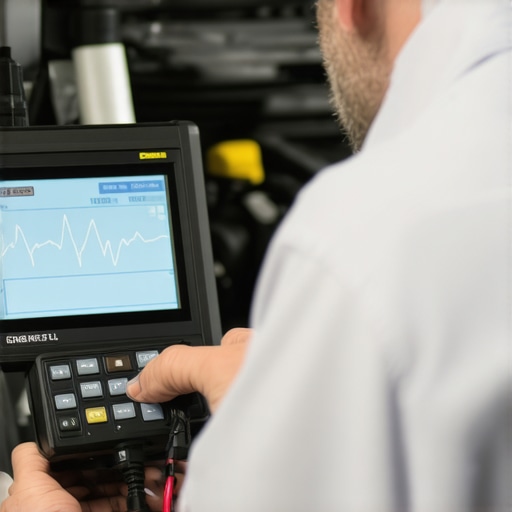
A fuel pump can often generate enough ‘prime’ pressure to start the engine but fail to maintain the necessary volume once the engine begins to run under its own power. This is frequently caused by a failing fuel pump relay that drops the circuit after the initial prime or a clogged fuel filter that restricts flow. Advanced technicians use an oscilloscope to monitor the fuel pump’s current ramp, ensuring the motor isn’t drawing excessive amperage as it warms up. If you suspect your ignition system is also playing a role, you should inspect your spark plugs for signs of fouling, which can indicate whether the engine was running too rich or too lean in the moments before it died. To ensure your vehicle receives the professional oversight required for these complex systems, we encourage you to schedule a comprehensive car service to prevent a minor sensor drift from becoming a total transmission or engine-control catastrophe.
The Alternator Handoff That Quietly Fails Your Battery
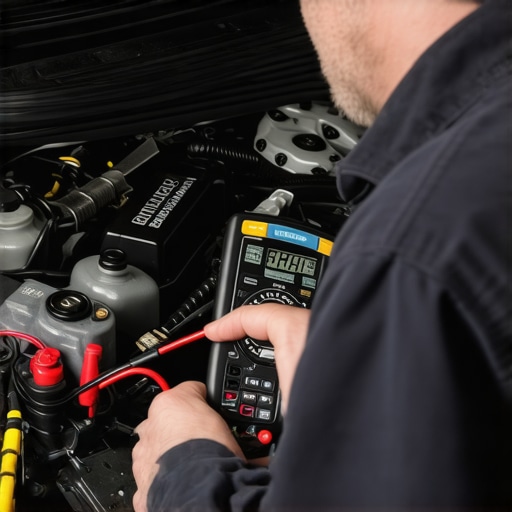
The moment the ignition key returns from the ‘start’ position to ‘run,’ the vehicle undergoes a massive electrical shift. During cranking, the battery provides several hundred amps of current, but once the engine fires, the alternator must instantly assume the electrical burden of the ignition system, fuel pump, and control modules. If the alternator’s voltage regulator is sluggish or the internal diodes are leaking AC current into the DC system, the voltage may dip below the threshold required to keep the fuel injectors pulsing. You can often diagnose this specific transition by learning how to test an alternator using only a screwdriver to check for magnetic field strength at the pulley during the initial run. If the battery is already marginalized, perhaps due to a parasitic battery drain, the sudden drop in amperage as the starter cuts out can cause the ECU to reset, creating a perpetual loop of starting and immediate stalling. This is particularly common in modern vehicles with high electrical demands from electric power steering and advanced cabin electronics.
When Backpressure Turns Your Exhaust into a Chokehold
Exhaust restrictions present another mechanical hurdle that often mimics an electronic fuel delivery failure. A disintegrated catalytic converter or a collapsed internal muffler baffle acts like a cork; while the engine has enough internal volume to start and run for a few seconds, as combustion gases rapidly accumulate in the head, the resulting backpressure prevents fresh air from entering during the intake stroke. The engine essentially suffocates on its own waste. To rule this out without expensive tools, you can learn the easy way to tell if your catalytic converter is clogged by monitoring intake vacuum readings or checking for excessive heat build-up at the exhaust manifold within seconds of startup. If you’ve recently performed maintenance on the cooling system, ensure that a hidden drain plug or a misplaced rag hasn’t accidentally obstructed a vital flow path, as even minor physical blockages can destabilize a fragile cold idle.
Could Your Torque Converter Be Stalling the Crankshaft?
In vehicles equipped with automatic transmissions, the torque converter clutch (TCC) is designed to create a solid mechanical link between the engine and the gearbox at cruising speeds. However, if the TCC solenoid is stuck in the ‘on’ position—often due to debris in the valve body or old, varnished fluid—the converter may remain locked even at a standstill. This creates a direct mechanical drag that stalls the engine the moment the RPMs attempt to settle into an idle, functioning exactly like a manual transmission car being stopped in gear without the driver depressing the clutch pedal. Recognizing transmission failures early is vital, as many owners spend thousands on engine parts when the culprit is actually a $50 solenoid. According to technical service bulletins from Delphi Technologies, faulty solenoid signals or ‘cross-talk’ in the wiring harness often trigger these stalls specifically during the transition from open-loop to closed-loop engine management.
Eliminate Electronic Interference and Ghost Signals
Electrical noise and ground loops are the silent killers of a stable engine idle. A frayed wire or a loose engine block ground can introduce electromagnetic interference into the ECU’s sensitive data lines, effectively ‘blurring’ the signal from the Crankshaft Position (CKP) sensor. Without a crystal-clear signal indicating the exact position of the pistons, the ECU cannot time the ignition pulse or fuel injection correctly, leading to an immediate shutdown. If you suspect an intermittent short or a ground loop is the culprit, using a simple tool for finding electrical shorts can help you isolate the specific circuit that is bleeding voltage or injecting noise into the system. Before you dive into expensive replacements of the ECU or wiring harness, we suggest reading about common engine hesitation triggers to see if your symptoms align with a broader sensor or grounding failure. Share your specific diagnostic findings in the comments below, or reach out to our team if you need a deep-dive scan into your vehicle’s history to find the ‘ghost in the machine’ that keeps your car from staying running.
Heat Soak Triggers Immediate Stalling After a Hot Start
While cold start issues often dominate the conversation, a vehicle that fires up perfectly when cold but stalls seconds after a warm restart points toward a phenomenon known as heat soak. This occurs when thermal energy from the engine block radiates into the fuel rail or sensitive electronic sensors once the cooling airflow from driving has ceased. In some fuel-injected systems, this heat can cause ‘vapor lock’ in the rail, where the fuel turns to gas, preventing the injectors from delivering a liquid charge. Additionally, a Crankshaft Position (CKP) sensor with an internal winding fracture may provide just enough signal to allow the ECU to sync during the high-amperage crank, but the increased resistance from engine heat causes the signal to drop out the moment the engine reaches a sustained RPM. To determine if your electrical components are failing under load, you might want to use a diagnostic tool for finding electrical shorts or resistance spikes that only manifest at operating temperature.
Does an Oil Pressure Switch Have the Power to Cut Your Fuel Supply?
In many older domestic designs and specific heavy-duty applications, the oil pressure switch serves as a redundant safety circuit for the fuel pump. If the fuel pump relay fails, the pump can actually receive power through the oil pressure switch once the engine builds enough pressure to close the internal contacts. Conversely, if the switch itself is faulty or if the engine takes too long to build pressure, the ECU may cut the fuel pump ground as a protective measure to prevent catastrophic engine damage. This creates a distinct ‘start-and-stall’ pattern where the engine runs for the three seconds it takes for the initial prime to deplete. According to technical standards published by SAE International, these integrated safety loops are designed to preserve the mechanical integrity of the rotating assembly, but they can become a primary failure point if the sensor’s internal diaphragm leaks oil into the electrical connector, causing a signal-to-ground bridge.
Variable Valve Timing Phasers Can Sabotage Your Idle Quality
Modern engines utilize Variable Valve Timing (VVT) to optimize efficiency, but this system relies heavily on oil pressure and solenoid precision. If a VVT solenoid is stuck in the ‘advance’ position due to sludge or a mechanical failure, the camshaft timing will be optimized for high-RPM power rather than a stable idle. When you start the car, the engine may fire because it is in ‘open-loop’ mode, but as soon as the ECU attempts to settle the timing for a smooth idle, the advanced cam position causes a massive intake overlap that kills the engine. If you’ve recently noticed that your engine hesitates when you step on the gas, it could be a sign that the cam phasers are not returning to their ‘parked’ position. Cleaning the solenoids or performing a specialized oil system flush is often the first step in vehicle diagnostics before committing to a full timing chain teardown.
The Ghost Vacuum Leak Hiding in Your Brake Booster
Not all vacuum leaks are found in the intake manifold or the small rubber lines crisscrossing the engine bay. A ruptured internal diaphragm in the brake booster can create a massive, hidden vacuum leak that only presents itself when the engine transitions out of the high-fuel ‘cranking’ enrichment. Since the booster is a large reservoir, it can lean out the air-fuel mixture enough to cause an immediate stall without making the traditional whistling sound associated with smaller leaks. You can test this theory by temporarily disconnecting and plugging the large vacuum hose leading to the booster; if the engine suddenly maintains a steady idle, you’ve located your culprit. For those performing a DIY car service, don’t forget to check the PCV valve as well, as a stuck-open plunger can act as a secondary unmetered air source that mimics a failing transmission torque converter drag or a dead MAF sensor. If you are seeing specific error codes like P0171 or P0174, we recommend you deploy a smoke machine or vacuum gauge to visualize exactly where the atmospheric seal has been breached.
Stop the Intake from Drowning in Fuel Vapors
A frequently overlooked culprit in the ‘start-and-stall’ saga is the Evaporative Emission (EVAP) purge valve. This component is designed to remain closed until the engine reaches operating temperature and enters closed-loop operation. If the valve is physically stuck in the open position, the intake manifold receives a direct, unregulated stream of raw fuel vapors from the charcoal canister the moment the engine creates vacuum. This effectively floods the combustion chamber with an excessively rich mixture that the ECU cannot compensate for during the delicate transition from cranking. If you suspect this, try performing a vehicle diagnostics test by pinching off the purge line; if the engine suddenly holds its idle, you’ve confirmed a mechanical bypass failure.
Lying Sensors Can Freeze Your Warm-Up Sequence
The Engine Coolant Temperature (ECT) sensor acts as the master conductor for the cold-start enrichment strategy. If this sensor ‘shifts’ its resistance—meaning it doesn’t fail completely but sends a signal that is 40 degrees off—the ECU may believe the engine is already at operating temperature when it is actually ice cold. This results in a lean-out condition that provides zero ‘choke’ effect, causing the engine to fire and then instantly die as the fuel droplets fail to atomize. According to technical bulletins from Standard Motor Products, sensor bias is often more difficult to catch than a total circuit failure because it won’t always trigger a Check Engine Light. Verifying the sensor’s accuracy against an infrared thermometer is a critical step in professional auto repair.
Could Your Car’s ‘Digital Memory’ Be Forcing a False Stall?
Modern Engine Control Units utilize Long Term Fuel Trims (LTFT) to account for gradual engine wear or small vacuum leaks. If you recently disconnected the battery or performed a car service that involved fixing a major air leak, the ECU may still be applying a massive ‘fuel add’ or ‘fuel subtract’ command based on the previous mechanical state. This ‘ghost’ calibration can be so extreme that it drives the air-fuel ratio into a stall-zone before the sensors can react. In these instances, a hard reset of the KAM (Keep Alive Memory) or a specialized scan tool command to clear adaptive fuel tables is necessary to allow the engine to ‘re-learn’ its baseline idle requirements. If you’re still struggling, checking for electrical shorts that might be corrupting the memory chip’s voltage can provide a breakthrough.
Pulse-Width Modulation Fails Where Relays Once Succeeded
In many late-model vehicles, the traditional fuel pump relay has been replaced by a Fuel Pump Driver Module (FPDM). This module uses Pulse-Width Modulation (PWM) to vary the pump’s speed based on demand. Because these modules are often mounted on the vehicle’s frame rail, they are prone to severe corrosion and thermal fatigue. An FPDM can fail such that it allows enough current for the initial prime but shuts down as soon as it begins the high-frequency switching required for a running engine. Inspecting these modules for a cracked aluminum housing is a staple of high-level transmission and drivetrain diagnostics. 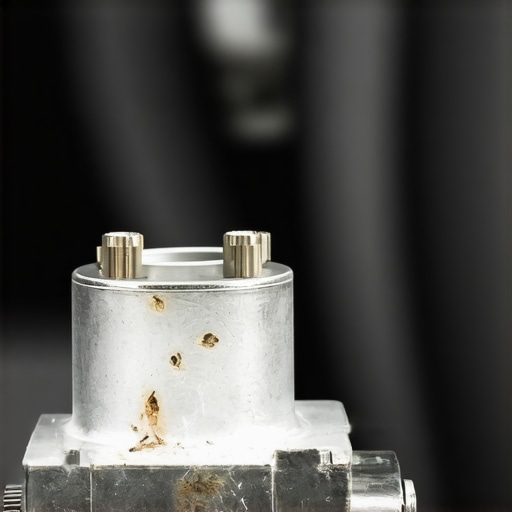
The Invisible Reference Voltage Tug-of-War
Sensors like the Throttle Position Sensor (TPS) and the MAP sensor share a 5-volt reference circuit originating from the ECU. If a single sensor on that circuit—even one unrelated to starting, like an A/C pressure switch—has an internal short, it can ‘pull down’ the entire 5V bus. When the engine starts and the alternator kicks in, the fluctuating voltage can cause this short to manifest, crashing the signal for the vital sensors needed to maintain a run-mode. This results in a stall that feels mechanical but is purely electrical. To solve this, you should systematically unplug sensors on the Vref line while monitoring the voltage. If you notice hesitation when you step on the gas just before the stall, the TPS is a primary suspect for a Vref breach. Before you commit to dropping the fuel tank, we urge you to share your scan tool’s ‘fuel pressure desired’ vs. ‘fuel pressure actual’ PIDs in the comments below or contact our experts to help decode the data stream before you swap expensive hardware.
The transition from a cranking cycle to a sustained idle is one of the most complex sequences in modern engine management. When an internal combustion engine fires successfully but fails to maintain RPM for more than a few seconds, it indicates a breakdown in the critical hand-off between start-up enrichment and stabilized run-mode logic. This phenomenon, often referred to as a ‘start-and-stall’ condition, typically originates from a failure in either security verification, air-metering calibration, or fuel pressure retention. Mastering the nuances of vehicle diagnostics is essential for pinpointing whether the issue is a software-induced shutdown or a physical hardware collapse during the initial load phase.
Your Security System Might Be Overriding Your Ignition
Modern vehicles utilize sophisticated immobilizer systems that allow the engine to start momentarily before the Engine Control Unit (ECU) verifies the transponder key’s signature. If the ‘handshake’ fails, the ECU will intentionally cut the fuel injector pulse or the ignition spark to prevent theft. This often confuses owners into thinking they have a mechanical fuel delivery problem. In professional auto repair environments, we first look for the security or ‘padlock’ light on the instrument cluster. According to technical documentation from Bosch Automotive Technology, if the rolling code between the key and the immobilizer module is out of sync, the engine will consistently die after exactly two to three seconds of operation.
Identify the Critical Airflow Discrepancies Killing Your Idle
Once the engine leaves the cranking phase, it relies heavily on the Mass Air Flow (MAF) sensor or the Manifold Absolute Pressure (MAP) sensor to calculate the exact volume of air entering the cylinders. If the MAF sensor is sending a frequency signal that falls outside the expected range, the ECU may default to a ‘limp’ strategy that is insufficient to maintain a cold idle. Before assuming a sensor is dead, experts recommend you clean your mass air flow sensor to remove microscopic contaminants that skew voltage readings. Furthermore, massive unmetered air entries—often caused by a torn intake boot or a disconnected vacuum line—can lean out the mixture so severely that the engine stalls the moment it attempts to transition out of its rich start-up state. For those chasing elusive leaks, using a specialized vacuum diagnostic tool can save hours of guesswork by visualizing the atmospheric breach.
Can a Faulty Idle Air Control Valve Mimic a Major Mechanical Failure?
The Idle Air Control (IAC) valve or the electronic throttle body (ETB) is responsible for bypassing the closed throttle plate to provide the engine with air during idle. If the IAC motor is seized or the throttle plate is heavily carbon-fouled, the engine will start because the throttle is usually slightly cracked open during the crank, but it will immediately choke out once the ECU attempts to settle the RPM. This is a common point of failure in high-mileage vehicles where carbon buildup prevents the plate from reaching its ‘minimum air’ position. If you notice the engine hesitates when you step on the gas just before it dies, the problem likely lies within this air-bypass circuit or a failing throttle position sensor.
Verify Fuel Pressure Under Initial Load Conditions
A fuel pump can often generate enough ‘prime’ pressure to start the engine but fail to maintain the necessary volume once the engine begins to run under its own power. This is frequently caused by a failing fuel pump relay that drops the circuit after the initial prime or a clogged fuel filter that restricts flow. Advanced technicians use an oscilloscope to monitor the fuel pump’s current ramp, ensuring the motor isn’t drawing excessive amperage as it warms up. If you suspect your ignition system is also playing a role, you should inspect your spark plugs for signs of fouling, which can indicate whether the engine was running too rich or too lean in the moments before it died. To ensure your vehicle receives the professional oversight required for these complex systems, we encourage you to schedule a comprehensive car service to prevent a minor sensor drift from becoming a total transmission or engine-control catastrophe.
The Alternator Handoff That Quietly Fails Your Battery
The moment the ignition key returns from the ‘start’ position to ‘run,’ the vehicle undergoes a massive electrical shift. During cranking, the battery provides several hundred amps of current, but once the engine fires, the alternator must instantly assume the electrical burden of the ignition system, fuel pump, and control modules. If the alternator’s voltage regulator is sluggish or the internal diodes are leaking AC current into the DC system, the voltage may dip below the threshold required to keep the fuel injectors pulsing. You can often diagnose this specific transition by learning how to test an alternator using only a screwdriver to check for magnetic field strength at the pulley during the initial run. If the battery is already marginalized, perhaps due to a parasitic battery drain, the sudden drop in amperage as the starter cuts out can cause the ECU to reset, creating a perpetual loop of starting and immediate stalling. This is particularly common in modern vehicles with high electrical demands from electric power steering and advanced cabin electronics.
When Backpressure Turns Your Exhaust into a Chokehold
Exhaust restrictions present another mechanical hurdle that often mimics an electronic fuel delivery failure. A disintegrated catalytic converter or a collapsed internal muffler baffle acts like a cork; while the engine has enough internal volume to start and run for a few seconds, as combustion gases rapidly accumulate in the head, the resulting backpressure prevents fresh air from entering during the intake stroke. The engine essentially suffocates on its own waste. To rule this out without expensive tools, you can learn the easy way to tell if your catalytic converter is clogged by monitoring intake vacuum readings or checking for excessive heat build-up at the exhaust manifold within seconds of startup. If you’ve recently performed maintenance on the cooling system, ensure that a hidden drain plug or a misplaced rag hasn’t accidentally obstructed a vital flow path, as even minor physical blockages can destabilize a fragile cold idle.
Could Your Torque Converter Be Stalling the Crankshaft?
In vehicles equipped with automatic transmissions, the torque converter clutch (TCC) is designed to create a solid mechanical link between the engine and the gearbox at cruising speeds. However, if the TCC solenoid is stuck in the ‘on’ position—often due to debris in the valve body or old, varnished fluid—the converter may remain locked even at a standstill. This creates a direct mechanical drag that stalls the engine the moment the RPMs attempt to settle into an idle, functioning exactly like a manual transmission car being stopped in gear without the driver depressing the clutch pedal. Recognizing transmission failures early is vital, as many owners spend thousands on engine parts when the culprit is actually a $50 solenoid. According to technical service bulletins from Delphi Technologies, faulty solenoid signals or ‘cross-talk’ in the wiring harness often trigger these stalls specifically during the transition from open-loop to closed-loop engine management.
Eliminate Electronic Interference and Ghost Signals
Electrical noise and ground loops are the silent killers of a stable engine idle. A frayed wire or a loose engine block ground can introduce electromagnetic interference into the ECU’s sensitive data lines, effectively ‘blurring’ the signal from the Crankshaft Position (CKP) sensor. Without a crystal-clear signal indicating the exact position of the pistons, the ECU cannot time the ignition pulse or fuel injection correctly, leading to an immediate shutdown. If you suspect an intermittent short or a ground loop is the culprit, using a simple tool for finding electrical shorts can help you isolate the specific circuit that is bleeding voltage or injecting noise into the system. Before you dive into expensive replacements of the ECU or wiring harness, we suggest reading about common engine hesitation triggers to see if your symptoms align with a broader sensor or grounding failure. Share your specific diagnostic findings in the comments below, or reach out to our team if you need a deep-dive scan into your vehicle’s history to find the ‘ghost in the machine’ that keeps your car from staying running.
Heat Soak Triggers Immediate Stalling After a Hot Start
While cold start issues often dominate the conversation, a vehicle that fires up perfectly when cold but stalls seconds after a warm restart points toward a phenomenon known as heat soak. This occurs when thermal energy from the engine block radiates into the fuel rail or sensitive electronic sensors once the cooling airflow from driving has ceased. In some fuel-injected systems, this heat can cause ‘vapor lock’ in the rail, where the fuel turns to gas, preventing the injectors from delivering a liquid charge. Additionally, a Crankshaft Position (CKP) sensor with an internal winding fracture may provide just enough signal to allow the ECU to sync during the high-amperage crank, but the increased resistance from engine heat causes the signal to drop out the moment the engine reaches a sustained RPM. To determine if your electrical components are failing under load, you might want to use a diagnostic tool for finding electrical shorts or resistance spikes that only manifest at operating temperature.
Does an Oil Pressure Switch Have the Power to Cut Your Fuel Supply?
In many older domestic designs and specific heavy-duty applications, the oil pressure switch serves as a redundant safety circuit for the fuel pump. If the fuel pump relay fails, the pump can actually receive power through the oil pressure switch once the engine builds enough pressure to close the internal contacts. Conversely, if the switch itself is faulty or if the engine takes too long to build pressure, the ECU may cut the fuel pump ground as a protective measure to prevent catastrophic engine damage. This creates a distinct ‘start-and-stall’ pattern where the engine runs for the three seconds it takes for the initial prime to deplete. According to technical standards published by SAE International, these integrated safety loops are designed to preserve the mechanical integrity of the rotating assembly, but they can become a primary failure point if the sensor’s internal diaphragm leaks oil into the electrical connector, causing a signal-to-ground bridge.
Variable Valve Timing Phasers Can Sabotage Your Idle Quality
Modern engines utilize Variable Valve Timing (VVT) to optimize efficiency, but this system relies heavily on oil pressure and solenoid precision. If a VVT solenoid is stuck in the ‘advance’ position due to sludge or a mechanical failure, the camshaft timing will be optimized for high-RPM power rather than a stable idle. When you start the car, the engine may fire because it is in ‘open-loop’ mode, but as soon as the ECU attempts to settle the timing for a smooth idle, the advanced cam position causes a massive intake overlap that kills the engine. If you’ve recently noticed that your engine hesitates when you step on the gas, it could be a sign that the cam phasers are not returning to their ‘parked’ position. Cleaning the solenoids or performing a specialized oil system flush is often the first step in vehicle diagnostics before committing to a full timing chain teardown.
The Ghost Vacuum Leak Hiding in Your Brake Booster
Not all vacuum leaks are found in the intake manifold or the small rubber lines crisscrossing the engine bay. A ruptured internal diaphragm in the brake booster can create a massive, hidden vacuum leak that only presents itself when the engine transitions out of the high-fuel ‘cranking’ enrichment. Since the booster is a large reservoir, it can lean out the air-fuel mixture enough to cause an immediate stall without making the traditional whistling sound associated with smaller leaks. You can test this theory by temporarily disconnecting and plugging the large vacuum hose leading to the booster; if the engine suddenly maintains a steady idle, you’ve located your culprit. For those performing a DIY car service, don’t forget to check the PCV valve as well, as a stuck-open plunger can act as a secondary unmetered air source that mimics a failing transmission torque converter drag or a dead MAF sensor. If you are seeing specific error codes like P0171 or P0174, we recommend you deploy a smoke machine or vacuum gauge to visualize exactly where the atmospheric seal has been breached.
Stop the Intake from Drowning in Fuel Vapors
A frequently overlooked culprit in the ‘start-and-stall’ saga is the Evaporative Emission (EVAP) purge valve. This component is designed to remain closed until the engine reaches operating temperature and enters closed-loop operation. If the valve is physically stuck in the open position, the intake manifold receives a direct, unregulated stream of raw fuel vapors from the charcoal canister the moment the engine creates vacuum. This effectively floods the combustion chamber with an excessively rich mixture that the ECU cannot compensate for during the delicate transition from cranking. If you suspect this, try performing a vehicle diagnostics test by pinching off the purge line; if the engine suddenly holds its idle, you’ve confirmed a mechanical bypass failure.
Lying Sensors Can Freeze Your Warm-Up Sequence
The Engine Coolant Temperature (ECT) sensor acts as the master conductor for the cold-start enrichment strategy. If this sensor ‘shifts’ its resistance—meaning it doesn’t fail completely but sends a signal that is 40 degrees off—the ECU may believe the engine is already at operating temperature when it is actually ice cold. This results in a lean-out condition that provides zero ‘choke’ effect, causing the engine to fire and then instantly die as the fuel droplets fail to atomize. According to technical bulletins from Standard Motor Products, sensor bias is often more difficult to catch than a total circuit failure because it won’t always trigger a Check Engine Light. Verifying the sensor’s accuracy against an infrared thermometer is a critical step in professional auto repair.
Could Your Car’s ‘Digital Memory’ Be Forcing a False Stall?
Modern Engine Control Units utilize Long Term Fuel Trims (LTFT) to account for gradual engine wear or small vacuum leaks. If you recently disconnected the battery or performed a car service that involved fixing a major air leak, the ECU may still be applying a massive ‘fuel add’ or ‘fuel subtract’ command based on the previous mechanical state. This ‘ghost’ calibration can be so extreme that it drives the air-fuel ratio into a stall-zone before the sensors can react. In these instances, a hard reset of the KAM (Keep Alive Memory) or a specialized scan tool command to clear adaptive fuel tables is necessary to allow the engine to ‘re-learn’ its baseline idle requirements. If you’re still struggling, checking for electrical shorts that might be corrupting the memory chip’s voltage can provide a breakthrough.
Pulse-Width Modulation Fails Where Relays Once Succeeded
In many late-model vehicles, the traditional fuel pump relay has been replaced by a Fuel Pump Driver Module (FPDM). This module uses Pulse-Width Modulation (PWM) to vary the pump’s speed based on demand. Because these modules are often mounted on the vehicle’s frame rail, they are prone to severe corrosion and thermal fatigue. An FPDM can fail such that it allows enough current for the initial prime but shuts down as soon as it begins the high-frequency switching required for a running engine. Inspecting these modules for a cracked aluminum housing is a staple of high-level transmission and drivetrain diagnostics.
The Invisible Reference Voltage Tug-of-War
Sensors like the Throttle Position Sensor (TPS) and the MAP sensor share a 5-volt reference circuit originating from the ECU. If a single sensor on that circuit—even one unrelated to starting, like an A/C pressure switch—has an internal short, it can ‘pull down’ the entire 5V bus. When the engine starts and the alternator kicks in, the fluctuating voltage can cause this short to manifest, crashing the signal for the vital sensors needed to maintain a run-mode. This results in a stall that feels mechanical but is purely electrical. To solve this, you should systematically unplug sensors on the Vref line while monitoring the voltage. If you notice hesitation when you step on the gas just before the stall, the TPS is a primary suspect for a Vref breach. Before you commit to dropping the fuel tank, we urge you to share your scan tool’s ‘fuel pressure desired’ vs. ‘fuel pressure actual’ PIDs in the comments below or contact our experts to help decode the data stream before you swap expensive hardware.
Expert Insights & Advanced Considerations
Stop Firing the Parts Cannon at Your Dashboard
Throwing parts at a start-and-stall condition without verifying the signal path is a recipe for frustration. Professional auto repair focuses on using an oscilloscope to verify the ‘handshake’ between the CKP sensor and the fuel injector pulse. If the signal is clear but the stall remains, look toward load-side electrical failures.
Your Chassis Ground is the Most Overlooked Component
High resistance in a main engine block ground can pull down the 5V reference bus exactly as the alternator attempts to take over the electrical load. Always perform a voltage drop test on your grounds before assuming an ECU or FPDM has failed.
Pending Codes Reveal the Truth First
Often, an intermittent MAF or TPS fault won’t trigger a hard Check Engine Light during a two-second run cycle. Accessing the ‘pending’ code list during vehicle diagnostics can uncover hidden sensor bias that hasn’t yet reached the threshold for a permanent trouble code.
Curated Expert Resources
- SAE International: The industry benchmark for technical standards regarding safety-critical engine shutdown logic and fuel system protocols.
- Bosch Mobility Solutions: Provides unmatched depth on modern Engine Management Systems and the transition from open-loop to closed-loop idling.
- Delphi Technologies Resource Center: A vital source for understanding how solenoid cross-talk and varnished transmission fluid affect crankshaft drag.
Final Expert Perspective
Navigating a start-and-stall loop requires a synthesis of mechanical intuition and advanced electrical knowledge. By systematically ruling out security handshakes, air-bypass obstructions, and reference voltage breaches, you can move beyond guesswork. Mastering top auto repair techniques allows you to identify these ghosts in the machine before they lead to costly hardware replacements. If your car continues to defy logic, reaching out for a professional reliable car service in 2025 ensures that your vehicle diagnostics are performed with the precision necessary for today’s complex engine management systems. We invite you to share your diagnostic logs in the comments below to further our collective understanding of these elusive stalling triggers.