When a modern internal combustion engine fails to respond instantaneously to throttle input, it is rarely the result of a single component failure but rather a breakdown in the synchronization between the Engine Control Unit (ECU) and the physical combustion cycle. For master technicians, this hesitation or lag represents a critical mismatch in the stoichiometric ratio—the precise balance of air and fuel required for efficient power strokes. As automotive technology advances, the window for error in fuel delivery and ignition timing has narrowed, meaning even a minor deviation in sensor data can lead to significant drivability issues. Identifying the root cause requires moving beyond basic code scanning and entering the hidden world of vehicle diagnostics to analyze live data streams and sensor latency.
Why Your Engine Lags When You Need Power Most
Acceleration hesitation is often the first symptom of a lean-burn condition, where the air-fuel mixture contains too much oxygen and not enough gasoline. This imbalance frequently originates from a contaminated Mass Air Flow (MAF) sensor or an undetected vacuum leak. When you step on the gas, the throttle plate opens to allow more air into the intake manifold; if the MAF sensor is slow to report this change, the ECU cannot adjust fuel injector pulse width fast enough to match the surge of oxygen. This results in a temporary power drop, commonly described as why your engine stumbles when you accelerate. According to technical standards established by SAE International, precision in sensor feedback loops is the foundation of modern engine efficiency and emissions control.
Is It Possible for a Torque Converter Issue to Feel Like an Engine Misfire?
In many cases, what feels like an engine hesitation is actually a mechanical slip or hydraulic delay within the drivetrain. A failing torque converter clutch can cause a shuddering sensation during moderate acceleration that closely mimics an engine stumble. This confusion often leads car owners to replace spark plugs or fuel filters unnecessarily while the true issue lies within transmission failures or fluid pressure inconsistencies. When the lock-up solenoid engages prematurely or fails to release smoothly, the engine may bog down, creating a perceptible lag that disappears once the vehicle reaches a higher gear. Distinguishing between a powertrain stumble and a combustion misfire requires monitoring the RPM fluctuations alongside throttle position sensor (TPS) percentages.
Look Beyond Spark Plugs to Find the True Source of Stumbling
While ignition components are a common culprit, the increasing complexity of direct injection systems has introduced new variables. Carbon buildup on intake valves, a byproduct of GDI (Gasoline Direct Injection) engines, can disrupt the airflow tumble pattern, leading to poor fuel atomization during sudden load increases. This physical obstruction prevents the engine from breathing efficiently, especially under the high-pressure demands of highway merging. If you are experiencing these symptoms, you may find that the 15-fix for engines that stumble under pressure offers a localized solution for cleaning or sensor maintenance before opting for more expensive mechanical overhauls. Professional diagnostics should always include a check for stored ‘pending’ codes that do not yet trigger a Check Engine Light but indicate intermittent sensor failures.
Identify Pressure Drops in the Fuel Delivery System
A weakening fuel pump may provide enough volume for idling or steady cruising but fail to maintain the necessary pressure during rapid acceleration. This volumetric deficiency creates a ‘dead spot’ in the power curve. To diagnose this, technicians use a fuel pressure gauge to observe the needle under load; a sharp drop as the throttle opens confirms that the pump or the fuel pressure regulator is unable to keep up with demand. If you have noticed a decline in performance or a delay when passing other vehicles, consider that your car’s fuel system may be operating at its limit. To ensure your vehicle remains reliable, you should book a specialized car service to perform a comprehensive fuel system health check and preventative maintenance.
Why Noisy Electrical Grounds Mimic Mechanical Failures
Modern vehicles rely on low-voltage signals to communicate throttle position and air intake data; however, electromagnetic interference (EMI) can easily corrupt these signals. When a ground wire becomes frayed or corroded, the resistance increases, causing the ECU to receive ‘dirty’ data. This often manifests as a rhythmic surge or a sudden, brief cutout during acceleration. If you notice your dashboard lights flicker when you hit a bump, it is a strong indicator that an electrical ground is compromised. This isn’t just a lighting issue; it affects the entire sensor array. You can often diagnose the source of these flickers by inspecting the main engine-to-chassis ground straps for green oxidation or loose bolts. This electrical ‘noise’ forces the ECU into a failsafe mode, retarding ignition timing and causing that frustrating lag you feel when trying to merge onto the highway.
Can Old Transmission Fluid Gunk Up Your Engine’s Performance?
While we often separate engine problems from transmission issues, the two are inextricably linked through the powertrain control module. Degraded hydraulic fluid loses its ability to maintain consistent pressure within the valve body, leading to sluggish gear engagement. This delay is frequently mistaken for a ‘dead spot’ in the engine. To restore responsiveness, many technicians suggest a simple fluid exchange rather than a high-pressure flush. You can often fix annoying transmission gear whine and improve shifting latency with a high-quality additive or fresh fluid. However, exercise caution: the truth about transmission flushes is that on high-mileage vehicles, they can dislodge debris that clogs fine passages, potentially exacerbating the hesitation you were trying to solve.
#IMAGE_PLACE_HOLDER_B#
Bridge the Gap with a Jumper Wire or Paperclip
Before investing in expensive diagnostic scanners, expert mechanics often use analog techniques to verify sensor integrity. For older OBD-I systems or specific sub-systems in newer cars, you can actually pull engine fault codes using only a paperclip to bridge the diagnostic terminals. This method triggers the Check Engine Light to flash in specific sequences, revealing stored codes that point directly to the culprit. Similarly, if your ABS or traction control is interfering with your acceleration, you can identify the fault without a scan tool by using a simple jumper wire. According to the National Institute for Automotive Service Excellence (ASE), mastering these fundamental diagnostic shortcuts is what separates a parts-changer from a true diagnostician, ensuring that the repair addresses the root cause rather than just the symptom.
The Alternator Connection to Low-RPM Stumbling
A failing alternator does more than just stop charging the battery; it can produce an AC ripple that confuses the ECU’s sensitive processors. If the alternator diodes are failing, the electrical system receives inconsistent voltage, which is particularly noticeable when the engine is under load at low RPMs. You should learn how to identify a dying alternator before it leaves you stranded. Interestingly, you can even test your alternator without a multimeter by using a screwdriver to check for magnetic pull at the rear bearing, an old-school trick that still holds merit in modern engine bays. If your car stumbles only when the headlights or AC are on, your charging system is likely the silent saboteur of your engine’s smoothness. Have you checked your battery terminals for tightness lately? Share your diagnostic success stories in the comments below or reach out if you’re stuck on a persistent lag issue.
When Variable Valve Timing Fights Your Right Foot
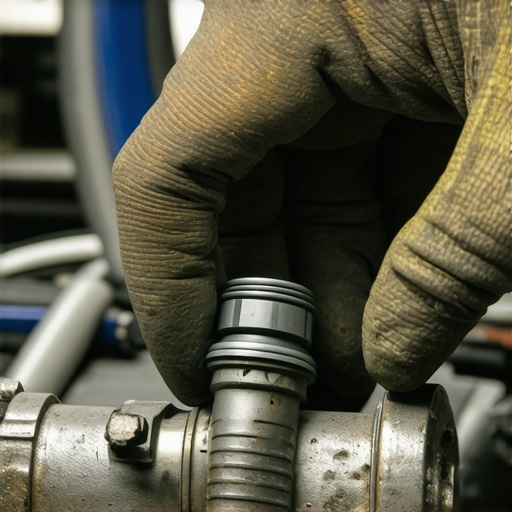
Modern engines rely on Variable Valve Timing (VVT) to optimize the overlap between intake and exhaust cycles across the entire RPM range. This system is hydraulically actuated by oil pressure via VVT solenoids. When these solenoids become clogged with sludge or if the oil viscosity is incorrect, the camshaft phasers cannot advance or retard the timing quickly enough to meet the demand of a wide-open throttle. This creates a noticeable “flat spot” in acceleration where the engine feels breathless before suddenly surging forward once the mechanical components catch up. If you’ve been lax on oil changes, this mechanical lag is a frequent culprit of intermittent stumbling that no electronic sensor can fully compensate for.
Why Does My Car Stumble Only When the Engine is Hot?
Heat-related hesitation is a classic symptom of failing electronics, specifically ignition coils and crankshaft position sensors. As the engine bay temperature rises, the internal copper windings of these components expand, increasing electrical resistance or causing micro-fractures in the insulation to open up. This leads to a “weak spark” or a signal dropout that only manifests after 20 minutes of driving. While the car may start and run perfectly when cold, the heat soak forces the ECU into a struggle to maintain timing synchronization. To diagnose this, a technician must monitor the primary and secondary ignition patterns on an oscilloscope during a road test to catch the breakdown as it occurs under peak thermal load.
Stop the Choke: How Clogged Exhaust Pathways Kill Torque
An engine is essentially a massive air pump; if it cannot expel spent gases, it cannot draw in a fresh charge. A partially melted catalytic converter or a collapsed internal muffler baffle creates excessive backpressure that literally chokes the combustion process. This manifests as a car that idles fine but feels like it is “hitting a wall” when you try to accelerate past a certain speed. According to the Automotive Service Association (ASA), diagnostic procedures for restricted exhaust should include a backpressure test where a gauge is inserted into the oxygen sensor port; any reading above 1.5 PSI at 2,500 RPM indicates a serious blockage that requires immediate mechanical attention before the trapped heat damages the exhaust valves.
The Millisecond War Between Cam and Crank Sensors
The synchronization between the crankshaft and the camshaft is the heartbeat of your engine’s timing. In many high-mileage vehicles, the timing chain can stretch just enough to create a “correlation error.” While the error might not be severe enough to cause a catastrophic mechanical collision, it is enough to make the ECU second-guess its ignition map. When you demand power, the ECU detects a slight discrepancy between the two sensors and retards the timing as a safety measure, causing that soggy, unresponsive feeling under your foot. Using a dual-trace lab scope to compare the square-wave signals of both sensors is the only definitive way to prove the chain has stretched beyond its service limits. Don’t wait for a P0016 code to appear; if your throttle response feels “rubbery,” the mechanical timing is the next place to look.
Resetting the Brain: Why Your ECU Might Be Learning Bad Habits
Your vehicle’s computer uses “Adaptive Learning” to compensate for minor wear in the fuel system and air intake. Over time, these Long Term Fuel Trims (LTFT) can drift to the extreme edges of their operating window to account for a small vacuum leak or aging injectors. If you fix a mechanical issue but don’t reset the Keep Alive Memory (KAM), the ECU will continue to apply those old, “learned” compensations to the new, healthy components, leading to continued hesitation. In these cases, a simple “battery nap” or a professional scan tool reset is necessary to clear the slate. If you’ve recently replaced a sensor and the car still isn’t acting right, you might just need to force the computer to re-learn its idle and part-throttle strategies from scratch.
Why Turbocharged Engines Stumble Before the Boost Hits
In the era of engine downsizing, turbocharging has become the standard for maintaining power while meeting stringent emission targets. However, this introduces a complex layer of pneumatic and electronic controls that can cause a distinct hesitation. If your engine feels sluggish until the RPMs climb, the culprit may not be the turbo itself, but the wastegate actuator or the boost control solenoid. A tiny crack in a vacuum line or a sticking bypass valve allows pressurized air to escape before it ever reaches the cylinders, leading to a massive drop in volumetric efficiency. Mastering the diagnosis of these leaks requires an understanding of duty cycles; if the ECU is commanding a 90% duty cycle on the solenoid but the manifold absolute pressure (MAP) isn’t rising, you have a mechanical breach in the pressure circuit. 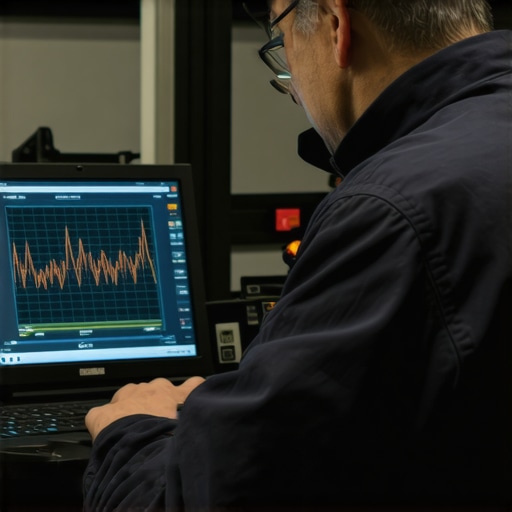
Could a Leaky EVAP Valve Be Tricking Your ECU?
The Evaporative Emission (EVAP) system is often overlooked during a performance diagnosis because it is designed for environmental compliance rather than power. Yet, a purge valve that sticks slightly open acts as a secondary, unmetered fuel source. When you accelerate from a stop, the ECU expects a specific air-fuel ratio based on the MAF and TPS data, but it suddenly receives a gulp of raw fuel vapors from the charcoal canister. This rich stumble is particularly prevalent after refueling and can leave even seasoned mechanics scratching their heads. According to the diagnostic specialists at Pico Technology, using a lab scope to monitor the oxygen sensor’s reaction time against the purge solenoid’s pulse-width modulation is the most effective way to catch this intermittent ghost in the machine.
The Hidden Latency in Electronic Throttle Control
Modern Drive-by-Wire systems have replaced the mechanical throttle cable with a pair of potentiometers and a DC motor. While this allows for better traction control and fuel economy, it introduces the possibility of signal latency. If the carbon tracks inside the Throttle Position Sensor (TPS) wear down, the signal may drop out for only a few milliseconds—not long enough to trigger a permanent fault code, but long enough for the ECU to pause fuel delivery as a safety precaution. This creates the infamous dead pedal sensation where the car simply refuses to move for a second before suddenly catching up. Verifying this requires a sweep test with a high-speed graphing multimeter to ensure the voltage rises linearly without any jagged interruptions or noise that could confuse the processor.
Guard Against Low-Speed Pre-Ignition Before It Shatters a Piston
For owners of modern GDI (Gasoline Direct Injection) engines, a stumble under heavy load at low RPMs might be a warning sign of Low-Speed Pre-Ignition (LSPI). This phenomenon occurs when a droplet of oil or fuel ignites before the spark plug fires, creating a massive pressure spike that fights the upward movement of the piston. It often sounds like a heavy metallic clunk or a brief hesitation when you tip into the throttle in a high gear. This isn’t just a performance issue; it is a mechanical emergency that can lead to cracked ring lands or bent connecting rods. To mitigate this, ensure you are using motor oils specifically formulated to prevent LSPI and avoid lugging the engine at low speeds. If your vehicle feels sluggish despite having a clean bill of health on the scan tool, it is time to look at the data pids for boost pressure and throttle command—tell us about your results in the comments so we can help decode the mystery.
Expert Insights & Advanced Considerations
Don’t Ignore the Data Highway Noise
Master technicians understand that many intermittent stumbles aren’t mechanical at all, but results of electromagnetic interference on the CAN bus. When a poorly shielded aftermarket accessory or a failing alternator diode creates electrical “noise,” the ECU can lose its place in the data stream for a few milliseconds. This is why the hidden world of vehicle diagnostics requires checking for communication codes (U-codes) before ever opening the hood to replace a physical sensor.
The Limits of Standard OBD-II Interpretation
A basic scan tool only tells you what the computer is seeing, not what is actually happening in the engine. If your engine stumbles when you accelerate, the computer might blame the oxygen sensor, but the real culprit could be a lazy fuel injector that is only failing under high duty cycles. Real-time graphing and fuel trim analysis are the only ways to separate a sensor’s report from the physical reality of combustion.
#IMAGE_PLACEHOLDER_E#
Software Updates Are the New Mechanical Tune-Up
In the age of computerized control, a physical repair isn’t always the answer. Manufacturers frequently release software calibration updates that adjust how the ECU handles aging components or environmental variables. If you have ruled out transmission failures and fuel delivery issues, check for technical service bulletins (TSBs) that might resolve the hesitation with a simple computer re-flash rather than a costly parts replacement.
Curated Expert Resources
ASE (National Institute for Automotive Service Excellence): This resource is vital for identifying technicians who have mastered the scientific approach to drivability diagnostics rather than relying on guesswork.
SAE International: The primary source for the engineering standards that define how modern sensors communicate and how stoichiometry is maintained under varying loads.
Pico Technology Waveform Library: An advanced repository showing how lab scopes catch millisecond-level ignition dropouts that standard scan tools are too slow to detect.
Final Expert Perspective
Restoring a vehicle’s responsiveness is an exercise in data-driven precision. When your engine stumbles when you accelerate, it is a clear signal that the delicate balance of air, fuel, and spark has been disrupted. Whether you use a paperclip diagnostic trick to check vintage systems or deploy a high-speed oscilloscope for modern direct injection, the goal is always to address the root cause, not just the symptom. To maintain peak performance and avoid costly misdiagnosis, it is essential to book a specialized car service that utilizes advanced diagnostic equipment. Share your most difficult diagnostic challenges in the comments below—we are here to help you get back on the road with confidence.