Achieving thermal stability in modern internal combustion engines requires more than a simple fluid swap. Most DIY enthusiasts and even some entry-level technicians mistakenly believe that opening the radiator petcock constitutes a complete flush. However, failing to address the deep-seated reservoirs within the engine block leads to coolant stratification, where old, acidified fluid mixes immediately with the new, significantly degrading its protective properties. In the realm of advanced auto repair, we recognize that the cooling system is the lifeblood of engine longevity. Precision vehicle diagnostics reveal that even a 10% volume of residual old coolant can drastically shift the pH balance of the entire system, leading to accelerated galvanic corrosion.
The Petcock Trap: Why Draining the Radiator Is Only Half the Job
While the radiator petcock is the most accessible point, it is rarely the lowest point in the entire cooling circuit. In many V6 and V8 configurations, several quarts of coolant remain trapped within the cylinder head jackets and the lower portion of the engine block. Professional top auto repair techniques emphasize that leaving this fluid behind is akin to changing only half of your engine oil. This residual fluid often contains suspended heavy metals and depleted corrosion inhibitors. According to technical standards established by the Society of Automotive Engineers, the interaction between different coolant chemistries—such as mixing old IAT with new OAT inhibitors—can lead to the formation of silicate drop-out or ‘gelation,’ which can clog the fine passages of your heater core and transmission oil cooler.
Locate the Engine Block Drain Plug to Prevent Thermal Breakdown
To perform a truly exhaustive car service, one must locate the engine block drain plug. Usually found on the side of the engine block, often obscured by the exhaust manifold or a knock sensor, this plug allows the coolant surrounding the cylinders to escape. Removing this plug is the only way to ensure that the thermal mass of the engine is truly purged of contaminants. This step is particularly vital for vehicles that have experienced overheating or those nearing high-mileage milestones. Integrating these expert auto repair tips into your maintenance routine prevents the ‘thermal spikes’ that occur when fresh coolant cannot properly circulate through sludge-filled block passages.
Is the risk of snapping a seized block plug worth the extra coolant recovery?
This is a frequent point of contention in professional forums. Because block plugs are often made of different metals than the block itself, they are prone to galvanic bonding and can seize over time. If a plug feels excessively resistant, the risk of shearing it—which would necessitate a complex extraction—must be weighed against the benefits of a total flush. In such cases, experts may opt for multiple distilled water cycles to dilute the old fluid rather than forcing a seized plug. If you are managing a high-mileage vehicle, consider how professional car service for seamless maintenance can identify these hidden failure points before they lead to a breakdown. Knowing when to push and when to use alternative flush methods is the hallmark of a master technician.
Force the Thermostat Open or Risk Trapping Old Sludge
Many technicians fail to realize that the thermostat acts as a physical gatekeeper during the cleaning process. If you attempt to flush the system with a cold engine, the thermostat remains closed, effectively walling off the engine block from the radiator. This means your cleaning agents and fresh water never actually reach the water jackets where the most significant scale and rust deposits reside. Expert vehicle diagnostics often show that persistent overheating issues after a flush are due to this ‘bypass’ effect. To do this right, you must either bring the engine to full operating temperature multiple times during the flush cycles or, ideally, temporarily remove the thermostat entirely. Removing the housing allows for a high-volume unrestricted flow, which is the only way to dislodge heavy sediment. According to technical bulletins from the Gates Corporation, neglecting the thermostat’s state during a flush can leave up to 40% of the system’s contaminants untouched, leading to premature water pump seal failure and accelerated hose degradation. 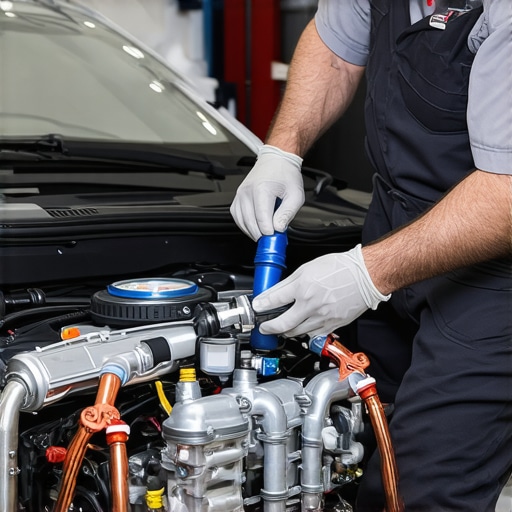
Stop the Air Pockets That Cause Instant Head Gasket Failure
The most dangerous part of a coolant service isn’t the drain; it is the refill. Modern cooling systems are designed with complex ‘high points’ where air naturally traps, creating localized steam pockets. These pockets prevent coolant from touching the metal surfaces of the cylinder head, leading to rapid localized overheating even if the dashboard gauge looks normal. This thermal stress is the hidden reason your engine is consuming oil without a leak, as warped heads eventually allow oil and coolant to migrate. To combat this, we recommend using a vacuum-fill tool that pulls the entire system into a deep vacuum before drawing in the new fluid. This ensures that every void, including the heater core and the transmission cooler, is 100% filled with liquid. If a vacuum tool isn’t available, you must utilize the specific bleed screws located on the thermostat housing or upper radiator hoses to burp the system. Ignoring these signals can lead to erratic behavior, such as why your ac blows cold then hot after 15 minutes of driving, which is often a symptom of air moving through the heater circuit.
How do you know if your heater core is acting as a debris trap?
If you notice that your cabin heat is lukewarm despite the engine being at temperature, your heater core has likely become a secondary filter for the entire cooling system. Because the passages in a heater core are significantly narrower than those in the radiator, they are the first to clog when pH-unbalanced coolant begins to drop solids. A professional-grade back-flush specifically for the heater core—using low-pressure air and water pulses—can often restore flow without requiring a dashboard-disassembling replacement. This level of detail is what separates a standard car service from a true restorative auto repair. Have you ever struggled with a ‘mysterious’ overheat after a simple coolant change? Share your experience in the comments or read our guide on choosing the right car service for seamless maintenance to see how the pros handle complex cooling circuits. Ensuring the system is free of air and debris is the only way to protect your engine’s internal tolerances.
Don’t Ignore the Small Valve Holding Your Engine Together
The radiator cap is far more than a simple lid; it is a calibrated pressure relief valve that dictates the boiling point of your entire system. For every pound of pressure the cap maintains, the boiling point of the coolant rises by approximately 3°F. In high-performance auto repair, we often see engines that suffer from mysterious coolant loss because a weakened cap spring allows fluid to escape into the overflow tank prematurely. This drop in pressure causes localized boiling around the exhaust ports, which can be detected through precision vehicle diagnostics even before the temperature needle moves. Ensuring the cap is tested for its specific PSI rating is a foundational step that many bypass during a standard car service, yet it remains the most cost-effective insurance against thermal runaway. 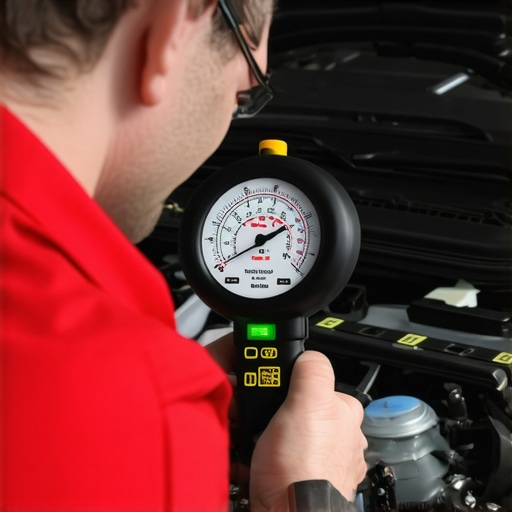
Can mineral content in tap water actually destroy a modern car service?
The answer is a resounding yes. Using tap water to dilute your coolant concentrate is one of the most common mistakes in DIY maintenance. Tap water contains calcium and magnesium, which precipitate out of the solution when heated, forming a hard scale on the internal surfaces of the radiator and engine block. This scale acts as a thermal insulator, preventing the metal from shedding heat to the coolant and effectively choking the engine’s ability to cool itself. According to the ASTM D3306 standard for engine coolants, the use of deionized or distilled water is mandatory to prevent the degradation of the corrosion inhibitor package. If you have already used tap water, a specialized chelating agent—not just a soap-based flush—is required to strip those minerals without eating through the thin aluminum cooling fins.
Fight Scale and Electrolysis Before They Eat Your Radiator
Beyond physical debris, the chemical health of your coolant determines the life of your transmission cooler and water pump. Over time, coolant becomes acidic as its buffers are used up. When this happens, it begins to act as an electrolyte, facilitating a process called electrolysis where electricity literally eats away at the softest metal in the system—usually the heater core or the radiator tubes. If you see a pitting pattern on the blades of your water pump during an auto repair inspection, you are looking at the physical results of a failed chemical balance. Professional top auto repair techniques involve using a multimeter to check for stray voltage in the coolant; anything over 0.1 volts indicates that the ground straps are failing or the coolant’s chemistry is severely depleted. This electrochemical breakdown is often the hidden culprit behind why transmission fluids can become contaminated by internal cooler leaks. To ensure your vehicle survives the next 50,000 miles, you must look past the color of the fluid and examine the ionic stability of the mixture. If you are unsure about your vehicle’s current state, our guide on expert auto repair tips for 2025 provides a deep dive into the specific additive packages required for European versus Asian imports. The nuances of silicate-free versus phosphate-enhanced formulas are the next frontier in preventing catastrophic engine failure.Beyond the basic selection of additives, the chemical methodology used to clean the system determines whether you are extending engine life or accelerating its demise. Traditional flushing agents often rely on harsh acids that can exacerbate the very pitting they intend to cure. Modern auto repair necessitates the use of specialized chelating agents—molecular structures that selectively bind to metallic ions like calcium and magnesium without attacking the underlying aluminum or copper substrates. Precision vehicle diagnostics now allow technicians to measure the ‘reserve alkalinity’ of a system, a metric that indicates how much acid-fighting capacity remains in the fluid. According to research published through the American Chemical Society, the depletion of these buffers is non-linear; once the pH drops below a critical threshold, the rate of molecular shear and metal loss triples almost immediately. This is why a simple visual inspection is often a fatal mistake in a professional car service; the fluid may appear clean while its chemical stability has already expired.
Does ‘Lifetime’ Coolant Actually Withstand the Heat of a Modern Turbo?
The marketing term ‘lifetime’ is perhaps the most dangerous phrase in modern automotive maintenance. In high-performance auto repair, we see that the extreme thermal cycles of a turbocharged engine—where the turbocharger is cooled by the same engine coolant—mechanically break down the long-chain polymers found in Organic Acid Technology (OAT) fluids. These polymers provide the critical passivation layer that coats internal metal surfaces. When subjected to the 200,000+ RPM heat of a turbocharger, these chains can shear, leaving the internal cooling channels vulnerable to cavitation and localized boiling. A truly expert top auto repair technique involves sampling the coolant at the turbo return line to check for these degraded particles.
Predicting Radiator Blowouts Before the Plastic Cracks
Modern radiators are engineering compromises that marry lightweight aluminum cores with high-density polymer end tanks. While these materials are initially resilient, the plasticizers—chemical agents that maintain the polymer’s elasticity—eventually migrate out of the material due to constant thermal hysteresis. Expert auto repair involves more than just checking for active leaks; it requires looking for ‘blooming’—a white or greenish chalky residue where the aluminum teeth crimp the plastic tank. This is a telltale sign that the underlying gasket is losing its compression set and the plastic is becoming brittle. 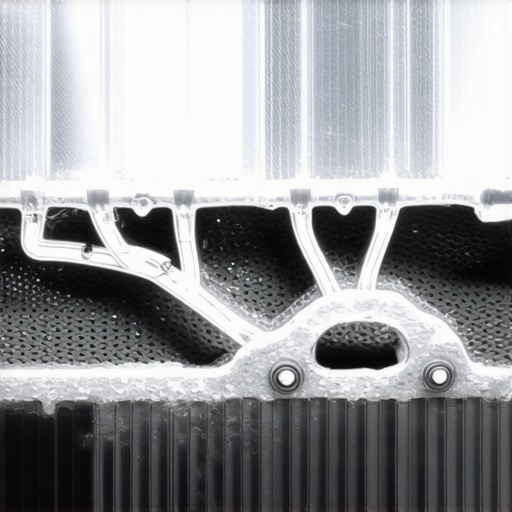 If these signs are ignored during a routine car service, the internal pressure will eventually exceed the weakened material’s tensile strength, resulting in a sudden catastrophic burst that renders the vehicle undriveable in seconds.
Why Your Transmission Depends on the Engine’s Cooling Loop
Most vehicle owners overlook the fact that their transmission fluid is often cooled by a dedicated heat exchanger integrated into the main radiator tank or mounted directly to the engine block. When engine coolant becomes acidic and the protective passivation layers fail, this internal cooler becomes a prime target for pinhole leaks caused by intergranular corrosion. The resulting cross-contamination is a death sentence for the gearbox; glycol dissolves the adhesives holding the friction material to the transmission plates, creating a slurry that ruins the unit within miles. High-level vehicle diagnostics can use specialized test strips to detect transmission oil in the coolant or vice versa, serving as an early warning system. By prioritizing this during your scheduled car service, you transform a simple fluid change into a vital shield for your entire drivetrain. Do you have a plan for your next major maintenance interval? Explore our guide on choosing the right car service for seamless maintenance to ensure your vehicle survives the demands of modern driving conditions.Achieving thermal stability in modern internal combustion engines requires more than a simple fluid swap. Most DIY enthusiasts and even some entry-level technicians mistakenly believe that opening the radiator petcock constitutes a complete flush. However, failing to address the deep-seated reservoirs within the engine block leads to coolant stratification, where old, acidified fluid mixes immediately with the new, significantly degrading its protective properties. In the realm of advanced auto repair, we recognize that the cooling system is the lifeblood of engine longevity. Precision vehicle diagnostics reveal that even a 10% volume of residual old coolant can drastically shift the pH balance of the entire system, leading to accelerated galvanic corrosion.
The Petcock Trap: Why Draining the Radiator Is Only Half the Job
While the radiator petcock is the most accessible point, it is rarely the lowest point in the entire cooling circuit. In many V6 and V8 configurations, several quarts of coolant remain trapped within the cylinder head jackets and the lower portion of the engine block. Professional top auto repair techniques emphasize that leaving this fluid behind is akin to changing only half of your engine oil. This residual fluid often contains suspended heavy metals and depleted corrosion inhibitors. According to technical standards established by the Society of Automotive Engineers, the interaction between different coolant chemistries—such as mixing old IAT with new OAT inhibitors—can lead to the formation of silicate drop-out or ‘gelation,’ which can clog the fine passages of your heater core and transmission oil cooler.
Locate the Engine Block Drain Plug to Prevent Thermal Breakdown
To perform a truly exhaustive car service, one must locate the engine block drain plug. Usually found on the side of the engine block, often obscured by the exhaust manifold or a knock sensor, this plug allows the coolant surrounding the cylinders to escape. Removing this plug is the only way to ensure that the thermal mass of the engine is truly purged of contaminants. This step is particularly vital for vehicles that have experienced overheating or those nearing high-mileage milestones. Integrating these expert auto repair tips into your maintenance routine prevents the ‘thermal spikes’ that occur when fresh coolant cannot properly circulate through sludge-filled block passages.
Is the risk of snapping a seized block plug worth the extra coolant recovery?
This is a frequent point of contention in professional forums. Because block plugs are often made of different metals than the block itself, they are prone to galvanic bonding and can seize over time. If a plug feels excessively resistant, the risk of shearing it—which would necessitate a complex extraction—must be weighed against the benefits of a total flush. In such cases, experts may opt for multiple distilled water cycles to dilute the old fluid rather than forcing a seized plug. If you are managing a high-mileage vehicle, consider how professional car service for seamless maintenance can identify these hidden failure points before they lead to a breakdown. Knowing when to push and when to use alternative flush methods is the hallmark of a master technician.
Force the Thermostat Open or Risk Trapping Old Sludge
Many technicians fail to realize that the thermostat acts as a physical gatekeeper during the cleaning process. If you attempt to flush the system with a cold engine, the thermostat remains closed, effectively walling off the engine block from the radiator. This means your cleaning agents and fresh water never actually reach the water jackets where the most significant scale and rust deposits reside. Expert vehicle diagnostics often show that persistent overheating issues after a flush are due to this ‘bypass’ effect. To do this right, you must either bring the engine to full operating temperature multiple times during the flush cycles or, ideally, temporarily remove the thermostat entirely. Removing the housing allows for a high-volume unrestricted flow, which is the only way to dislodge heavy sediment. According to technical bulletins from the Gates Corporation, neglecting the thermostat’s state during a flush can leave up to 40% of the system’s contaminants untouched, leading to premature water pump seal failure and accelerated hose degradation. #IMAGE_PLACE_HOLDER_B#
Stop the Air Pockets That Cause Instant Head Gasket Failure
The most dangerous part of a coolant service isn’t the drain; it is the refill. Modern cooling systems are designed with complex ‘high points’ where air naturally traps, creating localized steam pockets. These pockets prevent coolant from touching the metal surfaces of the cylinder head, leading to rapid localized overheating even if the dashboard gauge looks normal. This thermal stress is the hidden reason your engine is consuming oil without a leak, as warped heads eventually allow oil and coolant to migrate. To combat this, we recommend using a vacuum-fill tool that pulls the entire system into a deep vacuum before drawing in the new fluid. This ensures that every void, including the heater core and the transmission cooler, is 100% filled with liquid. If a vacuum tool isn’t available, you must utilize the specific bleed screws located on the thermostat housing or upper radiator hoses to burp the system. Ignoring these signals can lead to erratic behavior, such as why your ac blows cold then hot after 15 minutes of driving, which is often a symptom of air moving through the heater circuit.
How do you know if your heater core is acting as a debris trap?
If you notice that your cabin heat is lukewarm despite the engine being at temperature, your heater core has likely become a secondary filter for the entire cooling system. Because the passages in a heater core are significantly narrower than those in the radiator, they are the first to clog when pH-unbalanced coolant begins to drop solids. A professional-grade back-flush specifically for the heater core—using low-pressure air and water pulses—can often restore flow without requiring a dashboard-disassembling replacement. This level of detail is what separates a standard car service from a true restorative auto repair. Have you ever struggled with a ‘mysterious’ overheat after a simple coolant change? Share your experience in the comments or read our guide on choosing the right car service for seamless maintenance to see how the pros handle complex cooling circuits. Ensuring the system is free of air and debris is the only way to protect your engine’s internal tolerances.
Don’t Ignore the Small Valve Holding Your Engine Together
The radiator cap is far more than a simple lid; it is a calibrated pressure relief valve that dictates the boiling point of your entire system. For every pound of pressure the cap maintains, the boiling point of the coolant rises by approximately 3°F. In high-performance auto repair, we often see engines that suffer from mysterious coolant loss because a weakened cap spring allows fluid to escape into the overflow tank prematurely. This drop in pressure causes localized boiling around the exhaust ports, which can be detected through precision vehicle diagnostics even before the temperature needle moves. Ensuring the cap is tested for its specific PSI rating is a foundational step that many bypass during a standard car service, yet it remains the most cost-effective insurance against thermal runaway.
Can mineral content in tap water actually destroy a modern car service?
The answer is a resounding yes. Using tap water to dilute your coolant concentrate is one of the most common mistakes in DIY maintenance. Tap water contains calcium and magnesium, which precipitate out of the solution when heated, forming a hard scale on the internal surfaces of the radiator and engine block. This scale acts as a thermal insulator, preventing the metal from shedding heat to the coolant and effectively choking the engine’s ability to cool itself. According to the ASTM D3306 standard for engine coolants, the use of deionized or distilled water is mandatory to prevent the degradation of the corrosion inhibitor package. If you have already used tap water, a specialized chelating agent—not just a soap-based flush—is required to strip those minerals without eating through the thin aluminum cooling fins.
Fight Scale and Electrolysis Before They Eat Your Radiator
Beyond physical debris, the chemical health of your coolant determines the life of your transmission cooler and water pump. Over time, coolant becomes acidic as its buffers are used up. When this happens, it begins to act as an electrolyte, facilitating a process called electrolysis where electricity literally eats away at the softest metal in the system—usually the heater core or the radiator tubes. If you see a pitting pattern on the blades of your water pump during an auto repair inspection, you are looking at the physical results of a failed chemical balance. Professional top auto repair techniques involve using a multimeter to check for stray voltage in the coolant; anything over 0.1 volts indicates that the ground straps are failing or the coolant’s chemistry is severely depleted. This electrochemical breakdown is often the hidden culprit behind why transmission fluids can become contaminated by internal cooler leaks. To ensure your vehicle survives the next 50,000 miles, you must look past the color of the fluid and examine the ionic stability of the mixture. If you are unsure about your vehicle’s current state, our guide on expert auto repair tips for 2025 provides a deep dive into the specific additive packages required for European versus Asian imports. The nuances of silicate-free versus phosphate-enhanced formulas are the next frontier in preventing catastrophic engine failure.Beyond the basic selection of additives, the chemical methodology used to clean the system determines whether you are extending engine life or accelerating its demise. Traditional flushing agents often rely on harsh acids that can exacerbate the very pitting they intend to cure. Modern auto repair necessitates the use of specialized chelating agents—molecular structures that selectively bind to metallic ions like calcium and magnesium without attacking the underlying aluminum or copper substrates. Precision vehicle diagnostics now allow technicians to measure the ‘reserve alkalinity’ of a system, a metric that indicates how much acid-fighting capacity remains in the fluid. According to research published through the American Chemical Society, the depletion of these buffers is non-linear; once the pH drops below a critical threshold, the rate of molecular shear and metal loss triples almost immediately. This is why a simple visual inspection is often a fatal mistake in a professional car service; the fluid may appear clean while its chemical stability has already expired.
Does ‘Lifetime’ Coolant Actually Withstand the Heat of a Modern Turbo?
The marketing term ‘lifetime’ is perhaps the most dangerous phrase in modern automotive maintenance. In high-performance auto repair, we see that the extreme thermal cycles of a turbocharged engine—where the turbocharger is cooled by the same engine coolant—mechanically break down the long-chain polymers found in Organic Acid Technology (OAT) fluids. These polymers provide the critical passivation layer that coats internal metal surfaces. When subjected to the 200,000+ RPM heat of a turbocharger, these chains can shear, leaving the internal cooling channels vulnerable to cavitation and localized boiling. A truly expert top auto repair technique involves sampling the coolant at the turbo return line to check for these degraded particles.
Predicting Radiator Blowouts Before the Plastic Cracks
Modern radiators are engineering compromises that marry lightweight aluminum cores with high-density polymer end tanks. While these materials are initially resilient, the plasticizers—chemical agents that maintain the polymer’s elasticity—eventually migrate out of the material due to constant thermal hysteresis. Expert auto repair involves more than just checking for active leaks; it requires looking for ‘blooming’—a white or greenish chalky residue where the aluminum teeth crimp the plastic tank. This is a telltale sign that the underlying gasket is losing its compression set and the plastic is becoming brittle. If these signs are ignored during a routine car service, the internal pressure will eventually exceed the weakened material’s tensile strength, resulting in a sudden catastrophic burst that renders the vehicle undriveable in seconds.
Why Your Transmission Depends on the Engine’s Cooling Loop
Most vehicle owners overlook the fact that their transmission fluid is often cooled by a dedicated heat exchanger integrated into the main radiator tank or mounted directly to the engine block. When engine coolant becomes acidic and the protective passivation layers fail, this internal cooler becomes a prime target for pinhole leaks caused by intergranular corrosion. The resulting cross-contamination is a death sentence for the gearbox; glycol dissolves the adhesives holding the friction material to the transmission plates, creating a slurry that ruins the unit within miles. High-level vehicle diagnostics can use specialized test strips to detect transmission oil in the coolant or vice versa, serving as an early warning system. By prioritizing this during your scheduled car service, you transform a simple fluid change into a vital shield for your entire drivetrain. Do you have a plan for your next major maintenance interval? Explore our guide on choosing the right car service for seamless maintenance to ensure your vehicle survives the demands of modern driving conditions.
Pro Level Strategies for Total Thermal Control
Look Beyond the pH for True Chemical Stability
While many rely on simple litmus tests, the true measure of a cooling system’s health is its reserve alkalinity. In high-end auto repair, we understand that a fluid can maintain a neutral pH while being dangerously close to its point of exhaustion. Once these chemical buffers are depleted, the transition to an acidic state happens nearly overnight, often triggered by a single high-heat event. Advanced vehicle diagnostics allow us to predict this failure before it compromises the internal alloy integrity.
Stop Cavitation Before it Eats the Water Pump
When coolant chemistry fails, it loses its surface tension properties, leading to cavitation—the formation and violent collapse of vapor bubbles against the water pump impeller. This physical erosion can eat through metal even if the car has never technically overheated. Recognizing the early acoustic signs of cavitation is an advanced skill that prevents total cooling failure during a standard car service. Always inspect the impeller for ‘pitting’ whenever the pump is accessible.
Eliminate Air Pockets with Vacuum Pressure
Traditional ‘burping’ of the system is increasingly ineffective on modern low-profile engine bays where the radiator is lower than the cylinder heads. Entrapped air isn’t just an inconvenience; it creates steam pockets that lead to localized metal expansion and head gasket stress. We recommend a vacuum-refill method for any major service, especially when addressing transmission failures decoded via cooling loop leaks. This ensures 100% fluid saturation from the first engine start.
Essential Technical Resources for High-Level Diagnostics
ASTM D3306 Standards: This is the gold standard for coolant performance specs. Understanding these requirements helps you filter through marketing hype to find fluids that actually protect your specific engine alloy.
SAE Technical Papers: Peer-reviewed research on heat transfer efficiency provides the data needed to understand why scale buildup of even 1/16th of an inch can decrease cooling capacity by double digits.
IATN (International Automotive Technicians Network): This is the premier professional forum where master technicians share real-world failure patterns and specific fluid interaction issues that aren’t found in standard manuals.
Ensuring Your Engine Lives to its Full Potential
True thermal management is a molecular game. By moving beyond the ‘drain and fill’ mentality and embracing precision expert auto repair tips, you safeguard the complex mechanical tolerances of your modern engine. Whether you are performing a DIY service or choosing the right car service to manage a performance drivetrain, the focus must remain on chemical stability and air-free circulation. Do you have a plan for your next system refresh? For a deeper look at protecting your vehicle’s most expensive components, explore our insights into the truth about transmission flushes to understand how fluid chemistry impacts the entire powertrain.