Thermal Saturation and the 15-Minute Failure Limit
The phenomenon of an automotive air conditioning system that initiates with crisp, arctic air only to transform into a humid breeze exactly 15 minutes into a drive is rarely a coincidence; it is a symptomatic failure of the thermodynamic cycle. In the realm of professional auto repair, this specific timing often points to a component reaching a critical thermal threshold or a physical blockage caused by phase-change physics. When the system operates, the refrigerant undergoes a rigorous transition from high-pressure liquid to low-pressure gas. If there is even a microscopic amount of moisture within the lines, it will freeze at the expansion valve, effectively choking the system. It takes roughly 15 minutes for that ice to accumulate sufficiently to halt refrigerant flow, leading to the sudden loss of cooling. Establishing a baseline through vehicle diagnostics is the only way to differentiate between a simple moisture issue and a more sinister mechanical failure of the compressor clutch.
The Physics of Evaporator Freeze-Up
A primary culprit in this ‘cold-then-hot’ cycle is the evaporator core becoming a literal block of ice. Under normal conditions, the evaporator removes heat and humidity from the cabin air. However, if the refrigerant levels are slightly low or if the cabin air filter is severely restricted, the evaporator temperature drops below the freezing point of water. As condensation forms on the fins, it turns to ice. Within 15 to 20 minutes of operation, this ice creates a physical barrier that prevents air from passing through the core. You might notice the airflow from your vents weakening significantly just before the air turns warm. Utilizing top auto repair techniques, technicians often find that a faulty thermistor or evaporator temperature sensor is failing to cycle the compressor off, allowing the core to drop into these sub-freezing ranges.
Why Does the Evaporator Freeze Up Even in Sweltering Heat?
It seems counterintuitive that a car would freeze over while driving in 90-degree weather, but the vacuum-side pressure of the AC system dictates the boiling point of the refrigerant. If the pressure drops too low—often due to a slow leak or a restricted orifice tube—the temperature of the refrigerant drops far below the 32°F (0°C) threshold. According to research published by SAE International, maintaining precise refrigerant mass is critical for preventing thermal runaway in automotive HVAC systems. When the mass is insufficient, the system over-expands the gas, causing the evaporator to reach ‘flash freeze’ conditions, which then requires a full system thaw before cooling can resume.
Electrical Ghosting and Compressor Clutch Failure
Beyond the mechanical and thermodynamic, the 15-minute mark often coincides with the ‘heat soak’ limit of an aging compressor clutch relay or the clutch coil itself. As the engine bay reaches its operating temperature, electrical resistance in the compressor’s electromagnetic coil increases. If the coil is weakened by age, the heat-induced resistance eventually prevents the magnetic field from being strong enough to hold the clutch engaged. The compressor stops spinning, and your air immediately turns warm. If you find your system struggling, it is essential to seek a comprehensive car service that includes an electrical load test on the AC circuit. Don’t let a minor electrical resistance issue lead to a costly and unnecessary compressor replacement; professional diagnostic tools can isolate the coil’s health in minutes. If you are noticing these symptoms, contact our team today for a precision evaluation of your vehicle’s climate control system.
Blocked Condensers and High-Pressure Cutoffs
When the cabin air transitions from cool to stagnant after several minutes of driving, the issue often lies not within the evaporator, but at the very front of the vehicle. The condenser is responsible for shedding the heat absorbed from the cabin into the atmosphere. If the condenser fins are impacted with road debris or if the cooling fans fail to reach high-speed operation, the head pressure within the AC system skyrockets. Most modern vehicles are equipped with a high-pressure cutout switch designed to prevent the system from exploding under extreme stress. This safety mechanism typically triggers after 10 to 15 minutes of idling or low-speed driving when airflow is at its lowest. To properly diagnose this, one must dive into the hidden world of vehicle diagnostics to monitor real-time pressure transducer data. If the pressure exceeds 350-400 PSI, the ECU will instantly kill the compressor clutch to save the seals. 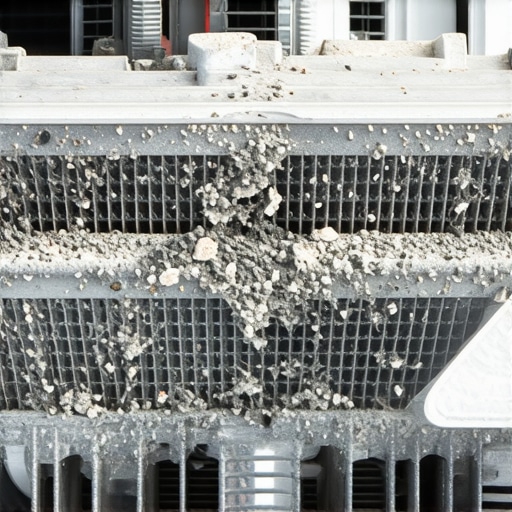
Is Your Cabin Filter Stealthily Killing Your Compressor?
It is a common misconception that a dirty cabin air filter only affects the smell of the interior; in reality, it is a primary driver of system-wide mechanical strain. When airflow is restricted by a clogged filter, the evaporator core cannot effectively transfer heat. This lack of heat exchange prevents the liquid refrigerant from fully boiling off into a gas before it returns to the compressor. Compressors are designed to pump gas, not liquid; attempting to compress a liquid leads to a catastrophic event known as ‘slugging.’ Long before the compressor dies, however, the system may simply freeze over and stop blowing air entirely. According to technical bulletins from the Mobile Air Climate Systems Association (MACS), nearly 30% of intermittent cooling complaints can be traced back to restricted airflow rather than a lack of refrigerant. If you’re tired of playing the guessing game with your climate control, consider choosing the right car service for seamless vehicle maintenance to ensure your system is vacuum-tested and charged to the gram. Have you checked your cabin filter in the last six months? Share your findings in the comments below, as you might be surprised by what is actually blocking your vents.
Why 2026 Firewall Security Makes DIY AC Repair Nearly Impossible
As we move toward more integrated vehicle architectures, the simple AC toggle switch has been replaced by complex localized networks. In newer models, the AC request signal must pass through multiple gateways that are now protected by advanced digital locks. If you are trying to troubleshoot a sensor issue on a newer platform, you may find that you need to bypass 2026 firewall security for diy vehicle diagnostics just to see why the compressor isn’t engaging. These systems often utilize ‘smart’ sensors that communicate via LIN-bus or CAN-bus protocols. For example, a failing ambient air temperature sensor or a glitch in the battery management system can prevent the AC from ever turning on. You might even need to fix 2026 smart charging glitches with this 12-sensor update before the climate control module will allow the compressor to pull the necessary amperage. This level of interconnectedness means that a fault in the charging system or a minor sensor error can manifest as a total loss of air conditioning, requiring a much deeper level of expertise than traditional mechanical repair.
Variable Displacement Compressors and the Silent Failure of Internal Control Valves
The evolution of the climate control system has led us to the era of the Variable Displacement Compressor (VDC). Unlike traditional compressors that cycle on and off using an electromagnetic clutch, a VDC remains engaged constantly but varies its internal stroke to meet cooling demands. When these units begin to fail after a short period of operation, the culprit is often a gummed-up internal control valve rather than the compressor assembly itself. These valves rely on precise PWM (Pulse Width Modulation) signals from the HVAC control module. According to technical training manuals from Denso, even a slight deviation in the signal duty cycle—caused by a corroded wire or a software glitch—can cause the compressor to ‘destroke’ and stop moving refrigerant entirely just as the cabin reaches its first thermal setpoint. This often mimics a 15-minute failure cycle because the computer initially commands full displacement for rapid cooldown and then fails to modulate correctly once the target temperature is approached. 
Does an Overheating Engine Automatically Shut Off the Air Conditioning?
Yes, and this is a frequent source of diagnostic confusion for many drivers. Modern Engine Control Units (ECUs) are programmed with a ‘thermal priority’ logic. If the engine coolant temperature sensor detects that the radiator is struggling to keep the block cool—perhaps due to a failing water pump or a partially clogged radiator—the ECU will shed the parasitic load of the AC compressor to reduce the heat generated in the engine bay. This shutdown usually happens about 10 to 15 minutes into a drive once the engine has reached its full operating temperature and the cooling system’s inefficiencies become apparent. If you notice your AC cutting out specifically during stop-and-go traffic or while climbing a grade, it may actually be an engine cooling issue masquerading as a climate control fault. Utilizing professional vehicle diagnostics is the only way to see if the ‘AC Cut’ command is being sent by the engine computer to protect the drivetrain.
Why Off-the-Shelf Leak Sealers Are a Technician’s Nightmare
In an attempt to save on auto repair costs, many vehicle owners turn to DIY cans of refrigerant that contain ‘stop-leak’ additives. While these products promise a quick fix, they are often the direct cause of the 15-minute failure window. These sealants react with moisture and oxygen to form a hard, plastic-like bridge over leaks; however, they cannot distinguish between a hole in a hose and the precision orifice of an expansion valve. As the system circulates, these chemical agents can partially clog the dryer or the expansion valve, restricting flow just enough that the system works initially but quickly reaches a high-pressure limit and shuts down. Once the system sits for a few minutes and pressures equalize, it may work again, creating a frustrating cycle of intermittent cooling. If you’ve used a sealant recently and your air is now failing, it is imperative to seek a specialized car service that can perform a full system flush before the sealant permanently destroys your expensive compressor.
Precision Refrigerant Oil Balance in Modern Climate Control
We often focus on the gas, but the oil is just as vital. Modern R-1234yf systems are incredibly sensitive to the ‘oil balance’—the specific ratio of PAG oil to refrigerant. If a previous repair resulted in too much oil being added, the excess fluid can pool in the evaporator or condenser, reducing the surface area available for heat exchange. This leads to a gradual loss of efficiency that manifests about 15 minutes into operation as the oil settles and begins to ‘slug’ the system. Conversely, too little oil causes internal friction that generates localized heat within the compressor, eventually triggering a thermal protection shutdown. Professional technicians use specialized recovery machines to measure exactly how much oil is removed during a vacuum test, ensuring that the recharge is accurate to the milliliter. If you’re experiencing a sudden loss of cooling on your commute, don’t wait for a total system seizure—reach out for a professional evaluation to verify your compressor’s modulation health. This interplay between liquid oil and gaseous refrigerant is governed by complex fluid dynamics that only become visible through…
Don’t Ignore the Dangers of Refrigerant Cross-Contamination
The 15-minute failure window is increasingly becoming a byproduct of chemical incompatibility in modern automotive workshops. With the industry transition from R-134a to the more environmentally friendly R-1234yf, the risk of cross-contamination has skyrocketed. These two refrigerants operate on vastly different pressure-temperature curves and require distinct PAG or POE oils. If a system is incorrectly topped off with the wrong gas, the thermodynamic properties are altered, causing the Engine Control Unit (ECU) to receive conflicting data from the pressure transducers. Within roughly 15 minutes of operation, the ECU may detect that the refrigerant state is not transitioning as programmed and will disengage the compressor to prevent hardware damage. This level of complexity requires precision vehicle diagnostics to identify the purity of the gas before any mechanical parts are replaced.
Sub-Cooling Secrets of the Liquid-to-Suction Heat Exchanger
Modern luxury and high-efficiency vehicles often utilize a Liquid-to-Suction Heat Exchanger (LSHX), a ‘tube-in-tube’ design that transfers heat from the warm liquid line to the cold suction line. This process sub-cools the liquid refrigerant before it reaches the expansion valve, significantly increasing cooling capacity. However, if this component suffers from internal scaling or a minor blockage, the system’s efficiency takes a dive as the cabin reaches its first thermal setpoint. As the system works harder to compensate, the compressor temperature climbs until a thermal protection switch triggers. According to the detailed technical guidelines from Honeywell Solstice, the chemical stability of R-1234yf is highly dependent on the exclusion of air and moisture to prevent the formation of acidic byproducts that compromise the compressor’s internal valving. If your air turns humid just as you reach highway speeds, the LSHX or its associated lines could be the silent culprit. 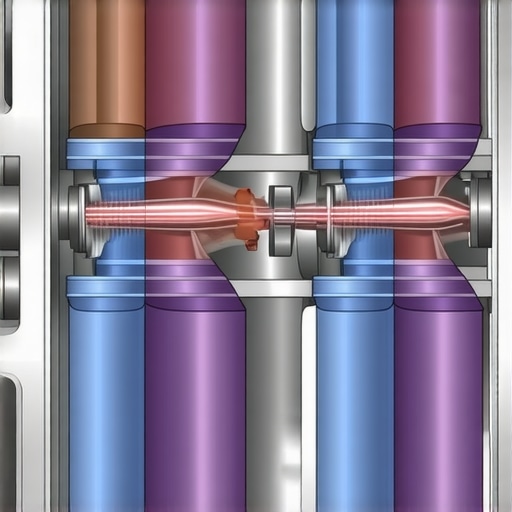
Does a Faulty Ambient Temp Sensor Stop the AC Cold?
Yes, and the failure is often delayed by several minutes as the engine bay heats up. The ambient air temperature sensor provides a critical data point for the HVAC control module; if the sensor is failing or ‘drifting’ in its resistance values due to heat soak, it may report an outside temperature of -40°F even in the middle of summer. Because the system is programmed to prevent the compressor from running in freezing temperatures to avoid damage, it will instantly shut down the cooling cycle. This is a common issue that confuses many who are focused on mechanical auto repair when the actual fix is a simple $20 sensor. Monitoring the ‘Outside Air Temp’ data PID via a scanner while driving is the only way to catch this electrical ghost in the act.
Stop Acid from Destroying Your AC Components from the Inside
When moisture enters a refrigerant circuit, it doesn’t just freeze; it reacts with the refrigerant and oil to form hydrofluoric and hydrochloric acids. These acids slowly eat away at the aluminum internals of the evaporator and the copper windings of the compressor. This degradation often manifests as an intermittent failure where the system operates fine until the ‘acid sludge’ migrates and partially clogs the expansion valve. If you have noticed a slight metallic smell or a consistent drop in cooling performance over 15 minutes, your system may be undergoing internal corrosion. Utilizing top auto repair techniques like an acid test kit can reveal if your system is being destroyed from within. Don’t wait for a total catastrophic failure that requires a multi-thousand dollar replacement; contact our expert team today to schedule a comprehensive AC system flush and moisture evacuation to protect your vehicle’s climate control longevity.
Expert Insights & Advanced Considerations
Go Beyond Static Pressure with Real-Time Transducer Monitoring
Traditional manifold gauges provide a snapshot, but they often fail to capture the transient spikes that trigger a high-pressure cutout. To truly master the 15-minute failure limit, a technician must utilize the hidden world of vehicle diagnostics to observe how the ECU interprets the voltage from the pressure transducer. If the sensor is drifting or reporting erratic data as it heats up, the system will disengage the compressor long before a physical gauge shows a problem. This level of precision is the hallmark of modern auto repair for 2025 and beyond.
Why a 500-Micron Vacuum is Your Only Defense Against Internal Acid
Simply pulling a vacuum until the gauge hits zero is insufficient for modern R-1234yf systems. Moisture trapped in the oil will not boil off at higher pressures. Achieving a deep vacuum of 500 microns ensures that even microscopic water vapor is evacuated, preventing the formation of hydrofluoric acid that eats away at the compressor’s internal valves. This proactive measure is one of the most critical top auto repair techniques for ensuring long-term climate control reliability. Without this depth of evacuation, you are merely delaying the inevitable acid-induced failure.
Visualizing Hidden Blockages Using Infrared Thermal Imaging
An infrared camera can reveal the exact point where a liquid line transforms into a gas prematurely due to a restriction. When a system fails after 15 minutes, scanning the condenser and evaporator for ‘cold spots’ can identify a partially clogged orifice tube or expansion valve that is causing the evaporator to freeze over. This non-invasive diagnostic step saves hours of labor and prevents the unnecessary replacement of functional components. Using thermal data is a superior way to differentiate between a refrigerant charge issue and a physical hardware blockage.
Curated Expert Resources
SAE International Technical Standards
The Society of Automotive Engineers provides the definitive benchmarks for refrigerant purity and system design. Their technical papers are essential for understanding the thermodynamic shifts between R-134a and R-1234yf and the specific oil-balance requirements of modern compressors.
MACS Technical Training Bulletins
The Mobile Air Climate Systems Association offers deep-dive bulletins that cover real-world failure patterns, such as the thermal priority logic used by modern ECUs. This resource is invaluable for technicians who need to solve complex electrical ghosting issues.
IATN Case Study Database
The International Automotive Technicians Network serves as a peer-reviewed repository of difficult-to-diagnose climate control failures. It is the go-to resource for identifying niche sensor failures or software glitches that mimic mechanical AC problems.
Final Expert Perspective
Solving the mystery of why an AC system fails exactly 15 minutes into a drive requires a shift from basic mechanical checking to advanced vehicle diagnostics. Whether the culprit is a thermal threshold in the compressor clutch, an evaporator freeze-up due to restricted airflow, or the complex intervention of an ECU protecting an overheating engine, the solution always lies in data-driven precision. We invite you to join the conversation below by sharing your most difficult AC diagnostic challenges or by booking an appointment at our car service center for a comprehensive system health check before the summer heat takes its toll. #IMAGE_PLACEHOLDER_E#