The persistent sponginess of a brake pedal following a standard bleeding procedure is one of the most frustrating enigmas in modern auto repair. While basic theory suggests that removing air from the lines should restore a firm pedal, the reality of hydraulic architecture is far more nuanced. When a technician encounters a pedal that lacks bite despite clear fluid flow, we must look beyond simple bubbles and investigate the systemic integrity of the brake’s closed-loop environment. This phenomenon often stems from microscopic air entrapment, internal component bypass, or mechanical expansion that mimics the compressibility of air, requiring advanced vehicle diagnostics to resolve properly.
The Hidden Physics of Hydraulic Resistance
In an ideal hydraulic system, fluid is practically incompressible. However, brake fluid is hygroscopic, meaning it absorbs moisture over time. This moisture not only lowers the boiling point but can also lead to internal corrosion in the ABS valves and master cylinder. Before you assume the job is done, it is crucial to recognize the difference between a soft brake pedal and a spongy one. A spongy pedal indicates air or elastic expansion, while a soft pedal that sinks to the floor often points to an internal seal failure within the master cylinder. Professional car service standards dictate that even a perfectly bled system can feel subpar if the mechanical leverage ratios are compromised by failing hardware.
Why Does Your ABS Module Trap Air Despite Multiple Bleed Cycles?
Modern anti-lock braking systems (ABS) introduce a labyrinth of solenoids and check valves that are notoriously difficult to purge. If air enters the ABS pump—often due to a master cylinder running dry during a routine car service—standard gravity or vacuum bleeding will rarely suffice. These modules often require a bi-directional scan tool to cycle the valves during the bleed process, forcing trapped pockets of air into the primary lines. Technicians specialized in transmission and powertrain diagnostics often find that the same level of hydraulic precision required for gear shifting is necessary for modern braking systems. Utilizing a scan tool to cycle the pump is the secret to getting a perfect brake pedal every time.
Identify Internal Master Cylinder Bypass and Seal Elasticity
Sometimes the spongy cake feeling isn’t air at all, but fluid bypassing the primary or secondary seals inside the master cylinder. This is known as an internal leak. When pressure is applied, the fluid slips past the piston seals and returns to the reservoir rather than moving the calipers. Furthermore, as vehicles age, the rubber flexible hoses connecting the hard lines to the calipers can weaken. Under high pressure, these hoses expand like a balloon, absorbing the force intended for the brake pads. This volumetric expansion is a common culprit in older vehicles. If you are performing a deep overhaul, knowing how to replace your own brake lines without making a mess can save hours of troubleshooting. According to the Society of Automotive Engineers (SAE) J1703 standards, maintaining fluid integrity and line rigidity is paramount for safety.
Stop Chasing Bubbles and Inspect Mechanical Deflection
Beyond hydraulics, mechanical issues often masquerade as air in the lines. A stuck caliper slide pin or a warped brake pad can cause the pedal to feel mushy as the system works to take up the slack before the friction material makes flat contact with the rotor. Ensuring that your auto repair routine includes a thorough cleaning of all contact points is essential for a firm response. For those seeking a higher tier of vehicle performance, exploring expert auto repair tips for 2025 can provide deeper insights into these mechanical nuances. If you have exhausted all bleeding methods, it is time to look at the calipers themselves. Are you a professional looking to sharpen your diagnostic skills? Share your most difficult ghost air stories in our community forum or learn about choosing the right car service for seamless vehicle maintenance to ensure your fleet stays road-ready. Effective vehicle diagnostics starts with a holistic view of the entire deceleration circuit and its mechanical interfaces.
Mastering the Bench Bleed Process for Absolute Pedal Firmness
Technicians often overlook the bench bleeding phase, assuming that pushing fluid through the lines will eventually evacuate the master cylinder bore. This is a common fallacy in auto repair. When a new master cylinder is bolted directly to the booster without pre-bleeding, air remains trapped in the dead space of the piston travel. This air acts as a persistent spring, absorbing pressure before it ever reaches the calipers. To ensure a rock-solid foundation, always use a bench bleed kit or fabricate your own lines to loop fluid back into the reservoir until no bubbles appear. While you are under the hood, it is also an ideal time to perform a quick visual inspection. If you want to save time later, learn how to check your own brake pads without taking the wheels off to monitor wear patterns that might indicate a sticking caliper or uneven hydraulic pressure distribution. 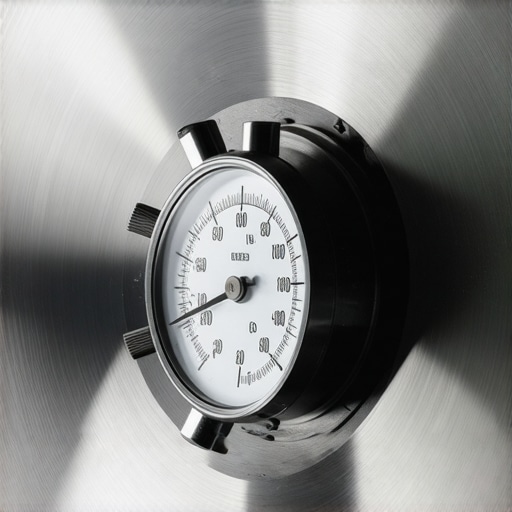
Could Your New Brake Pads Be the Reason Your Pedal Feels Soft?
Many drivers mistake the initial compressibility of new friction material for air in the lines. High-performance ceramic or semi-metallic pads require a specific thermal cycle to establish a transfer layer on the rotor surface. Without this, the interface between the pad and the disc lacks the necessary friction coefficient, leading to a dull, unresponsive pedal. Experts recommend following the correct way to bed new brake pads so they do not squeak and to ensure maximum clamping efficiency. According to technical documentation from Brembo, improper bedding can also lead to uneven material deposition, which manifests as pedal pulsation or a ‘vague’ sensation later in the vehicle’s life. This stage of auto repair is non-negotiable for anyone seeking professional-grade results.
Eliminate Hub Runout to Prevent Piston Knock-Back
A subtle but devastating cause of a spongy pedal is lateral runout. If the wheel hub or the rotor surface is not perfectly true, the rotor will wobble slightly as it spins. This wobble physically pushes the brake pistons back into their bores further than intended. The next time you press the pedal, the first half of the stroke is wasted just moving the pistons back into contact with the rotor—a phenomenon known as knock-back. This is often misdiagnosed as air. Before installing new rotors, always use a wire brush or the best way to remove rust from your brake rotors to ensure every speck of corrosion is gone from the hub surface. Integrating the one maintenance move that doubles the life of your rotors—proper cleaning and indexing—ensures that the runout remains within the tight tolerances, usually less than 0.002 inches, required for a modern high-pressure system. If you’re still feeling a strange vibration or pull after these steps, check out why your car pulls to the left after a professional brake job to identify if a seized slide pin or an internal hydraulic restriction is the true culprit. Do you have a specific diagnostic challenge or a tool recommendation that changed your workflow? Leave a comment below and help our community of enthusiasts master the art of the perfect stop.Many technicians focus exclusively on the front calipers, neglecting the reality that rear brake geometry heavily influences front pedal height. If your vehicle uses rear drum brakes, a seized self-adjuster creates a massive gap between the shoes and the drum. Every time you hit the brakes, the master cylinder must displace a significant volume of fluid just to move those shoes into contact. This creates a deep, mushy pedal that feels like air but is actually a mechanical ‘slack’ issue. Even with modern disc-rear setups, a sticking sliding pin can cause the same parasitic travel. If you’ve bled the system five times and the pedal is still low, it is time to pull the drums or inspect the rear caliper bracket alignment for any signs of flex or binding. 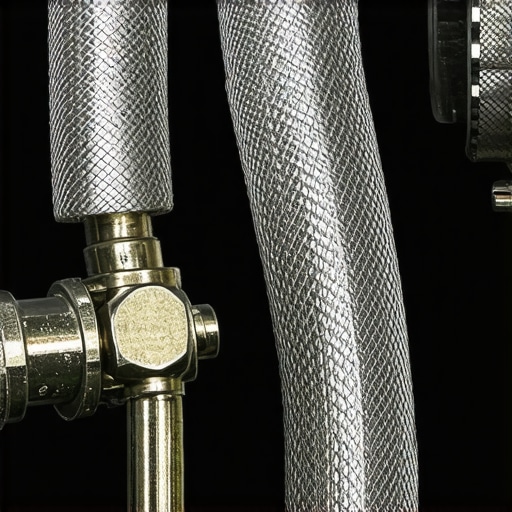
Does an Incorrectly Adjusted Brake Booster Pushrod Cause a Spongy Pedal?
A frequent culprit in master cylinder replacements is the critical interface between the power booster and the master cylinder piston. If the adjustable pushrod is set too short, you’ll experience an ‘air-like’ dead zone at the top of the pedal travel. Conversely, if it is too long, the primary piston cannot retract fully, preventing the compensating ports from opening. This traps pressure and causes the brakes to drag as they heat up. Precision matters here; a variance of just 0.020 inches can be the difference between a crisp engagement and a dangerously vague pedal. Use a dedicated pushrod depth gauge to ensure the gap meets the manufacturer’s specific tolerance before bolting the assembly together.
Upgrade to Braided Stainless Lines for Immediate Hydraulic Response
Even the most pristine hydraulic system is limited by the physical expansion of its delivery lines. Under the extreme pressures generated during a panic stop—often exceeding 1,000 PSI—factory rubber hoses expand. This volumetric expansion is quantified by the FMVSS 106 safety standards, which define the maximum allowable growth for a hose under load. Switching to braided stainless steel lines, which feature a Teflon inner core wrapped in a stainless mesh, virtually eliminates this expansion. The result is a more direct ‘pedal-to-pad’ feel that professional racers and performance enthusiasts demand. If you are chasing the ultimate firm pedal, replacing twenty-year-old rubber hoses is often more effective than another gallon of brake fluid.
Stop Fighting Gravity with a Professional Pressure Bleeder
Manual ‘pump-and-hold’ bleeding is prone to human error and often fails to move fluid fast enough to dislodge air bubbles clinging to the inner walls of the hard lines. A pressure bleeder, which attaches to the master cylinder reservoir and maintains a constant 15–20 PSI, provides a continuous, laminar flow that sweeps air toward the bleed screws. This method is especially vital for vehicles equipped with complex electronic brake distribution (EBD) systems. Unlike vacuum bleeding, which can pull air past the bleed screw threads and create false bubbles in your drain hose, pressure bleeding mimics the natural operation of the system. For a truly professional result, combine this with a high-performance fluid that has a higher dry boiling point to prevent vapor lock during spirited driving. Ready to take your shop’s efficiency to the next level? Mastering these nuances is what separates a standard car service from high-end performance tuning. If you are still seeing erratic pressure readings, we need to dive deeper into the world of electronic stability control (ESC) calibration and how itinfluences the communicative feedback between the driver and the road. Modern stability systems utilize a series of high-frequency solenoids that can pulsate dozens of times per second. If the internal accumulator in the ESC module contains even a trace amount of air, these pulsations become dampened, resulting in a pedal that feels ‘long’ or disconnected. This happens because the trapped air absorbs the initial energy intended to prime the caliper pistons, essentially delaying the mechanical response. Achieving hydraulic equilibrium requires a systematic approach where the electronic and mechanical components are synchronized. 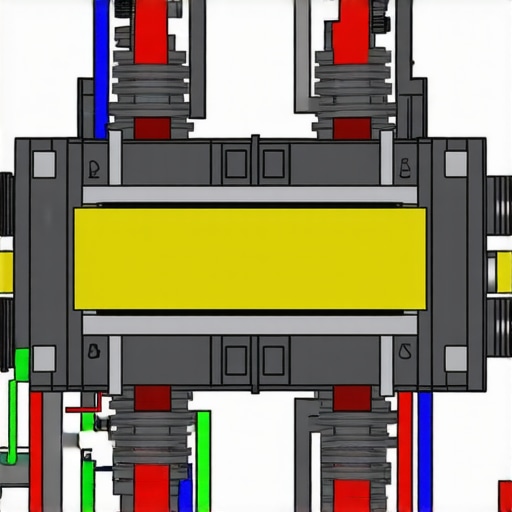
Sync Your Electronic Stability Control to Restore Pedal Bite
To properly calibrate the system, a technician must often perform a ‘zero-point calibration’ of the brake pressure sensor after a major hydraulic service. This ensures the ECU recognizes the exact pressure at which the pads begin to engage. Without this digital handshake, the vehicle may apply pre-charge pressure incorrectly, leading to a varying pedal feel that fluctuates based on vehicle speed. Professional vehicle diagnostics increasingly rely on this fusion of software and hardware. If you find yourself in a situation where the pedal feel changes after a hard corner, it is likely the ESC module attempting to compensate for what it perceives as a loss of pressure. Furthermore, many modern systems use an Electric Brake Booster (eBKV) which requires specific software commands to evacuate air from the high-pressure side.
Is Your Proportioning Valve Trapped in a State of Hydraulic Limbo?
On many performance and older vehicles, the proportioning valve serves as the gatekeeper of rear-to-front brake bias. These valves often contain a differential pressure switch that can get stuck in an off-center position during a heavy bleeding session. When this happens, it partially blocks flow to one circuit, making the pedal feel firm initially but then ‘giving way’ as the valve slowly shifts under pressure. Resetting this valve—sometimes requiring a manual centering tool or a specific sequence of rapid pedal strokes—is a critical step that many general car service shops overlook. This ‘limbo’ state creates a sensory illusion of air in the lines when the issue is purely a mechanical valve centering problem.
Upgrade Your Fluid Chemistry for Thermal Stability
Not all brake fluids are created equal, and the choice between DOT 4, DOT 5.1, and racing-grade fluids can drastically affect compressibility. While DOT 3 is the standard, its lower boiling point makes it susceptible to vapor lock under heavy use. For vehicles subjected to towing or spirited driving, transitioning to a high-performance fluid with a dry boiling point exceeding 600°F provides a much stiffer hydraulic column. According to technical insights from ZF Aftermarket’s guide on electronic brake systems, the viscosity of the fluid also plays a role in how quickly the ABS/ESC solenoids can react. A lower-viscosity fluid like DOT 5.1 allows for faster pressure modulation, which translates to a more precise and communicative pedal, especially in cold weather where fluid can thicken and slow down solenoid response times.
Eliminate Micro-Bubbles with Thermal Cycling
Sometimes, the most stubborn air isn’t in the calipers or the master cylinder, but clinging to the walls of the long chassis lines via surface tension. A trick used by endurance racing teams involves ‘thermal cycling’ the system. By getting the brakes up to operating temperature through a series of controlled stops and then performing a final ‘crack bleed’ while the fluid is hot, the decrease in fluid viscosity allows micro-bubbles to detach and flow toward the bleeder screw. This advanced auto repair technique can be the final 1% needed for a rock-solid pedal. Surface tension at the fluid-metal interface is significantly reduced when hot, allowing even the smallest pockets of air to be swept away by the high-velocity fluid flow of a pressure bleeder. Stop settling for ‘good enough’ stopping power. If you’ve followed every step and still feel a hint of sponginess, it’s time to inspect the physical rigidity of your caliper brackets or consider a full system flush with a vacuum-degassed fluid. What’s the most unconventional fix you’ve found for a soft pedal? Join our technical inner circle and let’s solve these hydraulic mysteries together.
Expert Insights & Advanced Considerations
Check Your Rear Drum Slack Before Bleeding Again
Many technicians focus exclusively on the front calipers, neglecting the reality that rear brake geometry heavily influences front pedal height. If your vehicle uses rear drum brakes, a seized self-adjuster creates a massive gap between the shoes and the drum. Every time you hit the brakes, the master cylinder must displace a significant volume of fluid just to move those shoes into contact. This creates a deep, mushy pedal that feels like air but is actually a mechanical slack issue. Before you perform another bleed, it is vital to know the difference between a soft brake pedal and a spongy one to avoid misdiagnosis.
Calibrate the Booster Pushrod for Instant Bite
A frequent culprit in master cylinder replacements is the critical interface between the power booster and the master cylinder piston. If the adjustable pushrod is set too short, you will experience an air-like dead zone at the top of the pedal travel. Conversely, if it is too long, the primary piston cannot retract fully, preventing the compensating ports from opening. This traps pressure and causes the brakes to drag as they heat up. Precision matters; a variance of just 0.020 inches can be the difference between a crisp engagement and a dangerously vague pedal. For those performing this deep-level work, the secret to getting a perfect brake pedal every time often lies in these micro-adjustments.
Swap Old Rubber for Braided Stainless Steel
Even the most pristine hydraulic system is limited by the physical expansion of its delivery lines. Under the extreme pressures generated during a panic stop, factory rubber hoses expand. This volumetric expansion can be significantly reduced by switching to braided stainless steel lines, which feature a Teflon inner core wrapped in a stainless mesh. The result is a more direct pedal-to-pad feel that professional racers demand. If you decide to upgrade, make sure you know how to replace your own brake lines without making a mess to ensure no new air enters the system.
Perform a Zero-Point Calibration for Electronic Stability
To properly calibrate modern systems, a technician must often perform a zero-point calibration of the brake pressure sensor after a major hydraulic service. This ensures the ECU recognizes the exact pressure at which the pads begin to engage. Without this digital handshake, the vehicle may apply pre-charge pressure incorrectly, leading to a varying pedal feel. Professional vehicle diagnostics increasingly rely on this fusion of software and hardware to maintain hydraulic equilibrium.
Essential Technical Manuals for Professional Technicians
SAE J1703 Standards Documentation
This is the gold standard for understanding the chemical and physical requirements of non-petroleum-based brake fluids. It provides the data needed to understand how moisture absorption affects the boiling point and compressibility of your fluid over time.
ZF Aftermarket Technical Portal
A deep-dive resource for those working on European vehicles or complex ABS/ESC modules. This portal offers specific bleeding sequences for electronic brake distribution systems that standard manuals often gloss over.
Brembo Technical Friction Guides
Excellent for mastering the interface between pad and rotor. These guides explain how lateral runout and improper bedding can mimic the feeling of air in the lines through a phenomenon called piston knock-back.
The Path to a Rock-Solid Stop
Achieving a firm brake pedal requires looking at the system as a symbiotic relationship between mechanical leverage, hydraulic integrity, and electronic calibration. If you have mastered the basics and are still chasing a soft pedal, the answer usually lies in the details—the pushrod depth, the hub runout, or the software calibration within your vehicle diagnostics protocol. Stop settling for a pedal that just works and start aiming for one that communicates. If you are looking to sharpen your shop’s skills further, explore our top auto repair techniques every car owner should know to ensure every vehicle that leaves your bay stops on a dime. Do you have a specific diagnostic challenge or a trick that finally solved your sponginess? Share your expertise in the comments below.