In the realm of preventative maintenance, the ability to accurately assess friction material thickness without comprehensive disassembly distinguishes the proactive vehicle owner from the average driver. Modern braking systems are engineered with visual access points that allow for precise monitoring of wear cycles, provided one understands the geometric relationship between the backing plate and the rotor surface. Mastering this diagnostic skill serves as a critical first line of defense in maintaining the integrity of your car service routine, ensuring that safety is never compromised by hidden mechanical degradation. By leveraging the optical clearance provided by alloy wheels and open-spoke designs, you can identify the exact moment when auto repair becomes a necessity rather than a suggestion.
Master the Sightline Between the Spoke and the Rotor
To perform a successful on-car inspection, you must align your perspective with the caliper’s inspection window. This small aperture is designed specifically to reveal the cross-section of the brake pad. When looking through the spokes, focus your attention on the outer pad—the component pressed against the exterior face of the rotor. You are looking for the total volume of friction material remaining between the metal backing plate and the rotor surface. In high-performance top auto repair techniques, we utilize a comparative logic: if the friction material appears thinner than the metal backing plate itself (typically around 3mm), the pad has reached the end of its operational lifespan and requires immediate replacement to avoid rotor scoring.
How can you accurately gauge thickness without a micrometer?
While a digital caliper provides the most accurate measurement, a visual proxy is highly effective for field diagnostics. Expert technicians often use a standard household item, like a wooden pencil or a straw, to establish a physical reference point. By inserting a thin object into the caliper window until it touches the rotor, you can mark the depth of the friction material. This provides a tangible measurement that transcends simple visual estimation. According to technical standards established by the Society of Automotive Engineers (SAE), the stability of a braking system is heavily dependent on the thermal mass of the remaining pad material; as the pad thins, its ability to dissipate heat diminishes, leading to potential brake fade during high-stress maneuvers.
Interpret the Witness Marks on Your Rotor Surface
The state of the rotor often tells a deeper story than the pad itself. While peering through the wheels, look for deep concentric grooves or a distinct lip at the outer edge of the disc. A significant lip indicates that the rotor has thinned beyond its discard thickness, a condition that often occurs simultaneously with pad wear. If you notice that the wear pattern is inconsistent across the circumference, you may be dealing with more complex vehicle diagnostics issues. Furthermore, why your brake pads are wearing unevenly on one side is often a symptom of seized caliper guide pins or a collapsing brake hose, neither of which can be fixed by simply swapping pads. Identifying these anomalies early prevents a simple maintenance task from escalating into a full hydraulic system overhaul.
If your inspection reveals thinning material or unusual surface scoring, do not delay the inevitable. You can find the simple 12 dollar fix for squeaky brakes that can save you hundreds in dealership costs before the metal-on-metal stage begins. Taking action now preserves the longevity of your transmission and engine by reducing the overall stress on the vehicle’s kinetic management systems.
Listen to the High-Pitched Language of Your Wheel Wells
Beyond the visual cues, the acoustic profile of your vehicle under deceleration provides a real-time data stream regarding the health of your calipers. When you hear a consistent, high-pitched chirping while the vehicle is in motion that disappears upon applying the brakes, you are likely hearing the acoustic wear indicator. This small metal tab is engineered to contact the rotor once the friction material reaches a predetermined safety threshold. It is a deliberate design feature meant to prevent you from reaching the catastrophic metal-on-metal stage. However, distinguishing this from a simple vibration is key. If you are experiencing noise without significant wear, you might simply need to stop your brake squeal without new pads using this 10 dollar paste, which dampens harmonic vibrations between the pad and the piston.
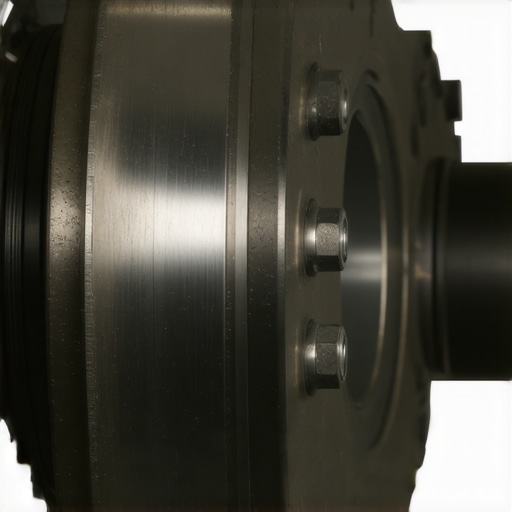
Why does your brake pedal feel like stepping on a marshmallow?
A firm, progressive pedal feel is the hallmark of a healthy hydraulic system, but many drivers gradually acclimate to a softening response, unaware that their safety margin is shrinking. This ‘sponginess’ typically indicates either air infiltration or moisture contamination within the brake lines. Because brake fluid is hygroscopic—meaning it actively absorbs moisture from the atmosphere—the boiling point of the fluid drops over time. Under heavy use, this moisture turns into steam, which is compressible, unlike the fluid itself. This results in a terrifying loss of pressure. If you have already attempted basic maintenance and found that why your brake pedal feels spongy after bleeding the lines remains a mystery, the issue likely resides in a bypassing master cylinder or a micro-leak in the ABS modulator.
Examine the Fluid Chemistry Behind the Stop
Maintenance experts look beyond the mechanical hardware and scrutinize the chemical integrity of the hydraulic medium. Dark, tea-colored fluid in your reservoir is a primary indicator of internal oxidation and the breakdown of corrosion inhibitors. This degradation doesn’t just affect stopping distance; it actively eats away at the delicate seals within your anti-lock braking system. Modern vehicles rely on these sensors for traction control and stability management. Research published by the National Highway Traffic Safety Administration (NHTSA) indicates that brake-related issues are the leading mechanical cause of crashes, often stemming from neglected hydraulic maintenance rather than just worn pads. If your dashboard illuminates with a warning, you can often identify why your ABS light is on without a scan tool using this jumper wire trick to pinpoint the exact sensor failure before visiting a shop.
Ignoring these subtle hydraulic shifts can lead to uneven pressure distribution, causing one side of the vehicle to work harder than the other. This eventually manifests as a pull to one side during hard stops, a clear sign that the equilibrium of your braking system is compromised. If you’re unsure whether your current fluid is compromised, take a moment to perform a quick visual check of the reservoir color and share your findings in the comments below for a quick expert assessment or check out our guide on finding a reliable shop if the job exceeds your current toolset.
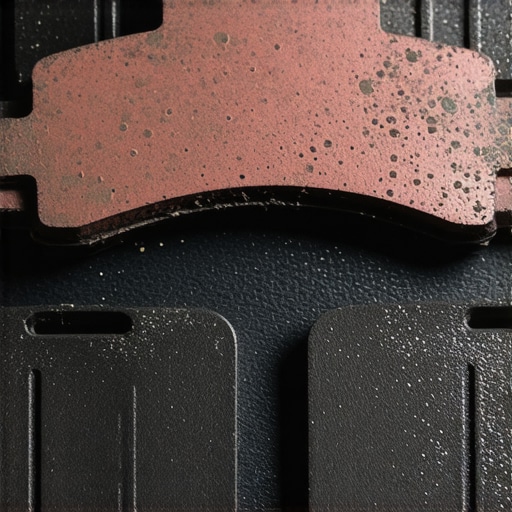
The phenomenon of thermal vitrification, commonly known as glazing, represents a silent performance killer that no amount of pad thickness can counteract. When friction material is subjected to temperatures exceeding its design window without a proper bedding-in period, the surface resins liquefy and then solidify into a smooth, glass-like veneer. This crystalline layer significantly reduces the coefficient of friction, turning a high-performance brake setup into a sliding liability. You will recognize this visually as a mirror-like sheen on the pads once removed, but on the road, it manifests as a hard pedal that simply refuses to bite, regardless of how much leg force you apply. If you suspect your pads have glazed, you may need more than a simple visual check; you may need to evaluate whether your driving style or a sticking caliper is causing excessive heat buildup.
Does extreme heat permanently change the internal structure of your rotors?
Many drivers mistake ‘warped’ rotors for a physical bending of the metal, but the reality is far more scientifically complex. Under extreme thermal stress, the cast iron in the rotor can undergo a phase transformation, creating spots of ultra-hardened material known as cementite. This occurs when localized hot spots exceed 1,200 degrees Fahrenheit, causing a carbon precipitation that is harder than the rest of the disc. Because cementite does not wear down at the same rate as the surrounding iron, it creates the pulsating sensation often blamed on warping. According to technical documentation from the Car Care Council, once these hard spots form, the rotor is essentially compromised and cannot be simply ‘turned’ on a lathe, as the lathe bit will skip over the cementite, leaving an uneven surface. This is why high-level vehicle diagnostics focus on thermal management as much as mechanical wear.
Keep Your Calipers Moving with Fresh Slide Pin Grease
While most enthusiasts focus on the pads and rotors, the true unsung heroes of the braking system are the caliper slide pins. These small metal rods allow the caliper to center itself over the rotor, ensuring that both the inner and outer pads apply equal pressure. Over time, the protective rubber boots can crack, allowing moisture and road salt to turn the internal lubricant into a thick, abrasive paste. This leads to a ‘frozen’ caliper where only one pad is doing the work, causing the vehicle to pull and the pads to wear at an alarming, diagonal angle. In the world of top auto repair techniques, cleaning and re-lubricating these pins with a high-temperature silicone-based grease is a non-negotiable step during every pad change. If you have ever wondered why your brake pads are wearing unevenly on one side, the slide pins are almost always the primary culprit.
Stop the Squeak at the Source by Replacing Hardware
A common mistake in DIY brake jobs is reusing the old stainless steel hardware clips. These small components are designed to provide a smooth, low-friction channel for the brake pad ears to move within. However, through thousands of heat cycles, they lose their spring tension and accumulate layers of baked-on brake dust. Research from the Brake Manufacturers Council emphasizes that reusing old hardware is a primary cause of ‘brake drag,’ where the pad fails to retract fully from the rotor after you release the pedal. This constant contact generates unnecessary heat, robs you of fuel economy, and can even place a parasitic load on your transmission components as the engine works harder to overcome the friction. If you are experiencing a persistent squeal even after applying this 10 dollar paste, the culprit is likely a vibrating clip that has lost its structural integrity. Take a moment to inspect the tension of your anti-rattle clips today, and if they feel loose or brittle, it is time for a complete hardware refresh to ensure your system operates in total silence.
While external hardware and fluid chemistry are vital, the physical conduits of pressure—the brake hoses—often harbor hidden defects that defy visual inspection. Over years of thermal cycling and exposure to ozone, the internal lining of a flexible rubber brake hose can delaminate. This creates a one-way valve effect, where high pressure from the master cylinder reaches the caliper, but the restricted return prevents the piston from retracting fully. This results in ‘ghost dragging,’ a phenomenon where the brakes remain partially applied, silently destroying your fuel economy and glazing the friction material. If your vehicle pulls to one side but the caliper pins are well-lubricated, you must investigate these hydraulic arteries for internal collapse.
Spot the Invisible Internal Collapse of Hydraulic Hoses
The danger of internal hose failure is its deceptive appearance; a hose can look pristine on the outside while its internal structure is shredded. This mechanical bottleneck prevents the equalization of pressure, leading to one wheel running significantly hotter than its counterpart. In the realm of advanced car service, technicians use infrared thermometers to compare temperatures between left and right wheels after a standard drive. A temperature delta of more than 20 degrees Fahrenheit often points to a failing hose or a sticking piston. Addressing this promptly is a cornerstone of professional auto repair, as it prevents the unnecessary replacement of healthy calipers that are simply reacting to an upstream hydraulic blockage.
How does electronic brakeforce distribution mask mechanical failure?
Modern stability control units utilize Electronic Brakeforce Distribution (EBD) to dynamically adjust the hydraulic pressure sent to each wheel based on load and traction. However, relying on electronic intervention to mask a mechanical imbalance is a dangerous gamble. According to engineering data provided by Akebono Brake Corporation, an over-reliance on EBD can lead to premature rear-pad wear on vehicles with heavy cargo, as the system attempts to compensate for front-end dive or uneven grip. This creates a deceptive wear pattern that might lead a technician to misdiagnose the primary failure point in the vehicle diagnostics chain if they rely solely on pad thickness indicators.
Measure Lateral Runout to Eliminate High-Speed Vibration
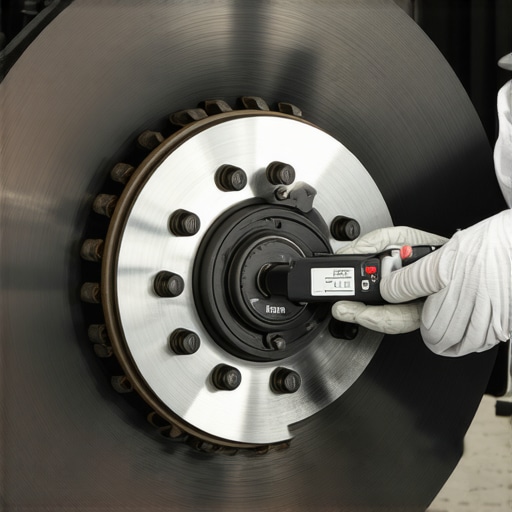
For those seeking the pinnacle of precision, simply replacing parts is insufficient. You must address lateral runout—the minute side-to-side wobble of the rotor as it spins. Using a magnetic dial indicator mounted to the steering knuckle, an expert technician measures the ‘runout’ to ensure it falls below the industry standard, typically 0.002 inches. Even a brand-new rotor can exhibit excessive runout if the wheel hub surface is contaminated with rust or debris. This microscopic misalignment is the root cause of high-speed pedal vibration, yet it is frequently overlooked in standard brake jobs. Before you bolt on that new hardware, clean the hub face to bare metal to ensure a perfectly true rotation and prevent the development of DTV (Disc Thickness Variation) over time.
Protect Your Alloy Finish with Smart Friction Choices
The interaction between your brake pads and your wheels extends beyond stopping power; it involves a complex chemical relationship. Semi-metallic pads, while offering superior heat dissipation for heavy towing or track use, produce an aggressive, corrosive dust that can permanently etch the clear coat on expensive alloy wheels. In contrast, ceramic formulations provide a cleaner, quieter experience for daily commuting but may lack the initial ‘cold bite’ required in extreme climates. When performing vehicle diagnostics on a performance car, consider the trade-offs between dusty high-mu materials and clean-running ceramics. If you have experienced a change in braking feel after a recent service, tell us about the specific pad brand you chose in the comments—we can help you determine if it is the right match for your driving environment.
Expert Insights & Advanced Considerations
Stop Drowning Your Rotors in Solvent
While a clean surface is essential, many DIY enthusiasts over-saturate their brake assemblies with aerosol cleaners. These aggressive solvents can penetrate the rubber dust boots of the caliper piston and the lubricant of the slide pins, leading to premature drying and seizing. A localized application on a lint-free cloth is far superior to a generic spray-and-pray approach. If you are already refining your expert auto repair tips for 2025, remember that chemical containment is just as important as mechanical torque.
Heat Cycle Your Pads Before They Fail You
Never subject a brand-new set of pads to a full emergency stop immediately after installation. To ensure longevity, you must perform a bedding-in procedure, which involves several controlled decelerations from 40 mph to 10 mph without coming to a complete stop. This transfers a thin layer of friction material to the rotor, preventing the ‘judder’ often mistaken for warped discs. This nuance is a hallmark of professional vehicle diagnostics and separates a functional job from a high-performance one.
The Danger of Letting Your Calipers Sit Idle
Vehicles that sit for extended periods—especially in humid climates—suffer from galvanic corrosion between the pad backing plate and the caliper bracket. This ‘rust-jacking’ can lock the pad in place, leading to a constant drag that overheats the hub. When you perform your next car service, check for these hidden oxidation points. For those managing more complex systems, learning how to check your transmission fluid level without a dipstick can help you monitor the entire drivetrain’s health alongside your braking system.
Curated Expert Resources
Brembo Technical Portal: A premier destination for understanding the metallurgy behind high-performance rotors and the specific torque requirements for aluminum calipers. It is indispensable for those moving beyond basic auto repair into specialized racing or heavy-duty applications.
SAE International (Brake Committee): For the data-driven owner, the SAE standards provide the rigorous testing protocols used to certify friction materials, offering a glimpse into the physics of thermal dissipation and wear cycles.
Akebono Brake Systems Technical Data: This resource provides deep dives into ceramic friction formulations and is a vital reference when choosing the right car service for seamless vehicle maintenance to ensure OEM-level silence and performance.
#IMAGE_PLACEHOLDER_E#
Final Expert Perspective
True mastery of your vehicle’s stopping power requires an integrated approach that balances mechanical hardware with fluid chemistry and thermal management. By looking beyond the simple thickness of a pad and addressing lateral runout, hydraulic integrity, and proper bedding procedures, you elevate your vehicle from a basic commuter to a precision-engineered machine. This high-level vehicle diagnostics strategy ensures that your car remains responsive under pressure, protecting everything from your brake rotors to your transmission components. If you have ever struggled with a persistent vibration or found that how we fixed a spongy brake pedal when bleeding the lines failed offered a new perspective, we invite you to share your specific diagnostic hurdles in the comments. What is the one tool in your kit that you believe every home mechanic should own for brake work?