Hydraulic Integrity and the Nuanced Language of Brake Feedback
In the high-stakes environment of professional automotive repair, the tactile response of a brake pedal serves as a primary diagnostic conduit between the vehicle’s hydraulic architecture and the technician’s experience. While a layman might describe any lack of firmness as ‘bad brakes,’ the distinction between a ‘soft’ pedal and a ‘spongy’ one is fundamental to localized troubleshooting. A soft pedal often indicates a mechanical or hydraulic bypass, such as an internal master cylinder seal failure, whereas sponginess is almost exclusively the signature of compressible air or moisture contamination within the system. Mastering these nuances is a core component of the hidden world of vehicle diagnostics, where subtle physical cues lead to definitive mechanical resolutions.
What Separates a Soft Pedal from a Spongy One?
A ‘soft’ brake pedal typically maintains its height but offers little resistance, often slowly sinking to the floor under steady pressure. This behavior points toward a fluid bypass within the master cylinder or a leak in the primary hydraulic circuit. Conversely, a ‘spongy’ pedal feels springy; it pushes back against your foot but lacks a hard ‘stop.’ This spring-like resistance is the physical manifestation of air being compressed. Unlike brake fluid, which is non-compressible according to Pascal’s Law, air trapped in the lines will shrink under pressure, absorbing the force intended for the calipers. According to the Society of Automotive Engineers (SAE), maintaining the integrity of the hydraulic fluid’s boiling point is critical, as degraded fluid can introduce vapor lock, mimicking these symptoms during high-heat operation.
Identify Internal Master Cylinder Leaks Before They Fail
One of the most elusive issues in a car service environment is the internal bypass of a master cylinder. Unlike a burst line, there is often no visible fluid loss. The fluid simply moves past the internal piston seals within the bore. If you find that your pedal slowly descends while holding at a stoplight, you are likely dealing with a degraded primary cup seal. This is a critical safety issue that requires immediate auto repair. Technicians often utilize ‘isolation testing’—plugging the master cylinder ports to see if the pedal remains firm—to confirm this diagnosis without dismantling the entire braking system.
Why Does Your Brake Pedal Feel Spongy After Bleeding the Lines?
It is a common frustration in the shop: you’ve performed a full flush, yet the firmness isn’t there. This often occurs because modern ABS (Anti-lock Braking System) modules can trap microscopic air bubbles in their internal valves and accumulators. Simply gravity bleeding or using the ‘pump and hold’ method may not suffice. In many cases, you must perform a ‘service bleed’ using a scan tool to cycle the ABS solenoids. If you are struggling with this, reviewing the specifics of why your brake pedal feels spongy after bleeding the lines can reveal if the issue lies in your technique or the equipment. To achieve professional results, consider how to flush your brake lines without a second person helping using a dedicated pressure bleeder.
The Critical Role of Component Flex and Mechanical Slack
Sometimes, what feels like a hydraulic issue is actually mechanical. Excessive ‘take-up’ in the pedal can be caused by improperly adjusted drum brake shoes or sliding calipers that are seized on their pins. When the mechanical components have too much travel before they engage, the driver perceives this as a soft initial pedal. Professional technicians must differentiate between this mechanical slack and hydraulic compression. If you want to elevate your maintenance game, discover the secret to getting a perfect brake pedal every time by addressing both the fluid and the hardware. Are you ready to dive deeper into advanced braking diagnostics? Join our professional community to share your most challenging brake recovery stories or ask our lead technicians for advice on complex ABS issues.
Stop Blaming the Fluid for a Rock-Hard Brake Pedal
While much of the focus on pedal feel centers on sponginess and sinking, a rock-hard pedal that requires excessive physical effort to stop the vehicle presents an entirely different set of diagnostic challenges. This condition usually bypasses the hydraulic circuit and points directly toward a failure in the power assist system. In most internal combustion vehicles, the vacuum booster utilizes engine vacuum to multiply the force applied by your foot. If the internal diaphragm ruptures or the check valve seizes, the mechanical link remains intact, but the assistance vanishes. Expert technicians often use a vacuum gauge to verify that the engine is providing at least 18 inches of mercury (Hg) to the booster before condemning the unit itself. For those working on modern turbocharged engines, where vacuum is often scarce, the culprit is frequently a dedicated electric vacuum pump that has reached the end of its service life.
Could a Failing Vacuum Pump Mimic a Total Hydraulic Collapse?
Interestingly, the failure of an auxiliary vacuum pump can lead to intermittent pedal hardness that confuses even seasoned mechanics. When the pump fails to maintain the reservoir’s negative pressure, the first few applications of the brake might feel normal, while subsequent stops become dangerously stiff. This is why thorough vehicle diagnostics must include a check of the vacuum supply lines for cracks or oil contamination. If you find oil inside your vacuum lines, it is a sign that a seal has failed, potentially allowing engine oil to degrade the booster’s rubber diaphragm. To prevent such cascades, using tools like the $30 tool that lets you see inside your engine can help you inspect the condition of internal seals and vacuum ports without a full teardown.
Thermal Thresholds and the Chemistry of Pedal Fade
Pedal feel is not a static property; it is heavily influenced by the thermal environment of the wheel ends. Under heavy braking, kinetic energy is converted into intense heat, which can exceed the boiling point of degraded brake fluid. This phenomenon, known as ‘vapor lock,’ creates a terrifying scenario where the pedal suddenly drops to the floor during spirited driving or long descents. According to the National Highway Traffic Safety Administration (NHTSA), brake fluid is hygroscopic, meaning it actively absorbs moisture from the atmosphere over time. This moisture lowers the fluid’s boiling point, significantly increasing the risk of brake fade in emergency situations. This is the primary reason why ‘lifetime’ fluid is a myth and why regular testing of the fluid’s water content is a non-negotiable safety standard.
Mechanical Symmetry and the Combat Against Pulsation
A soft pedal can also be a byproduct of ‘knock-back,’ where a warped rotor or a loose wheel bearing physically pushes the brake pads further away from the disc than intended. The next time you apply the brakes, the first inch of pedal travel is wasted just moving the pads back into contact with the rotor. This creates an inconsistent and unnerving driving experience. Technicians must check for lateral runout using a dial indicator to ensure the rotor is perfectly true. If you notice that your vehicle is acting up in other ways, such as why your brake pads are wearing unevenly on one side, it is often a sign of a seized sliding pin or a collapsed flex hose acting as a one-way valve. Learning how to free a seized brake caliper without replacing the whole unit can save significant costs while restoring the symmetrical pressure required for a firm pedal. Have you encountered a brake mystery that defied standard logic? Tell us about your weirdest diagnostic find in the comments below, or share this guide with a fellow gearhead who is chasing a phantom soft pedal.
Don’t Let Swelling Rubber Hoses Kill Your Pedal Response
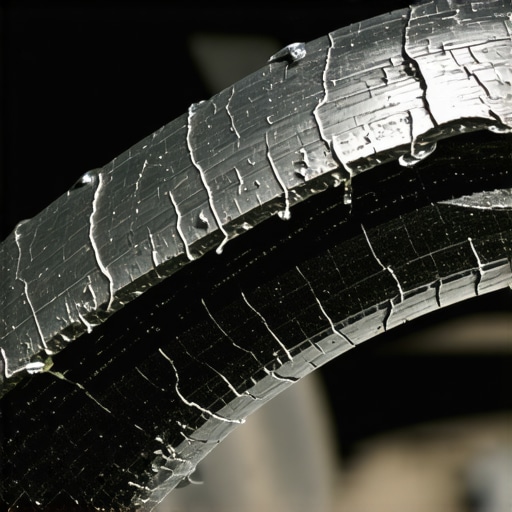
While technicians often focus on the master cylinder and calipers, the intermediate flexible hoses are frequently the weakest link in the hydraulic chain. Standard EPDM rubber hoses are designed to withstand high pressures, but they are not immune to the laws of physics. Over years of heat cycles and ozone exposure, the internal reinforcement layers begin to fatigue. This leads to an increase in volumetric expansion—a phenomenon where the hose physically expands outward like a balloon when you apply pressure. According to the SAE J1401 standard, brake hoses must meet strict expansion limits, yet aged hoses often exceed these tolerances, resulting in a pedal that feels ‘mushy’ despite a perfectly bled system. Upgrading to stainless steel braided lines effectively eliminates this expansion, providing a direct, linear relationship between pedal effort and clamping force.
Why Does a Failed Wheel Bearing Cause a Soft Brake Pedal?
It seems counterintuitive that a drivetrain component could affect hydraulic feedback, but a loose wheel bearing is a frequent culprit behind mysterious pedal travel issues. When a wheel bearing develops excessive play, it allows the hub and rotor to tilt slightly during cornering or over bumps. This lateral movement physically pushes the brake pads into the caliper, retracting the pistons further than their normal resting position. When the driver next applies the brakes, the master cylinder must first displace enough fluid to push those pistons back into contact with the rotor before any actual stopping force is generated. This ‘knock-back’ creates a terrifying moment where the first pump of the pedal goes nearly to the floor. Identifying this requires a dial indicator to measure hub runout, proving that advanced vehicle diagnostics must look beyond the fluid lines to the structural integrity of the suspension.
The High-Tech Illusion of Brake-by-Wire Systems
As we transition into the era of electric vehicles and sophisticated driver-assistance systems, the traditional physical link between your foot and the master cylinder is being severed. In many modern hybrids and EVs, the brake pedal is essentially a sophisticated joystick connected to a ‘pedal simulator.’ This simulator uses a series of springs, elastomers, and occasionally hydraulic dampers to recreate the tactile resistance we have been conditioned to expect. The actual braking is managed by a high-pressure electric pump and solenoid block that can transition seamlessly between regenerative motor braking and friction braking. However, this creates a new diagnostic layer: the ‘soft’ pedal might now be a software calibration error or a failure in the simulator’s feedback motor rather than a leak. If you have noticed an inconsistent feel in your late-model vehicle, it is essential to check if the system requires a firmware update or a recalibration of the stroke sensor. This shift in technology means that the future of auto repair involves as much data analysis as it does mechanical wrenching. Are you noticing a strange sensation in your brake pedal that doesn’t fit the traditional ‘spongy’ profile? Our experts are tracking these emerging electronic faults and can help you decode the digital signals behind your pedal’s behavior.
Fluid Cavitation and the Perils of High-Frequency ABS Cycling
When the ABS module activates during a panic stop on a slippery surface, it cycles the internal solenoids dozens of times per second. This rapid-fire modulation creates intense pressure spikes and drops within the hydraulic fluid. If the fluid is aerated or has a high moisture content, these pressure drops can trigger localized cavitation—the formation of vapor bubbles due to low pressure rather than high heat. These bubbles instantly collapse when pressure returns, sending shockwaves through the system that can damage internal valve seats and further degrade the pedal feel. This hidden degradation is why high-performance vehicles often require more frequent hydraulic maintenance than standard commuters, especially if the traction control systems are frequently engaged during spirited driving.Advanced hydraulic diagnostics require more than just a pressure gauge; they demand an understanding of the electrochemical environment inside the brake lines. When the internal copper coating of the steel lines leaches into the glycol-based fluid, it creates a conductive slurry that precipitates onto the delicate surfaces of the master cylinder. This isn’t just about moisture; it’s about active chemical erosion. According to the Motorist Assurance Program (MAP), maintaining copper levels below 200 ppm is critical for preserving the integrity of the EPDM seals. If the copper content rises, the fluid becomes an electrolyte, promoting galvanic corrosion that creates micro-pitting in the cylinder bore—a death sentence for pedal firmness. This degradation often manifests as a ‘phantom sink,’ where the pedal feels firm during a quick jab but slowly retreats under steady, light pressure.
Does your pedal sink only during a panic stop or ABS activation?
If you experience a firm pedal during normal driving but a sudden drop in height during an ABS event, the issue likely resides within the Hydraulic Control Unit (HCU). A microscopic piece of debris can lodge itself in the HCU’s normally closed valves, allowing high-pressure fluid to bypass the primary circuit only when the solenoids are energized. This creates a terrifying momentary loss of pedal height that often leaves no diagnostic trouble codes (DTCs). Diagnosing this requires a bi-directional scan tool to manually actuate each valve while monitoring pressure drops—a technique that separates true diagnostic experts from parts-changers. This specialized testing ensures that you are identifying the root cause within the modulation block rather than unnecessarily replacing the master cylinder.
Hunt Down the Micro-Leaks Hiding Inside Your ABS Block
The ABS block is a labyrinth of check valves and accumulators that can fail internally without any external evidence. A failing internal seal in the low-pressure accumulator can act as a pressure sponge, absorbing fluid volume without leaking a drop to the outside world. This is why a technician might bleed the system five times and still have a soft pedal. To isolate this, many professionals use specialized shut-off valves to block off the ABS module entirely. If the pedal firms up, you’ve localized the failure to the internal HCU valves. This level of vehicle diagnostics ensures you aren’t chasing ghosts. Remember that even a speck of rust the size of a grain of salt can prevent an ABS seat from sealing, resulting in a permanent loss of hydraulic efficiency.
Skip the Bench Bleed and You’ll Never Get a Firm Pedal
One of the most frequent errors in auto repair is installing a replacement master cylinder without a proper bench bleed. Because many master cylinders are mounted at a slight upward angle in the engine bay, air becomes trapped in the very front of the bore, where it can never be pushed out through the brake lines via traditional bleeding. You must perform a thorough bench bleed using return hoses to cycle fluid back into the reservoir until every microscopic bubble is purged. Only after the unit is hydraulically locked on the bench should it be mated to the booster. Even a tiny air pocket at the piston head can translate to two inches of wasted pedal travel. Have you struggled with a mystery soft pedal that defied all logic? Leave a comment below with your vehicle’s symptoms, and let’s troubleshoot the hydraulic physics together.
Hydraulic Integrity and the Nuanced Language of Brake Feedback
In the high-stakes environment of professional automotive repair, the tactile response of a brake pedal serves as a primary diagnostic conduit between the vehicle’s hydraulic architecture and the technician’s experience. While a layman might describe any lack of firmness as ‘bad brakes,’ the distinction between a ‘soft’ pedal and a ‘spongy’ one is fundamental to localized troubleshooting. A soft pedal often indicates a mechanical or hydraulic bypass, such as an internal master cylinder seal failure, whereas sponginess is almost exclusively the signature of compressible air or moisture contamination within the system. Mastering these nuances is a core component of the hidden world of vehicle diagnostics, where subtle physical cues lead to definitive mechanical resolutions.
What Separates a Soft Pedal from a Spongy One?
A ‘soft’ brake pedal typically maintains its height but offers little resistance, often slowly sinking to the floor under steady pressure. This behavior points toward a fluid bypass within the master cylinder or a leak in the primary hydraulic circuit. Conversely, a ‘spongy’ pedal feels springy; it pushes back against your foot but lacks a hard ‘stop.’ This spring-like resistance is the physical manifestation of air being compressed. Unlike brake fluid, which is non-compressible according to Pascal’s Law, air trapped in the lines will shrink under pressure, absorbing the force intended for the calipers. According to the Society of Automotive Engineers (SAE), maintaining the integrity of the hydraulic fluid’s boiling point is critical, as degraded fluid can introduce vapor lock, mimicking these symptoms during high-heat operation.
Identify Internal Master Cylinder Leaks Before They Fail
One of the most elusive issues in a car service environment is the internal bypass of a master cylinder. Unlike a burst line, there is often no visible fluid loss. The fluid simply moves past the internal piston seals within the bore. If you find that your pedal slowly descends while holding at a stoplight, you are likely dealing with a degraded primary cup seal. This is a critical safety issue that requires immediate auto repair. Technicians often utilize ‘isolation testing’—plugging the master cylinder ports to see if the pedal remains firm—to confirm this diagnosis without dismantling the entire braking system.
Why Does Your Brake Pedal Feel Spongy After Bleeding the Lines?
It is a common frustration in the shop: you’ve performed a full flush, yet the firmness isn’t there. This often occurs because modern ABS (Anti-lock Braking System) modules can trap microscopic air bubbles in their internal valves and accumulators. Simply gravity bleeding or using the ‘pump and hold’ method may not suffice. In many cases, you must perform a ‘service bleed’ using a scan tool to cycle the ABS solenoids. If you are struggling with this, reviewing the specifics of why your brake pedal feels spongy after bleeding the lines can reveal if the issue lies in your technique or the equipment. To achieve professional results, consider how to flush your brake lines without a second person helping using a dedicated pressure bleeder.
The Critical Role of Component Flex and Mechanical Slack
Sometimes, what feels like a hydraulic issue is actually mechanical. Excessive ‘take-up’ in the pedal can be caused by improperly adjusted drum brake shoes or sliding calipers that are seized on their pins. When the mechanical components have too much travel before they engage, the driver perceives this as a soft initial pedal. Professional technicians must differentiate between this mechanical slack and hydraulic compression. If you want to elevate your maintenance game, discover the secret to getting a perfect brake pedal every time by addressing both the fluid and the hardware. Are you ready to dive deeper into advanced braking diagnostics? Join our professional community to share your most challenging brake recovery stories or ask our lead technicians for advice on complex ABS issues.
Stop Blaming the Fluid for a Rock-Hard Brake Pedal
While much of the focus on pedal feel centers on sponginess and sinking, a rock-hard pedal that requires excessive physical effort to stop the vehicle presents an entirely different set of diagnostic challenges. This condition usually bypasses the hydraulic circuit and points directly toward a failure in the power assist system. In most internal combustion vehicles, the vacuum booster utilizes engine vacuum to multiply the force applied by your foot. If the internal diaphragm ruptures or the check valve seizes, the mechanical link remains intact, but the assistance vanishes. Expert technicians often use a vacuum gauge to verify that the engine is providing at least 18 inches of mercury (Hg) to the booster before condemning the unit itself. For those working on modern turbocharged engines, where vacuum is often scarce, the culprit is frequently a dedicated electric vacuum pump that has reached the end of its service life.
Could a Failing Vacuum Pump Mimic a Total Hydraulic Collapse?
Interestingly, the failure of an auxiliary vacuum pump can lead to intermittent pedal hardness that confuses even seasoned mechanics. When the pump fails to maintain the reservoir’s negative pressure, the first few applications of the brake might feel normal, while subsequent stops become dangerously stiff. This is why thorough vehicle diagnostics must include a check of the vacuum supply lines for cracks or oil contamination. If you find oil inside your vacuum lines, it is a sign that a seal has failed, potentially allowing engine oil to degrade the booster’s rubber diaphragm. To prevent such cascades, using tools like the $30 tool that lets you see inside your engine can help you inspect the condition of internal seals and vacuum ports without a full teardown.
Thermal Thresholds and the Chemistry of Pedal Fade
Pedal feel is not a static property; it is heavily influenced by the thermal environment of the wheel ends. Under heavy braking, kinetic energy is converted into intense heat, which can exceed the boiling point of degraded brake fluid. This phenomenon, known as ‘vapor lock,’ creates a terrifying scenario where the pedal suddenly drops to the floor during spirited driving or long descents. According to the National Highway Traffic Safety Administration (NHTSA), brake fluid is hygroscopic, meaning it actively absorbs moisture from the atmosphere over time. This moisture lowers the fluid’s boiling point, significantly increasing the risk of brake fade in emergency situations. This is the primary reason why ‘lifetime’ fluid is a myth and why regular testing of the fluid’s water content is a non-negotiable safety standard.
Mechanical Symmetry and the Combat Against Pulsation
A soft pedal can also be a byproduct of ‘knock-back,’ where a warped rotor or a loose wheel bearing physically pushes the brake pads further away from the disc than intended. The next time you apply the brakes, the first inch of pedal travel is wasted just moving the pads back into contact with the rotor. This creates an inconsistent and unnerving driving experience. Technicians must check for lateral runout using a dial indicator to ensure the rotor is perfectly true. If you notice that your vehicle is acting up in other ways, such as why your brake pads are wearing unevenly on one side, it is often a sign of a seized sliding pin or a collapsed flex hose acting as a one-way valve. Learning how to free a seized brake caliper without replacing the whole unit can save significant costs while restoring the symmetrical pressure required for a firm pedal. Have you encountered a brake mystery that defied standard logic? Tell us about your weirdest diagnostic find in the comments below, or share this guide with a fellow gearhead who is chasing a phantom soft pedal.
Don’t Let Swelling Rubber Hoses Kill Your Pedal Response
While technicians often focus on the master cylinder and calipers, the intermediate flexible hoses are frequently the weakest link in the hydraulic chain. Standard EPDM rubber hoses are designed to withstand high pressures, but they are not immune to the laws of physics. Over years of heat cycles and ozone exposure, the internal reinforcement layers begin to fatigue. This leads to an increase in volumetric expansion—a phenomenon where the hose physically expands outward like a balloon when you apply pressure. According to the SAE J1401 standard, brake hoses must meet strict expansion limits, yet aged hoses often exceed these tolerances, resulting in a pedal that feels ‘mushy’ despite a perfectly bled system. Upgrading to stainless steel braided lines effectively eliminates this expansion, providing a direct, linear relationship between pedal effort and clamping force.
Why Does a Failed Wheel Bearing Cause a Soft Brake Pedal?
It seems counterintuitive that a drivetrain component could affect hydraulic feedback, but a loose wheel bearing is a frequent culprit behind mysterious pedal travel issues. When a wheel bearing develops excessive play, it allows the hub and rotor to tilt slightly during cornering or over bumps. This lateral movement physically pushes the brake pads into the caliper, retracting the pistons further than their normal resting position. When the driver next applies the brakes, the master cylinder must first displace enough fluid to push those pistons back into contact with the rotor before any actual stopping force is generated. This ‘knock-back’ creates a terrifying moment where the first pump of the pedal goes nearly to the floor. Identifying this requires a dial indicator to measure hub runout, proving that advanced vehicle diagnostics must look beyond the fluid lines to the structural integrity of the suspension.
The High-Tech Illusion of Brake-by-Wire Systems
As we transition into the era of electric vehicles and sophisticated driver-assistance systems, the traditional physical link between your foot and the master cylinder is being severed. In many modern hybrids and EVs, the brake pedal is essentially a sophisticated joystick connected to a ‘pedal simulator.’ This simulator uses a series of springs, elastomers, and occasionally hydraulic dampers to recreate the tactile resistance we have been conditioned to expect. The actual braking is managed by a high-pressure electric pump and solenoid block that can transition seamlessly between regenerative motor braking and friction braking. However, this creates a new diagnostic layer: the ‘soft’ pedal might now be a software calibration error or a failure in the simulator’s feedback motor rather than a leak. If you have noticed an inconsistent feel in your late-model vehicle, it is essential to check if the system requires a firmware update or a recalibration of the stroke sensor. This shift in technology means that the future of auto repair involves as much data analysis as it does mechanical wrenching.
Fluid Cavitation and the Perils of High-Frequency ABS Cycling
When the ABS module activates during a panic stop on a slippery surface, it cycles the internal solenoids dozens of times per second. This rapid-fire modulation creates intense pressure spikes and drops within the hydraulic fluid. If the fluid is aerated or has a high moisture content, these pressure drops can trigger localized cavitation—the formation of vapor bubbles due to low pressure rather than high heat. These bubbles instantly collapse when pressure returns, sending shockwaves through the system that can damage internal valve seats and further degrade the pedal feel. This hidden degradation is why high-performance vehicles often require more frequent hydraulic maintenance than standard commuters, especially if the traction control systems are frequently engaged during spirited driving.Advanced hydraulic diagnostics require more than just a pressure gauge; they demand an understanding of the electrochemical environment inside the brake lines. When the internal copper coating of the steel lines leaches into the glycol-based fluid, it creates a conductive slurry that precipitates onto the delicate surfaces of the master cylinder. This isn’t just about moisture; it’s about active chemical erosion. According to the Motorist Assurance Program (MAP), maintaining copper levels below 200 ppm is critical for preserving the integrity of the EPDM seals. If the copper content rises, the fluid becomes an electrolyte, promoting galvanic corrosion that creates micro-pitting in the cylinder bore—a death sentence for pedal firmness. This degradation often manifests as a ‘phantom sink,’ where the pedal feels firm during a quick jab but slowly retreats under steady, light pressure. #IMAGE_PLACEHOLDER_A#
Does your pedal sink only during a panic stop or ABS activation?
If you experience a firm pedal during normal driving but a sudden drop in height during an ABS event, the issue likely resides within the Hydraulic Control Unit (HCU). A microscopic piece of debris can lodge itself in the HCU’s normally closed valves, allowing high-pressure fluid to bypass the primary circuit only when the solenoids are energized. This creates a terrifying momentary loss of pedal height that often leaves no diagnostic trouble codes (DTCs). Diagnosing this requires a bi-directional scan tool to manually actuate each valve while monitoring pressure drops—a technique that separates true diagnostic experts from parts-changers. This specialized testing ensures that you are identifying the root cause within the modulation block rather than unnecessarily replacing the master cylinder.
Hunt Down the Micro-Leaks Hiding Inside Your ABS Block
The ABS block is a labyrinth of check valves and accumulators that can fail internally without any external evidence. A failing internal seal in the low-pressure accumulator can act as a pressure sponge, absorbing fluid volume without leaking a drop to the outside world. This is why a technician might bleed the system five times and still have a soft pedal. To isolate this, many professionals use specialized shut-off valves to block off the ABS module entirely. If the pedal firms up, you’ve localized the failure to the internal HCU valves. This level of vehicle diagnostics ensures you aren’t chasing ghosts. Remember that even a speck of rust the size of a grain of salt can prevent an ABS seat from sealing, resulting in a permanent loss of hydraulic efficiency.
Skip the Bench Bleed and You’ll Never Get a Firm Pedal
One of the most frequent errors in auto repair is installing a replacement master cylinder without a proper bench bleed. Because many master cylinders are mounted at a slight upward angle in the engine bay, air becomes trapped in the very front of the bore, where it can never be pushed out through the brake lines via traditional bleeding. You must perform a thorough bench bleed using return hoses to cycle fluid back into the reservoir until every microscopic bubble is purged. Only after the unit is hydraulically locked on the bench should it be mated to the booster. Even a tiny air pocket at the piston head can translate to two inches of wasted pedal travel.
Pro Tips for the Master Technician
Watch for Copper Leaching in Aged Fluid
Beyond moisture, copper content is the hidden killer of master cylinder bores. When fluid becomes an electrolyte through chemical leaching, it accelerates seal degradation. Using copper test strips during every service is a high-level diagnostic habit that identifies the need for replacing your own brake lines or performing a deep flush before the hardware fails.
Identify Volumetric Expansion in Rubber Lines
If your hydraulic system is air-free but still lacks a crisp bite, perform a visual check of the rubber flex lines while an assistant applies heavy pedal pressure. Any visible swelling indicates the internal reinforcement has failed. This volumetric expansion is a common culprit for a mushy brake pedal that defies standard bleeding procedures.
Calibrate Sensors on Digital Braking Modules
In brake-by-wire vehicles, the ‘feel’ is often software-controlled. If the pedal height is inconsistent despite a perfect hydraulic circuit, the stroke sensor may require a zero-point calibration using a professional-grade scan tool. This ensures the computer correctly interprets the physical position of the pedal simulator.
Technical Resources Worth Your Time
SAE International Standards: The J1401 and J1703 standards provide the definitive scientific benchmarks for brake hose expansion and fluid boiling points, essential for any technician pursuing absolute precision.
NHTSA Safety Bulletins: Accessing the manufacturer-specific TSBs (Technical Service Bulletins) can reveal known defects in ABS module check valves that mimic standard hydraulic failures.
Motorist Assurance Program (MAP) Guidelines: These industry-standard diagnostic protocols offer a structured approach to brake system evaluation, ensuring that every component is tested against objective safety metrics.
Regain Confidence in Your Brake Pedal Firmness
Achieving a perfect brake pedal is an exercise in both physics and chemistry. By distinguishing between the springy resistance of trapped air and the sinking descent of an internal bypass, you can cut through the diagnostic noise and pinpoint the mechanical reality. Whether you are dealing with the traditional vacuum booster failures or the complex calibrations of modern brake-by-wire systems, the path to resolution remains the same: verify your hydraulic integrity, eliminate mechanical slack, and never underestimate the impact of thermal degradation. Take these expert insights to your next brake job and transform a frustrating mystery into a definitive repair. Do you have a specialized technique for purging air from complex HCU blocks? Join our professional forum to share your findings and help elevate the standard of braking safety for everyone.