The mechanics of hydraulic braking systems require a surgical approach, particularly when the integrity of the lines is compromised. Replacing brake lines is often viewed as a grueling, messy chore, yet seasoned technicians know that the secret to a clean swap lies in atmospheric pressure management. Before you even crack a flare nut, you must address the primary culprit of fluid loss: the reservoir vent. By creating a temporary vacuum or using a brake pedal depressor to block the master cylinder ports, you can significantly reduce the syphon effect that usually drains half the system onto your workshop floor. This level of precision is exactly what distinguishes professional car service from amateur tinkering, ensuring that the fluid stays where it belongs—inside the lines.
Control the Fluid Flow Before Breaking the Seal
In the world of advanced auto repair, preventing a mess starts with isolating the master cylinder. By using a pedal depressor to hold the brake pedal down slightly, the piston moves past the compensating ports, effectively sealing the reservoir from the rest of the lines. This simple maneuver prevents the constant drip-drip-drip that plagues most DIY projects. If you have ever wondered why your brake pedal feels spongy after bleeding the lines, it is often because air was allowed to travel too far upstream during a disorganized replacement process. High-stakes maintenance demands that we respect the hygroscopic nature of DOT fluid, which can quickly damage painted surfaces if not managed with containment trays and immediate plugging techniques.
How do you manage seized flare fittings without stripping the hex?
The most common failure point in brake line replacement isn’t the line itself, but the transition point at the union. Using a standard open-end wrench is a recipe for rounded edges and a subsequent nightmare in vehicle diagnostics if ABS sensors or hard lines get damaged in the struggle. High-quality flare nut wrenches (line wrenches) are non-negotiable. They grip five sides of the nut, providing the torque necessary to break through years of road grime and oxidation without catastrophic failure. For those dealing with similar fluid-related challenges in other areas, such as transmission leaks or solenoid issues, the principle of using the correct specialized tool remains the cornerstone of professional efficiency.
Implement Immediate Sealing and Vacuum Caps
As soon as the old line is disconnected, the clock is ticking. Professional-grade rubber vacuum caps or dedicated silicone plugs should be ready to pop onto the open ends immediately. This isn’t just about cleanliness; it’s about preventing the master cylinder from running dry. If air enters the ABS modulator valve block, you may find yourself needing a professional-grade scan tool to perform a service bleed—a task that moves beyond simple mechanics and into the realm of complex electronics. This is why following top auto repair techniques is vital for home mechanics. If your project does take a turn for the worse and the pedal remains soft, don’t hesitate to contact us for expert guidance on restoring your system’s hydraulic balance. According to SAE International, even a small amount of moisture ingress during an open-line event can lower the fluid’s dry boiling point by as much as 100 degrees Celsius, compromising safety under heavy braking conditions.The transition from traditional zinc-coated steel to copper-nickel (NiCopp) tubing represents a significant shift in long-term vehicle reliability. While steel lines are the factory standard for most vehicles, their susceptibility to internal and external corrosion in “salt belt” regions makes them a temporary fix at best. Copper-nickel lines offer a superior alternative, providing a much higher degree of malleability which allows for easier routing through tight chassis corridors without the risk of kinking. This material choice is a proactive move for anyone performing an advanced brake inspection who finds the existing hard lines scaling or pitted.
Is your flaring tool actually setting you up for failure?
The integrity of a hydraulic system rests entirely on the quality of the flare. Many DIY kits sold at big-box retailers produce inconsistent results, often creating asymmetrical flares that fail to seat perfectly against the union. Professional technicians prefer hydraulic flaring tools that apply even pressure, ensuring the “double flare” or “ISO bubble flare” maintains a constant wall thickness. A single hairline fracture in the flare seat is enough to cause a slow leak that mimics a master cylinder failure. If you have recently replaced lines and find that your brake pedal stays soft after youve bled the lines, the culprit is often a poorly formed flare rather than a trapped air bubble.
The Hidden Danger of Air Ingress in Electronic Brake Control Units
Modern vehicles equipped with Electronic Stability Control (ESC) and ABS have intricate internal valving that can trap air in ways that traditional systems never could. If the master cylinder runs dry during a line swap, air can migrate into the ABS pump’s high-pressure accumulation chambers. Standard pedal-pumping bleeding methods are often insufficient to dislodge these pockets. 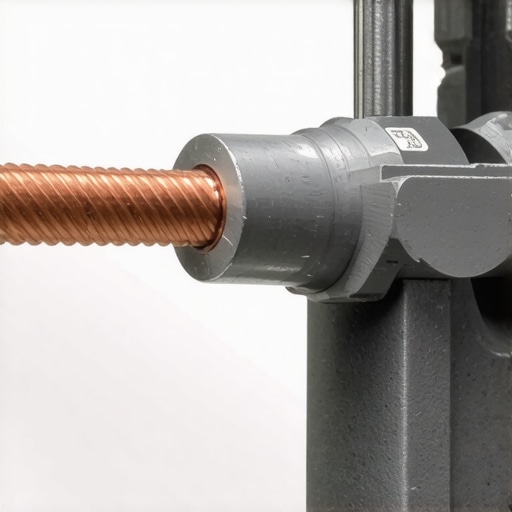 The National Institute for Automotive Service Excellence (ASE) emphasizes that any compromise in hydraulic line routing can lead to localized boiling or abrasive wear, which are often overlooked during routine inspections. This is why using a pressure bleeder is the preferred method, as it maintains a constant 10-15 psi, forcing fluid through the micro-valves and ensuring a rock-solid pedal. Identifying these issues early is part of mastering advanced vehicle diagnostics without the need for expensive dealer tools.
Protect Your New Lines from Heat and Fatigue
Routing is just as critical as the flare itself. Brake lines must be kept away from heat sources like exhaust manifolds and moving parts like suspension arms. Using the original plastic clips is essential, but if they are brittle and break, they must be replaced with rubber-lined P-clips to prevent harmonic vibration from fatigue-cracking the line over time. Proper spacing and securing prevent the line from rubbing against the chassis, which can wear through even the toughest coatings in a matter of months. If you are struggling with a hydraulic issue that does not seem to have a clear cause, we recommend you read our guide on solving spongy pedal issues or share your specific symptoms in the comments below for a crowdsourced diagnostic opinion.
Stop Corrosion Where Steel Meets Brass
The chemical reality of mixing metals in a high-salt environment is often the undoing of even the best car service. When you thread a new NiCopp or steel line into a brass proportioning valve or a cast-iron caliper, you create a galvanic cell that accelerates oxidation. To mitigate this risk, a microscopic application of nickel-based anti-seize on the threads—and strictly only the threads—can prevent the flare nut from cold-welding to the union over time. However, extreme caution is required during this stage of auto repair; getting any petroleum-based lubricant into the hydraulic circuit will swell the EPDM rubber seals, leading to a catastrophic failure of the master cylinder. Precision here isn’t just about torque; it’s about chemical compatibility and ensuring the flare seat remains a dry, metal-to-metal seal while the threads are protected from the elements.
Why does my car pull to one side even though the pads are new?
This phenomenon is frequently traced back to an internal collapse of the flexible rubber brake hose. Unlike a hard line that leaks externally, a rubber hose can delaminate internally, creating a microscopic flap of skin that acts as a one-way check valve. When you apply pressure, fluid forces its way past the flap to the caliper, but the flap prevents the fluid from returning to the master cylinder when you release the pedal. This keeps the brake partially applied on one wheel, causing excessive heat soak and a distinct pull toward that side. In the sophisticated world of vehicle diagnostics, identifying this requires checking for a residual pressure trap by briefly opening the bleeder screw after the pedal is released—if fluid squirts out with significant force, the hose has failed internally and must be replaced immediately.
Ditch the Two-Person Pump for a Professional Pressure Bleed
The traditional “pump-and-hold” method is a relic of the past that can actually damage older master cylinders during a line swap. When you floor the brake pedal during bleeding, the internal seals travel into a section of the bore they rarely visit, which is often pitted or corroded from years of moisture accumulation. This movement can shred the delicate primary cups, leading to an internal bypass leak where the pedal slowly sinks to the floor under steady pressure. A dedicated pressure bleeder, which attaches directly to the reservoir, eliminates this risk by using a constant 10-15 psi of air to push fluid through the lines without moving the master cylinder piston. 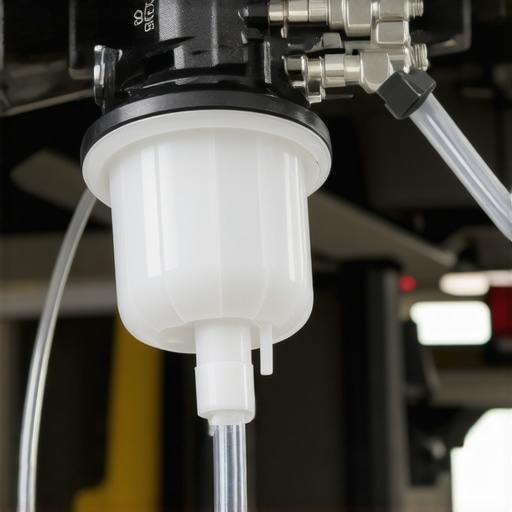 This method is the gold standard for ensuring that the secondary circuits in the ABS module are fully purged of air. If you’ve struggled with a soft pedal after a repair, troubleshooting the air-trapping zones usually points toward these high-pressure junctions that only a pressure bleeder can clear.
Pick the Right Fluid to Avoid Total System Meltdown
Not all DOT 4 fluids are created equal, and choosing the wrong one can jeopardize your entire hydraulic architecture. Modern vehicles with advanced traction control and stability systems require a “Low Viscosity” (LV) variant to ensure the ABS pump can cycle rapidly enough in freezing temperatures. According to the NHTSA’s FMVSS No. 116 standards, the equilibrium reflux boiling point must be strictly maintained to prevent vapor lock during high-load braking events. Mixing silicone-based DOT 5 with glycol-based DOT 3 or 4 is a fatal error, as it leads to fluid aeration and sludge formation that can ruin a transmission-style hydraulic control unit. If you are unsure about your vehicle’s specific requirements, reach out to our technical team to verify the correct chemical specifications for your specific braking system before you pour. This attention to detail prevents the catastrophic seals-swelling that occurs when the wrong chemistry enters the lines.
Stop Crushing Your Flares with Excessive Torque
The final tightening of a flare nut is where many professional car service procedures go wrong. It is a common misconception that more torque equals a better seal; in reality, over-torquing a flare nut can work-harden the metal, causing the flare to become brittle and eventually crack under the high-pressure cycles of emergency braking. A perfect seal is achieved when the flared end of the line conforms to the seat of the union without deforming the underlying structure. When working with copper-nickel lines, which are softer than traditional steel, the margin for error is even smaller. Professionals use a crows-foot wrench attached to a torque wrench to meet exact manufacturer specifications, ensuring that the connection remains leak-free for the life of the vehicle. This level of meticulous care is what separates a standard repair from high-tier auto repair.
Does your bench bleeding protocol ignore the secondary piston?
A frequent oversight during a master cylinder or full line replacement is failing to properly bench bleed the unit before it ever touches the chassis. If you simply install a dry master cylinder and attempt to bleed it through the calipers, you risk trapping air in the secondary circuit that may never escape through traditional means. Using a dedicated bench bleeding kit with clear return hoses allows you to watch for the final, microscopic bubbles that signify a truly purged system. You must ensure the pistons reach full travel during this process; otherwise, air remains trapped in the dead space between the primary and secondary seals. If you find that your brake pedal feels spongy after bleeding the lines, the root cause is almost certainly a skipped bench-bleed or an incomplete stroke during the initial setup. 
Master the Physics of Zero-Clearance Line Routing
The longevity of your hydraulic system is dictated by how the lines handle the vibration and thermal expansion inherent in high-performance driving. Professional routing involves more than just following the old path; it requires identifying potential rub points where the chassis flexes. Even a millimeter of contact against a sharp edge can lead to a catastrophic pressure drop over time. Utilizing rubber-isolated mounts and ensuring that lines are never under tension at the union points prevents the fatigue failure that often plagues rushed installations. This is particularly critical in the transmission tunnel area, where heat from the drivetrain can degrade the fluid if the lines are routed too closely to the housing. For those performing an advanced brake inspection, checking for these witness marks of contact is a mandatory step in ensuring system integrity.
Why DOT 5.1 is Often a Step Backward for Street Cars
While the nomenclature suggests an upgrade, switching to DOT 5.1 without understanding the vehicle’s original engineering can lead to unintended consequences. While DOT 5.1 offers a higher boiling point, it often lacks the lubrication properties designed into specific DOT 4 Low Viscosity (LV) formulations required by modern ABS and ESC pumps. As noted in technical literature from ATE (Continental AG), the transition to electronic braking systems has necessitated fluids with kinematic viscosities below 700 mm²/s to ensure the stability control system can react in milliseconds. If the fluid is too viscous in cold temperatures, the internal solenoids in the ABS block cannot cycle fast enough, potentially leading to a loss of control. If you have recently performed a swap and notice a change in the ABS intervention feel, contact us for a professional fluid analysis and system recalibration. Our team can help you identify why your ABS light is on and ensure your choice of hydraulic fluid matches the mechanical requirements of your vehicle’s safety systems.The mechanics of hydraulic braking systems require a surgical approach, particularly when the integrity of the lines is compromised. Replacing brake lines is often viewed as a grueling, messy chore, yet seasoned technicians know that the secret to a clean swap lies in atmospheric pressure management. Before you even crack a flare nut, you must address the primary culprit of fluid loss: the reservoir vent. By creating a temporary vacuum or using a brake pedal depressor to block the master cylinder ports, you can significantly reduce the syphon effect that usually drains half the system onto your workshop floor. This level of precision is exactly what distinguishes professional car service from amateur tinkering, ensuring that the fluid stays where it belongs—inside the lines.
Control the Fluid Flow Before Breaking the Seal
In the world of advanced auto repair, preventing a mess starts with isolating the master cylinder. By using a pedal depressor to hold the brake pedal down slightly, the piston moves past the compensating ports, effectively sealing the reservoir from the rest of the lines. This simple maneuver prevents the constant drip-drip-drip that plagues most DIY projects. If you have ever wondered why your brake pedal feels spongy after bleeding the lines, it is often because air was allowed to travel too far upstream during a disorganized replacement process. High-stakes maintenance demands that we respect the hygroscopic nature of DOT fluid, which can quickly damage painted surfaces if not managed with containment trays and immediate plugging techniques.
How do you manage seized flare fittings without stripping the hex?
The most common failure point in brake line replacement isn’t the line itself, but the transition point at the union. Using a standard open-end wrench is a recipe for rounded edges and a subsequent nightmare in vehicle diagnostics if ABS sensors or hard lines get damaged in the struggle. High-quality flare nut wrenches (line wrenches) are non-negotiable. They grip five sides of the nut, providing the torque necessary to break through years of road grime and oxidation without catastrophic failure. For those dealing with similar fluid-related challenges in other areas, such as transmission leaks or solenoid issues, the principle of using the correct specialized tool remains the cornerstone of professional efficiency.
Implement Immediate Sealing and Vacuum Caps
As soon as the old line is disconnected, the clock is ticking. Professional-grade rubber vacuum caps or dedicated silicone plugs should be ready to pop onto the open ends immediately. This isn’t just about cleanliness; it’s about preventing the master cylinder from running dry. If air enters the ABS modulator valve block, you may find yourself needing a professional-grade scan tool to perform a service bleed—a task that moves beyond simple mechanics and into the realm of complex electronics. This is why following top auto repair techniques is vital for home mechanics. If your project does take a turn for the worse and the pedal remains soft, don’t hesitate to contact us for expert guidance on restoring your system’s hydraulic balance. According to SAE International, even a small amount of moisture ingress during an open-line event can lower the fluid’s dry boiling point by as much as 100 degrees Celsius, compromising safety under heavy braking conditions.The transition from traditional zinc-coated steel to copper-nickel (NiCopp) tubing represents a significant shift in long-term vehicle reliability. While steel lines are the factory standard for most vehicles, their susceptibility to internal and external corrosion in “salt belt” regions makes them a temporary fix at best. Copper-nickel lines offer a superior alternative, providing a much higher degree of malleability which allows for easier routing through tight chassis corridors without the risk of kinking. This material choice is a proactive move for anyone performing an advanced brake inspection who finds the existing hard lines scaling or pitted.
Is your flaring tool actually setting you up for failure?
The integrity of a hydraulic system rests entirely on the quality of the flare. Many DIY kits sold at big-box retailers produce inconsistent results, often creating asymmetrical flares that fail to seat perfectly against the union. Professional technicians prefer hydraulic flaring tools that apply even pressure, ensuring the “double flare” or “ISO bubble flare” maintains a constant wall thickness. A single hairline fracture in the flare seat is enough to cause a slow leak that mimics a master cylinder failure. If you have recently replaced lines and find that your brake pedal stays soft after youve bled the lines, the culprit is often a poorly formed flare rather than a trapped air bubble.
The Hidden Danger of Air Ingress in Electronic Brake Control Units
Modern vehicles equipped with Electronic Stability Control (ESC) and ABS have intricate internal valving that can trap air in ways that traditional systems never could. If the master cylinder runs dry during a line swap, air can migrate into the ABS pump’s high-pressure accumulation chambers. Standard pedal-pumping bleeding methods are often insufficient to dislodge these pockets. The National Institute for Automotive Service Excellence (ASE) emphasizes that any compromise in hydraulic line routing can lead to localized boiling or abrasive wear, which are often overlooked during routine inspections. This is why using a pressure bleeder is the preferred method, as it maintains a constant 10-15 psi, forcing fluid through the micro-valves and ensuring a rock-solid pedal. Identifying these issues early is part of mastering advanced vehicle diagnostics without the need for expensive dealer tools.
Protect Your New Lines from Heat and Fatigue
Routing is just as critical as the flare itself. Brake lines must be kept away from heat sources like exhaust manifolds and moving parts like suspension arms. Using the original plastic clips is essential, but if they are brittle and break, they must be replaced with rubber-lined P-clips to prevent harmonic vibration from fatigue-cracking the line over time. Proper spacing and securing prevent the line from rubbing against the chassis, which can wear through even the toughest coatings in a matter of months. If you are struggling with a hydraulic issue that does not seem to have a clear cause, we recommend you read our guide on solving spongy pedal issues or share your specific symptoms in the comments below for a crowdsourced diagnostic opinion.
Stop Corrosion Where Steel Meets Brass
The chemical reality of mixing metals in a high-salt environment is often the undoing of even the best car service. When you thread a new NiCopp or steel line into a brass proportioning valve or a cast-iron caliper, you create a galvanic cell that accelerates oxidation. To mitigate this risk, a microscopic application of nickel-based anti-seize on the threads—and strictly only the threads—can prevent the flare nut from cold-welding to the union over time. However, extreme caution is required during this stage of auto repair; getting any petroleum-based lubricant into the hydraulic circuit will swell the EPDM rubber seals, leading to a catastrophic failure of the master cylinder. Precision here isn’t just about torque; it’s about chemical compatibility and ensuring the flare seat remains a dry, metal-to-metal seal while the threads are protected from the elements.
Why does my car pull to one side even though the pads are new?
This phenomenon is frequently traced back to an internal collapse of the flexible rubber brake hose. Unlike a hard line that leaks externally, a rubber hose can delaminate internally, creating a microscopic flap of skin that acts as a one-way check valve. When you apply pressure, fluid forces its way past the flap to the caliper, but the flap prevents the fluid from returning to the master cylinder when you release the pedal. This keeps the brake partially applied on one wheel, causing excessive heat soak and a distinct pull toward that side. In the sophisticated world of vehicle diagnostics, identifying this requires checking for a residual pressure trap by briefly opening the bleeder screw after the pedal is released—if fluid squirts out with significant force, the hose has failed internally and must be replaced immediately.
Ditch the Two-Person Pump for a Professional Pressure Bleed
The traditional “pump-and-hold” method is a relic of the past that can actually damage older master cylinders during a line swap. When you floor the brake pedal during bleeding, the internal seals travel into a section of the bore they rarely visit, which is often pitted or corroded from years of moisture accumulation. This movement can shred the delicate primary cups, leading to an internal bypass leak where the pedal slowly sinks to the floor under steady pressure. A dedicated pressure bleeder, which attaches directly to the reservoir, eliminates this risk by using a constant 10-15 psi of air to push fluid through the lines without moving the master cylinder piston. This method is the gold standard for ensuring that the secondary circuits in the ABS module are fully purged of air. If you’ve struggled with a soft pedal after a repair, troubleshooting the air-trapping zones usually points toward these high-pressure junctions that only a pressure bleeder can clear.
Pick the Right Fluid to Avoid Total System Meltdown
Not all DOT 4 fluids are created equal, and choosing the wrong one can jeopardize your entire hydraulic architecture. Modern vehicles with advanced traction control and stability systems require a “Low Viscosity” (LV) variant to ensure the ABS pump can cycle rapidly enough in freezing temperatures. According to the NHTSA’s FMVSS No. 116 standards, the equilibrium reflux boiling point must be strictly maintained to prevent vapor lock during high-load braking events. Mixing silicone-based DOT 5 with glycol-based DOT 3 or 4 is a fatal error, as it leads to fluid aeration and sludge formation that can ruin a transmission-style hydraulic control unit. If you are unsure about your vehicle’s specific requirements, reach out to our technical team to verify the correct chemical specifications for your specific braking system before you pour. This attention to detail prevents the catastrophic seals-swelling that occurs when the wrong chemistry enters the lines.
Stop Crushing Your Flares with Excessive Torque
The final tightening of a flare nut is where many professional car service procedures go wrong. It is a common misconception that more torque equals a better seal; in reality, over-torquing a flare nut can work-harden the metal, causing the flare to become brittle and eventually crack under the high-pressure cycles of emergency braking. A perfect seal is achieved when the flared end of the line conforms to the seat of the union without deforming the underlying structure. When working with copper-nickel lines, which are softer than traditional steel, the margin for error is even smaller. Professionals use a crows-foot wrench attached to a torque wrench to meet exact manufacturer specifications, ensuring that the connection remains leak-free for the life of the vehicle. This level of meticulous care is what separates a standard repair from high-tier auto repair.
Does your bench bleeding protocol ignore the secondary piston?
A frequent oversight during a master cylinder or full line replacement is failing to properly bench bleed the unit before it ever touches the chassis. If you simply install a dry master cylinder and attempt to bleed it through the calipers, you risk trapping air in the secondary circuit that may never escape through traditional means. Using a dedicated bench bleeding kit with clear return hoses allows you to watch for the final, microscopic bubbles that signify a truly purged system. You must ensure the pistons reach full travel during this process; otherwise, air remains trapped in the dead space between the primary and secondary seals. If you find that your brake pedal feels spongy after bleeding the lines, the root cause is almost certainly a skipped bench-bleed or an incomplete stroke during the initial setup.
Master the Physics of Zero-Clearance Line Routing
The longevity of your hydraulic system is dictated by how the lines handle the vibration and thermal expansion inherent in high-performance driving. Professional routing involves more than just following the old path; it requires identifying potential rub points where the chassis flexes. Even a millimeter of contact against a sharp edge can lead to a catastrophic pressure drop over time. Utilizing rubber-isolated mounts and ensuring that lines are never under tension at the union points prevents the fatigue failure that often plagues rushed installations. This is particularly critical in the transmission tunnel area, where heat from the drivetrain can degrade the fluid if the lines are routed too closely to the housing. For those performing an advanced brake inspection, checking for these witness marks of contact is a mandatory step in ensuring system integrity.
Why DOT 5.1 is Often a Step Backward for Street Cars
While the nomenclature suggests an upgrade, switching to DOT 5.1 without understanding the vehicle’s original engineering can lead to unintended consequences. While DOT 5.1 offers a higher boiling point, it often lacks the lubrication properties designed into specific DOT 4 Low Viscosity (LV) formulations required by modern ABS and ESC pumps. As noted in technical literature from ATE (Continental AG), the transition to electronic braking systems has necessitated fluids with kinematic viscosities below 700 mm²/s to ensure the stability control system can react in milliseconds. If the fluid is too viscous in cold temperatures, the internal solenoids in the ABS block cannot cycle fast enough, potentially leading to a loss of control. If you have recently performed a swap and notice a change in the ABS intervention feel, contact us for a professional fluid analysis and system recalibration. Our team can help you identify why your ABS light is on and ensure your choice of hydraulic fluid matches the mechanical requirements of your vehicle’s safety systems.
Expert Insights & Advanced Considerations
Stop Chasing Air When the Master Cylinder Bore is Scored
If you have meticulously bled the system and the pedal still slowly sinks under steady foot pressure, you aren’t dealing with air; you’re dealing with an internal bypass. As components age, a ridge of oxidation forms at the end of the normal piston stroke. During a manual bleed, pushing the pedal to the floor forces the delicate EPDM seals over this abrasive ridge, causing microscopic tears. This is one of the most common reasons why your brake pedal feels spongy after bleeding the lines even when no bubbles are visible.
Why NiCopp Tubing Requires a Softer Touch During Flaring
The popularity of Copper-Nickel lines is well-deserved due to their corrosion resistance, but their malleability is a double-edged sword. Unlike steel, NiCopp work-hardens very quickly. If you over-compress the flare or use a cheap tool that applies uneven force, you create a brittle zone at the very point where the seal must be most flexible. Professional auto repair demands checking the flare with a magnifying glass for hairline stress fractures before installation.
Don’t Ignore the Secondary Circuit During Bench Bleeding
A common mistake in top auto repair techniques is a shallow bench-bleed stroke. If you only move the piston halfway, air remains trapped in the secondary chamber that feeds the rear brakes. Mastering vehicle diagnostics means recognizing that a firm pedal that only develops halfway down the stroke is a classic sign of a failed bench-bleed protocol.
Curated Expert Resources
For those looking to deepen their technical mastery, we recommend the SAE International J1703 Standard, which provides the definitive chemical performance metrics for motor vehicle brake fluids. Additionally, the ASE Study Guide for Brakes (A5) offers a structured approach to hydraulic theory that is essential for any serious technician. Finally, the ATE Technical Training Portal is an invaluable resource for understanding the specific viscosity requirements of modern ESP and ABS systems.
Final Expert Perspective
The integrity of brake line replacement is the literal line between safety and catastrophe. It requires a synergy of mechanical precision, chemical awareness, and an understanding of fluid dynamics that goes far beyond simple part swapping. By prioritizing atmospheric pressure management and utilizing high-quality materials with professional-grade tools, you ensure a repair that outlasts the vehicle itself. #IMAGE_PLACEHOLDER_E# If you find yourself struggling with a hydraulic ghost in the machine, we encourage you to see how we fixed a spongy brake pedal when bleeding failed or contact us for a direct consultation on your specific vehicle’s needs.