Most drivers view battery corrosion as a cosmetic nuisance—a fuzzy white or blue growth that can be brushed away during a routine car service. From a diagnostic engineering perspective, however, this oxidation represents a significant impedance in the vehicle’s primary electrical circuit. Even a microscopic layer of lead sulfate at the terminal interface can induce voltage drops that trigger phantom trouble codes in the Engine Control Unit (ECU) or Transmission Control Module (TCM). In the era of complex vehicle diagnostics, ensuring a clean, conductive path is the foundation of all electronic reliability.
Stop Oxidation Before it Cripples Your ECU
The process of gassing during the charging cycle releases sulfuric acid vapors, which react with terminal materials. This is why you must understand how to tell if your battery is truly dying or just has dirty terminals. A simple yet effective professional trick involves the application of a thin layer of dielectric grease or specialized chemically-treated felt washers. These barriers prevent the acidic vapors from reaching the metal-to-metal contact points. For those performing their own auto repair, this five-minute step can prevent hours of frustration spent chasing intermittent electrical gremlins that often look like the hidden ground wire that causes intermittent starting issues.
Can Dirty Terminals Really Cause Transmission Shifting Issues?
Absolutely. Modern solenoid-controlled gearboxes require precise voltage to actuate fluid valves. If the battery terminals are compromised, the transmission may experience low-voltage conditions that cause harsh shifts or delayed engagement. This is a common diagnostic trap. Before you assume you are facing transmission failures decoded, ensure the power supply is stable. Low voltage can masquerade as mechanical wear, leading to unnecessary and expensive hardware replacements. According to research from the Battery Council International (BCI), improper terminal maintenance is one of the leading causes of premature battery replacement and secondary component failure.
Beyond Baking Soda: The Professional Approach to Terminal Longevity
While the old baking soda and water trick works for cleaning, prevention requires a different methodology. Once the terminals are neutralized and dried, many master technicians utilize an anti-corrosive spray that seals the assembly against atmospheric moisture and salt. This is especially critical for those living in humid or coastal climates. If you have already noticed power fluctuations, you should test your car battery with a simple headlight trick to see if the internal plates have been affected by the resistance caused by poor terminal health. If your car’s electrical behavior remains erratic after cleaning the terminals, explore our guide on unlocking your car’s potential with expert auto repair tips for 2025 to identify deeper system imbalances.
When a battery terminal develops high resistance, it doesn’t just affect the starter; it forces the alternator into a state of perpetual high-output. This increased load generates internal heat within the alternator’s diodes and windings, significantly shortening its lifespan. If you’ve noticed your dashboard lights dimming when you stop, it might not be a failing generator, but rather the system struggling to push current through a choked connection. To verify this without complex tools, you can learn how to identify a bad ground wire without a multimeter. This simple diagnostic check ensures that the entire return path of your electrical system is as solid as the positive side. 
Why Does Your Voltage Fluctuate Despite New Hardware?
The answer often lies within the battery cables themselves. Over years of heat cycles, acidic vapors can travel up the copper strands beneath the plastic insulation—a phenomenon known as ‘wicking.’ This internal oxidation creates a bottleneck. While a multimeter might show a healthy voltage at rest, the moment you apply a high-amperage load—like the starter motor—the voltage collapses because the thin, oxidized strands cannot carry the necessary current. This discrepancy is a primary driver behind the hidden electrical drain killing your battery while the car is parked. When control modules don’t receive the expected ‘sleep’ signal due to unstable voltage, they remain awake, slowly bleeding the battery dry. Expert technicians often use a ‘voltage drop test’ across the cable to confirm this, as simple continuity tests often fail to reveal current-carrying capacity issues.
Modern Smart Charging and the Registration Requirement
In vehicles manufactured after 2015, the relationship between the battery and the car is governed by a Battery Management System (BMS). This computer tracks the age and health of the battery to adjust the alternator’s charging profile. As a battery ages, the BMS increases the charging rate to compensate for internal resistance. If you replace a battery or clean heavily corroded terminals without informing the BMS, the car may continue to overcharge the battery as if it were still the old, failing unit. Much like knowing how to reset your oil life monitor on any car, resetting the battery adaptation is a critical final step in modern maintenance. According to technical standards published by SAE International, failing to recalibrate these smart charging systems can reduce the lifespan of a new battery by up to 40% within the first year.
Stop the Invisible Drain Before Morning
If you find yourself jumping your car every Monday morning, you likely have a ‘parasitic draw.’ Before you blame the battery, utilize the simple trick to find a parasitic battery drain. This diagnostic approach allows you to isolate which circuit is staying active. Often, it’s a stuck relay or a faulty infotainment module that refuses to power down. By systematically checking the millivolt drop across fuses, you can pinpoint the culprit without pulling every fuse in the box. Have you dealt with a mystery battery drain that turned out to be something simple? Share your diagnostic wins in the comments below or let us know if you want a deep dive into specific sensor failures that cause starting issues.
How Summer Heat Stealthily Destroys Battery Chemistry
While most drivers fear the winter freeze, technical data from automotive engineers suggests that extreme heat is actually the primary killer of lead-acid batteries. High ambient temperatures accelerate the chemical reactions inside the casing, leading to internal plate corrosion and electrolyte evaporation. This isn’t just about the battery losing its charge; it is about the irreversible degradation of the lead-dioxide paste. When the temperature under the hood exceeds 140°F, the rate of self-discharge triples, often leading to a situation where the battery appears healthy on a surface-charge test but fails under a true load. Professional vehicle diagnostics involve looking at the ‘health score’ rather than just the voltage, as a battery with high internal resistance will struggle to deliver the burst of amperage required for modern ignition sequences.
Can a Faulty IBS Sensor Mimic a Dead Alternator?
Yes, and this is a frequent point of confusion in modern auto repair. The Intelligent Battery Sensor (IBS) is a small, sophisticated device mounted directly onto the negative terminal. It measures current flow, voltage, and temperature, then reports this data to the ECU via the LIN-bus. If the IBS fails or becomes corroded, it may send erroneous data, leading the ECU to believe the battery is fully charged when it is actually depleted. Consequently, the alternator may stop charging to ‘protect’ the system, resulting in a dead battery while driving. Before you replace an expensive alternator, checking the integrity of the IBS connector and its wiring harness is a mandatory step for any technician worth their salt. 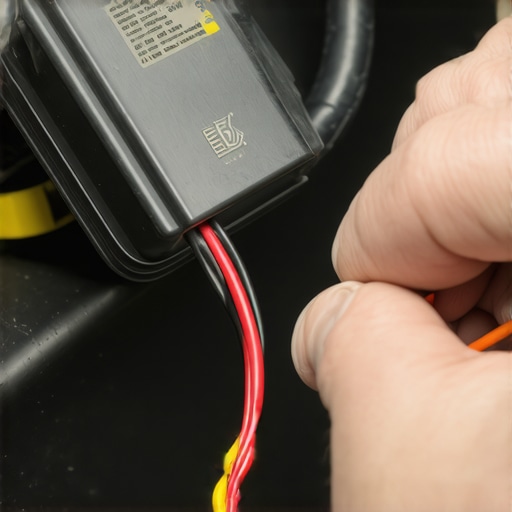
Why Precision is Key for the Intelligent Battery Sensor
The precision required for modern fuel-saving technologies like stop-start systems means the margin for error is nearly zero. According to technical documentation from Robert Bosch GmbH, the IBS must maintain a current measurement accuracy of within 1% to ensure the start-stop system functions without strands of data corruption. This sensitivity makes the sensor vulnerable to environmental factors. If you’ve ever experienced your engine failing to shut off at a red light, it might not be a mechanical fault but rather the IBS detecting that the battery’s state of health (SOH) has dipped below the critical 70% threshold. This ‘software-limited’ functionality is a safety protocol designed to ensure the vehicle always has enough reserve power to restart.
Why AGM Batteries Demand Specialized Charging Profiles
As we transition toward more electrically-dense vehicle architectures, the reliance on Absorbent Glass Mat (AGM) batteries has become the standard. Unlike traditional flooded batteries, AGM units hold their electrolyte in glass fiber separators, making them spill-proof and more resistant to vibration. However, they are incredibly sensitive to heat and charging voltage. If a technician applies a standard high-voltage charge to an AGM battery, the pressure-relief valves may open, causing ‘dry out’—a permanent failure. This is where car service becomes a high-stakes endeavor; using the wrong charging profile can kill a $300 battery in a matter of weeks. Understanding the nuance between these chemistries is what separates a DIYer from a master of transmission and electrical integration.
The integration of these systems means that a simple battery swap is now a complex procedure involving data handshakes between multiple modules. Have you noticed your fuel economy dipping after a battery replacement? It could be because the system hasn’t been recalibrated to recognize the new power source. If you are seeing strange ‘Service Charging System’ messages, you might need to look deeper into how the various modules communicate over the CAN-bus network to maintain electrical equilibrium. We would love to hear about your diagnostic challenges—have you ever checked your IBS for corrosion after a long winter?
Clean Power is Non-Negotiable for ADAS Sensors
As vehicles transition toward semi-autonomous capabilities, the sensitivity of the electrical architecture reaches a fever pitch. Systems like Lane Keep Assist (LKA) and Adaptive Cruise Control (ACC) rely on millisecond-perfect data transmission. When a battery terminal is compromised, it doesn’t just lower the voltage; it introduces high-frequency ‘noise’ into the CAN-bus network. This electrical ripple can garble signals between radar sensors and the main processing unit, causing sudden system deactivations or ‘ghost’ obstacle detections. In the world of high-end vehicle diagnostics, experienced technicians often see ‘sensor communication lost’ codes that vanish the moment the battery terminals are properly torqued and cleaned. Ensuring a ripple-free power supply is the first step in calibrating any safety-critical system.

Can a Weak Ground Strap Disrupt Your Blind Spot Monitoring?
The answer is a resounding yes. While the focus usually stays on the positive terminal, the chassis ground strap is equally vital for signal return and shielding. If the ground path is corroded, the electrical ‘potential’ of the car’s body shifts, potentially turning the entire vehicle frame into an antenna for electromagnetic interference (EMI). This interference is a primary reason why modern auto repair for electronic faults must include a voltage drop test on the negative side of the circuit. According to technical research from VARTA Automotive, even a 0.2-ohm increase in ground resistance can trigger catastrophic communication failures in high-speed data buses, making the vehicle’s computer modules behave erratically or enter ‘limp mode’ without a mechanical cause.
Stop Chasing Ghost Codes in Your Transmission
The transmission control module is particularly sensitive to the ‘dirty power’ caused by sulfated terminals. Because the solenoids within the gearbox require rapid, high-current pulses to change gears, any resistance at the battery creates a momentary voltage sag during every shift. This sag can cause the TCM to lose its memory of adaptive shift points, leading to a transmission that feels like it is slipping or searching for gears. Instead of jumping to a rebuild, professional diagnostics prioritize the health of the primary power cables. If you have been dealing with erratic shifting, inspecting the internal copper strands of your battery cables for green oxidation is a high-level troubleshooting step that often yields a cheaper, more effective solution than hardware replacement.
The Critical Role of Battery Insulation and Thermal Management
Modern car manufacturers often wrap batteries in plastic or felt jackets. This is not for aesthetics; it is a thermal barrier designed to protect the battery from the intense radiant heat of turbocharged engines. Removing these covers during a car service or failing to replace them after a battery swap significantly accelerates the degradation of the electrolyte. High-performance AGM batteries are especially prone to ‘thermal runaway’ if they are overcharged while hot. Maintaining these thermal shields is a simple yet expert-level maintenance task that extends the life of the entire electrical system. Have you ever encountered a ‘Service Charging System’ light that turned out to be a simple loose ground? Share your weirdest electrical diagnostic stories in the comments or let us know if you want us to cover the intricacies of recalibrating steering angle sensors after a power loss.
Expert Insights & Advanced Considerations
Don’t Trust the Maintenance-Free Label Blindly
While many lead-acid units are marketed as maintenance-free, this is often a misnomer in the context of professional auto repair. These batteries still vent gases through small relief valves, which can lead to terminal oxidation over time. A true expert knows that periodic inspection of the seal and the state of the casing is necessary to prevent the very issues that lead to why your car battery dies every time it rains due to moisture-induced tracking.
Stop Overtightening Your Battery Terminals
One of the most common mistakes in amateur car service is over-torquing the terminal nuts. Lead is a soft metal; excessive pressure can cause micro-fractures where the terminal post enters the plastic casing. These cracks allow sulfuric acid to creep out, accelerating corrosion from the inside out. Using a dedicated torque wrench and adhering to the manufacturer’s spec—usually around 5 to 7 Nm—is a hallmark of high-level top auto repair techniques every car owner should know. #IMAGE_PLACEHOLDER_E#
The Hidden Logic of Charging Profiles
Your car’s computer doesn’t just charge the battery; it manages an intricate thermal model. In many luxury and European vehicles, the charging voltage is intentionally lowered during long highway cruises to prevent electrolyte boil-off. If you suspect your system is under-charging, you should learn how to spot a bad ground wire before it kills your new battery, as a high-resistance ground can trick the BMS into providing the wrong voltage for the current ambient temperature.
Curated Expert Resources
To truly master the nuances of automotive electrical systems, I recommend consulting the following authoritative bodies: Battery Council International (BCI) provides the foundational standards for battery testing and safety protocols. SAE International offers peer-reviewed technical papers on the evolution of 48-volt architectures and smart charging logic. Robert Bosch GmbH provides deep-dive documentation on the Intelligent Battery Sensors (IBS) used in most modern vehicle diagnostics workflows.
Final Expert Perspective
Mastering the intricacies of your vehicle’s electrical health goes far beyond just cleaning away some white powder. It requires a holistic understanding of how voltage stability influences everything from your safety sensors to your transmission‘s longevity. By integrating these advanced vehicle diagnostics into your routine, you ensure that every module—from the ECU to the radar sensors—operates within its peak efficiency range. If you are struggling with persistent electrical issues, we recommend checking our guide on transmission troubles and how to save time and money, or diving into the hidden world of vehicle diagnostics to better interpret what your car is trying to tell you. What is the most surprising electrical ghost you have ever chased out of your engine bay? Reach out to us through our contact page or share your experiences in the professional community.