Modern automotive engineering is a paradox of complexity; while microprocessors manage millisecond-level shifts in a transmission, the foundational electrical integrity still relies on a chemical reaction within lead-acid plates. As a seasoned technician, I have observed countless vehicle diagnostics lead to expensive ghost repairs simply because the professional overlooked the basics of load testing. The health of your car service routine shouldn’t just be about fluid intervals; it is about the steady current that keeps every solenoid and sensor operational.
Why the Headlight Trick Still Beats a Cheap Multimeter
In the world of auto repair, we often lean on digital readouts, but a multimeter can lie. A battery might show a healthy 12.6 volts at rest but collapse entirely under the amperage draw of a cold start. This is where the old-school headlight trick serves as a high-fidelity diagnostic tool. By turning on the high beams before attempting to crank the engine, you are applying a significant electrical load. If those lights dim to a dull orange the moment the key turns, you have instantly diagnosed a high-resistance connection or internal cell failure. This method effectively bypasses the surface charge that often masks a dying battery.
Can a Failing Battery Mimic a Serious Transmission Fault?
The answer is a resounding yes. Modern electronically controlled gearboxes depend on stable voltage to actuate shift solenoids. When your battery is marginal, the resulting voltage drops can trigger limp-home modes or erratic shifting patterns that many drivers mistake for mechanical transmission failures. Before you commit to a costly teardown, ensure your electrical foundation is solid. Low voltage can cause communication errors between the Engine Control Unit (ECU) and the Transmission Control Unit (TCU), leading to symptoms like harsh gear engagement or slipping during turns.
Advanced Diagnostic Strategies for Electrical Integrity
Beyond the battery, we must analyze parasitic draws and charging efficiency. If you find your battery dies every morning, the headlight trick is only your starting point. You need to investigate the alternator’s ability to handle the vehicle’s full load while maintaining at least 13.5 volts. According to technical standards established by the Society of Automotive Engineers (SAE), voltage fluctuations as small as 0.5V can disrupt sensitive CAN-bus communication, leading to a cascade of false diagnostic trouble codes. Professional vehicle diagnostics require a holistic view of the system, not just a quick scan for codes. If you are struggling to pin down a mysterious electrical gremlin or a weird noise, reach out to our expert team for a deep-dive diagnostic session.
The Real-World Impact of Neglected Grounds
An often-overlooked aspect of professional car service is the inspection of grounding straps. A corroded ground can create enough resistance to simulate a failing alternator or even a dead starter motor. In my experience, cleaning a single ground point can sometimes fix multiple unrelated issues, from flickering dash lights to a hesitation when you step on the gas. For those taking a DIY approach, identifying these points is as critical as any expert auto repair tips you will find in a manual. High-performance vehicle maintenance demands a proactive approach to these invisible electrical pathways.
Sensors That Lie Without Throwing a Code
In my years on the shop floor, I have found that the most frustrating driveability issues rarely trigger a Check Engine light immediately. We often encounter ‘lazy’ sensors—components like the Oxygen (O2) sensor or the Mass Air Flow (MAF) sensor that remain within their logical operating voltage but react too slowly to real-time changes. When these components degrade, the Engine Control Unit (ECU) receives data that is technically ‘valid’ but practically incorrect, leading to a scenario where the real reason your gas mileage suddenly dropped remains hidden from a standard OBD-II scan. To combat this, a professional technician looks at ‘Long Term Fuel Trims.’ If your engine is adding 15% more fuel than the factory map dictates, you likely have a contaminated sensor or a subtle vacuum leak. You can often resolve a rough idle simply by learning how to clean your mass air flow sensor before the component fails entirely.
Why Does Your Engine Bog Down When the AC Kicks In?
This symptom is a classic indicator of a system struggling to manage parasitic load. When the air conditioning compressor engages, it places a significant mechanical strain on the crankshaft. Normally, the Idle Air Control (IAC) valve or the electronic throttle body compensates by increasing airflow to maintain RPM. However, if you find why your car bogs down when you turn on the air conditioner, it is often a sign of a carbon-restricted throttle plate or a weakening charging system that cannot handle the simultaneous electrical draw of the cooling fans. This intersection of mechanical and electrical load is where many DIY diagnostics fail, as they focus on the AC system rather than the engine’s ability to compensate for torque demand.
Visualizing Internal Wear Before the Metal Starts Screaming
While electronics provide the data, sometimes you need eyes on the hardware. One of the most effective ways to verify engine health without a complete teardown is the use of an endoscope. This simple tool lets you see inside your engine to inspect for carbon buildup on valves or scoring on cylinder walls that could be causing oil consumption. 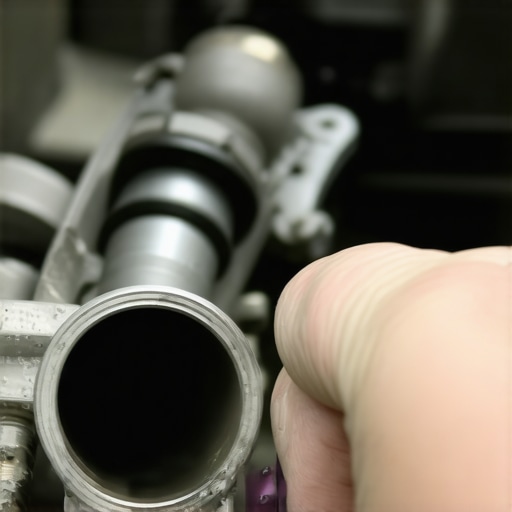 Beyond visual inspection, the sound of the engine remains a primary diagnostic signal. Just as a doctor uses a stethoscope, a technician can use a long screwdriver held against a fuel injector to hear the rhythmic ‘click’ of the solenoid. If one sounds dull or irregular, you can test a fuel injector with a screwdriver to confirm a mechanical hang-up before spending hundreds on replacements. This level of granular testing is what separates a parts-changer from a true diagnostician. According to the National Institute for Automotive Service Excellence (ASE), the integration of mechanical intuition with digital data is the benchmark for Master Technician certification. Managing these complexities requires a systematic approach to unmetered air; often, a cheap tool finds vacuum leaks that electronic sensors might interpret as a failing fuel pump. If you are noticing these subtle symptoms, leave a comment below with your vehicle’s year and model so we can help you pinpoint the likely culprit. For those looking to stay ahead of the curve, you might also want to learn how to check your own brake pads to ensure your stopping power matches your engine’s performance.While stopping power is vital for safety, the internal thermal balance is what ensures your vehicle’s longevity.
Stop Ignoring the Cooling System’s Impact on Your Gearbox
Many drivers think the radiator only keeps the engine from melting, but it plays a critical role in fluid longevity for your transmission. Most modern vehicles utilize a heat exchanger integrated into the radiator tank. If the internal cooling fins become restricted by scale or debris, your transmission fluid temperatures can skyrocket without ever triggering a warning light on the dashboard. A transmission that regularly operates above 200°F will suffer from accelerated oxidation, where the fluid’s molecular structure breaks down and loses its ability to lubricate. This leads to the very transmission failures we strive to avoid. When you perform a routine car service, don’t just check the level; use an infrared thermometer to verify that the return line from the cooler is significantly cooler than the feed line. 
Can Dirty Coolant Actually Damage Your Engine’s Electronics?
It sounds like science fiction, but old, neglected coolant can become a battery itself. Over time, the corrosion inhibitors in the antifreeze deplete, and the fluid becomes electrolytic. This phenomenon, known as electrolysis, allows a small electrical current to flow through the liquid. This stray voltage can play havoc with sensitive vehicle diagnostics, as it tricks temperature sensors into sending erratic signals to the ECU. According to the Automotive Maintenance & Repair Association (AMRA), failing to flush coolant at the proper intervals can lead to pitting in aluminum components, which often mimics a head gasket failure. If you have ever seen a sensor that looks perfectly clean but provides wildly inaccurate data, you might be dealing with a chemistry problem rather than a mechanical one.
Why Modern Synthetics Aren’t a Cure-All for Short Trips
We often hear that modern synthetic oils can last 10,000 miles or more, but this expert auto repair advice comes with a major asterisk: the duty cycle. If your daily commute consists of short, five-mile trips, your engine never reaches the operating temperature required to evaporate the moisture and fuel that naturally blow past the piston rings. This creates a sludge-like emulsion that can clog the variable valve timing (VVT) solenoids. These solenoids are the heartbeat of modern performance; a single blockage here will lead to a hesitation when you step on the gas that no amount of premium fuel will fix. High-quality expert auto repair tips always prioritize the severe service schedule if your vehicle rarely sees highway speeds. If you are unsure if your driving habits qualify as severe, consult our diagnostic specialists to tailor a maintenance plan to your specific needs.
The Pressure Paradox in High-Mileage Hydraulic Systems
As an engine ages, the tolerances between moving parts—like bearings and journals—gradually widen. This creates a drop in oil pressure that can be particularly troublesome for hydraulic lifters and chain tensioners. While you might be tempted to switch to a much thicker oil to fill the gaps, doing so can actually starve the top end of the engine during a cold start. The resistance of a high-viscosity oil can also increase the load on the oil pump drive, leading to premature wear. Balancing the need for pressure with the necessity of rapid flow is a delicate dance.
Direct Injection Carbon Crust Is Stealthily Stealing Your Horsepower
Modern vehicle systems are increasingly interconnected, where a fault in one module creates a ripple effect across seemingly unrelated components. For instance, the transition from traditional port fuel injection to Gasoline Direct Injection (GDI) has introduced a specific maintenance challenge that many owners ignore until it is too late. Because fuel is injected directly into the combustion chamber, the intake valves are no longer ‘washed’ by the detergent-rich gasoline. Over time, oil vapors from the crankcase ventilation system solidify on the valves, creating a thick, insulating layer of carbon. This restriction doesn’t just reduce airflow; it fundamentally alters the air-fuel swirl, causing erratic combustion and hesitation when you step on the gas that often goes undetected by basic scanners. According to field data from the International Automotive Technicians Network (iATN), technicians often spend hours chasing ignition coils when the actual culprit is this mechanical blockage. High-level vehicle diagnostics now require using chemical walnut-blasting or specialized solvents to restore the intake path’s geometry. 
Can a Failing Wheel Speed Sensor Trick Your Transmission into Shifting Late?
The complexity of modern networking means your gearbox doesn’t just listen to the engine; it listens to the wheels. If a single wheel speed sensor provides a jittery signal—even if it doesn’t trigger an ABS light—the Transmission Control Unit (TCU) may interpret this as wheel slip. To protect the drivetrain, the software might delay shifts or increase line pressure, leading to symptoms that mimic transmission failures. This is why a holistic approach to expert auto repair tips always includes a ‘live data’ road test to observe how these signals interact under load. If you notice your car ‘holding’ a gear too long, the problem might be at the hub, not inside the case.
The Silent Squeak That Ruins Your Electronic Stability Control
Suspension wear is often categorized as a comfort issue, but in the era of electronic stability control (ESC), it is a safety-critical diagnostic factor. When bushings in the control arms soften or tear, the suspension geometry changes dynamically under braking or cornering. This deflection can cause the Steering Angle Sensor (SAS) to report a discrepancy between the driver’s input and the vehicle’s actual path. The car’s computer may then apply individual brakes to ‘correct’ a skid that isn’t actually happening. Professional car service specialists look for these subtle variances in chassis alignment that could confuse the onboard computers.
Stop Treating Modern Brake Systems Like 1990s Hydraulics
Brake fluid is hygroscopic, meaning it actively absorbs moisture from the atmosphere. While older systems could tolerate a bit of water, the microscopic valves inside a modern ABS or Traction Control pump cannot. Moisture leads to internal corrosion that can cause a valve to stick, resulting in a firm pedal but zero braking force at one wheel. This is a nightmare for vehicle diagnostics because it is a purely mechanical failure within an electronic component. If you are experiencing pulling under braking or a strange pedal feel, reach out to our expert team to perform a copper-strip test on your fluid. Don’t let a simple fluid maintenance item turn into a four-figure module replacement.
Expert Insights & Advanced Considerations
The Fallacy of ‘Lifetime’ Transmission Fluids
Manufacturers often market transmission fluid as ‘lifetime’ to lower the perceived cost of ownership, but from a mechanical standpoint, fluid is a consumable. Oxidation and shear forces are inevitable. If you intend to keep your vehicle past the warranty period, you must learn how to check your transmission fluid level without a dipstick to assess its color and smell. Dark, burnt fluid is a precursor to catastrophic failure, regardless of what the manual claims.
Ground Loops Can Decimate Your Communication Network
A vehicle’s electrical system is only as strong as its weakest return path. High resistance in a ground strap doesn’t just stop a component from working; it can create ‘noise’ that disrupts the CAN-bus signal, leading to phantom codes in the airbag or ABS modules. When tracking these ghosts, the $5 tool for finding electrical shorts in minutes—a simple test light or a dedicated short finder—becomes more valuable than a $5,000 scanner.
Thermal Imaging as a Preventive Diagnostic Layer
Advanced technicians are increasingly using infrared cameras to spot uneven heat distribution across brake rotors and calipers. This can identify a sticking piston before it causes significant vibration or pad wear. Keeping your braking surfaces clean is essential; you might need to know the best way to remove rust from your brake rotors to ensure thermal efficiency and prevent the ‘hot spots’ that lead to warped discs.
#IMAGE_PLACEHOLDER_E#
Curated Expert Resources
SAE International Technical Papers: The gold standard for understanding the technical engineering decisions and material science behind automotive evolution.
ASE Certification Study Guides: Even for non-professionals, these guides outline the systematic logic required for high-level troubleshooting and professional car service standards.
AMRA Maintenance Guidelines: Excellent for identifying standardized service intervals that prioritize vehicle longevity over marketing hype.
iATN (International Automotive Technicians Network): A peer-to-peer repository of real-world fixes that often catch what factory service manuals miss.
Final Expert Perspective
True mastery of vehicle diagnostics isn’t about memorizing every fault code; it is about respecting the physics of the machine. Whether you are dealing with a complex car service routine or a sudden mechanical anomaly, the solution almost always lies in the fundamentals—clean air, stable voltage, and thermal management. By applying top auto repair techniques every car owner should know, you move from being a reactive driver to a proactive steward of your vehicle’s health. If you are facing a diagnostic challenge that defies logic, reach out to our expert team or share your experiences in the community below to help others sharpen their own technical intuition.