A sudden decline in fuel economy is rarely a localized failure; rather, it is typically the result of a systemic breakdown in the engine’s thermodynamic efficiency or a spike in parasitic drivetrain losses. From an engineering perspective, internal combustion engines operate within a narrow band of peak efficiency, managed by a complex interplay of sensors and actuators. When your miles-per-gallon (MPG) drops significantly, the vehicle’s Engine Control Unit (ECU) is often struggling to maintain a stoichiometric air-fuel ratio, resulting in ‘rich’ running conditions that burn excess fuel without a corresponding increase in power output. Professionals in the field look beyond simple mechanical failures to identify subtle sensor drifts that do not yet trigger a Check Engine Light but severely impact operational costs.
Your Fuel Map is Fighting a Losing Battle
The most common culprit for decreased efficiency lies within the closed-loop fueling system. If your oxygen sensors or mass air flow (MAF) sensor begin to report inaccurate data, the ECU cannot accurately calculate the required fuel load. Over time, these sensors suffer from carbon fouling or age-related lag, causing the engine to over-inject fuel as a ‘safe’ default. According to the U.S. Department of Energy, replacing a clogged air filter or a malfunctioning oxygen sensor can improve gas mileage by up to 40% in some older vehicles. To pinpoint these issues before they become catastrophic, a deep dive into vehicle diagnostics is essential, as modern scanners can track real-time fuel trims to see exactly where the waste occurs.
Is a Lazy Torque Converter Killing Your Highway Mileage?
Many drivers associate fuel economy strictly with the engine, but the drivetrain plays a critical role, particularly during highway cruising. The torque converter clutch (TCC) is designed to create a mechanical ‘lock’ between the engine and the gearbox, eliminating the energy loss inherent in fluid coupling. If the TCC fails to engage or slips intermittently due to fluid degradation or solenoid wear, you lose that direct connection, and your RPMs will hover higher than normal at speed. This internal friction translates directly into wasted fuel. Addressing these transmission troubles early can prevent the excessive heat buildup that eventually leads to a total gearbox overhaul.
Stop Ignoring Marginal Gains in Your Maintenance Routine
Efficiency is often recovered in the small details. Ignition system health is a primary factor; a single cylinder with a weak spark due to a worn coil pack can lead to incomplete combustion, forcing the other cylinders to work harder to maintain momentum. Integrating advanced auto repair techniques, such as scoping ignition waveforms, allows technicians to see misfires that are too fast for the human ear to detect. Furthermore, choosing the right car service ensures that high-quality, low-friction lubricants are used, reducing the internal drag that fights against your engine’s output. [IMAGE_PLACEHOLDER] If you’ve noticed a persistent dip in efficiency, it’s time to unlock your car’s potential with a professional diagnostic scan to stop the financial leak at the pump.
Fix the Thermal Leak in Your Engine’s Strategy
While most enthusiasts focus on air and fuel, the thermal state of the engine dictates the ultimate efficiency of the combustion cycle. A thermostat that hangs partially open may not cause overheating, but it prevents the engine from reaching its target operating temperature quickly. When the engine runs ‘cool,’ the oil remains more viscous, increasing internal friction, and the ECU remains in a rich-biased fueling map to compensate for the perceived lack of heat. This phenomenon is often the root cause when you try to the hidden reason your engine is consuming oil without a leak, as poor thermal management leads to increased blow-by and oil dilution. According to data from the Society of Automotive Engineers (SAE), parasitic losses from mechanical cooling systems can consume a significant percentage of net power if the thermal feedback loop is compromised.
Why Does Your Engine Stay in Cold-Start Mode Long After the Key Turns?
The culprit is frequently a skewed coolant temperature sensor. If the sensor reports a temperature even ten degrees lower than reality, the ECU will continue to inject excess fuel to stabilize the idle. This not only wrecks your MPG but also results in carbon buildup on the valves. You can often stop your engine from surging at idle with this 12-cleaning-trick by addressing the throttle body and sensors that manage these early-cycle transitions. An expert technician uses a thermal imager to verify that the sensor data matches the physical temperature of the radiator hoses, ensuring the ‘brain’ of the car isn’t operating on false premises.
Stop Fighting the Friction in Your Own Wheel Hubs
Mechanical resistance outside the engine block is a silent thief of momentum. Brake drag is one of the most overlooked factors in poor fuel economy. A seized caliper slide pin or a collapsed flexible brake line can prevent the pads from fully retracting from the rotor. This creates constant friction that the engine must overcome. If you have recently performed a brake job and noticed a drop in efficiency, investigate why your abs light stays on after changing your brake pads, as sensor misalignment can sometimes be the first warning of a mechanical drag issue.  Beyond the brakes, wheel bearings that have lost their lubrication create a rotational resistance that compounds at highway speeds, effectively acting like a constant uphill climb for your drivetrain.
The Hidden Cost of Electrical Drag
The alternator is not a free source of energy; it is a load-sensing device that places a mechanical burden on the crankshaft via the serpentine belt. As electrical demand increases—due to a failing battery or a diode leak—the alternator becomes harder to turn, requiring more fuel to maintain the same engine speed. Learning how to identify a dying alternator before your battery deserts you is a critical skill for any owner looking to optimize long-term efficiency. High electrical resistance in old ground wires can force the charging system to work at 90% capacity just to maintain 14 volts, creating a parasitic drain that shows up clearly at the gas pump. If these technical adjustments seem daunting, learning how to find reliable car service near you in 2025 will ensure your vehicle receives the precision tuning it requires to stay efficient. Feel free to share your diagnostic success stories or ask about specific sensor readings in the comments below to help the community keep their vehicles running at peak performance.
Don’t Fight the Air: The Hidden Drag of Missing Underbody Shields
Modern vehicle design relies heavily on fluid dynamics to pierce through the atmosphere with minimal resistance. While many owners focus on the engine bay, the underside of the car is often a chaotic mess of turbulent air. Manufacturers install plastic belly pans and air dams not just for protection, but to smooth out this airflow. If these panels are missing or hanging loose after a hasty oil change, the resulting ‘parachuting’ effect increases the vehicle’s drag coefficient significantly. At speeds above 55 MPH, aerodynamic drag becomes the primary force the engine must overcome. Even a small displacement in an air dam can lead to a measurable drop in highway efficiency. 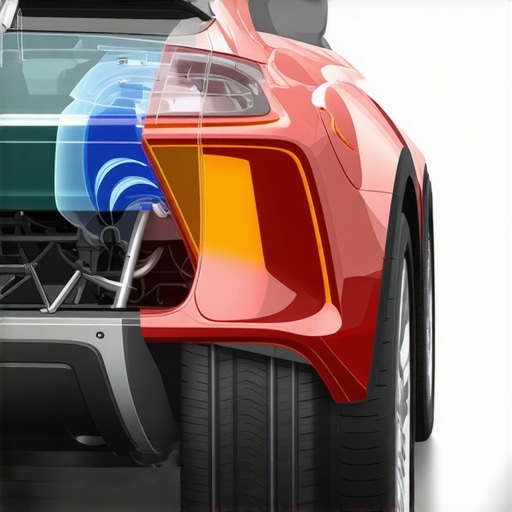 If you have noticed your car feels more ‘heavy’ at high speeds, inspecting the integrity of your aerodynamic trim is a necessary step in vehicle diagnostics that most DIYers overlook.
Can a Partially Clogged Catalytic Converter Go Unnoticed?
A restricted exhaust system is essentially a bottleneck for your engine’s breathing. If the ceramic substrate inside your catalytic converter begins to melt or becomes fouled with oil ash, it creates excessive backpressure. This means the piston must expend more energy to push exhaust gases out of the cylinder, leaving less energy to drive the wheels. According to the U.S. Environmental Protection Agency (EPA), maintaining exhaust system integrity is vital for both emission standards and the preservation of engine pumping efficiency. A technician can diagnose this by performing a backpressure test via the upstream oxygen sensor port; any reading over 1.5 PSI at idle or 3 PSI at 2,500 RPM suggests your engine is struggling against its own exhaust flow. Addressing these transmission troubles and engine flow issues simultaneously ensures that power isn’t being choked off before it reaches the ground.
Your Camshaft Timing Might Be Robbing You Blind
Variable Valve Timing (VVT) is a marvel of modern engineering that allows an engine to behave like a fuel-sipper at low RPMs and a performance machine under load. However, the solenoids and phasers that control this timing are incredibly sensitive to oil quality. If the VVT system becomes ‘lazy’ due to sludge or incorrect oil viscosity, the valves may not close at the optimal moment for gas exchange. This results in poor volumetric efficiency, where the engine consumes the same amount of fuel but produces less torque. You can often see this manifested as a subtle loss of low-end power that forces you to press the pedal deeper than usual. Utilizing auto repair techniques like monitoring live data for cam-crank correlation can reveal if your engine’s ‘heartbeat’ is out of sync with its ‘lungs.’
Alignment Settings Are Stealth Fuel Killers
Even if your car drives straight, your alignment could be sabotaging your MPG. ‘Toe’ settings describe whether your tires are pointing inward or outward rather than perfectly parallel. If your toe-in is excessive, your tires are essentially scrubbing across the pavement sideways as you move forward. This creates immense rolling resistance that the engine must fight constantly. A precise alignment doesn’t just save your tires; it reduces the mechanical load on the entire drivetrain. When you choose a professional car service, ensure they provide a before-and-after printout of these angles, as even a fraction of a degree can equate to hundreds of dollars in wasted fuel over the life of a tire set. Beyond the simple mechanics, the sophisticated interaction between the steering angle sensor and the stability control system means that a bad alignment can also trigger unwanted brake interventions, further dragging down your efficiency levels without ever throwing a code.
Beyond the mechanical drag and sensor drift, the sheer physics of fluid delivery dictates the efficiency of every combustion event. Fuel injectors are often treated as binary components—they either work or they do not—but reality is far more nuanced for high-mileage engines. When an injector’s internal solenoid develops a slight electrical lag, or ‘latency,’ the timing of the fuel spray drifts away from the ECU’s commanded window. This subtle desynchronization leads to a fragmented flame front, where fuel is consumed but not fully converted into kinetic energy.
Stop Blaming the Pump and Inspect Your Spray Patterns
High-pressure direct injection systems operate at incredible speeds, with pulse widths measured in milliseconds. If an injector becomes partially restricted by carbon deposits, the fuel no longer atomizes into a fine mist. Instead, it enters the chamber as larger droplets that burn slowly and unevenly. This forces the ECU to extend the pulse width to meet torque demands, effectively dumping raw fuel into the exhaust. According to research from the Argonne National Laboratory, engine efficiency is heavily dependent on the precision of these micro-bursts, particularly during the critical transition from cold start to closed-loop operation. If these patterns are disrupted, your catalytic converter ends up processing unburnt hydrocarbons that should have been driving your wheels.
Can Your Evaporative Emissions System Steal Fuel While You Park?
Most drivers think of the EVAP system as a purely environmental control, but a stuck-open purge valve acts as a massive vacuum leak that the driver cannot see. This valve is designed to vent fuel vapors from the charcoal canister into the intake manifold only under specific cruise conditions. If it fails and remains open, the engine draws in a constant, unregulated stream of raw fuel vapor. This creates a rich-running condition that the oxygen sensors must scramble to correct by pulling fuel from the main injectors. This ‘fuel trim tug-of-war’ is a common reason for a ‘hunting’ idle and a notable drop in city-driving MPG. Identifying these vapor leaks requires a professional smoke machine test, a staple of advanced vehicle diagnostics.
Tire Compounds That Fight Against Your Momentum
While alignment is critical, the molecular makeup of your tires determines their rolling resistance coefficient. Soft, high-performance summer compounds offer incredible grip but generate significant internal heat through hysteretic loss—the energy lost as the tire deforms and recovers its shape during every rotation. This energy comes directly from your fuel tank. Switching to a tire with a lower rolling resistance can reclaim 3-5% of your fuel economy without sacrificing safety.  Beyond the compound itself, the tread depth and pattern also influence aerodynamic drag under the wheel arches, another area where precision car service provides an edge through informed equipment selection.
Why Cheap Fuel Actually Costs More per Mile
The energy density of ethanol is roughly 33% lower than pure gasoline, meaning your engine must burn more volume to achieve the same power output. In regions where seasonal blends fluctuate significantly, your engine may be working harder to extract the same caloric value from the fuel, leading to a ‘ghost’ drop in MPG that no mechanical fix can solve. Sophisticated auto repair techniques now include testing fuel alcohol content to explain why a car’s long-term fuel trims have shifted into the positive range. If your vehicle feels sluggish despite a clean bill of health, don’t just clear the codes; analyze the chemistry. Stop settling for guesswork and book a precision analysis at a qualified shop to recover your car’s factory-spec efficiency today.
A sudden decline in fuel economy is rarely a localized failure; rather, it is typically the result of a systemic breakdown in the engine’s thermodynamic efficiency or a spike in parasitic drivetrain losses. From an engineering perspective, internal combustion engines operate within a narrow band of peak efficiency, managed by a complex interplay of sensors and actuators. When your miles-per-gallon (MPG) drops significantly, the vehicle’s Engine Control Unit (ECU) is often struggling to maintain a stoichiometric air-fuel ratio, resulting in ‘rich’ running conditions that burn excess fuel without a corresponding increase in power output. Professionals in the field look beyond simple mechanical failures to identify subtle sensor drifts that do not yet trigger a Check Engine Light but severely impact operational costs.
Your Fuel Map is Fighting a Losing Battle
The most common culprit for decreased efficiency lies within the closed-loop fueling system. If your oxygen sensors or mass air flow (MAF) sensor begin to report inaccurate data, the ECU cannot accurately calculate the required fuel load. Over time, these sensors suffer from carbon fouling or age-related lag, causing the engine to over-inject fuel as a ‘safe’ default. According to the U.S. Department of Energy, replacing a clogged air filter or a malfunctioning oxygen sensor can improve gas mileage by up to 40% in some older vehicles. To pinpoint these issues before they become catastrophic, a deep dive into vehicle diagnostics is essential, as modern scanners can track real-time fuel trims to see exactly where the waste occurs.
Is a Lazy Torque Converter Killing Your Highway Mileage?
Many drivers associate fuel economy strictly with the engine, but the drivetrain plays a critical role, particularly during highway cruising. The torque converter clutch (TCC) is designed to create a mechanical ‘lock’ between the engine and the gearbox, eliminating the energy loss inherent in fluid coupling. If the TCC fails to engage or slips intermittently due to fluid degradation or solenoid wear, you lose that direct connection, and your RPMs will hover higher than normal at speed. This internal friction translates directly into wasted fuel. Addressing these transmission troubles early can prevent the excessive heat buildup that eventually leads to a total gearbox overhaul.
Stop Ignoring Marginal Gains in Your Maintenance Routine
Efficiency is often recovered in the small details. Ignition system health is a primary factor; a single cylinder with a weak spark due to a worn coil pack can lead to incomplete combustion, forcing the other cylinders to work harder to maintain momentum. Integrating advanced auto repair techniques, such as scoping ignition waveforms, allows technicians to see misfires that are too fast for the human ear to detect. Furthermore, choosing the right car service ensures that high-quality, low-friction lubricants are used, reducing the internal drag that fights against your engine’s output. [IMAGE_PLACEHOLDER] If you’ve noticed a persistent dip in efficiency, it’s time to unlock your car’s potential with a professional diagnostic scan to stop the financial leak at the pump.
Fix the Thermal Leak in Your Engine’s Strategy
While most enthusiasts focus on air and fuel, the thermal state of the engine dictates the ultimate efficiency of the combustion cycle. A thermostat that hangs partially open may not cause overheating, but it prevents the engine from reaching its target operating temperature quickly. When the engine runs ‘cool,’ the oil remains more viscous, increasing internal friction, and the ECU remains in a rich-biased fueling map to compensate for the perceived lack of heat. This phenomenon is often the root cause when you try to the hidden reason your engine is consuming oil without a leak, as poor thermal management leads to increased blow-by and oil dilution. According to data from the Society of Automotive Engineers (SAE), parasitic losses from mechanical cooling systems can consume a significant percentage of net power if the thermal feedback loop is compromised.
Why Does Your Engine Stay in Cold-Start Mode Long After the Key Turns?
The culprit is frequently a skewed coolant temperature sensor. If the sensor reports a temperature even ten degrees lower than reality, the ECU will continue to inject excess fuel to stabilize the idle. This not only wrecks your MPG but also results in carbon buildup on the valves. You can often stop your engine from surging at idle with this 12-cleaning-trick by addressing the throttle body and sensors that manage these early-cycle transitions. An expert technician uses a thermal imager to verify that the sensor data matches the physical temperature of the radiator hoses, ensuring the ‘brain’ of the car isn’t operating on false premises.
Stop Fighting the Friction in Your Own Wheel Hubs
Mechanical resistance outside the engine block is a silent thief of momentum. Brake drag is one of the most overlooked factors in poor fuel economy. A seized caliper slide pin or a collapsed flexible brake line can prevent the pads from fully retracting from the rotor. This creates constant friction that the engine must overcome. If you have recently performed a brake job and noticed a drop in efficiency, investigate why your abs light stays on after changing your brake pads, as sensor misalignment can sometimes be the first warning of a mechanical drag issue. Beyond the brakes, wheel bearings that have lost their lubrication create a rotational resistance that compounds at highway speeds, effectively acting like a constant uphill climb for your drivetrain.
The Hidden Cost of Electrical Drag
The alternator is not a free source of energy; it is a load-sensing device that places a mechanical burden on the crankshaft via the serpentine belt. As electrical demand increases—due to a failing battery or a diode leak—the alternator becomes harder to turn, requiring more fuel to maintain the same engine speed. Learning how to identify a dying alternator before your battery deserts you is a critical skill for any owner looking to optimize long-term efficiency. High electrical resistance in old ground wires can force the charging system to work at 90% capacity just to maintain 14 volts, creating a parasitic drain that shows up clearly at the gas pump. If these technical adjustments seem daunting, learning how to find reliable car service near you in 2025 will ensure your vehicle receives the precision tuning it requires to stay efficient. Feel free to share your diagnostic success stories or ask about specific sensor readings in the comments below to help the community keep their vehicles running at peak performance.
Don’t Fight the Air and Missing Underbody Shields
Modern vehicle design relies heavily on fluid dynamics to pierce through the atmosphere with minimal resistance. While many owners focus on the engine bay, the underside of the car is often a chaotic mess of turbulent air. Manufacturers install plastic belly pans and air dams not just for protection, but to smooth out this airflow. If these panels are missing or hanging loose after a hasty oil change, the resulting ‘parachuting’ effect increases the vehicle’s drag coefficient significantly. At speeds above 55 MPH, aerodynamic drag becomes the primary force the engine must overcome. Even a small displacement in an air dam can lead to a measurable drop in highway efficiency. If you have noticed your car feels more ‘heavy’ at high speeds, inspecting the integrity of your aerodynamic trim is a necessary step in vehicle diagnostics that most DIYers overlook.
Can a Partially Clogged Catalytic Converter Go Unnoticed?
A restricted exhaust system is essentially a bottleneck for your engine’s breathing. If the ceramic substrate inside your catalytic converter begins to melt or becomes fouled with oil ash, it creates excessive backpressure. This means the piston must expend more energy to push exhaust gases out of the cylinder, leaving less energy to drive the wheels. According to the U.S. Environmental Protection Agency (EPA), maintaining exhaust system integrity is vital for both emission standards and the preservation of engine pumping efficiency. A technician can diagnose this by performing a backpressure test via the upstream oxygen sensor port; any reading over 1.5 PSI at idle or 3 PSI at 2,500 RPM suggests your engine is struggling against its own exhaust flow. Addressing these transmission troubles and engine flow issues simultaneously ensures that power isn’t being choked off before it reaches the ground.
Your Camshaft Timing Might Be Robbing You Blind
Variable Valve Timing (VVT) is a marvel of modern engineering that allows an engine to behave like a fuel-sipper at low RPMs and a performance machine under load. However, the solenoids and phasers that control this timing are incredibly sensitive to oil quality. If the VVT system becomes ‘lazy’ due to sludge or incorrect oil viscosity, the valves may not close at the optimal moment for gas exchange. This results in poor volumetric efficiency, where the engine consumes the same amount of fuel but produces less torque. You can often see this manifested as a subtle loss of low-end power that forces you to press the pedal deeper than usual. Utilizing auto repair techniques like monitoring live data for cam-crank correlation can reveal if your engine’s ‘heartbeat’ is out of sync with its ‘lungs.’
Alignment Settings Are Stealth Fuel Killers
Even if your car drives straight, your alignment could be sabotaging your MPG. ‘Toe’ settings describe whether your tires are pointing inward or outward rather than perfectly parallel. If your toe-in is excessive, your tires are essentially scrubbing across the pavement sideways as you move forward. This creates immense rolling resistance that the engine must fight constantly. A precise alignment doesn’t just save your tires; it reduces the mechanical load on the entire drivetrain. When you choose a professional car service, ensure they provide a before-and-after printout of these angles, as even a fraction of a degree can equate to hundreds of dollars in wasted fuel over the life of a tire set. Beyond the simple mechanics, the sophisticated interaction between the steering angle sensor and the stability control system means that a bad alignment can also trigger unwanted brake interventions, further dragging down your efficiency levels without ever throwing a code.
Beyond the mechanical drag and sensor drift, the sheer physics of fluid delivery dictates the efficiency of every combustion event. Fuel injectors are often treated as binary components—they either work or they do not—but reality is far more nuanced for high-mileage engines. When an injector’s internal solenoid develops a slight electrical lag, or ‘latency,’ the timing of the fuel spray drifts away from the ECU’s commanded window. This subtle desynchronization leads to a fragmented flame front, where fuel is consumed but not fully converted into kinetic energy.
Stop Blaming the Pump and Inspect Your Spray Patterns
High-pressure direct injection systems operate at incredible speeds, with pulse widths measured in milliseconds. If an injector becomes partially restricted by carbon deposits, the fuel no longer atomizes into a fine mist. Instead, it enters the chamber as larger droplets that burn slowly and unevenly. This forces the ECU to extend the pulse width to meet torque demands, effectively dumping raw fuel into the exhaust. According to research from the Argonne National Laboratory, engine efficiency is heavily dependent on the precision of these micro-bursts, particularly during the critical transition from cold start to closed-loop operation. If these patterns are disrupted, your catalytic converter ends up processing unburnt hydrocarbons that should have been driving your wheels.
Can Your Evaporative Emissions System Steal Fuel While You Park?
Most drivers think of the EVAP system as a purely environmental control, but a stuck-open purge valve acts as a massive vacuum leak that the driver cannot see. This valve is designed to vent fuel vapors from the charcoal canister into the intake manifold only under specific cruise conditions. If it fails and remains open, the engine draws in a constant, unregulated stream of raw fuel vapor. This creates a rich-running condition that the oxygen sensors must scramble to correct by pulling fuel from the main injectors. This ‘fuel trim tug-of-war’ is a common reason for a ‘hunting’ idle and a notable drop in city-driving MPG. Identifying these vapor leaks requires a professional smoke machine test, a staple of advanced vehicle diagnostics.
Tire Compounds That Fight Against Your Momentum
While alignment is critical, the molecular makeup of your tires determines their rolling resistance coefficient. Soft, high-performance summer compounds offer incredible grip but generate significant internal heat through hysteretic loss—the energy lost as the tire deforms and recovers its shape during every rotation. This energy comes directly from your fuel tank. Switching to a tire with a lower rolling resistance can reclaim 3-5% of your fuel economy without sacrificing safety. Beyond the compound itself, the tread depth and pattern also influence aerodynamic drag under the wheel arches, another area where precision car service provides an edge through informed equipment selection.
Why Cheap Fuel Actually Costs More per Mile
The energy density of ethanol is roughly 33% lower than pure gasoline, meaning your engine must burn more volume to achieve the same power output. In regions where seasonal blends fluctuate significantly, your engine may be working harder to extract the same caloric value from the fuel, leading to a ‘ghost’ drop in MPG that no mechanical fix can solve. Sophisticated auto repair techniques now include testing fuel alcohol content to explain why a car’s long-term fuel trims have shifted into the positive range. If your vehicle feels sluggish despite a clean bill of health, don’t just clear the codes; analyze the chemistry. Stop settling for guesswork and book a precision analysis at a qualified shop to recover your car’s factory-spec efficiency today.
Expert Insights & Advanced Considerations
Look Beyond the Fault Codes
A vehicle’s diagnostic system is designed to alert you to failures that cross a specific threshold, but sub-threshold degradation often does more damage to your wallet over time. By utilizing advanced auto repair techniques, such as monitoring fuel trim trends before they trigger a check engine light, you can identify lean-burn conditions caused by microscopic intake leaks early.
The Ethanol Impact on Injector Latency
Modern fuel blends with high ethanol content can accelerate the degradation of older fuel system components. This isn’t just about rubber lines; it’s about the internal electrical resistance of the injectors. If you suspect your fuel system is struggling, learning about the 15-fix for engines that stumble under pressure can save you from a full system replacement.
Why Real-Time Data Beats Static Testing
Static tests tell you if a part is broken, but dynamic data tells you if it’s working efficiently. Monitoring the relationship between your throttle position and oxygen sensor response time is the only way to catch a ‘lazy’ sensor that is technically functional but slowing down the engine’s reaction time. This level of detail is why professional vehicle diagnostics remains the most powerful tool in an expert’s arsenal.
Curated Expert Resources
SAE International Technical Papers
This is the gold standard for engineering data on internal combustion efficiency and parasitic loss management. It is essential for those who want to understand the rigorous physics behind every gallon burned.
Argonne National Laboratory Research
Argonne provides deep-dive analysis into fuel atomization and the effects of high-pressure injection on combustion cycles, helping experts stay ahead of technological shifts in engine design.
Reliable Auto Cares Diagnostic Library
A focused collection of real-world repair data and specific fixes, such as transmission failures decoded signs and expert fixes, tailored for modern vehicle maintenance and efficiency restoration.
Final Expert Perspective
Achieving peak fuel economy is not about finding a single magic additive; it is the result of maintaining the delicate balance between thermal management, mechanical drag, and electronic precision. When you move beyond the basics and start addressing the marginal losses in your drivetrain and sensor loops, you stop simply driving and start optimizing. If you are ready to stop the financial leak at the pump, explore our guide on unlocking your car’s potential or leave a comment with your latest MPG data to join our technical community discussion.