The audible clicking sound encountered during an ignition attempt is rarely a singular fault; rather, it is the diagnostic signature of a system-wide breakdown within the vehicle’s high-current electrical loop. From a professional diagnostic perspective, this sound represents a cycle of the starter solenoid attempting to engage the flywheel, only to have the system voltage collapse the moment the high-load contact is made. This phenomenon, often referred to as a ‘no-start’ condition, serves as a critical communication from your car’s electrical brain, signaling that while the signal to start is being received, the physical capacity to turn the engine over is missing. Understanding the nuances of these sounds allows for a more surgical approach to auto repair, moving beyond trial-and-error part replacement toward evidence-based vehicle diagnostics.
Rapid-Fire Clicking Points to Insufficient Amperage
When you hear a rapid, staccato clicking as you turn the key or push the start button, you are witnessing a high-speed relay failure. The battery provides enough voltage to pull the starter solenoid in, but the moment the solenoid bridges the gap to the starter motor, the high amperage demand causes a massive voltage drop. This drop is so significant that the solenoid can no longer maintain its magnetic hold, causing it to snap back. Once the load is removed, the voltage recovers, and the cycle repeats instantly. Identifying the specific clicking noise that means your starter is dying is crucial, but more often than not, this rapid fire points directly to a depleted battery or a failing charging system. [image_placeholder] According to technical reports from the Society of Automotive Engineers (SAE), electrical system failures remain the leading cause of roadside assistance calls, often rooted in battery impedance issues that manifest exactly like this.
Is Your Battery Truly Failing or Just Starved for a Clean Connection?
Before condemning the battery, one must examine the interface between the lead posts and the cable terminals. Even a thin layer of lead sulfate or oxidation can introduce enough resistance to prevent the passage of the 200 to 400 amps required for cranking. It is essential to learn how to tell if your battery is truly dying or just has dirty terminals by performing a voltage drop test across the connections. If the battery is healthy but the car remains silent or clicks, the issue may lie in a transmission-related neutral safety switch or a parasitic draw that has drained the reserve capacity overnight. In many cases, the simple trick to find a parasitic battery drain can save you from replacing a perfectly functional alternator.
Why a Single Heavy Thud Signals Solenoid Fatigue
A single, loud ‘clack’ or thud followed by silence typically indicates a different failure mode than rapid clicking. This suggests that the solenoid is successfully moving into position, but the internal copper contacts have burned or pitted to the point where they can no longer bridge the electrical current to the starter motor itself. In some specialized car service scenarios, this sound can also indicate a mechanically seized engine or a jammed starter pinion gear that cannot mesh with the flywheel. This requires a deeper level of auto repair investigation, often involving a manual rotation of the crankshaft to ensure the engine is not hydro-locked or mechanically obstructed.
Don’t Overlook the Critical Role of Engine Grounding
In modern vehicles, the return path for electrical current is just as vital as the supply path. A corroded ground strap—the thick wire connecting the engine block to the chassis—will frequently cause a clicking sound because the starter cannot complete its circuit. Learning how to spot a bad ground wire before it kills your new battery is a vital skill for any high-mileage vehicle owner, as a poor ground will force current through smaller, sensitive electronics, potentially causing widespread damage. If you’re unsure whether your clicking sound stems from a dying starter or a simple cable issue, explore our guide on the hidden world of vehicle diagnostics to narrow down the fault with professional precision.
Heat Soak Can Paralyze a Weak Starter Motor
A common but frustrating phenomenon in auto repair is the ‘hot restart’ failure. You drive to the store without issue, but after ten minutes of shopping, the car only emits a faint click when you try to leave. This is often caused by heat soak—where the high temperatures of the engine block transfer to the starter motor, increasing the electrical resistance within its copper windings. A motor that barely had enough strength to turn when cold will fail completely when hot. 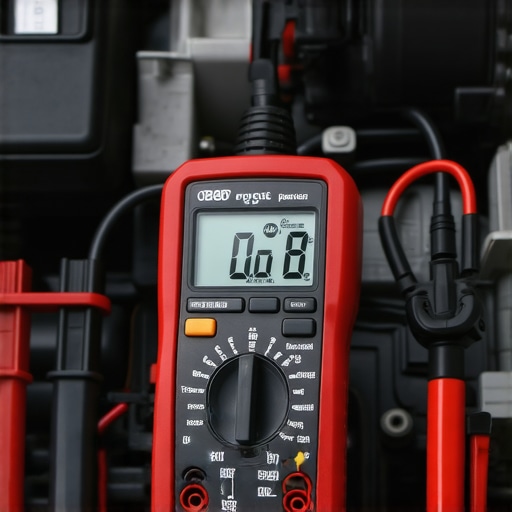 This scenario frequently masks underlying issues; for instance, learning how to identify a bad ground wire without a multimeter becomes a critical diagnostic step here, as heat expands metal and can worsen a marginal connection. Professionals at the National Institute for Automotive Service Excellence (ASE) report that intermittent electrical failures are often misdiagnosed as component deaths, leading to hundreds of dollars in unnecessary part swaps when the issue is merely thermal resistance in the primary cables.
Does Your Car Only Click After the Engine Is Hot?
When high temperatures are involved, the diagnostic path shifts significantly. It is no longer just about the battery’s state of charge; it is about the starter motor’s ability to overcome internal friction and increased electrical resistance simultaneously. If you notice that your vehicle exhibits other symptoms, such as why your dashboard lights flicker every time you hit a pothole or dim excessively during a hot start attempt, it suggests the vibration and heat are compromising your electrical integrity. High-quality vehicle diagnostics require testing the cranking circuit while it is at full operating temperature to catch these heat-sensitive voltage drops that disappear once the car cools down.
Computer Logic Often Overrides Your Ignition Key
In modern vehicles, the traditional physical connection between your key and the starter solenoid has been replaced by a digital request processed through a control module. When you turn the key, you are essentially asking the Powertrain Control Module (PCM) for permission to start. If the computer detects a security mismatch or an incorrect sensor reading, it will deny the request or trigger a relay that clicks without engaging the starter. If you suspect the electronics are blocking your progress, knowing how to bypass a faulty neutral safety switch in an emergency can be the difference between getting home and calling an expensive tow truck. These complex systems often require more than basic hand tools; using the 20-scan tool that does more than the dealership rig can help you see if the computer is actually sending the ‘start’ command or if it is stuck in a lockout. Furthermore, if you have wondered why your car alarm goes off for no reason at night, you might be dealing with a corrupted communication bus that is also interfering with your ignition signal. Have you ever been stranded by a ‘smart’ car that refused to recognize its own key? Share your experience in the comments below or check out our diagnostic database to master your car’s digital quirks.
Listen for the Cabin Relay Before Blaming the Battery
Distinguishing where the clicking originates is a master-level car service skill. A faint click coming from under the dashboard usually indicates the ignition relay is functioning, but the signal is not reaching the heavy-duty solenoid on the starter. Conversely, a loud metallic ‘clack’ from the engine bay confirms the signal arrived, but the starter itself lacks the mechanical energy to spin. This distinction is vital for accurate auto repair. If the transmission is not fully seated in Park, the cabin relay may click, but the safety logic will prevent the engine from cranking. Always ensure the gear selector is firmly in position before assuming your starter has reached the end of its life.
Stop Replacing Parts and Start Testing Amperage Draw
While voltage is a convenient metric for a quick battery check, amperage is the actual ‘work’ being done by the electrical system. A starter motor may receive 12.6 volts but fail to turn the crankshaft if the current flow is restricted by internal bottlenecks. This is where an inductive amp clamp becomes an indispensable tool in vehicle diagnostics. By measuring the current flow through the positive battery cable during a cranking attempt, you can determine if the starter is ‘dragging’—pulling excessive amperage due to internal mechanical wear—or if it is ‘starved,’ meaning high resistance in the circuit is preventing it from reaching its full torque potential. According to technical standards from the Battery Council International (BCI), a healthy four-cylinder engine typically requires 150 to 200 amps to crank, while larger V8 engines can demand upwards of 400 amps. If your reading is significantly lower despite a fully charged battery, the bottleneck is almost certainly a corroded cable, a loose crimp, or a failing internal connection within the starter unit itself.
What Happens When the Starter Spins but the Engine Stays Still?
Occasionally, the diagnostic sound isn’t a click or a thud, but a high-pitched whirring or ‘zinging’ noise. This occurs when the electric motor within the starter spins at high RPM, but the Bendix drive—the directional clutch mechanism—fails to extend the pinion gear into the flywheel. This is a common failure point in car service where the internal lubrication of the starter has dried out or become contaminated with clutch dust or oil. In this scenario, the electrical side of the system is technically functioning, but the mechanical bridge has collapsed. This specific symptom requires a full starter replacement, as the internal overrunning clutch is usually a sealed unit that cannot be serviced independently. If you find yourself in this situation, understanding how to unstick a starter motor with a hammer the right way might provide a temporary reprieve, but it is a clear sign that the mechanical components are at their end-of-life stage.
Don’t Ignore the Physical Connection at the Flywheel
The interface between the starter pinion and the engine’s ring gear is a high-stress environment that many homeowners overlook during auto repair. Over hundreds of starts, the leading edges of the teeth on the flywheel or transmission flexplate can become chipped, flattened, or completely sheared off. 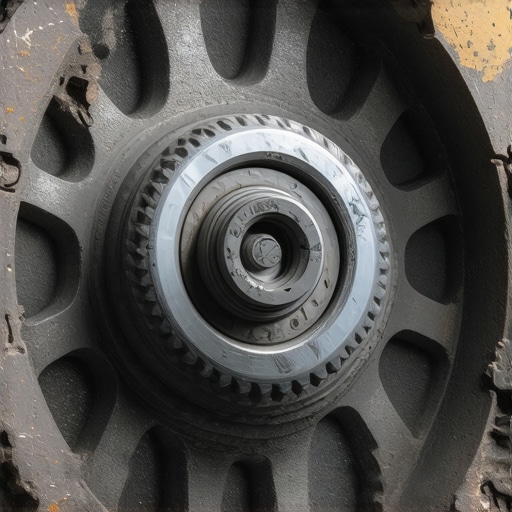 When the starter attempts to engage at a ‘dead spot’ where the teeth are damaged, it will result in a loud, metallic grinding noise or a singular heavy click as the gears clash but fail to mesh. Professional diagnostics requires a visual inspection of the ring gear through the starter mounting hole or an inspection cover. If the damage is localized to the flywheel, even a brand-new starter will eventually fail as the mismatched gears continue to chew into each other. Mastering how to inspect your flywheel without removing the transmission can save you from the nightmare of installing multiple starters only to have them all fail within weeks.
Why a Bench Test Might Lie to You
One of the most common pitfalls in DIY vehicle diagnostics is trusting a parts store bench test too implicitly. A starter that spins freely on a test stand may still fail when installed on a vehicle. The reason lies in the load. On a bench, the starter does not have to overcome the immense cylinder compression and frictional losses of a multi-ton engine assembly. A motor with a weak internal field coil or worn brushes can spin perfectly fine in open air but lack the torque to move a piston. This is why many experts recommend performing ‘in-vehicle’ testing whenever possible. If you’ve ever wondered why new parts fail or the truth about remanufactured starters, it often comes down to these marginal internal components that pass a simple no-load test but fail under the heat and pressure of real-world operation. If you’ve ever replaced a starter only to have the same clicking return a week later, you might be missing the subtle signs of high-resistance cabling. Check out our deep dive into the art of electrical troubleshooting to master these advanced concepts.
While testing the main power cable is standard practice, seasoned auto repair experts know that the ‘S’ terminal—the small trigger wire that tells the solenoid to engage—is frequently the silent culprit behind a clicking starter. This thin wire carries the command signal from the ignition switch through a series of fuses, relays, and safety switches. If this circuit suffers from even minor corrosion, it can deliver enough voltage to click the relay but not enough amperage to fully pull in the heavy-duty solenoid plunger. This results in a frustrating ‘intermittent’ click that seems to disappear and reappear without logic. Testing this requires a bypass jump to see if the starter fires directly, a technique that separates a vehicle diagnostics issue from a hardware failure.
The Thin Signal Wire That Ruins Everything
In many high-mileage vehicles, the connector at the starter solenoid becomes brittle due to constant exposure to heat and road salt. This degradation increases resistance specifically in the trigger circuit. When you turn the key, the solenoid might partially engage, creating a weak click, but fail to maintain the connection. 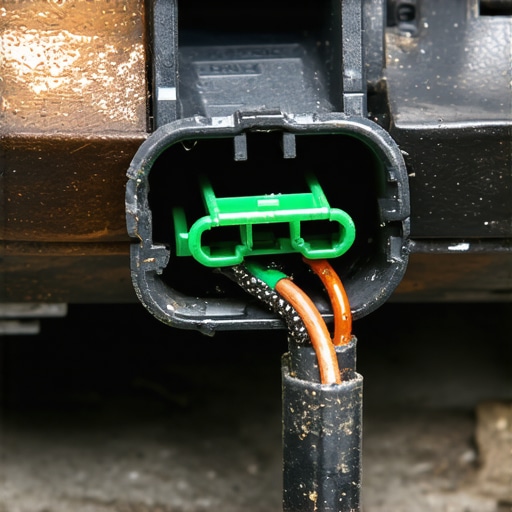 This is particularly common in car service for European models where the wiring harnesses are tightly packed near the exhaust manifold. If you’ve ruled out the battery, your next step should be a voltage drop test on the solenoid trigger wire while an assistant attempts to crank the engine. Any drop greater than 0.5 volts indicates a compromised wire or a failing ignition relay that needs immediate attention before it leaves you stranded.
Why Does a Failing Alternator Mimic a Dead Starter?
It is a common misconception that a clicking noise always originates within the starting circuit itself. Often, the root cause is a failing alternator that has stopped providing a ‘surface charge’ to the battery. While the battery might show 12 volts on a multimeter, it lacks the deep reserve capacity to handle the massive ‘inrush’ current required by the starter motor. According to the Auto Care Association, charging system imbalances are responsible for nearly 30% of preventable electrical breakdowns. If your alternator’s internal diodes are leaking, they can also cause a parasitic drain that slowly siphons power overnight, leading to that dreaded morning click. This creates a cycle where the battery is never truly full, causing the starter to work harder and eventually burn out its internal brushes prematurely.
Extreme Cold Turns Your Engine Oil Into Molasses
Winter brings a unique set of challenges for vehicle diagnostics. Not only does the chemical reaction inside your battery slow down—reducing its Cold Cranking Amps (CCA)—but the engine oil also thickens significantly. This increase in ‘viscous drag’ means the starter motor must work twice as hard to move the internal transmission components and pistons. If your starter is already aging, this extra resistance is often the final straw. A motor that clicked once or twice in the autumn will likely seize entirely when the temperature drops below freezing. Upgrading to a high-torque, gear-reduction starter can provide the mechanical advantage needed for harsh climates, but ensuring you are using the manufacturer-recommended oil weight is the most cost-effective first step in auto repair.
When Your Key Cylinder Quits Before the Battery Does
Sometimes the clicking isn’t coming from the engine bay at all, but from the steering column. Mechanical wear inside the ignition lock cylinder can prevent the internal electrical contacts from making a solid connection. If you have a heavy keychain, the constant swinging can wallow out the tumblers, leading to a situation where the signal to the starter is ‘noisy’ or flickering. This results in a rapid-fire clicking of the ignition relay as it struggles to maintain a clean signal. If wiggling the key while turning it suddenly makes the car start, you have found your culprit. Have you ever experienced a ‘ghost’ click that fixed itself after a few tries? Join the conversation in our community forum or read our guide on diagnosing modern ‘Push-to-Start’ button failures to ensure your vehicle remains reliable.
Expert Insights & Advanced Considerations
Why 12.6 Volts on a Multimeter Can Still Mean a Dead Battery
A common mistake in vehicle diagnostics is assuming a battery is healthy because it shows a standard resting voltage. Internal resistance can cause the voltage to plummet the microsecond a high-amperage load is applied. If you find that why your car battery dies every time it rains is a recurring mystery, you’re likely dealing with moisture-induced conductivity across the casing that mimics a failing cell. Always perform a load test to verify amperage capacity, never rely solely on voltage. [image_placeholder]
Stop Blaming the Starter When the PCM Denies the Request
In modern CAN bus-equipped vehicles, the clicking you hear might be the starter relay engaging while the engine computer (PCM) refuses to send the final high-current signal. This can happen due to an anti-theft security mismatch or an incorrect sensor reading from the transmission position sensor. Before committing to expensive auto repair, use the 20-scan tool that does more than the dealership rig to see if the start-enable command is actually being authorized by the vehicle’s brain.
Corroded Cables Can Act as High-Resistance Resistors
The physical integrity of your wiring harness is just as critical as the components themselves. Even internal corrosion—invisible under the plastic insulation—can prevent enough amperage from reaching the solenoid. Learning how to identify a bad ground wire without a multimeter by observing heat generation at the terminals or flickering dashboard lights is an essential skill for troubleshooting those intermittent ‘ghost’ clicks that bypass traditional bench testing.
Curated Expert Resources
SAE International Technical Papers: For those who want to understand the deep physics of inrush current and solenoid magnetic flux, the SAE database provides the gold standard in automotive engineering data and peer-reviewed failure analysis.
ASE Test Preparation Manuals: Even for DIY enthusiasts, the ASE A6 study guide for Electrical and Electronic Systems offers the most logical diagnostic flowcharts for vehicle diagnostics used by master technicians to eliminate guesswork.
Battery Council International (BCI) Standards: This resource defines the rigorous testing parameters for Cold Cranking Amps (CCA) and reserve capacity, helping you understand how batteries are rated and why they fail under specific thermal conditions.
Final Expert Perspective
Mastering the clicking ignition diagnosis requires a transition from a parts-replacer mindset to a systems-analyst mindset. Whether you are dealing with a complex security lockout or simple oxidation on a lead post, the key is isolating exactly where the electrical current stops doing its work. Precision in auto repair not only saves money but ensures the long-term reliability of your vehicle’s electrical infrastructure. If you are ready to unlock your car’s potential with expert auto repair tips for 2025, we invite you to apply these advanced troubleshooting techniques and take full control of your car’s maintenance journey.