The Anatomy of a Runaway Horn Circuit
A car horn that refuses to silence itself is more than just a social embarrassment; it is a critical diagnostic indicator of a compromised electrical circuit. In the professional field of the hidden world of vehicle diagnostics, a constant ‘on’ state typically suggests a collapsed switch, a fused relay, or an unintended ground path. Technicians view this as a systematic breakdown of the Low-Side Control Circuit, necessitating a methodical approach to isolation before the battery drains or the horn assembly experiences thermal failure. Identifying the root cause requires a deep understanding of how the steering column interfaces with the vehicle’s central electrical hub.
[image_placeholder_1]
Shut Down the Noise Immediately
When a horn sticks, the immediate priority is preventing battery depletion and component damage. The fastest way to break the circuit is by locating the horn relay or fuse in the Power Distribution Center. Much like the hidden fuse that controls your fuel pump, the horn fuse is often a sacrificial lamb designed to protect the wiring from excessive current. If pulling the fuse does not work, the relay itself might be physically welded shut due to internal arcing. In such cases, the relay must be replaced entirely to restore proper function. Always inspect the relay sockets for signs of heat damage, as what that hot plastic smell means for your electrical system can often be the first warning of a melting terminal block.
Why Your Steering Column Is Usually to Blame
The steering column houses several sensitive components that can trigger a horn. The horn switch is essentially a spring-loaded contact point behind the airbag module. Over time, heat and wear can cause the plastic components to deform, causing the contacts to touch permanently. Furthermore, the clock spring—a spiral-wound ribbon cable—allows electrical signals to pass through the steering wheel while it rotates. If this cable shorts internally, it can bypass the switch entirely. You may need to learn how to identify a bad ground wire without a multimeter to see if the steering column’s grounding strap has failed, as a floating ground can cause erratic electrical behavior across the entire dashboard. In some instances, professional top auto repair techniques are required to disassemble the column safely without detonating the airbag.
Can a Faulty Clock Spring Sabotage Other Critical Safety Systems?
Absolutely. The clock spring is a shared conduit for the horn, steering wheel audio controls, and, most importantly, the Supplemental Restraint System (SRS) or airbag. When a clock spring fails, it rarely affects just one system. If your horn is honking and your airbag warning light is illuminated, you are dealing with a compromised safety loop. According to the National Highway Traffic Safety Administration (NHTSA) safety guidelines on audible warnings, the horn is a vital safety device, and its failure—either by being silent or being stuck—renders the vehicle non-compliant with standard safety protocols. If you are experiencing these complex electrical overlaps, do not hesitate to reach out via our contact us page for professional diagnostic support.
Humidity Turns Your Grille Into a Conductor
In many modern vehicle designs, the horn assembly is positioned directly behind the front grille to maximize sound projection. While efficient for safety, this placement exposes the electrical terminals to road salt, high-pressure car washes, and heavy rain. When moisture penetrates the horn’s internal housing or its connector, it can create a conductive bridge between the positive feed and the ground. This creates a low-resistance path that bypasses the steering wheel switch entirely. It is a similar phenomenon to why your car battery dies every time it rains, where environmental factors turn a stable circuit into an active drain. Expert technicians often find that green crust—copper oxidation—inside the connector is enough to keep the horn blaring even with the engine off.
Look Beyond the Switch for Rubbing Wire Harnesses
If the horn relay is functioning and the steering column switch is disconnected but the noise persists, the problem lies within the wiring harness itself. Automotive wiring is subjected to constant vibration and heat cycles. Over years of operation, the protective loom can chafe against the sharp edges of the chassis or engine block. If the horn’s trigger wire (which is often a ground-side trigger) loses its insulation and touches the metal frame, the horn will activate instantly. This type of short-to-ground is notoriously difficult to find because it may be intermittent. Much like why your dashboard lights flicker every time you hit a pothole, the movement of the vehicle can cause the wire to touch and then move away from the frame, leading to a horn that honks only during turns or over bumps.

Identifying these hidden shorts requires a systematic visual inspection of the harness. You should prioritize areas where the wires pass through the firewall or near moving suspension components. Knowing how to identify a bad ground wire before it kills your new battery is essential here, as the horn circuit relies on a clean, controlled ground to stay silent. If the wire is compromised, the only long-term fix is to splice in a new section of automotive-grade wire and seal it with marine-grade heat shrink to prevent future corrosion.
Does Your Body Control Module Have a Digital Mind of Its Own?
In vehicles manufactured over the last decade, the horn is rarely a simple circuit consisting of just a battery, a fuse, and a switch. Instead, the steering wheel button sends a low-voltage signal to the Body Control Module (BCM), which then logic-gates the request before energizing the horn relay. According to IEEE (the Institute of Electrical and Electronics Engineers) standards for automotive electronic robustness, software-driven logic in the BCM is designed to prevent unintended activation, yet hardware failures within the module can cause ‘latched’ states. If the BCM experiences an internal micro-short or a software hang due to a sudden voltage spike, it may continue to send power to the relay indefinitely. This is why some mechanics recommend a hard reset—disconnecting the battery for 30 minutes—to clear the BCM’s temporary memory before tearing into the mechanical components.
The Mechanical Failure of the Horn Relay
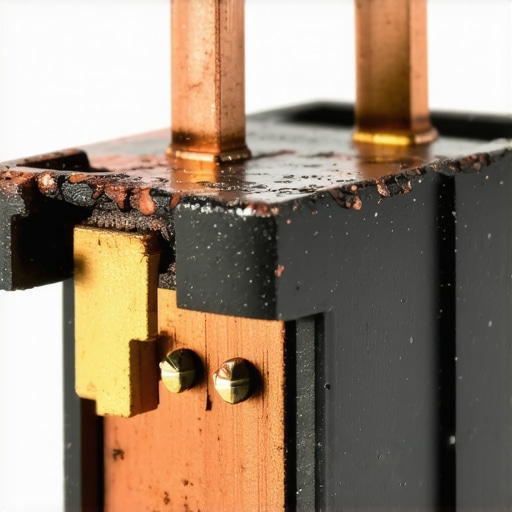
A relay is essentially an electromagnetic switch. When it is working correctly, an electromagnet pulls a metal arm to close a high-current circuit. However, high-current draws can cause ‘arcing’ at the contact points. Over time, this arcing can literally weld the internal contacts together in the closed position. Even when you let go of the steering wheel, the physical metal bridge inside the relay remains stuck. You can use the relay trick to stop the clicking sound to diagnose other electrical issues, but for a stuck horn, the diagnostic is simpler: if you tap the relay with a screwdriver handle and the horn stops, the internal contacts are fatigued and the relay must be discarded. If you have managed to silence the noise but still suspect a parasitic draw is affecting your vehicle, read our guide on the hidden electrical drain killing your battery while the car is parked to ensure your electrical system is fully restored to health.
When Third-Party Security Systems Go Rogue
A frequent but often overlooked culprit in the saga of the stuck horn is the aftermarket alarm system or remote start module. These systems typically intercept the horn trigger wire to provide audible feedback for locking or alarm triggers. If the internal micro-relay within the security control brain fails in a closed state, it creates a permanent bridge to ground that bypasses your steering wheel entirely. This is why some owners find their horn blaring even after they have pulled the factory relay; the aftermarket system may be feeding power through a secondary, hidden harness. Much like fixing a car alarm that goes off randomly at night, resolving this requires locating the ‘brain’ of the security system—usually tucked deep under the driver-side dashboard—and checking for melted insulation or internal hardware faults. If the unit is drawing too much current, it can eventually compromise the integrity of the entire interior CAN-bus network.
The Ghost in the Keyless Entry Machine
Modern Smart Entry systems introduce a digital layer of complexity that can lead to ‘phantom’ horn activations. These systems rely on proximity sensors and RFI (Radio Frequency Interference) to communicate with your key fob. If the vehicle’s battery voltage drops below a specific threshold—typically 10.5 volts—the logic gates within the Body Control Module can become unstable. This instability can manifest as a ‘latched’ output signal, where the BCM mistakenly believes a ‘panic’ command has been received. You might find that the hidden electrical drain killing your battery is both the cause and the symptom of the horn issue. When voltage fluctuates, the electromagnetic fields within the vehicle can trigger the horn relay without any physical input, making a high-quality battery tender an essential tool for diagnostic isolation.
Can a Low-Voltage Battery Trigger a Spontaneous Horn Activation?
Yes, and the phenomenon is more common than most drivers realize. When a lead-acid battery nears the end of its life, it often experiences internal plate shorting, which creates rapid voltage ‘ripples.’ These ripples confuse the digital processors that control safety equipment. According to technical standards established by SAE International (specifically SAE J1105 regarding Horn Performance and Durability), horn circuits are designed to operate within a specific voltage window; when the power supply becomes ‘dirty’ or inconsistent, the BCM may default to an active state as a fail-safe or due to logic corruption. If your horn starts screaming the moment you turn the key or during a cold morning start, your first diagnostic step should be a load test on the battery. If you are unsure how to interpret these voltage drops, our team can provide guidance through our direct support channels.
Don’t Ignore the Post-Event Thermal Death
Even after you have successfully silenced the horn by pulling the fuse or disconnecting the battery, the damage may already be done to the horn assembly itself. Automotive horns are not rated for continuous duty; they are designed for short, intermittent bursts. A horn that has been active for more than ten minutes straight generates immense heat within its internal copper windings. This heat can melt the thin lacquer insulation on the wires, leading to an internal short-to-case. Consequently, even if you fix the wiring issue, the horn may now sound muffled, raspy, or draw twice the intended amperage. This increased draw can then blow your new fuse immediately. It is a cascading failure similar to what that hot plastic smell means for your electrical system, where one overheated component compromises the safety of the next connected link.
The Critical Role of the Clock Spring Continuity
As the primary bridge between the stationary steering column and the rotating wheel, the clock spring is a marvel of engineering that is unfortunately prone to fatigue. Over hundreds of thousands of rotations, the ribbon cable inside can develop microscopic cracks. When these cracks allow two adjacent circuits to touch, the horn trigger (ground) may find a path through the cruise control or airbag ground wire. This is a highly dangerous scenario because it implies that a deployment signal could, theoretically, be cross-contaminated by a horn request. If you notice that your horn only gets stuck when the wheel is turned to a specific angle, you are dealing with a mechanical failure of this ribbon cable. At this stage, professional intervention is mandatory to ensure the SRS system remains functional while restoring silence to your commute.
Signal Noise from Aftermarket LEDs Can Hijack Your Horn
In the high-stakes world of modern vehicle electronics, many luxury and late-model cars have transitioned away from traditional copper-switched circuits in favor of the Local Interconnect Network (LIN) or CAN-Bus architecture. This digital landscape is susceptible to a phenomenon known as Electromagnetic Interference (EMI). If you have recently upgraded to high-intensity LED headlights or non-shielded HID ballasts, the resulting ‘noise’ can leak into the steering column’s data lines. This electronic crosstalk tricks the Body Control Module (BCM) into interpreting a stream of corrupted data as a valid horn request. Unlike a physical short, this ‘ghost signal’ leaves no physical trace, requiring a specialist to isolate the lighting circuit to see if the horn suddenly falls silent. If your horn only screams when your lights are on, you are likely dealing with a failure in RFI shielding rather than a mechanical defect.

How Minor Front-End Impacts Shift Internal Horn Diaphragms
The physical structure of a disc or trumpet horn is a finely tuned mechanical assembly. Inside the metal housing, a flexible diaphragm sits microns away from an electromagnetic contact point. A sharp impact—such as hitting a deep pothole or a minor low-speed parking lot ‘love tap’—can be enough to slightly deform the horn’s mounting bracket or the housing itself. This mechanical shift reduces the ‘air gap’ between the contacts to virtually zero. Under these conditions, the simple vibration of the engine at idle can be enough to bridge the remaining gap, causing the horn to stutter or fire continuously. This is often why a horn seems to have a ‘mind of its own,’ activating only when the car is vibrating at a specific RPM. It is a physical failure that bypasses every fuse and relay in the system because the short is occurring at the final output device.
Does a Corroded Hood Latch Sensor Actually Have the Power to Trigger Your Horn?
Surprisingly, the answer is yes. In vehicles equipped with factory security systems, the hood latch sensor is integrated into the anti-theft perimeter loop. When this sensor becomes contaminated with road salt or moisture, it can create a high-resistance ‘partial ground.’ The security module may interpret this unstable signal as a break-in attempt, triggering the panic alarm. However, if the module is experiencing a logic hang-up, it might only activate the horn output without flashing the lights, making it appear as though the horn switch is stuck. According to technical standards established by SAE International (specifically SAE J1105 regarding Horn Performance and Durability), the duty cycle of these components is not designed for the prolonged activation caused by such sensor failures, which can lead to permanent diaphragm warping if the battery is not disconnected promptly.
Catching Ghost Signals with High-Frequency Oscilloscope Tracing
When traditional multimeters fail to show a definitive short, elite technicians turn to a digital storage oscilloscope. This tool allows us to see voltage fluctuations in real-time at a resolution of microseconds. By probing the horn’s signal wire, we can identify ‘voltage ripples’ that indicate a failing BCM transistor or a leaking capacitor. This level of forensic electrical work is the only way to prove that a ‘stuck’ horn is actually being pulsed by a failing computer module. If your vehicle has been through a flood or has had significant interior detailing where liquids may have entered the dash, these micro-shorts within the silicon chips are a common, yet invisible, culprit. If you suspect your vehicle is suffering from these complex digital overlaps, we strongly encourage you to book a specialized electrical sweep via our direct diagnostic portal to prevent a total module meltdown.
Restore Your Circuit by Routing New Marine-Grade Ground Leads
Once a short is identified in the main wiring harness, the standard ‘tape and wrap’ repair is often insufficient. For a permanent fix, especially in the harsh environment behind the grille, we recommend bypass-wiring using marine-grade tinned copper leads. These wires are specifically designed to resist the capillary action of moisture that leads to internal corrosion. By creating a new, dedicated ground path that bypasses the compromised section of the factory loom, you ensure that the horn circuit remains ‘open’ until you explicitly press the pad. This proactive approach not only silences the current noise but also hardens the circuit against the environmental stressors that likely caused the failure in the first place. High-level automotive electrical repair is about more than just stopping the noise; it is about re-engineering the circuit to be more resilient than it was the day it left the factory.
Expert Insights and Advanced Considerations
Why Your BCM Logic Might Be Trapped in a Loop
A persistent horn activation isn’t always a physical short; it can be a digital ‘latch’ within the Body Control Module. When you encounter this, a simple battery reset often clears the corrupted state. Understanding the hidden world of vehicle diagnostics is essential here, as it allows you to differentiate between a fried transistor and a software glitch before replacing expensive hardware components.
The Horn’s Duty Cycle Limit Is Shorter Than You Think
Most horns are designed for intermittent bursts, not continuous operation. If your horn blared for more than 15 minutes, the internal electromagnetic coils have likely suffered significant thermal fatigue. Even if you fix the external wiring, the sound quality may never recover. You must watch out for what that hot plastic smell means for your electrical system because it often indicates the horn assembly has internally melted and may now represent a fire hazard.
Protect Your Repairs with Marine-Grade Component Standards
Standard electrical tape is a temporary fix in the high-corrosion environment of the front grille. Experts use tinned copper wiring and adhesive-lined heat shrink to prevent road salt from wicking into the copper. Learning how to identify a bad ground wire before it kills your new battery will ensure your new circuit remains silent and functional for years to come, regardless of the weather conditions.
#IMAGE_PLACEHOLDER_E#
Curated Expert Resources
SAE International J1105 Database: This is the definitive technical standard for automotive audible signal devices. It provides the exact voltage tolerances and decibel requirements necessary for professional-grade diagnostics and system verification.
NHTSA Safety Recall Portal: Frequently, stuck horns are the result of manufacturing defects in clock springs or BCM software. Checking your VIN here can save hours of diagnostic labor if a free dealership fix is available for your specific model year.
ALLDATA Diagnostic Flowcharts: For complex LIN-bus or CAN-bus horn circuits, these professional wiring diagrams are indispensable for tracing ‘ghost signals’ through the vehicle’s main harness and identifying shared grounds.
Final Expert Perspective
Successfully silencing a runaway car horn requires a transition from reactive emergency measures to proactive electrical hardening. By systematically isolating the relay, inspecting the clock spring, and verifying the integrity of the Body Control Module, you move beyond mere guesswork into professional-grade repair. Whether you are performing a DIY fix or choosing the right car service for seamless vehicle maintenance, precision is your best tool for long-term reliability. We invite you to share your unique diagnostic challenges or reach out through our contact us page to explore more advanced automotive repair techniques and resources.