The pungent, acrid scent of burning plastic inside a vehicle cabin is rarely a benign occurrence; it is the olfactory signature of an electrical thermal event. To the seasoned technician, this smell serves as a critical diagnostic data point, signaling that current flow has encountered excessive resistance, leading to the breakdown of polymer insulation. When your vehicle’s electrical architecture begins to overheat, you are witnessing the physical manifestation of Joule heating, where electrical energy is converted into heat at a rate that exceeds the system’s ability to dissipate it. Ignoring these warnings doesn’t just risk a breakdown; it invites the possibility of a catastrophic engine bay fire or the total loss of sensitive control modules.
Identifying the Chemical Warnings of an Electrical Thermal Overload
In the realm of advanced vehicle diagnostics, distinguishing between different burning odors is a fundamental skill. While a sweet smell might indicate a coolant leak, and a sulfurous scent points toward a failing battery or catalytic converter, the smell of burning plastic almost exclusively identifies melting wire insulation or overheating connectors. This often happens when a circuit is forced to carry more amperage than it was designed for, or when a loose connection creates a high-resistance point. Over time, this heat carbonizes the surrounding material, which can eventually lead to a short circuit. If you notice your dashboard lights flicker alongside this smell, the integrity of your wiring loom is likely compromised.
Locating the Source of Acrid Odors in Your Vehicle’s Wiring Loom
Professional auto repair often begins with a systematic hunt for the point of failure. The alternator is a primary suspect; a failing internal diode or a seized bearing can generate immense heat, melting the plastic insulators on the output stud. According to the National Fire Protection Association (NFPA), electrical failures remain a leading cause of vehicle fires, emphasizing the need for immediate intervention. Another common culprit is the blower motor resistor, which can overheat if the cabin air filter is clogged, causing the surrounding plastic housing to singe. If the smell is localized near the steering column, it may involve the ignition switch or the clock spring, both of which are high-traffic electrical components. Utilizing the $5 tool for finding electrical shorts in minutes can help pinpoint these faults before they necessitate a full harness replacement.
Is Your Aftermarket Installation Bypassing Critical Circuit Protections?
A frequent cause of thermal distress in modern vehicles is the improper integration of high-draw accessories, such as amplifiers or off-road lighting. When these components are wired without adequate fusing or at an improper gauge, they can easily exceed the thermal limits of the factory electrical system. In some cases, the hidden ground wire can become the bottleneck for this increased current, leading to localized melting at the chassis ground point. If you suspect an aftermarket component is at fault, disconnect the accessory immediately and consult a professional for a comprehensive car service to verify the safety of your vehicle’s power distribution.
Protect Your Vehicle Through Proactive Diagnostics
Maintaining the electrical health of your car requires more than just replacing a blown fuse; it demands an analytical approach to power management. For those experiencing intermittent starting issues or strange odors, checking the charging system is a logical first step. You can even learn how to test an alternator using only a screwdriver as a preliminary field test. However, because electrical faults can hide behind complex layers of the transmission and engine management systems, professional intervention is often the safest route. If you have encountered a persistent burning smell, share your experience in the comments or contact an expert technician to ensure your vehicle remains roadworthy.
Stop Chasing Fuses and Start Inspecting Terminals
Many drivers mistakenly believe that a fuse will always pop before damage occurs, but the smell of burning plastic often tells a different story. Fuses protect against sudden surges in current, yet they are notoriously poor at detecting ‘glow contact’—a scenario where a loose terminal creates a localized heat source without exceeding the circuit’s total amperage rating. This phenomenon often centers around the Power Distribution Center (PDC). When a connector within the PDC begins to fail, it doesn’t just cut power; it generates enough heat to liquefy the surrounding plastic housing. If you find yourself hunting for the hidden fuse that controls your fuel pump, take a moment to look for signs of discoloration or warping on the fuse box itself. A scorched socket is a definitive sign that the mechanical tension of the terminal has failed, turning a simple circuit into a miniature heating element.
Why Does Your Car Smell Like Burning Plastic Only When the Headlights Are On?
This specific symptom points toward a high-load circuit failure, usually involving the headlight switch or the multi-function lever. Unlike modern LED systems, traditional halogen bulbs pull significant amperage that passes through physical contacts. If these contacts become pitted or worn, the resistance spikes. You might notice the real reason your headlights dim when you hit the brakes is actually a shared ground wire that is currently melting its insulation. As the wire heats up, the polymer jacket off-gases that distinct, acrid scent. This is more than a nuisance; it is a precursor to a total lighting failure during nighttime driving. Professional technicians use thermal imaging to see these ‘hot spots’ in real-time, identifying failing switches long before they manifest as a puff of smoke from the steering column.
Moisture and the Slow Burn of Copper Oxidation
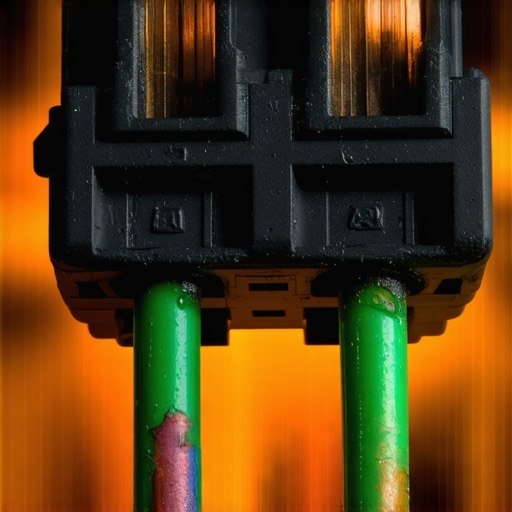
Environmental factors play a massive role in electrical degradation. When moisture enters a connector, it initiates the formation of cupric oxide—the ‘green crust’ often seen on old battery terminals. This oxidation layer is significantly less conductive than raw copper, forcing electrons to struggle through a bottleneck. According to research published by SAE International, even microscopic layers of oxidation on terminal pins can increase contact resistance to the point where localized temperatures exceed 300°F within seconds of circuit activation. This is why some owners report that why your car battery dies every time it rains often correlates with a burning smell; the moisture bridges compromised insulation or accelerates oxidation on high-draw components like the starter or alternator. Addressing this requires more than a cleaning; it often necessitates a terminal ‘re-pinning’ to restore the structural integrity of the connection.
Digital Communication Failures Driven by Thermal Stress
In modern vehicles, the smell of burning plastic can be the opening act for a total system blackout. Today’s cars rely on CAN-bus (Controller Area Network) systems to communicate between modules. When a main wiring loom suffers thermal damage, it can melt the twisted-pair communication wires together. This doesn’t just stop one component; it ‘mutes’ the entire network, leading to a Christmas tree of warning lights on your dash. While you might use the $20 scan tool that actually finds hidden transmission codes to see the errors, the physical cause is often a harness rubbing against a hot EGR pipe or exhaust manifold. If you are attempting a DIY fix, you can learn how to test a fuel pump using only a screwdriver and a friend to verify power delivery, but always inspect the harness for ‘crispy’ sections first. Have you ever discovered a melted wire just in the nick of time? Share your diagnostic wins in the comments below to help other owners identify these hidden hazards.
Don’t Let Brittle Connectors Turn Into Ignition Sources
While most drivers focus on the wiring itself, the real danger often lies within the plastic connector housings that join different parts of the harness. These connectors are typically made from glass-filled polymers like PBT (Polybutylene terephthalate), designed to withstand significant engine bay heat. However, when an internal metal terminal loses its mechanical tension—a process known as stress relaxation—the contact area between the male and female pins shrinks. This reduced surface area forces the same amount of current through a smaller point, creating a localized furnace. If you have recently dealt with hidden transmission codes that seem to vanish and reappear, you may be witnessing the early stages of terminal fretting, where micro-vibrations and heat cycles create a layer of non-conductive debris that eventually leads to a total thermal meltdown of the plastic shell.
The Math Behind the Meltdown: Why Milliohms Matter
To understand why your car is off-gassing toxic fumes, one must look at the physics of power dissipation. According to Joule’s first law, the heat produced in a circuit is proportional to the square of the current multiplied by the resistance (P = I²R). In a high-amperage circuit like the radiator fan or the rear defroster, even an infinitesimal resistance of just 0.1 ohms can generate enough wattage to liquefy solder. This is why a simple car service visual inspection is often insufficient; technicians must perform a ‘voltage drop’ test while the circuit is under load. Research published in the IEEE Transactions on Components and Packaging Technologies highlights that contact resistance can escalate exponentially once the ‘softening voltage’ of the metal is reached, leading to rapid thermal runaway. If you notice a faint smell only when your heater is on high, you are likely dealing with a blower motor drawing excessive current through a resistive terminal that is currently reaching its melting point.
Can a malfunctioning relay melt your wiring even when the engine is off?
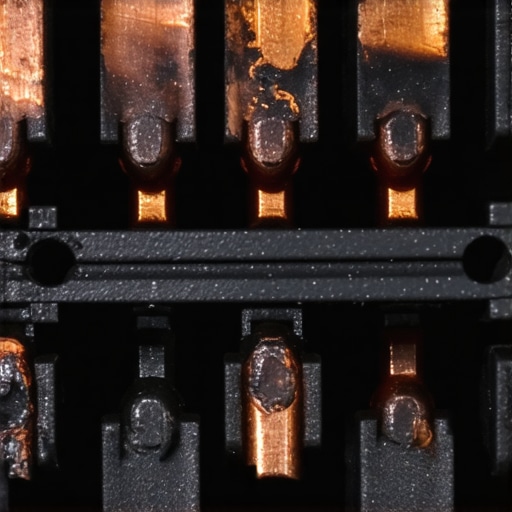
Yes, and this is one of the most dangerous scenarios in auto repair. Relays are essentially remote-controlled switches; over time, the internal silver-oxide contacts can ‘weld’ together due to arcing. If a relay for a high-draw component like an electric cooling fan or a secondary air pump welds shut, it will continue to pull current directly from the battery even after you pull the key. Because the engine is no longer running, there is no airflow to dissipate the heat generated by the resisting wires. This often results in a ‘silent burn’ that can consume a fuse box overnight. If you suspect your vehicle is staying ‘active’ after shutdown, checking for the hidden ground wire or a stuck relay is a life-saving diagnostic step. Have you ever walked out to a dead battery and a strange chemical smell in the garage? Your insights could help another owner prevent a total loss.
Why Your Hybrid Battery Cables Require a Different Diagnostic Approach
In the transition to electrification, the stakes for vehicle diagnostics have never been higher. High-voltage (HV) systems in hybrids and EVs operate at hundreds of volts, where any breach in insulation or a loose high-tension cable doesn’t just cause a smell—it creates a high-energy arc flash. These systems use orange-coded cabling to signify danger, and the plastic shielding is rated for much higher thermal thresholds than standard 12V looms. However, the DC-DC converters that bridge the HV and low-voltage systems remain a common point of failure. If the cooling system for these power electronics fails, the resulting thermal event can be much more intense than a standard engine fire. Understanding why your dashboard lights flicker in a hybrid context is critical, as it may indicate an isolation fault where current is leaking through compromised, heat-damaged plastic into the vehicle chassis. This necessitates the use of specialized megohmmeters to test insulation integrity, a step far beyond the capabilities of a standard multimeter.
The structural integrity of a wiring harness is frequently compromised by the relentless mechanical energy of the engine bay. Continuous vibration induces micro-movements within the pin connectors, a phenomenon known as fretting corrosion. This wear strips the protective plating from terminals, exposing the underlying copper to rapid oxidation. As the oxide layer builds, it creates a high-resistance barrier that forces current to generate intense heat—the primary driver of that acrid plastic smell. This is not just a localized failure; it is a progressive degradation of the vehicle’s electrical nervous system. To the expert, these odors are the chemical screams of vehicle diagnostics waiting to be addressed before they transition from a nuisance to a catastrophe.
Vibration Slowly Shakes Your Wiring into a Thermal Event
Modern electrical connectors are designed with a specific ‘clamping force’ to maintain low resistance. However, years of heat cycles cause the metal to lose its spring-like tension, a process called stress relaxation. When this happens, the contact area between the pins decreases, concentrating the electrical flow into a tiny, high-load zone. This creates what technicians call a ‘glow contact,’ which can reach temperatures high enough to liquefy the surrounding polymer without ever blowing a fuse. This is why auto repair must often involve replacing the entire connector pigtail rather than just cleaning the pins. If you have recently discovered hidden transmission codes that only appear when the car is hot, you are likely feeling the effects of this thermal resistance increase.
Why Your Defroster Serves as the Ultimate Stress Test
High-amperage systems like the rear defroster and the HVAC blower motor are the most common sources of melting plastic odors. These circuits pull massive amounts of current for extended periods, pushing the thermal limits of every junction. According to data provided by the National Highway Traffic Safety Administration (NHTSA), a significant percentage of electrical-related vehicle fires originate in the climate control wiring due to sustained high-current draw on compromised connectors. If you smell something burning specifically when clearing your windshield, the resistor pack or its associated harness is likely in the process of a slow-motion meltdown. Identifying these ‘hot circuits’ early can save your dashboard from permanent damage.
Is an Overlooked Cabin Filter Putting Your Wiring at Risk?
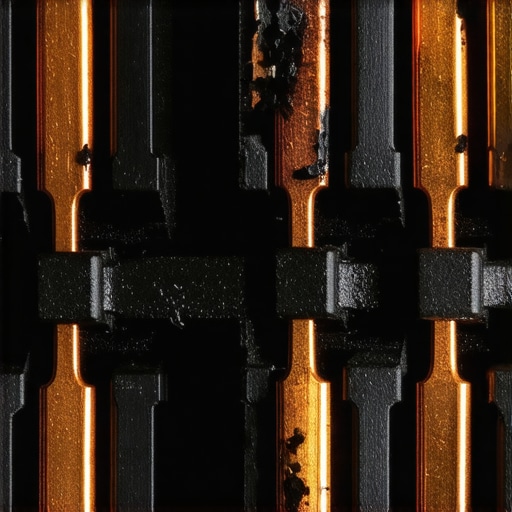
It might seem unrelated, but a clogged cabin air filter is a frequent catalyst for electrical fires. A restricted filter forces the blower motor to work significantly harder to move air, which in turn spikes the amperage across the entire circuit. This extra load generates excessive heat in the wiring loom and the resistor pack. If you notice the smell of burning plastic specifically when you turn the fan to its highest setting, you are witnessing the physical limits of your car’s wiring. Proactive car service in this instance starts with basic maintenance: replacing a ten-dollar filter can prevent a thousand-dollar harness replacement. Always check the airflow before assuming the motor itself has failed.
Catch Early Signs of Failure with Infrared Thermal Mapping
To truly master vehicle diagnostics, one must move beyond visual inspections. Expert technicians now utilize infrared thermography to identify ‘hot spots’ that the human eye cannot detect. By viewing the fuse box or the alternator output through a thermal camera, you can observe real-time heat blooms where resistance is peaking. This allows for the surgical replacement of a single failing terminal or relay before it cascades into a total system failure. Have you encountered a ‘ghost’ smell that only appears under heavy electrical loads? Share your findings in the comments below and help our community build a better database of diagnostic clues to prevent vehicle fires.
The pungent, acrid scent of burning plastic inside a vehicle cabin is rarely a benign occurrence; it is the olfactory signature of an electrical thermal event. To the seasoned technician, this smell serves as a critical diagnostic data point, signaling that current flow has encountered excessive resistance, leading to the breakdown of polymer insulation. When your vehicle’s electrical architecture begins to overheat, you are witnessing the physical manifestation of Joule heating, where electrical energy is converted into heat at a rate that exceeds the system’s ability to dissipate it. Ignoring these warnings doesn’t just risk a breakdown; it invites the possibility of a catastrophic engine bay fire or the total loss of sensitive control modules.
Identifying the Chemical Warnings of an Electrical Thermal Overload
In the realm of advanced vehicle diagnostics, distinguishing between different burning odors is a fundamental skill. While a sweet smell might indicate a coolant leak, and a sulfurous scent points toward a failing battery or catalytic converter, the smell of burning plastic almost exclusively identifies melting wire insulation or overheating connectors. This often happens when a circuit is forced to carry more amperage than it was designed for, or when a loose connection creates a high-resistance point. Over time, this heat carbonizes the surrounding material, which can eventually lead to a short circuit. If you notice your dashboard lights flicker alongside this smell, the integrity of your wiring loom is likely compromised.
Locating the Source of Acrid Odors in Your Vehicle’s Wiring Loom
Professional auto repair often begins with a systematic hunt for the point of failure. The alternator is a primary suspect; a failing internal diode or a seized bearing can generate immense heat, melting the plastic insulators on the output stud. According to the National Fire Protection Association (NFPA), electrical failures remain a leading cause of vehicle fires, emphasizing the need for immediate intervention. Another common culprit is the blower motor resistor, which can overheat if the cabin air filter is clogged, causing the surrounding plastic housing to singe. If the smell is localized near the steering column, it may involve the ignition switch or the clock spring, both of which are high-traffic electrical components. Utilizing the $5 tool for finding electrical shorts in minutes can help pinpoint these faults before they necessitate a full harness replacement.
Is Your Aftermarket Installation Bypassing Critical Circuit Protections?
A frequent cause of thermal distress in modern vehicles is the improper integration of high-draw accessories, such as amplifiers or off-road lighting. When these components are wired without adequate fusing or at an improper gauge, they can easily exceed the thermal limits of the factory electrical system. In some cases, the hidden ground wire can become the bottleneck for a large current draw, leading to localized melting at the chassis ground point. If you suspect an aftermarket component is at fault, disconnect the accessory immediately and consult a professional for a comprehensive car service to verify the safety of your vehicle’s power distribution.
Expert Insights and Advanced Considerations
Fuses Aren’t Failsafes for Slow Melts
Many drivers wrongly assume that if a fuse hasn’t blown, the circuit is safe. However, ‘glow contacts’ caused by loose terminals generate extreme heat while keeping current draw just below the fuse’s trip point. This is why you must physically inspect connectors for discoloration even if the circuit still functions. For deeper insights into these phantom failures, explore the hidden world of vehicle diagnostics to understand how modern sensors react to these micro-thermal events.
Rely on Voltage Drop Over Resistance Readings
Static resistance tests with a multimeter often miss the real issue. A wire with only one surviving strand will show good continuity but will overheat instantly under load. Always perform a dynamic voltage drop test to see how the circuit behaves when it is actually working. Mastering these top auto repair techniques allows you to catch failing looms before they reach the point of combustion.
How Thermal Imaging Exposes Ghost Failures
Using an infrared camera during peak electrical load is the most efficient way to find high-resistance points. A ‘hot’ relay or a glowing fuse block connector stands out instantly against the cooler engine bay, allowing for surgical repairs rather than expensive harness replacements. If you find your turn signals blink fast on one side, it may be a heat-related ground issue visible only through thermography.
Curated Expert Resources
NFPA 921 Guide for Fire Investigations
This is the definitive industry standard for determining the origin and cause of vehicle fires. It provides high-level scientific data on how electrical arcing differs from external heat damage.
SAE International Technical Papers
The Society of Automotive Engineers publishes peer-reviewed research on terminal tension loss and the chemical breakdown of PVC versus XLPE wire insulation under thermal stress.
I-CAR Electrical Damage Analysis Training
A specialized curriculum for professionals focusing on the structural integrity of wiring harnesses after a thermal event, ensuring that hidden damage doesn’t lead to future failures.
Final Expert Perspective
The scent of burning plastic is the final warning of a system under extreme distress. Effectively managing these risks requires shifting from reactive fuse-swapping to proactive vehicle diagnostics. By understanding the physics of voltage drops and the vulnerability of aging connectors, you protect not just your vehicle’s electronics, but your safety on the road. If you are struggling with persistent electrical gremlins or intermittent odors, we invite you to share your findings in the comments or reach out for professional guidance to ensure your electrical architecture remains secure. For more advanced troubleshooting, see our guide on expert auto repair tips for 2025.