Standing at the gas station while the nozzle repeatedly clicks off every three seconds is more than a minor annoyance; it is a diagnostic symptom of a compromised Evaporative Emission Control (EVAP) system. In modern automotive engineering, the process of filling a fuel tank requires a precise balance of fluid dynamics and air displacement. When gasoline enters the tank, the air and fuel vapors inside must be vented out at an equal rate to make room for the liquid. When this venting process is obstructed, backpressure builds rapidly, triggering the shut-off mechanism in the gas pump nozzle—a safety feature designed to prevent spills. Analyzing this failure requires a deep dive into the vehicle diagnostics surrounding the EVAP network, which is often more complex than a simple mechanical blockage.
Stop Fighting the Gas Pump Handle and Check Your EVAP Venting
The primary culprit behind a gas pump that won’t stay engaged is usually a blockage in the venting path. As fuel flows into the filler neck, vapors are typically routed through a charcoal canister where they are stored until the engine can burn them. If the vent valve or the lines leading to the canister are restricted, the air has nowhere to go. This creates a localized high-pressure zone in the filler neck that mimics a full tank, forcing the pump’s Venturi effect sensor to shut off the flow. This issue is frequently encountered during professional auto repair sessions where technicians find that spiders or debris have clogged the small vent lines. For those looking to sharpen their DIY skills, mastering top auto repair techniques can help in identifying these external blockages before diving into expensive component replacements.
Your Charcoal Canister Might Be Drowning in Liquid Fuel
One of the most common reasons for premature nozzle clicking is a saturated charcoal canister, often caused by the habit of ‘topping off’ the tank. When you force extra fuel into the tank after the first click, liquid gasoline can enter the vapor lines and soak the activated charcoal. Once saturated, the canister can no longer allow air to pass through freely. This creates a permanent restriction in the venting system. According to research by SAE International, liquid fuel contamination is the leading cause of premature EVAP component failure. If your car has reached this stage, it’s often the $5 part that causes most EVAP leak codes that needs inspection, though a full canister replacement is frequently necessary to restore proper fueling flow.
Is a Faulty Vent Valve Triggering the Pump Sensor Prematurely?
The EVAP vent valve is designed to stay open during refueling to allow air to escape. If this valve becomes stuck in the closed position due to electrical failure or internal corrosion, the tank becomes a sealed pressurized vessel the moment you start pumping. This is a common point of failure that requires specialized vehicle diagnostics to confirm. Professional-grade scan tools can command the valve to open or close, allowing a technician to verify its operation. If you suspect your car’s electronics are interfering with basic mechanical functions, exploring the hidden world of vehicle diagnostics can provide the clarity needed to differentiate between a simple clog and a complex sensor error. Don’t ignore these signs, as a restricted EVAP system can eventually lead to poor engine performance or a stubborn check engine light. If you have experienced similar fueling frustrations, we encourage you to share your specific vehicle symptoms in our community forum to help refine our diagnostic database.
Beyond the electronic solenoids, physical blockages often hide deep within the fuel filler neck, where they remain invisible to most scan tools. Some vehicles are equipped with an anti-siphon screen or a restrictor plate that can catch debris or, in rare cases, become misaligned. If the flow of fuel hits a physical barrier just a few inches down the pipe, the splash-back is immediate, tricking the pump nozzle into thinking the tank is full. Identifying these mechanical bottlenecks requires a physical inspection of the filler assembly rather than a reliance on computer codes alone. Often, a small obstruction here can be the hidden reason your gas mileage just dropped, as a poorly vented tank can lead to improper fuel delivery and increased evaporative losses.

Clear Out the Physical Obstructions Hiding in Your Filler Neck
One of the more bizarre yet frequent causes of refueling frustration involves nature’s interference. Various automotive manufacturers have issued service bulletins regarding the Yellow Sac spider, which is chemically attracted to the odor of gasoline. These spiders tend to weave dense, silk-like nests inside the EVAP vent lines, creating a plug that is strong enough to resist the air pressure of refueling. While it sounds like a mechanic’s urban legend, this specific biological blockage has led to massive recalls across several major brands. Clearing these lines requires disconnecting the vent hose from the canister and using low-pressure compressed air to blow out the obstruction. This level of hands-on maintenance is a perfect example of why mastering how to test your car fuel pressure using a tire gauge is only the beginning of a truly comprehensive diagnostic toolkit.
Why Does the Problem Disappear at Slower-Flowing Gas Pumps?
If you find that the pump only clicks off when the handle is fully squeezed, but works fine at a slower speed, you are likely dealing with a marginal restriction in the venting system. High-speed commercial pumps can deliver fuel at a rate that the restricted vent simply cannot keep up with. According to guidelines from the American Petroleum Institute (API), refueling nozzles are designed with an internal sensing port that detects a change in pressure; even a slight backup of air will trigger the shut-off to prevent environmental contamination. When you slow down the flow, you are essentially giving the small amount of remaining vent capacity enough time to bleed off the pressure, confirming that the system is not completely blocked but is operating well below its designed efficiency. This nuance is a critical data point for any vehicle diagnostics professional trying to pinpoint the exact location of a narrowing in the vapor path.
Stop Overlooking the Role of the Inlet Check Valve
Deep at the base of the filler neck, where it connects to the actual fuel tank, sits the inlet check valve—often referred to as a “flapper” or “ping-pong ball” valve. This component serves two purposes: preventing fuel from sloshing back up the neck during hard cornering and acting as a seal in the event of a vehicle rollover. If the hinge on this valve becomes stiff or the ball becomes swollen due to poor fuel quality, it will not open fully under the weight of incoming gasoline. This creates a bottleneck at the very entrance of the tank. Diagnosing a faulty check valve is challenging because it is often an integrated part of the tank assembly, but if you have already cleared the charcoal canister and the vent valves, this is the most likely remaining culprit. If you are tired of the guesswork involved in these complex systems, we highly recommend choosing the right car service for seamless vehicle maintenance to ensure a smoke test is performed to visualize these hidden blockages accurately. We want to hear from you—have you ever found a surprising blockage in your fuel lines? Leave a comment below and share your experience with the community.
How Your Car’s Pressure Sensor Sabotages the Pump
While mechanical blockages are the usual suspects, the electronic feedback loop governed by the Fuel Tank Pressure (FTP) sensor often acts as a silent saboteur. In many modern vehicles, the Engine Control Module (ECM) uses the FTP sensor to monitor the internal pressure of the fuel tank during both operation and refueling. If this sensor is “skewed”—meaning it is sending a voltage signal that indicates higher pressure than actually exists—the vehicle’s computer may prematurely close certain valves or trigger a diagnostic routine that interferes with the venting process. This is particularly prevalent in vehicle diagnostics where no physical clog is found, yet the system behaves as if it is completely obstructed. A technician using a bi-directional scan tool can observe these pressure readings in real-time; if the sensor shows 2.0 inches of water column pressure when the cap is off, you’ve found your ghost in the machine.

Can a Faulty Gas Cap Seal Actually Prevent You From Filling Up?
It sounds counterintuitive—after all, the gas cap is off when you are fueling. However, the integrity of the neck seal and the surrounding housing plays a vital role in how the Onboard Refueling Vapor Recovery (ORVR) system initializes. According to the Environmental Protection Agency (EPA), ORVR systems are designed to capture 95% of fuel vapors during the refueling process. If the seal or the “door” in a capless system is damaged, it can cause turbulent airflow at the mouth of the filler neck. This turbulence can splash fuel back onto the nozzle’s sensor port, causing it to click off immediately. In these cases, the problem isn’t a deep-seated EVAP failure, but a localized aerodynamic issue right at the point of entry. If you have been struggling with a capless system, exploring how to fix a gas tank that won’t fill up can offer specific remedies for these specialized assemblies.
Why Summer Heat Makes Your Refueling Problems Worse
Ambient temperature has a profound effect on the volatility of gasoline. During the summer months, fuel suppliers switch to “summer blends” with a lower Reid Vapor Pressure (RVP) to reduce smog, but even these blends expand significantly when sitting in a hot underground tank or your car’s fuel system. When you attempt to pump cool fuel into a hot tank, the temperature differential causes immediate flash evaporation. This sudden surge of vapor can overwhelm an EVAP system that is already slightly compromised by a partially restricted charcoal canister or a dusty vent filter. If your car only refuses fuel on days when the thermometer climbs above 90 degrees, your auto repair strategy should focus on the efficiency of the vapor path and the cleanliness of the fresh-air intake filter located near the rear wheel well.
The Role of the Liquid-Vapor Separator in Preventing Splashback
Tucked away near the top of the fuel tank is a component known as the liquid-vapor separator. Its job is exactly what the name implies: ensuring that only vapors, and not liquid fuel, reach the charcoal canister. Over time, the internal baffles of this separator can degrade or become coated in varnish from old fuel. When this happens, liquid fuel droplets get sucked into the vent line during the high-velocity air displacement of refueling. These droplets create “slugs” of liquid that act like tiny pistons, blocking the flow of air and causing the pump to shut off. This is a nuanced failure that doesn’t always throw a code, making it one of the most frustrating aspects of professional vehicle diagnostics. If you’ve ever noticed a strong smell of raw gas after a failed refueling attempt, this separator is a primary suspect. Have you noticed that your car is more difficult to fill depending on which side of the street the gas station is on? This could indicate that the tilt of the car is affecting the separator’s ability to keep the vent line clear…
While mechanical clogs are often the first point of investigation, environmental factors frequently introduce complexities that generic scanners miss. For drivers in rural or arid climates, the EVAP system’s fresh air intake filter is a prime candidate for failure. This filter, often tucked away near the wheel well to stay away from direct road spray, can become completely encased in fine particulate matter or “bull dust.” When this happens, the charcoal canister can no longer “exhale” the air displaced by incoming fuel. In professional auto repair, this is often diagnosed by temporarily disconnecting the vent line to see if the tank fills normally; if it does, you’ve confirmed a respiratory issue for your car rather than an internal organ failure.
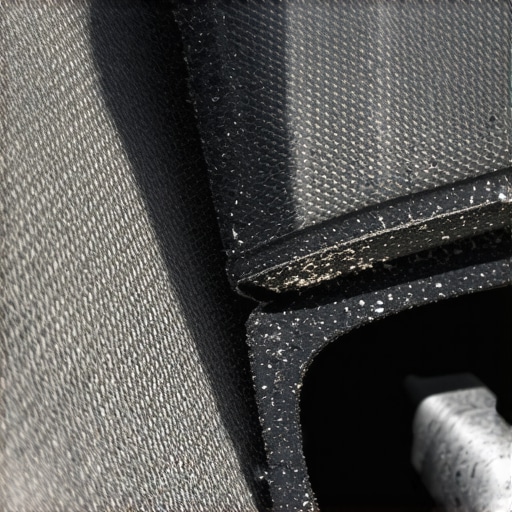
Keep the Vent Path Breathing in Dusty Terrain
The accumulation of environmental debris isn’t limited to the filter itself. In some chassis designs, the vent hose features a series of “U-bends” intended to prevent water intrusion, but these same bends can trap heavy dust that turns into a cement-like sludge when combined with morning dew or humidity. This hidden blockage requires a technician to perform a flow-rate test, measuring the backpressure within the system during a simulated fill-up. Ignoring a clogged vent doesn’t just make fueling difficult; it puts undue stress on the fuel tank’s structural integrity. Over time, the repeated vacuum and pressure cycles can lead to micro-fractures in plastic fuel tanks, highlighting why proactive vehicle diagnostics are essential for long-term vehicle health.
Why Does Your Car’s Internal Software Block the Fuel Flow?
In the era of software-defined vehicles, a mechanical problem isn’t always mechanical. Some modern Engine Control Modules (ECM) execute a “vacuum leak check” or a “purge system calibration” the moment the fuel door is opened or when the pressure sensor detects a sudden drop. If the software logic is flawed or if a previous sensor error is stored in the “permanent” memory, the computer might incorrectly command the vent solenoid to close as a fail-safe. According to technical archives at the National Highway Traffic Safety Administration (NHTSA), several manufacturers have released firmware updates specifically to address refueling interruptions caused by over-sensitive diagnostic logic. This means your refueling frustration might actually require a laptop and an interface cable rather than a wrench and a screwdriver.
Stop Fighting the Roll-Over Valve
Another specialized component that causes localized backpressure is the roll-over valve, which is distinct from the inlet check valve. This safety device is often a float-style valve located at the highest point of the tank. Its primary job is to seal off the vapor lines if the car flips over, preventing fuel from leaking into the canister and onto the ground. However, if this float becomes heavy or “waterlogged” with fuel additives, it can sit partially closed even when the car is level. This creates a bottleneck that restricts the high-velocity air exiting the tank during a fill-up. Diagnosing this requires a “drop-down” inspection where the tank is partially lowered to access the top-mounted ports. It’s a labor-intensive process, but it is often the final answer when all other car service attempts have failed to resolve a “slow-fill” complaint.
Understanding these intricacies transforms a simple annoyance into a masterclass in automotive engineering. Whether it is a software glitch or a sediment-heavy roll-over valve, the solution lies in a systematic approach that looks beyond the obvious. If you’re ready to stop the guessing game at the pump, dive deeper into our advanced diagnostic sequences or subscribe to our technical newsletter for weekly troubleshooting breakthroughs. We want to know: have you ever had a mechanic find a problem that “wasn’t supposed to exist” according to the service manual?
Expert Insights into Complex Fueling Failures
Watch Out for Moisture in the Vent Lines
In regions with high humidity or frequent temperature swings, condensation can accumulate within the bends of the EVAP vent lines. This liquid trap acts as a secondary seal that prevents the tank from breathing during a fill-up. While many mechanics focus on the canister, a veteran in vehicle diagnostics knows to blow out the lines with low-pressure air to ensure no ‘slugs’ of water are blocking the path. This subtle issue is a prime example of why the hidden world of vehicle diagnostics requires looking beyond the computer codes.
Stop Guessing and Start Graphing Your Data
If you are tired of throwing parts at the problem, it is time to look at the Fuel Tank Pressure (FTP) sensor data in real-time. By using a bi-directional scan tool, you can watch the pressure climb as you simulate a fill-up. A sharp spike in pressure the moment flow begins confirms a physical restriction, whereas a slow creep suggests a saturated canister. Learning to interpret these waveforms is one of the top auto repair techniques that separates DIYers from professional technicians. For those on a budget, the $20 scan tool that does more than the dealership rig can often provide enough basic data to point you in the right direction.
Don’t Ignore the Impact of Winter Road Salt
For drivers in the salt belt, the external vent filter is often the first casualty of winter. Road salt and slush can form a crust over the fresh air intake, effectively suffocating the EVAP system. This external blockage is frequently overlooked during a standard auto repair session because the filter is hidden behind plastic wheel liners. A quick visual inspection of this area can save you hundreds of dollars in unnecessary canister replacements.
Deepen Your Automotive Knowledge with These Sources
SAE International Technical Papers
The Society of Automotive Engineers provides the foundational research on Onboard Refueling Vapor Recovery (ORVR). Accessing their database offers a deep dive into the engineering constraints that dictate how modern fuel tanks are designed to vent and capture emissions.
NHTSA Technical Service Bulletins
The National Highway Traffic Safety Administration maintains a massive database of TSBs. These documents are gold mines for identifying vehicle-specific refueling issues that manufacturers have already recognized, often including software update instructions that address over-sensitive pressure sensors.
iATN Professional Forums
The International Automotive Technicians Network is a peer-to-peer resource where master mechanics share real-world solutions for problems that service manuals fail to address. It is an essential stop for anyone pursuing high-level expertise in complex car service scenarios.
A Final Word on Mastering Your Fueling Issues
Conquering a gas pump that won’t stop clicking requires moving past the frustration and adopting a systematic diagnostic mindset. Whether the culprit is a biological blockage from a spider or a skewed pressure sensor, the key is understanding the delicate balance between liquid fuel entry and vapor exit. Proactive vehicle diagnostics and a refusal to ‘top off’ your tank remain the best defenses against these expensive EVAP failures. If you are struggling with a persistent fueling issue, we strongly recommend how to find reliable car service near you in 2025 to get a professional smoke test performed. We value your expertise—if you have uncovered a rare cause for this problem, please share your findings in the comments to help our community grow.