The Complex Architecture of Modern Automotive Thermal Management
Modern automotive thermal management has transitioned from basic bimetallic switches to highly sophisticated, logic-driven feedback loops governed by the Powertrain Control Module (PCM). When a cooling fan refuses to cease operation, it is rarely a simple mechanical fluke; rather, it is a calculated—or failed—response to specific input parameters within the vehicle’s electronic ecosystem. Professionals in car service recognize that this persistent symptom is a critical diagnostic breadcrumb, pointing toward either an intentional protective strategy or a catastrophic breakdown in the signal chain.
Protective Logic of the Post-Shutdown Thermal Stabilization Phase
In many high-performance or turbocharged powerplants, the fan continuing to run after the engine has stopped is a programmed after-run sequence. This is strategically designed to prevent heat soak, a phenomenon where stagnant coolant absorbs massive residual heat from the cylinder head and turbocharger housing, potentially leading to localized boiling or component warping. However, if this duration exceeds ten minutes or occurs during cold starts, the system has likely shifted from a protective state into a failure mode requiring advanced vehicle diagnostics to identify the sensor mismatch.
Could a Faulty Air Conditioning Pressure Switch Be the Secret Saboteur?
Most contemporary vehicles automatically engage the cooling fan the moment the air conditioning is activated to ensure sufficient airflow through the condenser. If the A/C high-side pressure sensor is faulty or internally shorted, it may transmit an artificially high pressure signal to the PCM. The computer, perceiving an imminent over-pressure condition in the HVAC loop, responds by running the fan indefinitely. This logic often bypasses engine temperature readings, leading to a fan that stays on even when the engine is stone cold. Diagnosing this requires a scanner capable of reading live data streams to verify if the pressure signal matches the physical reality of the system.
Stuck Relays and the Physical Breakdown of Electrical Gates
The cooling fan relay functions as a heavy-duty gate for high-amperage current. Over thousands of cycles, the internal contact points can arc-weld themselves together. When this mechanical fusion occurs, the circuit remains closed even when the PCM terminates the ground signal. This results in a constant parasitic drain that will inevitably lead to a flat battery. If your fan refuses to stop, you should immediately investigate the hidden electrical drain killing your battery while the car is parked to confirm if a welded relay is the primary offender. According to technical documentation from SAE International, electrical component fatigue remains one of the top three causes for unexpected fan behavior in vehicles over five years old.
Why the PCM Triggers Fail-Safe Mode on Cold Mornings
If the PCM detects a correlation error between the Engine Coolant Temperature (ECT) sensor and the Intake Air Temperature (IAT) sensor, it enters a fail-safe or limp-home mode. For instance, if the IAT reports 40°F but the ECT reports a nonsensical 240°F, the computer lacks confidence in its sensors and defaults to maximum cooling to protect the engine from potential auto repair nightmares like warped heads. Furthermore, integrated coolers in the transmission can also influence these fan cycles, as the PCM manages thermal loads across both the engine and the gearbox. For those looking to master these complex systems, we recommend reading how to unlock your car’s potential with expert repair tips for 2025.
Phantom Signals from a Corroded Ground Circuit
Experienced technicians know that the integrity of a sensor’s signal is only as reliable as its ground. In many modern vehicles, the Engine Coolant Temperature (ECT) sensor operates on a 5-volt reference loop. If the engine block ground or the PCM ground terminal suffers from micro-corrosion, it can create a ‘floating ground’ condition. This subtle resistance skews the return voltage, leading the PCM to believe the engine is operating at dangerously high temperatures. If you suspect an electrical ghost is at play, learning how to identify a bad ground wire without a multimeter can save you hours of aimless parts-swapping.

Does Low System Voltage Scramble Your Fan Logic?
It sounds counterintuitive, but a dying battery or a struggling alternator can directly cause the cooling fan to run indefinitely. When system voltage drops below a specific threshold—often during a cold crank or when the battery is nearing its end of life—the logic gates within the fan control module or the integrated power module can ‘lock’ in the last known command state. This is essentially a digital hiccup where the module stays energized because it lacks the stable voltage required to process a ‘shut off’ command. Before you tear into the radiator shroud, it is worth investigating how to tell if your battery is truly dying or just has dirty terminals to rule out a power-supply anomaly.
Transmission Thermal Loads That Command Maximum Fan Speed
In many modern SUVs and trucks, the engine cooling fans serve a dual purpose by also managing the heat generated by the automatic transmission. The transmission fluid is often routed through a dedicated cooler inside the radiator end tank. If the transmission is struggling with internal friction or a failing torque converter, the fluid temperature can skyrocket. The PCM monitors the transmission fluid temperature (TFT) sensor and will command the fans to high speed to prevent the gearbox from melting down. This creates a scenario where the engine temps look perfect on the dash, but the fan is screaming. Understanding the surprising reason your transmission overheats while driving uphill can provide the necessary context for why your fans are working overtime even when the coolant needle is dead-center.
Bypassing the Dealer with Precision Diagnostic Data
Many drivers assume that a constantly running fan requires a trip to the dealership for a proprietary computer reset. However, the democratisation of automotive data has changed the game. According to technical bulletins from Mitchell 1 ProDemand, many fan-on conditions are tied to ‘soft codes’ that don’t always trigger a Check Engine Light but are visible through a standard OBD-II data stream. By monitoring the ‘Fan Duty Cycle’ and ‘Target vs. Actual Temperature’ parameters, you can see exactly what the computer is thinking. You don’t need a four-figure professional rig for this; even the $20 scan tool that does more than the dealership rig can often expose the specific sensor that is crying wolf. Have you ever been stranded by a fan that drained your battery overnight? Share your story in the comments or read more about the hidden electrical drain killing your battery while the car is parked to ensure you aren’t the next victim of a stuck relay.
Pulse Width Modulation Modules That Default to Full Speed
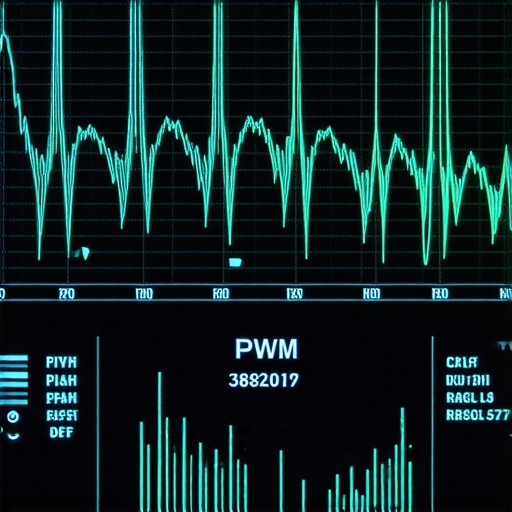
In many vehicles manufactured after 2015, the traditional on/off relay has been superseded by Pulse Width Modulation (PWM) fan control modules. These solid-state devices allow the PCM to vary fan speed precisely from 1% to 100%, rather than relying on binary states. However, this complexity introduces a unique failure mode: internal MOSFET short-circuiting. When the internal transistor fails, it often defaults to a closed state, providing a direct, unmanaged path for high-amperage current to the fan motor. Unlike a traditional relay that might click or smell of ozone, a failing PWM module often behaves like a software glitch, keeping the fan screaming at maximum RPM even with the ignition key in your pocket. Professional car service centers use oscilloscopes to verify these signals, as a standard multimeter often lacks the sampling rate to catch high-frequency duty cycle anomalies. According to technical deep-dives in Motor Age Magazine, PWM failures are frequently misdiagnosed as sensor issues, leading to expensive and unnecessary cooling system overhauls.
Why Does My Fan Stay On Long After the Engine Is Stone Cold?
This phenomenon usually points toward a breach in the coolant temperature sensor’s rationality logic. Modern engines often employ two or even three temperature sensors: one at the thermostat housing, one at the radiator outlet, and sometimes a cylinder head temperature (CHT) sensor. If the radiator outlet sensor reports a temperature significantly higher than the inlet sensor after a period of rest, the PCM suspects a catastrophic blockage or a stuck-closed thermostat. To prevent a perceived thermal runaway, the computer commands a ‘forced fan’ state. If you find yourself in this situation, performing a comprehensive vehicle diagnostics session is paramount. You must check the ‘Temperature Delta’ between sensors; a difference of more than 10 degrees on a cold engine is a smoking gun for a skewed sensor that needs immediate replacement.
The Hidden Link Between Active Grille Shutters and High Fan Duty Cycles
Aerodynamics and thermal management are now inextricably linked through Active Grille Shutters (AGS). These motorized slats behind the bumper open and close to balance engine cooling with aerodynamic drag. If the AGS motor fails or the shutters become jammed by road debris, the PCM loses its ability to regulate airflow passively. To compensate for the lack of ram-air cooling, the system defaults to running the electric fans at high speed to pull air through the restricted opening. This often happens at highway speeds, where the fan shouldn’t even be needed. If your fan is working overtime, inspect the front grille for obstructions. If the shutters are stuck shut, it can put immense strain on the fan motor, potentially leading to the very auto repair issues you are trying to avoid. If your scanner is showing a 100% duty cycle when the engine is cold, it’s time to stop guessing and start testing the module itself.
Software Calibration Glitches That Demand a PCM Reflash
Sometimes the hardware is perfectly fine, but the logic governing it is flawed. Manufacturers frequently release Technical Service Bulletins (TSBs) that address ‘software-induced fan run-on.’ These are essentially bugs in the code where the PCM fails to exit the after-run cooling state under specific environmental conditions, such as high humidity combined with rapid heat-soak. In these instances, no amount of parts-swapping will fix the issue. A professional technician must ‘flash’ or update the PCM with the latest calibration files from the manufacturer. This is particularly common in modern turbocharged engines where the cooling logic is incredibly aggressive. If you’ve already verified the health of your transmission coolers and sensors, check for pending software updates that specifically target fan duration parameters. Furthermore, understanding the nuances of how these systems communicate over the Controller Area Network (CAN bus) is essential, especially when dealing with high-end European or late-model domestic vehicles.
Environmental Sensor Interference Under the Side Mirrors
It may seem unrelated, but the ambient air temperature sensor—often located in the side mirror or behind the front emblem—plays a massive role in cooling fan behavior. If this sensor fails and reports an outside temperature of 130°F, the PCM will prioritize aggressive cooling for the entire engine bay, regardless of what the coolant temperature says. This ‘logic override’ is designed to protect plastic components and electrical harnesses from melting in extreme heat. If your dashboard display shows an impossible outdoor temperature, you’ve found your phantom. Addressing this early can prevent you from needing to unlock your car’s potential with more drastic measures later. Investigating the wiring harness inside the door hinge can often reveal broken wires that cause these erratic temperature readings.
When the CAN-Bus Communication Breakdown Causes Fan Panic
In the intricately networked environment of a modern vehicle, the cooling fan is no longer a localized component; it is a node on the Controller Area Network (CAN-Bus). When communication packets between the Body Control Module (BCM) and the Powertrain Control Module (PCM) become corrupted or delayed, the system defaults to a ‘fail-safe high’ state. This is a protective firmware hard-stop; the computer assumes that if it cannot verify the current temperature due to a network lag or a ‘bus-off’ condition, it must provide maximum airflow to prevent a meltdown. This type of digital ghost is often why a fan might run at full tilt even when the engine is off and the coolant is cold. Investigating these communication errors requires more than a simple code reader; it demands a deep dive into network traffic to see if a unrelated module, like a faulty door lock actuator, is ‘spamming’ the bus and drowning out thermal data.
Thermal Cascades in High-Voltage Hybrid Cooling Circuits
For those driving hybrid or electric vehicles, the cooling fan logic is exponentially more complex. These vehicles often utilize multiple independent cooling loops—one for the internal combustion engine (if applicable), one for the high-voltage battery pack, and a third for the power electronics and inverter. A fan that continues to scream after the car is parked may be responding to the thermal needs of the battery pack rather than the engine. If the battery cells are undergoing a balancing phase or if the ambient garage temperature is high, the vehicle will prioritize cooling the lithium-ion chemistry to prevent long-term degradation. This is an essential part of car service for electrified platforms, where thermal management is the primary factor in battery longevity.
Why Does Your Fan Pulse Rapidly instead of Running Smoothly?
Erratic pulsing or a ‘hunting’ fan speed usually indicates a struggle between the requested duty cycle and the physical capability of the fan motor. This is often caused by increased internal resistance in the fan motor brushes or a failing capacitor within the control module. As the module attempts to ramp up the speed using Pulse Width Modulation (PWM), the motor fails to respond linearly, causing the controller to over-compensate and then retract the signal. This rhythmic surging can also be a sign of a partially blocked condenser or radiator, where the high-pressure switch is rapidly toggling on and off. If you notice this surging, it is a precursor to a total motor burnout and should be addressed during your next vehicle diagnostics session before the hardware fails entirely.
The Overlooked Impact of ECU Remapping on Fan Duty Curves
Aftermarket performance tuning is a popular way to increase horsepower, but many ‘off-the-shelf’ maps aggressively alter the fan engagement temperatures to keep the intake charge as cool as possible. While this aids performance, it often places a 100% duty cycle load on components designed for intermittent use. Over time, this leads to the premature failure of the fan motor or the melting of the harness connectors due to sustained high-amperage heat. If you have recently tuned your vehicle, ensure that the software hasn’t set the ‘Fan-Off’ threshold lower than the thermostat’s opening temperature. This creates a logical loop where the fan can never satisfy the computer’s demand, leading to the exact hidden electrical drain killing your battery that leaves drivers stranded. According to technical training modules from ASE (Automotive Service Excellence), verifying aftermarket software compatibility with OEM hardware is now a top priority for modern drivability technicians.
Stop the Guesswork with Component-Level Testing
Relying solely on dashboard gauges is a recipe for frustration because they are often ‘buffered’ to stay at the center point despite minor fluctuations. To truly understand why your fan won’t stop, you must look at the raw voltage return from the sensors. A sensor might be ‘drifting’—reporting a temperature that is high enough to trigger the fan but low enough to avoid a warning light. If you suspect your cooling system is lying to you, learning auto repair techniques involving a digital thermometer can help you verify the actual heat at the radiator hose versus what the computer perceives. Have you experienced a fan that seemed to have a mind of its own after a heavy rain or a car wash? Share your findings in the comments below, or explore our guide on how to identify a bad ground wire to see if moisture in a connector is the culprit behind your thermal troubles.
Expert Insights & Advanced Considerations
Stop Trusting the Dashboard Temperature Needle
One of the most common mistakes in high-level vehicle diagnostics is assuming the dashboard gauge reflects real-time coolant fluctuations. Modern instrument clusters are intentionally “dampened” by the manufacturer to stay perfectly horizontal even as temperatures swing between 180°F and 220°F. If your fan is running but the needle hasn’t moved, the PCM has likely detected a “cross-rationality error” where the radiator outlet sensor disagrees with the cylinder head sensor. In these cases, checking the hidden world of vehicle diagnostics through live data is the only way to see the truth before a components fails.
Relay Fusion and High-Amperage Circuit Failures
When a cooling fan relay “welds” shut, it is rarely a random act of hardware failure. Instead, it is often caused by an aging fan motor drawing more amperage than the circuit was designed to handle. This increased load creates a micro-arc every time the relay closes, eventually fusing the internal contacts. If you find yourself constantly replacing relays, it is time to investigate the hidden electrical drain killing your battery while the car is parked to ensure a dying fan motor isn’t the root cause of your electrical woes.
Turbocharged Engines and the After-Run Logic Trap
On turbocharged platforms, the “after-run” cycle is a critical protective measure. However, if this cycle happens even after a gentle five-minute drive in cool weather, it may indicate a logic glitch. Technicians at a high-end car service often look for “ghost” signals from the A/C pressure sensor, which can trick the car into thinking the HVAC system is under extreme pressure. Learning how to tell if your battery is truly dying or just has dirty terminals can also help rule out the voltage drops that cause these logic modules to freeze in the “ON” position.
#IMAGE_PLACEHOLDER_E#
Curated Expert Resources
Master Thermodynamics with SAE Technical Papers
For those who want to understand the thermodynamics behind cooling fan duty cycles, the Society of Automotive Engineers (SAE) provides the gold standard in peer-reviewed research. Their papers on Pulse Width Modulation (PWM) control strategies explain exactly how modern ECUs manage thermal gradients.
Crowdsource Solutions via Professional Technician Networks
Platforms like iATN (International Automotive Technicians Network) are where the world’s most elite mechanics go to share “pattern failures.” If your specific car model has a known issue with the cooling fan staying on, chances are there is a documented fix here that bypasses the generic advice found in standard repair manuals.
Trust Factory-Grade Data for Wiring Accuracy
Professional auto repair starts with the right wiring diagrams from sources like Mitchell 1 ProDemand. These platforms provide factory-level Technical Service Bulletins (TSBs) that often reveal hidden software updates required to fix fan run-on issues that hardware replacement cannot solve.
Final Expert Perspective
A cooling fan that refuses to shut down is more than a nuisance; it is a sophisticated warning from your vehicle’s central nervous system. Whether the cause is a welded relay, a skewed temperature sensor, or a logic error within the transmission cooling loop, the key to a permanent fix lies in data, not guesswork. By utilizing precision tools and understanding the nuances of thermal management, you can protect your engine from catastrophic heat soak and your battery from premature failure. If you are ready to take control of your vehicle’s health, we recommend you unlock your car’s potential with expert auto repair tips for 2025 to stay ahead of these complex electronic challenges. Have you dealt with a fan that just wouldn’t quit? Reach out via our contact us page and let’s discuss your diagnostic findings.