The standard industry perspective often dictates that brake rotors are sacrificial components, destined for the scrap bin every 30,000 to 50,000 miles. However, from a high-level engineering standpoint, the degradation of grey iron discs is rarely a matter of inevitable friction and more a consequence of thermal mismanagement and mechanical neglect. Achieving the elusive 100,000-mile mark requires an analytical approach to auto repair and a shift from reactive maintenance to precision car service. It involves understanding the interplay between pad transfer layers, cooling cycles, and the structural integrity of the entire hub assembly.
Stop Blaming the Metal for Premature Warping
Most drivers complain about ‘warped’ rotors when they feel a vibration, but true metallurgical warping is exceptionally rare in passenger vehicles. What professionals identify as warping is typically Disc Thickness Variation (DTV), caused by the uneven transfer of friction material from the pads to the rotor surface. This often stems from failing to follow the one maintenance move that doubles the life of your rotors. When a vehicle is held at a dead stop with scorching brakes after a high-speed deceleration, a ‘pad imprint’ occurs, creating a high spot that eventually leads to pulsation. Understanding this helps explain why your brake rotors keep warping every six months regardless of brand; it is often a procedural error rather than a part failure.
The Science of Bedding New Pads Correctly
The longevity of a rotor is established in its first fifty miles. A professional ‘bedding-in’ procedure involves a series of controlled decelerations that heat the friction material enough to deposit a uniform layer onto the iron disc. This sacrificial layer protects the underlying metal from abrasive wear. If you skip the correct way to bed new brake pads so they do not squeak, you are essentially sandpapering your rotors every time you touch the pedal. According to research published by SAE International, maintaining a consistent transfer film is the primary factor in reducing long-term rotor mass loss.
Why Heat Dissipation Dictates Your Maintenance Schedule
Excessive heat is the enemy of iron. If your calipers are sticking or the sliding pins are seized, the rotor never gets a chance to cool down, leading to accelerated wear and crystallisation of the friction material. Utilizing advanced vehicle diagnostics during every oil change can reveal if a brake drag is present before it consumes the rotor. You must learn how to unstick a caliper without replacing the whole brake system to ensure even thermal distribution across both sides of the disc. If you notice the specific smell that tells you your brakes are dragging, the rotor’s lifespan is already being cut in half.
Integrating Brake Health into Your Full Auto Repair Strategy
A vehicle is a singular machine where systems interact in ways most owners overlook. For instance, the health of your transmission plays a subtle role in brake wear; a properly functioning gearbox allows for effective engine braking, reducing the thermal load on the rotors during downhill descents. Conversely, transmission failures decoded often reveal that drivers compensate for poor shifting by overusing their brakes, leading to premature rotor thinning. High-quality car service should always include a holistic check of the drivetrain to ensure no secondary system is taxing your braking components.
Why Do Some Rotors Outlast the Car Itself?
The secret lies in the synergy between high-carbon metallurgy and driver habits that prioritize ‘rolling stops’ and gradual energy dissipation. Professionals who reach 100k miles on original rotors typically use vehicle diagnostics tools to monitor wheel speed sensor data and ensure the ABS and traction control systems aren’t ‘micro-braking’ unnecessarily. If you are serious about automotive longevity, we encourage you to share your own high-mileage maintenance tips in our professional forums or consult our advanced guides for further technical insights.
Even the most premium iron discs cannot compensate for a mounting surface that lacks geometric precision. Professional technicians understand that the relationship between the hub flange and the rotor is measured in thousandths of an inch. If the hub is contaminated with rust or if the wheel bearings are beginning to lose their axial tolerance, the rotor will oscillate as it rotates. You should learn how to identify a failing wheel bearing before the hub seizes up to prevent this oscillation from becoming permanent. When the rotor does not sit perfectly flat, it strikes the pads twice per revolution, creating thin spots that eventually manifest as the dreaded pedal pulsation. Using a dial indicator to check for lateral runout is a mandatory step in high-level auto repair that most DIYers unfortunately skip.
Lateral Runout and the Geometric Truth Behind Pedal Pulsation
Ignoring the hub interface is the fastest way to ruin a new set of rotors within months. High-mileage success requires stripping the hub back to bare metal and verifying the runout with precision tools. If you ignore the specific noise your wheel bearing makes before it fails, you are likely allowing excessive play to dictate the wear pattern of your entire braking system. A rotor can only stay true if the foundation it rests upon is equally stable. Technical bulletins from Brake & Front End emphasize that even 0.003 inches of runout at the hub can double by the time it reaches the edge of a 12-inch rotor, leading to catastrophic thickness variation over time.
Does Your Suspension Geometry Compromise Pad Contact?
Worn control arm bushings or failing struts do more than just ruin your ride quality; they alter the dynamic alignment of the wheel during heavy braking. When the suspension shifts under load, it can pull the rotor out of its ideal path, causing uneven pressure from the calipers. This explains why your car pulls to the left even after an alignment in some cases; the braking force is physically twisting a weakened suspension component. Integrating vehicle diagnostics into your routine to check for bushing deflection is as important as checking the pads themselves. A holistic car service approach ensures that the forces generated during deceleration are absorbed by the suspension, not the friction surfaces.
Prevent Moisture and Oxidation from Compromising Hard Parts
The internal health of your braking system is governed by the chemical stability of the fluid. Brake fluid is hygroscopic, meaning it actively absorbs moisture from the atmosphere, which lowers its boiling point and introduces oxygen into the steel lines and caliper pistons. This internal oxidation can cause pistons to bind slightly, preventing the pads from retracting fully. If you have experienced the real reason your brake pedal feels like spongy cake after bleeding, you are likely dealing with moisture-induced air pockets or internal corrosion. We recommend the simple move to prevent your brake lines from rusting out by performing a full system flush every 24 months, regardless of mileage. If you’ve managed to push your rotors past the 100k mark through meticulous fluid management, we want to hear about your specific inspection rituals in the comments below.
Stop Over-Torquing Your Lug Nuts Before You Warp the Hat
Many DIY enthusiasts and even some hasty technicians fail to realize that the final torque application on your wheel nuts is a critical stage of brake system assembly. Using an impact wrench without a torque stick can distort the rotor hat, creating a wave in the friction surface that mirrors the uneven clamping force. This is why a calibrated torque wrench is the most important tool in your auto repair arsenal. Even the most robust high-carbon discs will succumb to lateral runout if the mounting pressure isn’t uniform across the hub face. Professional assembly requires a star-pattern tightening sequence to ensure the rotor is sandwiched perfectly flat against the hub.
Why High-Carbon Iron Wins the Long-Distance Race
When selecting replacement parts during a car service, the metallurgical composition matters more than the brand name. High-carbon rotors contain a higher percentage of carbon (often 3.6% to 3.9%), which significantly improves thermal conductivity. This allows the heat generated during a stop to move away from the friction surface more rapidly, preventing the localized ‘hot spots’ that cause cementite formation—the extremely hard inclusions that lead to permanent vibration. Engineering data from Bosch Braking Systems confirms that high-carbon castings exhibit better damping characteristics, reducing the high-frequency squeals that often plague standard iron discs. 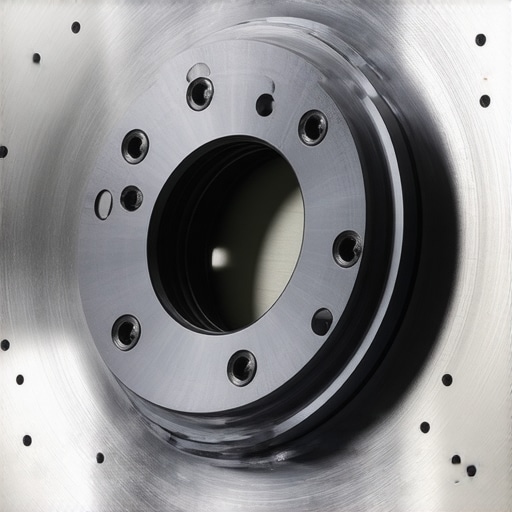
Can Electronic Parking Brakes Unintentionally Ruin Your Rear Rotors?
With the industry shift toward Electronic Parking Brakes (EPB), the mechanics of rear brake wear have fundamentally changed. Unlike traditional cable-actuated systems, the EPB uses an electric motor to clamp the pads against the rotor. If the system’s software isn’t calibrated or if the caliper slides are neglected during vehicle diagnostics, the motor can apply excessive pressure or fail to fully retract. This leads to a constant, microscopic drag that glazes the rear rotors, rendering them useless long before the front ones show wear. If you have wondered the reason your rear brakes wear faster than your fronts, the EPB logic is often the culprit. Proper servicing now requires a diagnostic tool to put the calipers into ‘service mode’ to prevent mechanical binding.
Regenerative Braking and the New Challenge of Surface Corrosion
In the era of hybrid and electric vehicles, the rotors face a paradoxical threat: lack of use. Regenerative braking handles the majority of deceleration, meaning the mechanical friction brakes may only engage in the final few feet of a stop. This lack of thermal cycles allows moisture to sit on the iron surface, leading to deep pitting and ‘rust jacking’ between the pad and the rotor. High-level auto repair for these vehicles requires a different mindset, focusing on keeping the friction surfaces clean rather than monitoring for thinness. You must understand how to prevent rust on EV brakes that hardly get used to avoid a safety failure when you actually need full stopping power. Transitioning your maintenance focus ensures the system remains responsive even when the transmission and motor-generators are doing the heavy lifting. We invite you to explore our technical library if you are noticing unusual oxidation on your low-mileage hybrid.
The Subtle Impact of Road Chemicals on Rotor Integrity
During winter months, the chemical de-icers used on highways do more than just rust the bodywork; they chemically alter the friction layer on your discs. Calcium chloride and magnesium chloride are particularly aggressive, creating a film that can interfere with the pad transfer layer we discussed earlier. When these salts combine with the fine metallic dust from the pads, they create an abrasive slurry that accelerated rotor thinning. Professional-grade car service in cold climates should include a thorough cleaning of the rotor vents to prevent this corrosive buildup from trapped heat and moisture.
While the interaction between the pad and the iron surface is the most visible aspect of braking, the thermal stability of the entire assembly relies on factors far below the surface. A precision car service doesn’t just stop at swapping parts; it requires a deep dive into the metallurgy and geometry that most shops ignore. If you want to join the elite group of drivers who see six-figure mileage on a single set of rotors, you must treat your braking system as a high-tolerance engineering project rather than a simple friction mechanism.
Stop Letting Microscopic Rust Ruin Your Brake Job
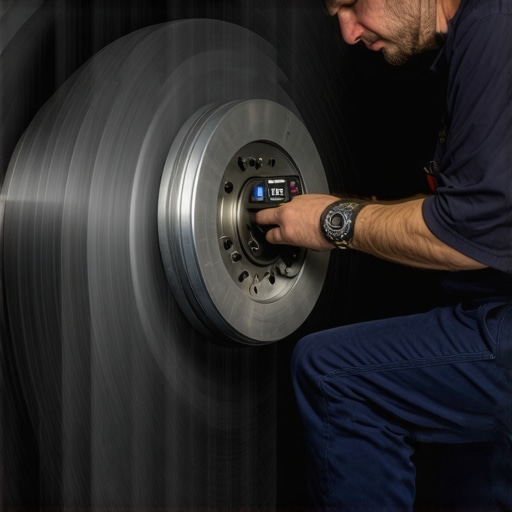
The interface between the rotor hat and the wheel hub is where most longevity is lost. Even a single flake of corrosion or a stray speck of grease can introduce lateral runout that translates into a noticeable wobble at the outer edge of the disc. This is the primary reason high-quality auto repair starts with a wire brush and a micrometer. When the rotor doesn’t sit perfectly true, it creates ‘DTV’ (Disc Thickness Variation) through incidental contact with the pads during normal driving. This constant ‘kissing’ of the surfaces leads to localized overheating and the eventual development of hard spots that no amount of resurfacing can truly fix.
How Much Lateral Runout Is Too Much for Modern Hubs?
In the world of high-performance vehicle diagnostics, we measure success in microns. Most manufacturers specify a maximum allowable runout of 0.002 inches, yet a stack-up of tolerances between a new rotor and an old hub can easily exceed this. According to technical standards maintained by The National Institute for Automotive Service Excellence (ASE), failure to index the rotor to the hub—essentially rotating the rotor relative to the studs to find the ‘sweet spot’ of minimum runout—is a leading cause of premature pedal pulsation. Professional technicians utilize on-car brake lathes to match the rotor perfectly to the hub’s unique axial profile, a step that is non-negotiable for extreme longevity.
Aerodynamic Wheel Covers Might Be Suffocating Your Discs
Modern vehicle design often prioritizes fuel economy through closed-face wheel designs and aerodynamic covers. While these features reduce drag, they also significantly restrict the airflow required to cool the rotors after a heavy braking event. If your transmission is constantly downshifting to maintain speed on grades, the heat generated by the brakes has nowhere to go. This trapped thermal energy causes the brake fluid to degrade prematurely and can lead to the ‘tempering’ of the rotor iron, making it more brittle over time. If you frequently drive in mountainous terrain, opting for wheels with better ventilation is a legitimate car service upgrade that pays for itself in reduced rotor replacement costs.
Thermal Imaging Reveals the Truth About Caliper Health
Sometimes, the symptoms of a failing braking system are invisible to the naked eye. Advanced vehicle diagnostics now involve the use of infrared thermography to identify ‘lazy’ calipers. By measuring the temperature of each rotor immediately after a drive, a technician can spot a 50-degree discrepancy that indicates a sticking piston or a collapsed flexible hose. This proactive approach to auto repair ensures that one dragging pad doesn’t consume an entire rotor while the others remain healthy. We encourage you to ask your technician for a thermal health report during your next inspection; it is the most effective way to ensure your entire system is working in harmony. What has been your experience with diagnosing difficult brake vibrations? Join our community discussion below and share your technical wins.
Expert Insights & Advanced Considerations
Why Rotating the Rotor Relative to the Hub Stops Vibration
Achieving zero-vibration braking is not just about installing new parts; it is about the geometric alignment of the assembly. A technique often overlooked in standard auto repair is ‘indexing’ the rotor. By measuring lateral runout with a dial indicator and then rotating the rotor across the different wheel studs, you can find the orientation where the hub’s runout and the rotor’s runout cancel each other out. If your steering wheel vibrates at exactly 60 mph, the cause is frequently a failure to index the rotor during the last car service, leading to microscopic thickness variations over time.
Match Your Pad Compound to the Rotor Carbon Density
Longevity is a function of compatibility between the friction material and the iron substrate. High-carbon rotors perform best when paired with premium ceramic or low-metallic pads that facilitate a stable transfer film. When the pad is too hard for the rotor’s metallurgy, it creates excessive abrasive wear rather than adhesive friction. Professional vehicle diagnostics often reveal that premature thinning occurs when budget pads are slapped onto high-performance discs, disrupting the thermal equilibrium required for a 100,000-mile lifespan.
Prevent Your ABS Module from Prematurely Eating Your Discs
Modern electronic stability systems use the brakes to torque-vector and stabilize the vehicle, often without the driver ever touching the pedal. If the wheel speed sensors are dirty or providing erratic data, the ABS module may apply ‘micro-braking’ events that heat the rotors unnecessarily. This is why the hidden world of vehicle diagnostics is so critical; keeping the electronic control side of the braking system calibrated prevents the mechanical components from wearing out in the background.
#IMAGE_PLACEHOLDER_E#
Curated Expert Resources
SAE International Technical Papers
For those who want to see the raw data on metallurgical wear, the SAE digital library provides peer-reviewed research on friction material transfer and thermal fatigue in grey iron castings. It is the gold standard for understanding how heat cycles affect the structural integrity of your brakes.
Bosch Braking Systems Whitepapers
As a leading OEM supplier, Bosch provides deep dives into the evolution of high-carbon metallurgy and the impact of regenerative braking on modern rotor design. These resources are invaluable for owners of hybrids or EVs who face unique corrosion challenges.
Brake & Front End Technical Journal
This trade publication offers real-world case studies and diagnostic flowcharts that bridge the gap between theoretical engineering and practical auto repair. It is an essential resource for identifying rare failure modes like ‘cementite’ formation.
Final Expert Perspective
Pushing a set of brake rotors to 100,000 miles is not a matter of luck; it is a deliberate engineering outcome. It requires a holistic understanding of how the transmission, suspension geometry, and electronic control modules interact with the friction surfaces. By shifting your focus from simple replacement to precision maintenance and high-level vehicle diagnostics, you transform the braking system from a consumable liability into a long-term asset. For the best results, always prioritize a comprehensive car service that treats the hub, the fluid, and the metallurgy as a single, unified system. We invite you to share your technical questions or your own high-mileage success stories in the comments below as we continue to decode the complexities of modern automotive longevity.