Precision Geometry Beyond the Alignment Rack
Steering geometry is frequently misinterpreted by vehicle owners as a simple matter of toe and camber adjustments. However, when a vehicle continues to drift toward the left despite a clean printout from a laser-alignment machine, it indicates a conflict between theoretical specifications and real-world kinetic forces. An expert-level auto repair analysis must look beyond the standard tie-rod adjustments to account for factors like steering axis inclination (SAI), setback, and memory steer. While most technicians focus on the angles of the wheels relative to the chassis, true car service excellence requires evaluating the vehicle’s dynamic behavior under load, where suspension compliance and bushing deflection play critical roles in directional stability.
Tire Conicity and the Invisible Mechanics of Radial Pull
One of the most frequently overlooked culprits in post-alignment pulling is tire conicity. During the manufacturing process or due to uneven wear patterns, the internal steel belts of a tire can shift slightly, causing the tire to take on a subtle conical shape. As the tire rotates, it naturally attempts to roll in a circle rather than a straight line. This phenomenon, known as radial pull, is entirely independent of wheel alignment. To diagnose this, a skilled technician might perform a cross-rotation. If the direction of the pull changes after swapping the front tires, the issue is structural rather than geometrical. According to technical standards established by SAI International, even a microscopic variance in tread belt tension can generate significant lateral force at highway speeds.
Why does my car still drift despite a ‘perfect’ alignment printout?
A ‘perfect’ printout only reflects the static state of the vehicle while it sits on a level rack. In professional vehicle diagnostics, we must consider the ‘road crown’—the intentional slope of most roads for drainage. Some vehicles are aligned with a slight caster offset to compensate for this, but if the caster is equalized on a road with a heavy crown, the car will naturally fall toward the low side. Furthermore, worn control arm bushings can allow for dynamic toe changes under acceleration or braking that do not show up during a static test. If you suspect deeper mechanical issues, learning the hidden world of vehicle diagnostics can help you identify these ephemeral faults before they lead to premature component failure.
Dragging Calipers Can Mimic Improper Camber Settings
The intersection of the braking system and steering stability is a common source of frustration for owners. A brake caliper that fails to retract fully—due to a collapsed flexible hose or a seized piston—will apply constant, subtle friction to one side of the vehicle. This creates a rotational drag that the driver perceives as a steering pull. This is especially common after a transmission service or heavy maintenance where the vehicle has been lifted, potentially disturbing older brake lines. If you have recently serviced your stoppers and noticed a change in handling, you should investigate why your car pulls to the left after a professional brake job to rule out hydraulic imbalances.
Mechanical Failure in the Suspension Stack
Finally, we must address the integrity of the suspension components themselves. A failing wheel bearing can create enough drag to influence the vehicle’s path, or a weak strut mount can cause the spring to ‘bind,’ leading to memory steer where the car pulls in the direction of the last turn. Expert technicians often utilize a floor jack to check for play in the hub assembly; you can perform a preliminary check yourself by learning how to diagnose a bad wheel bearing using a jack. Maintaining these components is vital, as a healthy suspension stack not only ensures straight-line tracking but also doubles the life of your rotors by preventing vibration and heat spotting. If your steering remains unresponsive to standard fixes, consider contributing your experience to our community forums to help refine our collective understanding of complex chassis dynamics.
When the Steering Rack Fights Its Own Hydraulic Pressure
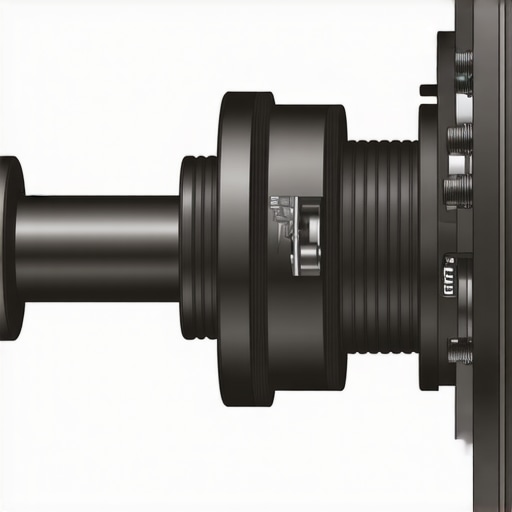
While external adjustments handle the wheel angles, the internal mechanics of a hydraulic steering rack can introduce a bias that no alignment rack can fix. Inside the steering gear, a spool valve redirects pressurized fluid to assist your movements. If the internal seals on this valve begin to degrade, hydraulic fluid can leak into one side of the cylinder even when the steering wheel is centered. This creates a constant phantom pressure that nudges the vehicle toward one side. Drivers often mistake this for a bad alignment, but the root cause is actually the most overlooked fluid in your car that causes sudden steering failure. Over time, contaminated fluid acts as an abrasive, carving micro-grooves into the valve housing and necessitating a full rack replacement to restore neutral handling.
Is your steering wheel only fighting back when you hit the gas?
If the pull occurs strictly during acceleration, the diagnostic path shifts from static geometry to the drivetrain. This is often dismissed as generic torque steer, but in many cases, it is exacerbated by a failing CV joint or an imbalanced half-shaft. A binding joint creates rotational resistance that pulls the steering toward the affected side. You can often confirm this by checking why your car pulls to the left during hard acceleration. When one axle is not delivering power as smoothly as the other, the vehicle’s vector naturally deviates. Furthermore, modern Electric Power Steering (EPS) systems use torque sensors to calculate assistance; a skewed sensor might interpret slight road resistance as driver input, providing unwanted help that feels like a steady drift. Professional safety standards from the National Highway Traffic Safety Administration (NHTSA) emphasize that steering systems must maintain a predictable return-to-center feel, and any persistent deviation suggests a critical failure in these feedback loops.
Subframe Shifts and the Permanent Offset
Even a perfectly aligned set of wheels cannot compensate for a subframe that has shifted its position relative to the unibody. The subframe acts as the foundation for the control arms and the engine; if the mounting bolts have stretched or the frame has taken a hard hit from a pothole, the entire geometry shifts incorrectly. This shift alters the Steering Axis Inclination (SAI) and included angle, which are often non-adjustable parameters on most consumer vehicles. When evaluating a high-mileage vehicle, using the checklist for buying a used car with 150000 miles can help identify signs of structural fatigue or prior impact damage that might cause these permanent pulling issues. Have you encountered a persistent pull that only shows up at specific speeds or under specific loads? Share your experience in the comments below to help our community troubleshoot these complex steering ghosts.
Electronic Calibration of the Zero-Point Position
In the era of Advanced Driver Assistance Systems (ADAS), a car’s straight ahead is no longer just a physical measurement; it is a digital one. If you have had an alignment done but the steering angle sensor (SAS) was not reset, the car’s computer may believe it is in a permanent turn. The electronic stability control might then apply subtle braking to one wheel to correct the perceived slide, creating a physical pull. This digital-physical conflict highlights why choosing the right car service for seamless vehicle maintenance is vital—technicians must possess the specialized scan tools necessary to recalibrate these sensors. Without a digital zero-point reset, even the most precise mechanical alignment will feel off to the vehicle’s onboard logic, leading to a frustrating and unnecessary search for mechanical ghosts.
Rear Axle Thrust Angle and the Dog-Tracking Effect
While the front wheels handle the steering, the rear wheels dictate the direction of travel. If the rear axle is not perfectly perpendicular to the vehicle’s centerline, it creates what technicians call a ‘thrust angle.’ This offset forces the front wheels to turn slightly to compensate, leading to a phenomenon where the car appears to ‘dog-track’ down the road. Even if your front-end auto repair was performed to exacting standards, a neglected rear adjustment will keep the steering wheel off-center and the vehicle drifting. Professionals certified by the National Institute for Automotive Service Excellence (ASE) emphasize that a four-wheel alignment is the only way to ensure the thrust line coincides with the vehicle’s geometric center, preventing the chassis from fighting itself at high speeds.
The Invisible Flex of Bushing Compliance Steer
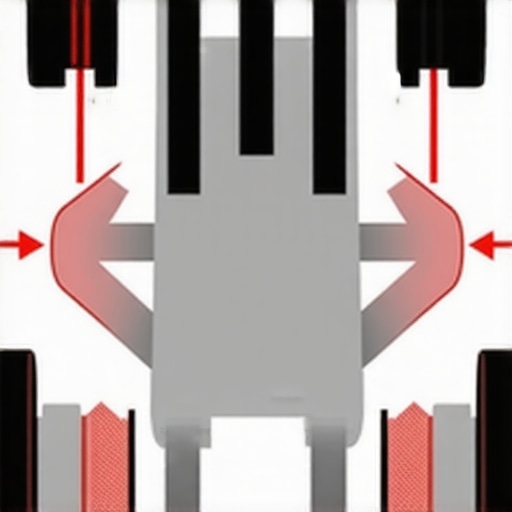
Static measurements on an alignment rack often fail to capture the dynamic reality of ‘compliance steer.’ Every suspension system relies on rubber or polyurethane bushings to isolate vibration, but as these components age, they lose their lateral stiffness. Under the heavy torque of a transmission delivering power or the force of high-speed cornering, a softened bushing allows the control arm to shift significantly. This momentary change in toe or camber is invisible while the car is stationary but results in a persistent pull during active driving. High-performance vehicle diagnostics involve using pry bars to simulate these road forces while the car is on the lift, identifying the ‘ghost’ movements that standard lasers miss. If you find yourself constantly correcting the wheel over bumps, your bushings may have transitioned from dampeners to structural liabilities.
Does a crooked steering wheel always mean the alignment is bad?
Surprisingly, no. A steering wheel that is off-center while the car travels straight is often the result of a technician failing to lock the wheel at absolute zero during the tie-rod adjustment. While this is technically an alignment error, it doesn’t always mean the tires are wearing unevenly or the geometry is ‘out.’ However, in modern cars, this physical offset can trigger a ‘steering angle sensor’ fault, which confuses the traction control system. If your wheel is crooked but the car doesn’t pull, you likely need a simple steering link centering. But if the car actively veers when you let go, the problem is deeper. Understanding how to diagnose a bad wheel bearing or other mechanical drags can help differentiate between a simple centering issue and a genuine safety hazard.
Hydraulic Thermal Expansion and the Morning Cold Pull
In rare but complex cases, a vehicle may pull only when the engine is cold or, conversely, only after an hour of highway driving. This usually points toward the hydraulic fluid within the steering rack. As fluid heats up, its viscosity drops. If the internal seals or the spool valve housing are worn, the thinner fluid may bypass the seals more easily on one side, creating an asymmetric power assist. This ‘thermal pull’ is a hallmark of a steering rack nearing the end of its service life. To catch these issues early, pay close attention to how your car service professional evaluates your fluid condition—dark, burnt-smelling fluid is often the first warning sign of internal rack erosion. If your steering weight changes as the car warms up, you are likely dealing with a hydraulic imbalance rather than a mechanical alignment shift. If you’ve experienced this strange temperature-dependent drift, share your story in our technical forum so we can compare notes on rack-and-pinion failure patterns.
Steering Column Intermediate Shaft Binding
The connection between your hands and the steering rack is not a solid rod; it is a series of shafts and U-joints. If the needle bearings in the intermediate shaft U-joint begin to seize due to road salt or moisture, they can create ‘tight spots’ in the steering rotation. If a joint binds at a specific point in its 360-degree travel, it can exert a slight return-to-center force that feels like a pull. This is often mistaken for a bad pump or a dragging brake. A seasoned technician will disconnect the shaft to feel the resistance manually, a step that is frequently skipped in basic vehicle diagnostics but is essential for older high-mileage cars.Beyond the mechanical linkages, we must investigate the subtle but persistent influence of ‘bushing clocking.’ When a technician replaces a control arm or bushing, the final tightening of the mounting bolts must occur while the vehicle is at its natural ride height—often referred to as ‘curb weight’ position. If the bolts are torqued while the suspension is at full droop on a two-post lift, the rubber becomes pre-twisted once the car is lowered. This creates a constant, spring-loaded force that attempts to rotate the arm, manifesting as a persistent pull that no amount of toe adjustment can fix. This ‘memory’ in the rubber not only ruins the handling but leads to rapid bushing failure as the elastomer is perpetually stressed beyond its design limits. 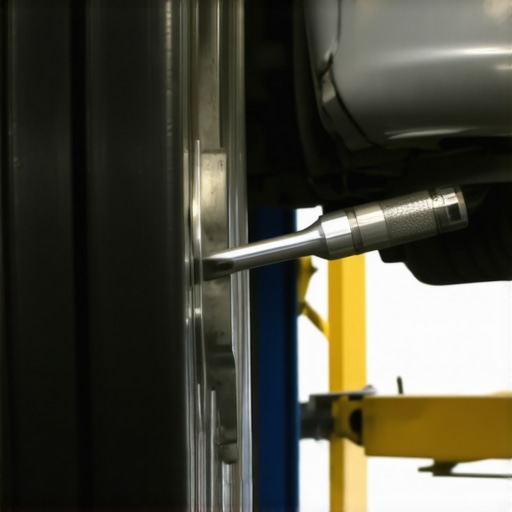
The Invisible Impact of Loose Belly Pans on Highway Stability
Aerodynamic imbalances are frequently the ‘ghost in the machine’ for high-speed directional issues. Modern vehicles use extensive underbody shielding to manage airflow and reduce lift. If a plastic belly pan or air dam is loose, cracked, or missing a few fasteners on one side, it creates an asymmetric high-pressure zone under the car. At highway speeds, this air pressure can exert enough lateral force to push the chassis off-center. Drivers often report this as a ‘wandering’ sensation that disappears at city speeds. Unlike mechanical auto repair issues, this won’t show up on a rack; it requires a physical inspection of the vehicle’s aerodynamic integrity to ensure the under-cladding is symmetrical and secure.
Why does my steering wheel feel stiffer after a simple repair?
If you notice increased steering effort following a car service, it often points to an over-adjusted rack-and-pinion preload. Some technicians attempt to ‘tighten up’ a loose steering feel by adjusting the rack guide screw. If tightened too much, it creates excessive friction between the rack and the pinion gear, preventing the steering from naturally returning to center after a turn. This binding can feel like a pull because the car stays in a slight arc rather than straightening out. True vehicle diagnostics should always verify that the steering system retains its ‘returnability’—the mechanical tendency to find zero-point through caster geometry alone.
Digital Brains Need Periodic Electronic Resets
In vehicles equipped with active steering or lane-keep assist, the steering rack is essentially a robot that listens to your commands. If the internal torque sensors lose their calibration, the motor might apply ‘phantom’ assistance. This is particularly common after a transmission drop or any work that involves disconnecting the battery for extended periods. According to technical standards discussed by the Automotive Service Association (ASA), the integration of ADAS means that mechanical work is now inseparable from software configuration. If your car is fighting you, it might simply need a steering angle sensor (SAS) recalibration to teach the computer exactly where ‘straight’ is. If you have noticed your car acting more like a co-pilot than a tool, it is time to look into advanced digital resets. Don’t let a simple software glitch dictate your driving experience; reach out to a specialist who understands the nexus of silicon and steel.
Rhythmic Pulling Caused by Rotor Lateral Runout
While we previously discussed dragging calipers, we should also consider the lateral runout of the brake rotors themselves. If a rotor is warped or improperly seated on the hub, it can ‘kiss’ the brake pads intermittently during every revolution. This creates a rhythmic drag that mimics a steering pull at specific frequencies, often getting worse as the brakes heat up. This vibration can even travel through the steering column, making the wheel feel light and then heavy in a cyclic pattern. Ensuring that hubs are cleaned of all rust before new rotors are installed is a critical step in precision car service that prevents this frustrating directional drift.
Precision Geometry Beyond the Alignment Rack
Steering geometry is frequently misinterpreted by vehicle owners as a simple matter of toe and camber adjustments. However, when a vehicle continues to drift toward the left despite a clean printout from a laser-alignment machine, it indicates a conflict between theoretical specifications and real-world kinetic forces. An expert-level auto repair analysis must look beyond the standard tie-rod adjustments to account for factors like steering axis inclination (SAI), setback, and memory steer. While most technicians focus on the angles of the wheels relative to the chassis, true car service excellence requires evaluating the vehicle’s dynamic behavior under load, where suspension compliance and bushing deflection play critical roles in directional stability.
Tire Conicity and the Invisible Mechanics of Radial Pull
One of the most frequently overlooked culprits in post-alignment pulling is tire conicity. During the manufacturing process or due to uneven wear patterns, the internal steel belts of a tire can shift slightly, causing the tire to take on a subtle conical shape. As the tire rotates, it naturally attempts to roll in a circle rather than a straight line. This phenomenon, known as radial pull, is entirely independent of wheel alignment. To diagnose this, a skilled technician might perform a cross-rotation. If the direction of the pull changes after swapping the front tires, the issue is structural rather than geometrical. According to technical standards established by SAI International, even a microscopic variance in tread belt tension can generate significant lateral force at highway speeds.
Why does my car still drift despite a ‘perfect’ alignment printout?
A ‘perfect’ printout only reflects the static state of the vehicle while it sits on a level rack. In professional vehicle diagnostics, we must consider the ‘road crown’—the intentional slope of most roads for drainage. Some vehicles are aligned with a slight caster offset to compensate for this, but if the caster is equalized on a road with a heavy crown, the car will naturally fall toward the low side. Furthermore, worn control arm bushings can allow for dynamic toe changes under acceleration or braking that do not show up during a static test. If you suspect deeper mechanical issues, learning the hidden world of vehicle diagnostics can help you identify these ephemeral faults before they lead to premature component failure.
Dragging Calipers Can Mimic Improper Camber Settings
The intersection of the braking system and steering stability is a common source of frustration for owners. A brake caliper that fails to retract fully—due to a collapsed flexible hose or a seized piston—will apply constant, subtle friction to one side of the vehicle. This creates a rotational drag that the driver perceives as a steering pull. This is especially common after a transmission service or heavy maintenance where the vehicle has been lifted, potentially disturbing older brake lines. If you have recently serviced your stoppers and noticed a change in handling, you should investigate why your car pulls to the left after a professional brake job to rule out hydraulic imbalances.
Mechanical Failure in the Suspension Stack
Finally, we must address the integrity of the suspension components themselves. A failing wheel bearing can create enough drag to influence the vehicle’s path, or a weak strut mount can cause the spring to ‘bind,’ leading to memory steer where the car pulls in the direction of the last turn. Expert technicians often utilize a floor jack to check for play in the hub assembly; you can perform a preliminary check yourself by learning how to diagnose a bad wheel bearing using a jack. Maintaining these components is vital, as a healthy suspension stack not only ensures straight-line tracking but also doubles the life of your rotors by preventing vibration and heat spotting. If your steering remains unresponsive to standard fixes, consider contributing your experience to our community forums to help refine our collective understanding of complex chassis dynamics.
When the Steering Rack Fights Its Own Hydraulic Pressure
While external adjustments handle the wheel angles, the internal mechanics of a hydraulic steering rack can introduce a bias that no alignment rack can fix. Inside the steering gear, a spool valve redirects pressurized fluid to assist your movements. If the internal seals on this valve begin to degrade, hydraulic fluid can leak into one side of the cylinder even when the steering wheel is centered. This creates a constant phantom pressure that nudges the vehicle toward one side. Drivers often mistake this for a bad alignment, but the root cause is actually the most overlooked fluid in your car that causes sudden steering failure. Over time, contaminated fluid acts as an abrasive, carving micro-grooves into the valve housing and necessitating a full rack replacement to restore neutral handling.
#IMAGE_PLACEHOLDER_E#
Expert Insights & Advanced Considerations
The Digital Zero Point Every Modern Car Needs
In the current landscape of auto repair, mechanical precision is only half the battle. Vehicles equipped with Advanced Driver Assistance Systems (ADAS) rely on a Steering Angle Sensor (SAS) that must be electronically zeroed after any geometry change. If the computer believes the wheels are turned while they are physically straight, the electronic power steering may apply a constant counter-force. Ensuring your technician uses high-level vehicle diagnostics to reset these digital parameters is non-negotiable for 2025. This is why choosing the right car service for seamless vehicle maintenance requires looking for shops with current software capabilities.
Stop Ignoring the Subframe’s Hidden Shift
A vehicle’s alignment is only as stable as the subframe it sits on. Over time, mounting bolts can stretch or bushings can perish, allowing the entire engine and suspension cradle to shift slightly out of square with the unibody. This creates a permanent thrust angle error that standard alignment racks often fail to flag as a primary culprit. For high-mileage heroes, implementing expert auto repair tips for 2025 includes a thorough inspection of subframe alignment to ensure the foundation of your steering is actually centered.
Bushings Are Not Static Rubber Blocks
One of the most profound realizations in advanced chassis tuning is the impact of bushing compliance under load. A car can look perfect on an alignment rack but exhibit massive toe-out during hard acceleration if the control arm bushings are soft. Mastering top auto repair techniques every car owner should know involves understanding that suspension parts are dynamic; what works at a standstill might fail at 70 mph when aerodynamic and drivetrain forces come into play.
Curated Expert Resources
ASE (National Institute for Automotive Service Excellence): The gold standard for technician certification, offering deep-dive technical manuals on steering and suspension systems. Use their guides to verify your mechanic’s credentials and diagnostic approach.
SAE International (Society of Automotive Engineers): This resource provides the original engineering standards for vehicle geometry, including the physics behind tire conicity and scrub radius, essential for those who want to understand the ‘why’ behind the ‘how.’
iATN (International Automotive Technicians Network): A peer-to-peer network where master technicians share real-world fixes for ‘ghost’ steering issues that don’t follow the standard repair manuals.
Final Expert Perspective
Achieving a perfectly neutral steering feel requires moving beyond the basic alignment printout and embracing a holistic view of vehicle diagnostics. From the digital calibration of the steering angle sensor to the physical integrity of the subframe and the hydraulic health of the rack, every component must harmonize. When a car continues to pull, it is rarely a single angle at fault, but rather a combination of small tolerances failing under dynamic load. If your vehicle remains a challenge to keep in its lane, we invite you to contact us for a specialist consultation or share your unique handling symptoms in our community forum below. Let’s solve the steering ghosts together.