The phenomenon of a steering wheel shimmy localized to a specific speed range is a classic study in mechanical physics and vehicle diagnostics. While a casual driver might simply find it annoying, a seasoned diagnostic technician recognizes this as the ‘harmonic sweet spot’ where the frequency of a rotating component matches the natural frequency of the vehicle’s suspension system. This convergence creates an amplified vibration that is transmitted directly through the steering column, often manifesting between 55 and 65 mph. Identifying the root cause requires moving beyond guesswork and into the realm of precise analysis to distinguish between simple wheel issues and more complex drivetrain failures.
The Science of Harmonic Resonance at Freeway Speeds
When a tire is even slightly out of balance—by as little as half an ounce—it generates significant centrifugal force as RPMs increase. At freeway speeds, these forces act like a hammer hitting the suspension thousands of times per minute. If the vibration is felt strictly in the steering wheel and not the seat, the issue is almost certainly localized in the front end. However, experts must also consider that the hidden world of vehicle diagnostics often reveals that what feels like a tire issue is actually a symptom of rotational mass inconsistency within the CV axles or the brake assembly itself.
Why Does the Shaking Often Disappear at Higher Speeds?
Many drivers notice that if they accelerate to 75 mph, the vibration seemingly vanishes. This occurs because the vehicle has moved past its resonant frequency. The oscillation is still occurring, but the frequency is now so high that the suspension’s dampening components—such as your struts and bushings—can effectively mask the movement. Continuing to drive in this state is dangerous, as it places extreme stress on the wheel assembly. According to technical standards established by the Society of Automotive Engineers (SAE), persistent high-frequency vibration leads to accelerated fatigue in metal components, potentially resulting in catastrophic failure of the steering knuckles or ball joints.
Distinguish Between Tire Imbalance and Driveline Fatigue
If a simple wheel balance doesn’t solve the problem, the investigation must shift to the driveline and suspension geometry. Worn tie rod ends or failing lower control arm bushings allow for minute amounts of ‘play’ that become erratic at high speeds. Furthermore, a failing wheel bearing can produce a similar rhythmic shudder before it begins to growl. You should learn how to identify a failing wheel bearing before the hub seizes up to avoid being stranded. In some cases, the issue may stem from the braking system; if you notice the steering wheel pulls or pulses specifically during deceleration, you should investigate why your brake rotors keep warping every six months despite regular maintenance. If you are experiencing persistent oscillations, consult our specialized guide to choosing the right car service for seamless vehicle maintenance to ensure your suspension is inspected with professional-grade load-force balancing equipment.
Is Your Suspension Effectively Dampening Rotational Energy?
The role of the shock absorber is not just for comfort; it is to keep the tire in constant, stable contact with the road. When struts lose their hydraulic integrity, they can no longer suppress the minor, natural oscillations of the wheel, leading to a visible ‘cupping’ wear pattern on the tire tread. To determine if your dampeners are the culprit, you can use the easy way to tell if your struts are actually blown before committing to an expensive replacement. Professional auto repair starts with isolating these variables through systematic deduction rather than parts-replacement guesswork.
When standard wheel balancing fails to mitigate high-speed shimmy, technicians must look toward the rotational mass within the drivetrain itself. CV axles are often overlooked because they are assumed to only cause clicking during tight turns. However, an internally worn tripod joint can develop minute amounts of radial play that creates a massive imbalance under centrifugal load. This is distinct from tire issues because the vibration often changes intensity depending on whether you are accelerating or coasting. If you suspect your drivetrain is the culprit, you should learn how to diagnose a bad CV joint by the sound of your turn and how it translates to straight-line stability.
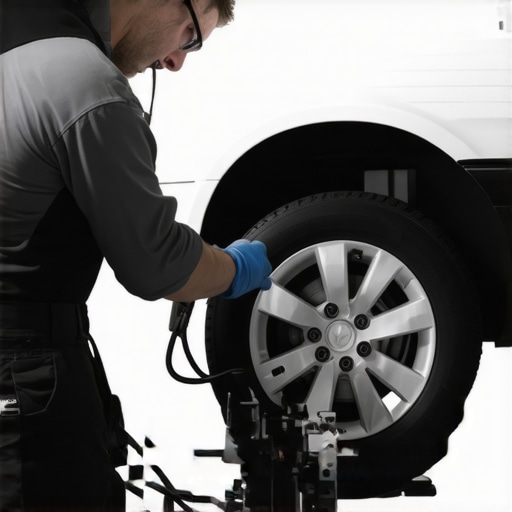
Beyond the axles, the steering rack itself can become a secondary amplifier for vibrations. If the internal bushings of the rack and pinion have degraded, the steering column loses its ability to isolate the driver from the natural road forces. Furthermore, hydraulic inconsistency within the power steering pump can lead to ‘shudder’ during high-pressure demands. Many owners ignore their power steering maintenance until it is too late, yet it remains the most overlooked fluid in your car that causes sudden steering failure and contributes to poor road feel at highway speeds.
Could Your Power Steering System Actually Amplify Small Vibrations?
A common misconception is that the steering system only reacts to input; in reality, it is a closed-loop hydraulic or electronic circuit that can suffer from ‘hunting’ or oscillations if there is a leak or air intrusion. Air bubbles in the hydraulic lines act as tiny springs, compressing and expanding, which allows the wheels to micro-oscillate independently of the driver’s grip. Professional standards from the National Institute for Automotive Service Excellence (ASE) emphasize that steering system integrity is paramount for high-speed safety, as any latency in steering response can turn a minor shimmy into a loss of control during emergency maneuvers.
Thermal Expansion and the Mystery of Heat-Induced Shudder
Occasionally, a vibration only appears after twenty minutes of driving. This is a classic indicator of a braking system issue rather than a balance problem. A sticking caliper piston can cause the brake pads to maintain light, constant contact with the rotor. This creates localized heat that eventually warps the rotor temporarily as it expands. You can often detect this early by identifying the specific smell that tells you your brakes are dragging. Once the metal cools, the shimmy may disappear, leading to a frustratingly intermittent diagnostic puzzle.
To prevent these heat-related distortions, high-performance maintenance is essential. Implementing the one maintenance move that doubles the life of your rotors ensures that your braking surfaces stay true and dissipate heat evenly, preventing the harmonic feedback that mimics a bad tire. If you want to keep your vehicle operating at peak precision, take a moment to unlock your car’s potential with expert auto repair tips for 2025 to stay ahead of common mechanical failures.
Stop Chasing Ghosts and Test for Radial Force Variation
Even if a tire technician reports a ‘zero-zero’ balance on a standard spin balancer, your steering wheel might still dance in your hands. This discrepancy occurs because traditional balancers do not account for Radial Force Variation (RFV), which is essentially the ‘stiffness’ of the tire as it rolls under the weight of the vehicle. A tire may be perfectly balanced in terms of weight distribution but possess an internal structural inconsistency or a ‘hard spot’ in the sidewall. When this hard spot hits the pavement, it acts like a speed bump, creating a vertical force that mimics an out-of-balance condition. Professionals utilize equipment like the Hunter Road Force® Elite, which applies a load roller to the tire to simulate the force of the road. According to the Tire Industry Association (TIA), addressing RFV is the only way to eliminate vibrations caused by internal belt non-uniformity that a standard spin balance simply cannot detect.
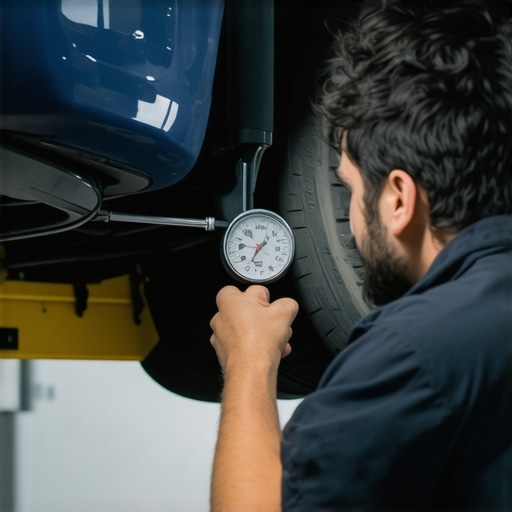
When you encounter a shimmy that defies multiple balance attempts, it is time to look at the ‘runout’ of the wheel and tire assembly. Runout is the degree to which a wheel or tire is out of round. A bent rim—often the result of a mid-winter pothole—can be balanced with weights, but the physical eccentricity of the circle will still cause a rhythmic hop at 60 mph. If you suspect your rims are the culprit, you should investigate the truth about road force balancing vs standard spins to see why your current shop might be missing the mark. This level of auto repair requires a dial indicator to measure the thousandths of an inch in deviation, ensuring the wheel is perfectly concentric to the hub.
Why Does My Steering Wheel Shudder Only When I Lightly Accelerate?
This is one of the most nuanced queries in vehicle diagnostics because it points away from the wheels and toward the drivetrain. If the vibration occurs specifically under light load—such as maintaining 55 mph on a slight incline—you may be experiencing a Torque Converter Clutch (TCC) shudder. Inside modern automatic transmissions, the torque converter ‘locks up’ to improve fuel economy. If the transmission fluid is degraded or the internal friction lining is worn, the clutch may slip and grab rapidly, sending a vibration through the entire chassis that feels remarkably like a tire balance issue. Before you replace your tires, learn the symptoms of transmission shudder that look like bad tires to avoid misdiagnosing a multi-thousand-dollar transmission failure as a simple rubber issue.
Hub-Centric vs. Lug-Centric: The Tiny Gap That Ruined Your Drive
Many drivers upgrade to aftermarket wheels for a personalized look, only to find an unsolvable vibration immediately after installation. The secret often lies in the hub-centric ring. Most factory wheels are ‘hub-centric,’ meaning the center hole of the wheel fits perfectly over the vehicle’s hub, centering the wheel with surgical precision. Many aftermarket wheels have larger center bores to fit various car models, making them ‘lug-centric.’ If you do not use a hub-centric ring to bridge that microscopic gap, the wheel will be centered only by the lug nuts. Even a fraction of a millimeter of offset will create a massive vibration at freeway speeds. This is why maintaining car service standards is vital; always verify that your wheels are seated correctly against the mounting surface and that all corrosion has been cleared from the hub face.
Can a Loose Steering Rack Bushing Mimic a Bad Tire Balance?
While we often focus on the rotating mass, the hardware holding those components in place is just as critical. The steering rack is bolted to the subframe via rubber or polyurethane bushings. Over time, these bushings can soften due to oil leaks or simple age, allowing the entire rack to shift laterally during high-frequency inputs. This ‘play’ allows the wheels to oscillate back and forth, a movement that is amplified by the power steering system. If you feel a ‘darting’ sensation along with your shimmy, your vehicle diagnostics should include a physical inspection of the rack mounting points. If the rack is moving even slightly, no amount of wheel balancing will ever provide a smooth ride, as the steering geometry itself is constantly changing under load.
When Aerodynamics Fight Your Suspension Geometry
While mechanical failures are the usual suspects, the role of high-speed aerodynamics in steering stability remains a critical frontier for advanced vehicle diagnostics. At freeway velocities, the air moving beneath your chassis acts as a dynamic force; if the front air dam or plastic undertrays are loose, damaged, or missing, air can stack up under the vehicle, creating significant lift. This reduction in downward pressure effectively lightens the front end, allowing minor tire imbalances—which might be successfully suppressed at lower speeds—to manifest as a violent, rhythmic shimmy. This is particularly prevalent in modern vehicles with high ground clearance or modified suspension heights where the laminar flow is disrupted and the tires lose their firmest contact with the pavement.

Does Your Vehicle’s Software Mistake a Vibration for a Loss of Traction?
In the era of Drive-by-Wire and integrated safety suites, a physical vibration can sometimes trigger an unintended electronic response. Modern Electronic Stability Control (ESC) and Traction Control Systems (TCS) rely on high-frequency data from wheel speed sensors to detect slip. If a mechanical shudder matches the sampling rate or ‘aliasing’ frequency of these sensors, the onboard computer may interpret the oscillation as a loss of traction. This can cause the system to micro-apply the brakes or adjust engine torque in a rapid, rhythmic cycle, effectively creating a digital vibration that overlays and amplifies the original mechanical fault. Resolving this requires a technician who understands how to interface with the ECU to monitor live sensor data during the exact speed range where the fault occurs, ensuring the fix isn’t just mechanical but also systemic.
The Invisible Grip of Tire Flat-Spotting and Cold Weather Squirm
Not all vibrations are caused by permanent structural defects. High-performance tires with high nylon content in their belts are prone to temporary flat-spotting, especially if the vehicle sits overnight in colder climates. When you first hit the highway, the flat spot creates a rhythmic thump that perfectly mimics a bad balance. As the tire warms up through friction, the rubber regains its intended shape, and the shimmy vanishes. However, as tires age, the process of vulcanization makes the rubber increasingly brittle and less compliant. This leads to a loss of uniformity in the tire’s carcass that no amount of balancing can fix. According to safety data and technical bulletins from the National Highway Traffic Safety Administration (NHTSA), aging tires are a leading contributor to steering instability and should be inspected for internal belt separation even if the tread depth appears legal.
Unsprung Weight and the Penalty of Heavy Aftermarket Rims
When enthusiasts swap factory wheels for larger, heavier aftermarket versions, they often overlook the impact of unsprung weight on the suspension’s natural frequency. The relationship between the spring rate and the unsprung mass is a delicate balance designed by factory engineers. A heavier wheel-and-tire combo carries more inertia; when it hits a bump or has a slight imbalance, the shock absorber has a much harder time controlling that momentum. This can shift the harmonic sweet spot of the vehicle into lower speed ranges, making the car feel nervous and jittery. In extreme cases, the dampeners can experience cavitation—a condition where hydraulic fluid foams under the stress—resulting in a total loss of control over the wheel’s vertical movement. If you have recently upgraded your wheels, it is imperative to use auto repair services that specialize in high-performance fitments to ensure your dampening rates are still adequate for the increased mass. If you are struggling with a persistent high-speed shake, you must book a professional diagnostic session to isolate whether your suspension is simply being overwhelmed by the weight of your wheels or if a deeper mechanical failure is at play.
Advanced Tactics for Solving High-Speed Vibrations
Look Beyond the Static Balance Weights
Many drivers are misled by a perfect balance report from a standard shop. In reality, vehicle diagnostics must account for Road Force Variation—the internal stiffness of the tire sidewall. A tire can be balanced in weight but still hop like a square wheel under load. If you are chasing a ghost, your next step is a diagnostic tool that simulates road pressure. This goes hand-in-hand with the hidden world of vehicle diagnostics where mechanical precision meets electronic data.
How Temperature Shifts Unmask Hidden Rotor Warpage
If your shimmy only starts after miles of driving, you likely have a sticky brake caliper causing thermal expansion in the rotor. This isn’t a balance issue; it’s a heat dissipation failure. You should also verify your brake fluid health, as learning the difference between a soft brake pedal and a spongy one can alert you to boiling fluid that often accompanies these high-heat scenarios.
#IMAGE_PLACEHOLDER_E#
The Electronic Stability Control Feedback Loop Trap
Modern cars can occasionally hallucinate a vibration. If your wheel speed sensors are dirty or faulty, the Traction Control System might try to correct a non-existent slip by pulsing the brakes at a frequency that matches your highway speed. This creates a digital shudder that mimics a mechanical one. If you have also noticed engine hesitation, you may need to learn how to diagnose a misfire without a code reader to ensure your sensors are sending clean signals to the ECU.
Essential Documentation for Master Technicians
Hunter Engineering Knowledge Base
This is the gold standard for documentation on Radial Force Variation. It provides the exact tolerances for what constitutes a round tire under load, helping you avoid the spin-balance trap that plagues most auto repair experiences.
Society of Automotive Engineers (SAE) Technical Papers
For those interested in the physics of harmonic resonance, searching SAE archives for suspension dampening frequency provides the engineering context for why 55-65 mph is the most common vibration window. This technical depth is often required for transmission failures decoded through forensic vibration analysis.
ASE L1 Advanced Diagnostic Training
The National Institute for Automotive Service Excellence provides specialized training on how vehicle computers interact with mechanical systems. These resources are invaluable for distinguishing between a physical tire vibration and a computer-induced braking pulse.
Closing the Loop on Steering Precision
Addressing a steering wheel shimmy is a masterclass in systematic vehicle diagnostics. It requires moving past the shotgun approach of replacing tires and actually measuring the runout, road force, and harmonic frequency of the drivetrain. Whether the culprit is a microscopic hub-centric gap or a complex TCC shudder, the solution is always found in precision measurement over guesswork. If you are ready to stop the shaking and restore your vehicle’s integrity, find a professional car service and book a professional diagnostic session today to isolate the root cause once and for all.