Why That Rhythmic Clicking Signals Imminent Axle Failure
In the realm of advanced vehicle diagnostics, few acoustic signatures are as definitive as the metallic clicking associated with a failing Constant Velocity (CV) joint. These precision-engineered components are responsible for transferring torque from the transmission to the drive wheels while accommodating the complex angles of steering and suspension travel. When the protective rubber boot tears, molybdenum grease escapes and road debris enters, leading to accelerated wear of the internal ball bearings and races. This mechanical degradation manifests as a rhythmic popping or clicking sound that synchronizes with wheel rotation speed, particularly during low-speed maneuvers where steering angles are maximized.
Ignoring these early auditory warnings often leads to a complete mechanical shear. If the joint fails entirely while in motion, the axle will spin freely, resulting in an immediate loss of power to the wheels. This is why seasoned experts prioritize identifying these signs early. For a deeper look at the risks involved, you should learn how to tell if your CV axle is about to snap before a minor clicking becomes a catastrophic roadside emergency.
Does the Noise Change When You Reverse While Turning?
One of the most effective ways to isolate a failing outer CV joint without specialized equipment is the reverse-circle test. By shifting into reverse, cutting the steering wheel sharply to one side, and moving in a circle, you place a unique load on the joint’s internal tracks. If the clicking becomes more pronounced or sharper in tone, it confirms that the tolerances within the joint housing have been exceeded. This diagnostic technique is a staple in professional auto repair for distinguishing between simple suspension bush noise and true drivetrain failure.
According to research published by SAE International, the integrity of drivetrain components like CV joints is critical for maintaining vehicle stability under high-torque loads. Variations in acoustic frequency during these tests provide professional technicians with the data needed to determine if the car service requires a simple boot replacement or a complete half-shaft assembly swap.
Differentiate Between Hub Bearing Groans and CV Joint Pops
Accurate vehicle diagnostics require distinguishing between different rotational sounds. While a CV joint produces a distinct, intermittent ‘pop’ or ‘click’ during a turn, a failing wheel bearing typically generates a constant low-frequency hum or growl that changes pitch with vehicle speed, regardless of steering angle. Understanding these nuances is essential for effective auto repair, as misdiagnosing a drivetrain issue can lead to unnecessary labor and parts costs. If you suspect the issue might be related to the wheel assembly rather than the axle, you can learn how to diagnose a bad wheel bearing using only your ears to narrow down the culprit.
Professional-grade car service doesn’t just stop at identifying the sound; it involves inspecting the kinetic feedback through the steering wheel. A shudder during acceleration, often confused with a transmission slip, can actually point to a failing inner CV joint. If you are experiencing shifting irregularities alongside these sounds, consider exploring our guide on transmission failures decoded to ensure a comprehensive repair strategy. Don’t let a small mechanical rattle turn into a major overhaul—contact our team today to schedule a professional inspection.
Stop Blaming the Engine for Every Highway Shudder
Inner CV joints, or ‘plunge’ joints, are frequently overlooked because their symptoms often mimic engine misfires or transmission imbalances. When the rollers inside an inner joint develop pits or ‘pockets’ in the housing due to metal fatigue, the axle can no longer move smoothly through its telescopic range. This results in a violent side-to-side shudder specifically during heavy acceleration or when the vehicle is under load, such as climbing a steep grade. If you’ve noticed your vehicle struggling in these scenarios, you might find the answer in our analysis of the surprising reason your transmission overheats while driving uphill, as drivetrain resistance often generates excessive heat. Unlike a wheel imbalance that persists at steady speeds, an inner CV joint vibration typically disappears the moment you lift your foot off the gas, providing a critical clue for accurate vehicle diagnostics.
Why Does Your Car Pull Toward the Curb Only Under Heavy Load?
Many drivers mistake a sudden veer during throttle application for a simple alignment issue, but a seizing axle joint is often the primary suspect. If the internal bearings of one axle provide more resistance than the other, the differential will inadvertently send more torque to the ‘easier’ side, causing a phenomenon known as torque steer. This is a common complication in front-wheel-drive platforms with unequal length half-shafts. You can read more about this specific behavior in our guide on why your car pulls to the left during hard acceleration to differentiate between a simple alignment fix and a necessary auto repair. An expert technician knows that if the pull is constant, it is likely alignment; however, if it only occurs under power, the axle or its carrier bearing is failing.
The Dangerous Myth of Permanent Drivetrain Lubrication
Modern manufacturers often market CV joints and sealed gearboxes as ‘lubricated for life,’ but real-world conditions tell a different story. According to technical insights from GKN Automotive, the world’s leading manufacturer of driveline components, the high-pressure additives in molybdenum grease eventually succumb to thermal degradation through thousands of heat cycles. Once the grease loses its viscosity or becomes contaminated with microscopic metal particulates, metal-on-metal contact is inevitable, regardless of whether the protective boot is intact. This mirrors the misconceptions found in other areas of car care; for example, the truth about lifetime transmission fluid reveals that ‘forever’ is often a marketing term rather than a mechanical reality. Regular car service should involve a tactile inspection of the axle boots for any signs of swelling or micro-cracking that suggest grease contamination.
Effective auto repair requires a holistic view of the rotating assembly. If you’ve eliminated the CV axles but still experience a rhythmic drone, it is time to look at the hub assembly. It is vital to learn how to identify a failing wheel bearing before the hub seizes up, as a seized bearing can cause the wheel to lock entirely at highway speeds. We invite you to share your diagnostic experiences in the comments below or explore the hidden world of vehicle diagnostics to master the art of professional-grade car maintenance.
Lift Kits and Lowering Springs Can Kill Your Axles Early
While altering a vehicle’s ride height is a popular modification, it fundamentally shifts the operational geometry of the drivetrain. CV axles are engineered to operate within a specific angular range; however, when a vehicle is lifted or lowered significantly, the axles are forced to work at extreme angles that accelerate wear on the internal races. This constant stress doesn’t just tear the boots—it creates excessive heat within the tripod joint, leading to a phenomenon known as ‘binding.’ If you’ve modified your suspension and notice a vibration that wasn’t there before, your vehicle diagnostics should start with checking the axle plunge depth. For those dealing with truck-specific setups, our guide on is it safe to drive with a bad cv axle covers the risks of high-angle failure in detail.

Can a Seizing CV Joint Actually Destroy Your Differential?
Many drivers assume the damage from a failing axle is contained within the shaft itself, but the reality is more expensive. A seizing inner CV joint creates significant lateral thrust forces that are transmitted directly into the transmission or transaxle. These forces put immense pressure on the output shaft seals and the differential carrier bearings, often leading to fluid leaks or, in extreme cases, internal gear misalignment. According to technical documentation from Dana Incorporated, maintaining proper driveline alignment is essential to prevent secondary vibration-induced failures in the gearset. If you see red or brown fluid weeping from where the axle meets the gearbox, you aren’t just looking at an auto repair for a shaft—you are looking at potential transmission surgery.
The Hidden Danger of ‘New’ Cheap Aftermarket Axles
When it comes to car service, the temptation to save money on parts is strong, but ‘new’ does not always mean ‘balanced.’ Many budget-grade aftermarket axles use solid steel shafts instead of the hollow, frequency-tuned shafts found in OEM (Original Equipment Manufacturer) units. This difference in mass and rigidity often introduces harmonic vibrations at specific highway speeds, typically between 55 and 70 mph. This ‘hollow vs. solid’ discrepancy is a common frustration in professional vehicle diagnostics, where a technician replaces a clicking axle only to introduce a new, persistent shudder. To ensure your auto repair is successful the first time, always verify the weight and diameter of the replacement part against the original. If you are struggling with a mystery shake after a repair, our checklist for common mistakes during transmission repair might help you identify if a low-quality component is the culprit.
Thermal Expansion and the Mystery of the ‘Hot-Only’ Vibration
Some drivetrain issues only manifest after thirty minutes of highway driving, leaving many DIY mechanics baffled. This occurs because metal components and the specialized molybdenum grease inside the CV joint expand as they reach operating temperatures. A joint that feels tight and functional when cold may develop enough clearance when hot to allow the internal rollers to ‘walk’ out of their designated tracks. This heat-induced instability mimics a tire balance issue, yet it disappears as soon as the vehicle cools down. Professional auto repair shops often use infrared thermometers to check for temperature deltas between the left and right inner joints after a test drive. An unusually hot joint housing is a ‘smoking gun’ for internal friction that hasn’t started clicking yet but is on the verge of mechanical seizure.
Damaged Axle Tone Rings Will Confuse Your ABS Sensors
Sophisticated vehicle diagnostics often reveal that an illuminated ABS light isn’t a sensor failure at all, but a structural compromise of the CV axle itself. Many modern axles feature an integrated tone ring—a precision-machined toothed gear that passes in front of the wheel speed sensor. In regions prone to road salt, ‘rust-jacking’ can occur, where corrosion builds up underneath this ring and forces it to expand until it cracks or becomes eccentric. This mechanical distortion disrupts the magnetic pulse frequency, leading the car’s ECU to believe a wheel is locking up during normal deceleration. If you experience an intrusive brake pedal pulsation on perfectly dry pavement just before coming to a complete stop, your auto repair strategy should shift toward inspecting the physical integrity of the axle’s serrated rings. These micro-fractures are often invisible unless the axle is rotated slowly by hand during a professional car service.
Worn Engine Mounts Are Quietly Snapping Your Axles
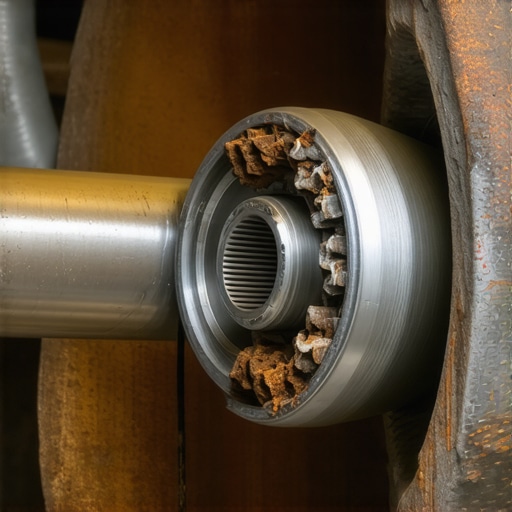
Experienced technicians understand that the drivetrain is a holistic system where the failure of a static component can destroy a dynamic one. When engine or transmission mounts lose their dampening properties or begin to sag, the entire powertrain shifts away from its factory-set orientation. This seemingly minor displacement fundamentally alters the plunge angle of the inner CV joints, forcing the internal tripod bearings to operate at the very edge of their designed travel. Over time, this geometric misalignment causes the bearings to hammer against the side of the housing, creating a violent rhythmic vibration often misdiagnosed as an imbalanced tire. A comprehensive car service must include a leverage test of the mounts; failing to do so means a newly installed axle will likely suffer the same fate within months due to the persistent and excessive torsional strain.
Is it possible for a bad CV joint to trigger a false traction control event?
This is where vehicle diagnostics enter the realm of digital complexity. High-frequency vibrations from a severely pitted inner CV joint can be so intense that they resonate through the steering knuckle and interfere with the accelerometer data in the Stability Control Module. The vehicle’s computer may interpret this mechanical shudder as wheel hop or a sudden loss of traction, causing it to prematurely cut engine power or apply individual brakes to correct a phantom skid. This ‘ghost’ intervention can be particularly jarring during highway merging or heavy acceleration. According to drivetrain engineering research from SKF, even a few microns of tolerance loss in the internal ball tracks can generate enough harmonic interference to disrupt these sensitive electronic feedback loops, proving that mechanical wear and software logic are inextricably linked.
Precision Balancing Over Budget Castings
The torsional rigidity and weight distribution of a half-shaft are critical for maintaining cabin refinement at high speeds. Premium-grade axles are frequently fitted with dynamic dampers—tuned rubber-and-steel weights clamped to the center of the shaft—to counteract the natural resonant frequency of the rotating assembly. In contrast, many budget-friendly auto repair options omit these dampers to reduce manufacturing overhead, leading to a ‘hollow’ ringing noise or a fine-grain vibration that only manifests within specific RPM windows. When scheduling your next car service, insist on components that match the exact dampening specifications of your original equipment. Do not settle for a part that solves the clicking sound but introduces a persistent floorboard drone. Reach out to our master technicians today to ensure your drivetrain is balanced to the highest industry standards and your vehicle’s electronic safety systems remain uncompromised.
Expert Insights & Advanced Considerations
Watch Out for Axle Plunge Depth on Lowered Cars
When you drop a vehicle’s ride height, the tripod joint sits deeper in its housing than the factory intended. This displacement doesn’t just increase operating temperatures; it can cause the joint to bottom out during hard cornering, sending mechanical shockwaves through the transmission and potentially cracking the differential casing. High-level vehicle diagnostics involves measuring this clearance before finalizing any suspension geometry changes. If you have modified your ride, you should check our guide on why your steering wheel is off center after a repair to ensure your geometry is still within safe limits.
Why Standard Lithium Grease Fails CV Joints
Using generic grease is a death sentence for high-torque axles. Constant velocity joints require specialized molybdenum disulfide additives to handle the extreme sliding pressures. Professionals performing an auto repair know that even if a boot looks fine, the chemical breakdown of the grease over a decade significantly reduces its load-bearing capacity. This leading to microscopic pitting that eventually manifests as the dreaded clicking sound. For those looking to extend component life, mastering top auto repair techniques every car owner should know is the first step in proactive maintenance.
Torque Steer Isn’t Always an Alignment Issue
If your vehicle pulls aggressively to one side during wide-open throttle, don’t rush to the alignment rack. A partially seizing axle creates enough internal resistance to fool the differential into biasing torque to the opposite wheel. This is a subtle nuance of car service that separates master technicians from part-swappers. If you are experiencing this, read our deep dive on why your car pulls to the left during hard acceleration to differentiate between a simple toe adjustment and a failing drivetrain component.
Use a Chassis Ear to Pinpoint the Correct Side
Acoustic shadowing can make a left-side clicking sound like it is coming from the right. Advanced vehicle diagnostics utilize multi-channel wireless microphones, often called chassis ears, clipped to each control arm. This allows the technician to hear exactly which joint is complaining under load, preventing the costly mistake of replacing the wrong side. We discuss these types of high-tech solutions in our overview of the hidden world of vehicle diagnostics.
Curated Expert Resources
SAE International Technical Papers
This is the gold standard for driveline engineering, providing peer-reviewed data on torque limits and material fatigue cycles for CV joints.
GKN Automotive Technical Portal
As the primary OEM supplier for many global brands, their technical bulletins offer the most accurate specifications for axle plunge and grease viscosity requirements.
Reliable Auto Care Transmission Decode
For a comprehensive look at how axle vibrations can be mistaken for internal gearbox issues, our resource on transmission failures decoded is essential reading.
SKF Vehicle Aftermarket Training
Provides deep-dive webinars on bearing tolerances and the impact of road contamination on modern sealed axle units.
Final Expert Perspective
Mastery of drivetrain health requires more than just listening for a metallic click; it demands an understanding of how suspension geometry, grease chemistry, and electronic sensors interact. Whether you are dealing with a mystery shudder or a persistent pull, accurate vehicle diagnostics are the only way to avoid the cycle of unnecessary parts replacement. By prioritizing high-quality components and understanding the secondary effects on your transmission, you ensure your auto repair efforts actually solve the root cause. If you are unsure about a sound or vibration, we invite you to contact us today to schedule a professional car service consultation and keep your vehicle on the road for the long haul.