The Thrust Angle Trap: Why Your Car Crabs After a Professional Repair
A steering wheel that fails to return to the twelve-o’clock position after a significant auto repair is rarely a simple error in judgment; it is often a symptom of a neglected thrust angle or an incomplete suspension synchronization. When technicians perform a car service involving subframe removal or steering rack replacement, the relationship between the front wheels and the rear axle’s centerline can shift. This geometric misalignment, known as ‘crabbing,’ forces the driver to counter-steer just to maintain a straight path, even if the front toe-in specs appear green on a standard alignment machine.
Achieving true centeredness requires more than just a quick wrench turn. High-level car service must account for the vehicle’s total alignment, ensuring that the steering wheel is physically locked at the center before any tie-rod adjustments begin. If you find yourself in this situation, it is worth investigating why your car pulls to the right even after an alignment to rule out underlying tire radial pull or unaddressed caster imbalances.
Modern Steering Racks Demand Digital Relearning
In the era of Electronic Power Steering (EPS), a crooked wheel is no longer just a mechanical nuisance—it is a data conflict. Advanced vehicle diagnostics reveal that most modern vehicles rely on a Steering Angle Sensor (SAS) to feed data to the Electronic Stability Control (ESC) and Advanced Driver Assistance Systems (ADAS). If the steering wheel is off-center by even a few degrees, the onboard computer may initiate a ‘drag compensation’ algorithm, thinking the car is perpetually in a turn, which can lead to premature wear on the transmission or erratic braking behavior.
Expert technicians utilize specialized vehicle diagnostics tools to perform an SAS reset, ensuring the computer’s ‘zero point’ matches the physical orientation of the steering rack. Without this digital handshake, even the most precise mechanical alignment will feel ‘vague’ or artificially heavy. For a deeper dive into how these systems interact, you can explore the hidden world of vehicle diagnostics.
Can an Intensive Transmission Repair Accidentally Compromise Your Steering Alignment?
It is a common question in professional forums: why would a gearbox issue affect the steering wheel? The answer lies in the structural architecture of front-wheel-drive and many all-wheel-drive vehicles. During a transmission removal, the engine subframe is often lowered or partially detached. If the subframe is not reinstalled in its exact original footprint, the entire suspension geometry—including the steering rack mounting points—shifts. This underscores the necessity of using subframe alignment pins during reassembly to maintain factory tolerances. According to the Car Care Council, even minor shifts in suspension mounting points can drastically alter the vehicle’s handling characteristics and safety profile.
If you have recently undergone major powertrain work, consider a comprehensive diagnostic check to ensure all structural components are torqued and aligned to spec. Are you concerned about your vehicle’s post-repair handling? Contibute your experience or seek a professional consultation to ensure your vehicle remains safe on the road.
Look Deep Into the Suspension Bushing Health Before Blaming the Rack
Rubber fatigue in control arm bushings is the silent killer of a precise steering feel. Even if a technician sets the static alignment to perfection on the rack, soft or torn bushings allow the suspension geometry to deflect under the dynamic loads of actual driving. This is why a car might track straight at 20 mph but start to drift as aerodynamic drag and road friction increase at highway speeds. When these ‘soft’ components fail, the steering rack essentially floats, making it impossible to maintain a fixed center point. If you hear a thud or pop during these transitions, it is worth checking why your car makes a clunking noise when you go over speed bumps to identify which component has finally given up.
Does Your Steering Wheel Wander Only Under Hard Acceleration?
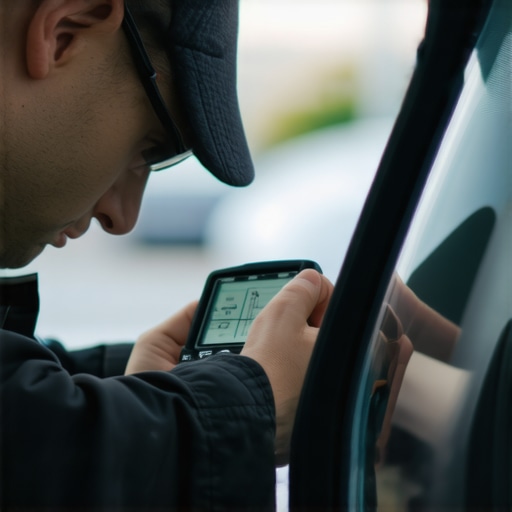
If the wheel stays centered while coasting but jerks to the left or right the moment you hit the throttle, you are not dealing with a traditional alignment issue. This phenomenon, often linked to worn engine or transmission mounts, allows the entire powertrain to tilt, altering the angle of the CV axles. Professional transmission troubles often manifest as this specific type of instability. Experts at SAE International note that driveline angles must remain within strict tolerances to prevent ‘torque steer’ from overpowering the driver’s input. This shift can be so subtle that it bypasses standard diagnostic protocols, requiring a technician to inspect the load-bearing mounts while the vehicle is under simulated torque.
The Hidden Saboteur: How Uneven Tire Wear Mimics a Bad Alignment
We often overlook the tires themselves as a source of steering offset. If a car was driven for thousands of miles with a bad alignment, the tires likely developed an uneven wear pattern known as ‘coning.’ Once the mechanical components are finally fixed, these coned tires will still want to roll in a circle rather than a straight line. This ‘radial pull’ can trick even an experienced mechanic into thinking the steering rack is indexed incorrectly. A quick way to diagnose this is to swap the front two tires; if the steering wheel now cocks in the opposite direction, the tires—not the repair—are the culprit. Before investing in more parts, learn how to tell if your struts are shot without a mechanic to see if a bounce-test reveals deeper suspension damping issues that could be contributing to rapid tire degradation.
The Critical Role of Intermediate Shaft Indexing
The physical connection between the steering wheel and the gear—the steering column—contains universal joints that can wear or become improperly indexed during a steering rack replacement. If a technician fails to lock the steering wheel in place before disconnecting the rack, the ‘clock spring’ inside the steering column can be over-rotated and snapped, leading to an immediate airbag warning light. This delicate balance of mechanical and electrical components is why high-end vehicle diagnostics are mandatory for any post-repair validation. Ensuring the intermediate shaft is seated perfectly on the rack’s input splines is a precision task that defines the difference between a ‘good enough’ repair and a factory-spec restoration. Have you ever left a shop only to realize your wheel is tilted? Share your story in the comments or tell us which diagnostic step finally solved your steering headache.
Stop Chasing Ghosts With High-Definition Road Force Balancing
Sometimes, the culprit behind a crooked steering wheel isn’t the alignment rack at all, but the microscopic variations in tire density. Even after a standard auto repair involving new tires or suspension components, a car can exhibit a persistent pull or off-center wheel. Standard balancers only measure weight distribution; they do not account for ‘radial force variation.’ Road force balancing mimics the weight of the vehicle on the tire, identifying hard and soft spots in the rubber. If the high-point of the tire’s radial force variation isn’t matched to the low-point of the wheel rim, the resulting ‘road force pull’ will force the driver to hold the wheel off-center just to maintain a straight line.
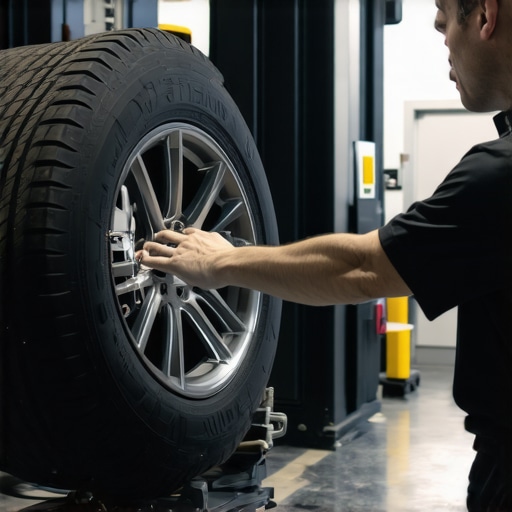
Expert technicians utilize this vehicle diagnostics technique to eliminate ‘tire-induced’ steering issues that an alignment machine simply cannot see. By indexing the tire to the rim, you reduce the vibration and lateral force that mimic a mechanical misalignment. This level of precision is the gold standard for high-performance car service, ensuring that the steering feel is as crisp as it was on the showroom floor. If you’ve had multiple alignments and the wheel is still crooked, it is time to demand a road force diagnostic.
Why Does My Steering Feel Spongy or Vague After a Hydraulic System Service?
While electronic systems are becoming the norm, millions of vehicles still rely on hydraulic power-assisted steering. A common oversight during a transmission or engine service is the improper bleeding of the power steering pump. Air trapped in the lines—a condition known as cavitation—creates compressible pockets within the hydraulic fluid. This causes a delayed reaction between the steering wheel input and the movement of the rack, often resulting in a wheel that ‘settles’ into an off-center position depending on which way you last turned. According to technical training standards from the National Institute for Automotive Service Excellence (ASE), failing to cycle the steering lock-to-lock during a fluid exchange can lead to pump overheating and inconsistent pressure regulation.
Tighten the Slack with Precision Rack Backlash Adjustment
In high-mileage vehicles, the physical gears inside the steering rack—the rack and the pinion—can develop a ‘dead zone.’ This is often mistaken for a bad alignment. A skilled auto repair specialist knows that many steering racks feature a backlash adjustment screw designed to take up this internal play. If this ‘pre-load’ is not set correctly after a steering rack rebuild or replacement, the wheel will have a few degrees of free-play. This slop makes it impossible for the wheel to return to a perfect twelve-o’clock position every time. However, over-tightening this screw is equally dangerous, as it can cause the steering to bind, preventing the wheel from ‘self-centering’ after a turn. Is your steering wheel failing to return to center on its own? This subtle mechanical adjustment might be the missing piece of your diagnostic puzzle.
The Sway Bar Link Connection You Probably Ignored
We often think of sway bars as purely for body roll, but they play a critical role in ‘loading’ the suspension. If a technician replaces a transmission and has to disconnect the sway bar links, failing to tighten them while the vehicle is at ‘ride height’ can introduce a pre-load into the suspension. If one side of the sway bar is under more tension than the other, it can physically pull the chassis to one side, necessitating a steering correction. This is why a professional car service always involves a final torque-down on a four-post lift rather than a two-post frame lift. Ensuring the suspension is ‘settled’ before the final bolts are tightened prevents the geometric ‘ghost pulls’ that baffle less-experienced mechanics.
Have you noticed your steering wheel shifting positions after a major mechanical overhaul? Sharing your specific vehicle symptoms can help our community of experts pinpoint whether you’re dealing with a hydraulic glitch or a structural pre-load issue. Let us know what you’ve observed during your post-repair test drive.
How Aerodynamic Lift at Highway Speeds Reveals Hidden Steering Deflection
A vehicle that feels perfectly centered at 30 mph but develops a crooked wheel at 70 mph is experiencing dynamic deflection. As aerodynamic lift reduces the downward force on the front tires, any slight imbalance in the steering rack’s mounting bushings or the subframe’s alignment becomes magnified. Under these conditions, the ‘thrust line’ of the car changes as the chassis rises slightly.
When High-Speed Airflow Exposes Low-Speed Mechanical Flaws
A vehicle that feels perfectly centered at 30 mph but develops a crooked wheel at 70 mph is experiencing dynamic deflection. As aerodynamic lift reduces the downward force on the front tires, any slight imbalance in the steering rack’s mounting bushings or the subframe’s alignment becomes magnified. Under these conditions, the ‘thrust line’ of the car changes as the chassis rises slightly. Professional auto repair technicians often find that this high-speed shift is linked to ‘soft’ subframe bushings that have lost their Shore hardness over time. While the car sits static on an alignment rack, everything appears perfect, but once the wind speed exerts lateral force on the body, the subframe shifts just enough to pull the steering wheel off-center. This is why a high-quality car service must include a road test at varying speeds to ensure the steering rack remains indexed under load.
Does Your Lane-Keeping System Conflict with Your New Mechanical Alignment?
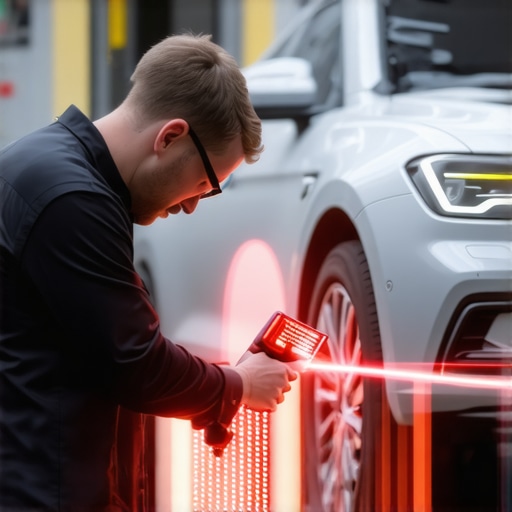
With the integration of Advanced Driver Assistance Systems (ADAS), a mechanical alignment is now only half the battle. If your vehicle features Lane Keep Assist (LKA) or Lane Centering, the car uses a front-facing camera to identify road markings. If the vehicle diagnostics system was not recalibrated after your steering rack or transmission service, the computer might still be using the ‘old’ zero-point coordinates. This results in a digital-mechanical tug-of-war where the car attempts to ‘correct’ its path, causing the steering wheel to feel heavy or jittery as it fights your manual input. According to the technical experts at I-CAR, failure to perform a static or dynamic ADAS calibration after suspension work can lead to unpredictable braking or steering interventions, making it a critical safety step in modern auto repair.
Why Heat Expansion Might Be Moving Your Steering Marks
In high-performance vehicles or those with mixed-material chassis, thermal expansion plays a surprising role in steering precision. When a vehicle undergoes an intensive car service, such as a transmission rebuild, it often involves disturbing the aluminum control arms and steel subframe connectors. Aluminum expands at a different rate than steel. If the alignment is performed on a ‘cold’ car that has just sat in a bay, the geometry can shift by several arc-minutes once the engine heat and road friction bring the suspension up to operating temperature. True experts in vehicle diagnostics often perform a ‘pre-conditioning’ drive to stabilize these temperatures before locking in the final toe settings. This ensures that the steering wheel remains centered regardless of whether you are five minutes or five hours into a road trip.
Address the Steering Damper Before Condemning the Rack
In many trucks, SUVs, and luxury sedans, a steering stabilizer or damper is used to absorb road shocks. If this component has internal valving failure, it can exert an asymmetrical force on the steering linkage. This ‘internal leak’ creates a hydraulic bias that forces the driver to hold the wheel slightly to one side to maintain a straight line. Often misdiagnosed as a bad alignment or a faulty transmission mount, a failing damper is a purely mechanical resistance issue. If your wheel feels ‘lazy’ when returning to center after a left turn but ‘snappy’ after a right turn, the stabilizer is likely the culprit. Have you experienced a steering wheel that seems to have a mind of its own after a major mechanical overhaul? Contact our specialists today to schedule a high-definition diagnostic review and reclaim your driving precision.
Expert Insights & Advanced Considerations
Subframe Alignment Pins Aren’t Optional
In many high-performance and front-wheel-drive platforms, the engine subframe provides the hard points for the steering rack. If a technician ignores the use of alignment pins during a transmission replacement, the subframe can sit slightly askew. This ‘shifted foundation’ makes it physically impossible for the steering rack to return to a natural center, regardless of how many times the tie rods are adjusted.
Electronic Stability Systems Need a Zero Point Reset
Modern vehicle diagnostics teach us that the Steering Angle Sensor (SAS) is the brain of your car’s stability control. If you have had major suspension work and the wheel feels ‘jittery’ or resists your input, the computer likely hasn’t been told where ‘straight ahead’ actually is. A professional car service must include a digital calibration to sync the mechanical wheel position with the onboard software.
Real-World Road Force Beats Static Balance Every Time
If you have investigated why your car pulls to the right even after an alignment and found no mechanical faults, the issue is likely radial force variation. Standard wheel balancers cannot detect hard spots in the tire sidewall that create a ‘lateral pull.’ Road force balancing simulates the weight of the vehicle, allowing technicians to match-mount the tire to the rim for a perfectly neutral steering feel.
#IMAGE_PLACEHOLDER_E#
Curated Expert Resources
National Institute for Automotive Service Excellence (ASE)
As the gold standard for technician certification, the ASE provides detailed service standards that define the difference between a basic fix and a master-level restoration. Their technical guides are essential for understanding the complexities of modern steering systems.
SAE International Technical Papers
For those looking to dive into the physics of vehicle dynamics, SAE International offers peer-reviewed research on everything from steering rack backlash to the effects of aerodynamic lift on chassis stability.
The Car Care Council Maintenance Guides
This resource offers practical, authoritative maintenance schedules and diagnostic checklists that help car owners advocate for high-quality auto repair and ensure no safety steps are skipped during major powertrain work.
Final Expert Perspective
True steering precision is a holistic achievement that requires more than just a standard alignment rack; it demands a deep integration of mechanical indexing and sophisticated vehicle diagnostics. When a car ‘crabs’ or resists centering after a major auto repair, it is a clear signal that the synergy between the subframe, steering rack, and software has been disrupted. Addressing these nuances ensures your vehicle remains predictable and safe at highway speeds. Have you struggled with a crooked wheel after a recent shop visit? We invite you to contact our specialist team or share your technical questions in the comments below to help our community solve these complex handling puzzles.