A clunking sound when traversing vertical obstacles isn’t merely an auditory nuisance; it is a critical diagnostic indicator of kinetic energy being improperly managed by the vehicle’s chassis. From a structural engineering standpoint, the suspension system is designed to isolate the passenger cabin from road irregularities through a sophisticated series of dampening and pivot points. When a percussive clunk occurs during the compression or rebound phase, it signals that the tolerance between moving components has exceeded safe specifications. Effective vehicle diagnostics requires a systematic approach to identifying whether the noise originates from rotational joints, isolation bushings, or a failure in the hydraulic dampening system itself.
Structural Integrity and the Physics of Vertical Loads
When a vehicle encounters a speed bump, the unsprung weight of the wheel assembly is thrust upward, exerting massive instantaneous force on control arms and ball joints. If the rubber isolation layers within these components have dry-rotted or delaminated, the resulting metal-on-metal contact creates the sharp sound known as clunking. This phenomenon is particularly prevalent in vehicles where the drivetrain mounts have also begun to settle, allowing the engine and transmission to oscillate against the frame. [IMAGE_PLACEHOLDER]
Could Your Strut Mounts Be the Real Source of That Impact Noise?
The upper strut mount serves as the crucial interface between the suspension assembly and the vehicle unibody. It contains a bearing plate that allows the strut to rotate during steering maneuvers while dampening vertical shocks. Over time, the internal elastomer degrades, leading to excessive axial play. According to research published by the Society of Automotive Engineers (SAE), structural fatigue in suspension mounts is one of the leading causes of Noise, Vibration, and Harshness (NVH) in high-mileage vehicles. If the clunking sensation feels as though it is originating from the top of the dashboard area, the failure of the mount to isolate the shock tower is the likely culprit, often requiring a full assembly replacement to restore original equipment manufacturer (OEM) ride quality.
Identify the Failure Points Before They Cause a Breakdown
It is surprisingly easy to misdiagnose a simple sway bar link as a major steering rack failure. Sway bar links are designed with small ball joints that manage lateral and vertical shifts during cornering and impact. Once the protective grease boot tears, road grit enters the joint, causing immediate friction-induced wear. This ‘play’ manifests as a rapid-fire clunking even on minor road imperfections. If you’re hearing a persistent rattle, don’t wait for a catastrophic failure. Explore our guide on choosing the right car service to ensure your suspension is inspected by a professional before your next road trip.
Why Worn Bushings Compromise More Than Just Ride Quality
Control arm bushings are the silent heroes of your car’s alignment and tracking. When these components fail, the arm is permitted to move fore and aft during braking and acceleration, not just vertically. This shifting geometry leads to accelerated tire wear and unpredictable handling during emergency maneuvers. A professional auto repair technician will typically use a pry bar to check for excessive deflection in these bushings, a method far more accurate than simple visual inspection. Replacing these components at the first sign of noise prevents the ‘domino effect’ where one worn bushing places undue stress on the entire steering rack and CV axles.
When steering wheel feedback correlates with an audible thud, the investigation must shift from the vertical dampening system to the lateral steering linkage. A common mistake is assuming that any noise from the front end necessitates new struts, but the intricate geometry of the steering rack often masks its own internal failures. If you find that why your power steering is stiff in the morning but fine later, it may indicate that the hydraulic fluid is masking physical play within the rack-and-pinion assembly that only manifests as a clunk once the system reaches operating temperature.
Stop Blaming the Shocks for Every Chassis Rattle
The inner tie rod ends are frequently the unsung villains of front-end noise. Unlike the outer tie rod ends, which are easily visible behind the wheel, the inner joints are protected by a rubber bellows boot, making visual inspection nearly impossible. These joints operate as a ball-and-socket mechanism; as the internal nylon cup wears down, the ball develops axial play. This slack results in a distinct ‘pop’ or ‘clunk’ when the steering direction is reversed or when the vehicle weight shifts during braking. A failed inner tie rod doesn’t just make noise; it compromises the vehicle’s alignment, leading to a scenario where you might wonder why your brake pads are wearing unevenly on one side due to the constant scrubbing of the tires against the asphalt.
Is Your Steering Rack Internal Play Creating a Ghost Clunk?
Internal rack lash occurs when the tensioning spring or the plastic bushing on the passenger side of the steering rack housing begins to fail. This creates a rhythmic knocking sound that often mimics a bad sway bar link. To differentiate these, an expert uses a stethoscope against the rack housing while a second technician cycles the steering. The National Highway Traffic Safety Administration (NHTSA) emphasizes that maintaining specific tolerances in these steering components is vital for preventing ‘death wobble’ and other high-speed instabilities. If the rack’s internal guide bushing is worn, the entire rack bar can bounce within the housing, a condition that no amount of lubricant or alignment can fix without a core replacement. 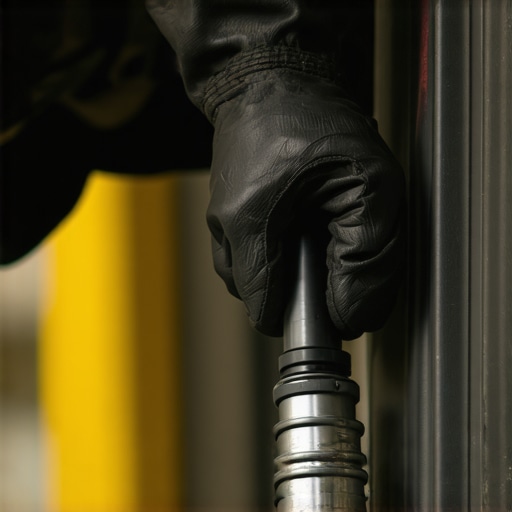
Master the Dry Park Test to Expose Hidden Tie Rod Slack
The most effective way to identify a failing joint without a lift is the ‘dry park’ test. This involves leaving the vehicle’s full weight on the tires while an assistant moves the steering wheel rapidly back and forth across the center point. This stresses the components in their natural state of operation. By placing a hand on the tie rod or ball joint, you can feel the mechanical ‘kick’ of a failing socket even before the noise becomes a constant roar. If the noise persists even after the steering components check out, it might be time to identify why your abs light is on without a scan tool using this jumper wire trick, as sensor vibrations can sometimes be felt through the pedal and mistaken for mechanical clunks.
Why Inner CV Joints Only Complain During Hard Acceleration
While an outer Constant Velocity (CV) joint clicks during tight turns, the inner CV joint—often called the ‘tulip’—manifests its failure through a heavy clunking or shuddering during vertical suspension travel under load. If you experience a shudder or thud only when accelerating up a hill or hitting a bump while the throttle is pinned, the tripod bearings within the inner joint are likely bottoming out against a worn groove in the housing. This diagnostic nuance is critical; replacing struts to fix a CV-induced thud is a costly mistake. If you’ve been chasing an intermittent vibration that refuses to go away, have you considered that the drivetrain angle might be the culprit? Tell us about your diagnostic challenges in the comments, or explore our advice on how to find reliable car service near you in 2025 to ensure your next mechanic understands these subtle mechanical differences.
Check the Foundation Because Loose Subframe Bolts Mimic Ball Joint Failure
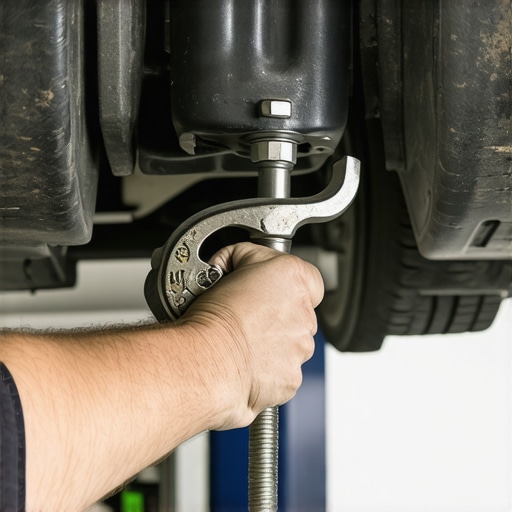
While the drivetrain components manage rotational energy, the foundation they rest upon—the subframe—often harbors the most elusive noises. In modern unibody construction, the engine, transmission, and lower suspension arms are all typically bolted to a massive cradle known as the subframe or K-frame. This cradle is isolated from the main cabin by heavy-duty rubber mounts. Over time, the high-torque bolts securing the subframe can stretch or succumb to galvanic corrosion, allowing the entire assembly to shift slightly during aggressive braking or when transitioning over a speed bump. This creates a deep, structural thud that resonates through the floorboards, often leading owners to replace perfectly functional struts or ball joints in a futile attempt to silence the ghost.
Why Does My Car Only Clunk During Cold Morning Starts?
Many drivers report that a persistent front-end noise vanishes after twenty minutes of driving, only to return the next morning. This phenomenon is rooted in the polymer science of the suspension’s rubber bushings. According to the National Institute for Automotive Service Excellence (ASE) in their advanced suspension and steering (A4) curriculum, rubber components possess a specific glass transition temperature. When ambient temperatures drop, the elastomers within control arm bushings or sway bar mounts harden significantly, losing their ability to dampen microscopic vibrations. As the vehicle travels and the suspension cycles, internal friction and heat from the engine compartment warm these components, restoring their pliability and silencing the clunk. If your vehicle ‘heals’ itself as the day warms up, it is a definitive sign that your rubber isolation layers have reached the end of their service life and are nearing total failure.
Pinpoint Ghost Rumbles with Electronic Chassis Ears
When traditional diagnostic methods like the pry bar or the dry park test fail to yield results, professionals turn to acoustic telemetry. A set of electronic chassis ears consists of several high-sensitivity microphones that can be clipped to various suspected failure points—such as the steering rack, the upper strut towers, or the lower ball joints. These microphones transmit audio to a wireless receiver inside the cabin, allowing a technician to isolate the exact component that is ‘talking’ under real-world driving conditions. This tool is invaluable because it removes the guesswork from complex multi-link suspension systems where a noise might travel through the metal and appear to originate from an entirely different area. If you’ve been chasing a vibration that defies logic, it might be time to how to find reliable car service near you in 2025 that utilizes this level of sophisticated diagnostic technology.
Don’t Let Secondary Harmonics From a Bent Rim Fool You
Sometimes the clunk isn’t a failure of the suspension at all, but rather a secondary harmonic caused by a compromised wheel. A slightly bent inner rim or a tire with a broken internal belt can create a cyclic thump that mimics the sound of a failing wheel bearing or an axle. As the tire rotates, the irregularity creates a vertical oscillation that excites the natural frequency of the coil springs. This can make a simple wheel issue sound like a major mechanical failure in the steering column. Before authorizing an expensive rack replacement, ensure your service provider performs a high-speed road force balance. This test goes beyond simple weight distribution by simulating the pressure of the road, exposing internal tire flaws and rim runout that a standard balancer would miss. Have you ever replaced a part only to find the noise remained exactly the same? Share your diagnostic journey with us below, as these complex interactions between tires and chassis are where the most challenging mysteries live.
While technicians often fixate on the struts, the torque strut mount—a small but vital link between the engine and the subframe—frequently goes unnoticed during a standard inspection. When its internal dampening fluid leaks or the rubber elastomer separates from the metal sleeve, the engine’s rotational force during a shift or a sudden vertical bump translates into a heavy thud against the bulkhead. This is particularly deceptive because the sensation often travels through the firewall, making the driver feel the impact directly in the steering column or floorboards, perfectly mimicking a failed lower control arm bushing.
Why Your Engine Mounts Might Be Lying to You
The physics of a failing hydraulic mount involves the loss of pressurized glycol, which is designed to absorb high-frequency vibrations. Once the fluid is gone, the mount collapses, and the engine sits on its internal safety stops. In this state, any vertical acceleration from a speed bump causes the entire drivetrain to bounce against the frame. To confirm this, a technician should perform a load test by applying the brakes while slightly revving the engine in gear; if the engine tilts excessively and produces a clunk, the suspension components might actually be in perfect health. This distinction is vital for preventing the unnecessary replacement of expensive shock absorbers.
The Stealthy Rattle of a Loose Exhaust Pipe
A loose exhaust pipe often mimics a failing sway bar link with surprising accuracy. Because the exhaust system is suspended by specialized rubber loops across the entire length of the chassis, a single perished hanger near the center muffler or the rear axle can allow the heavy steel piping to swing during vertical oscillations. This momentum causes the exhaust to strike the heat shields or the subframe, producing a metallic clank that mirrors the timing of a suspension compression. 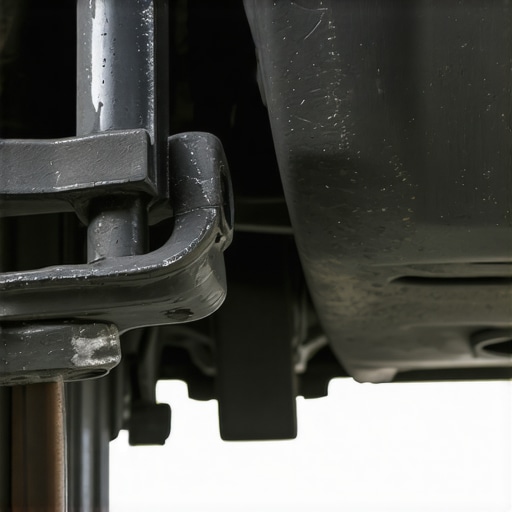
How Do You Distinguish Between a Steering Column Click and a Rack Clunk?
The steering column’s intermediate joint—a small U-joint connecting the steering wheel to the rack—can develop a minute amount of play that resonates as a sharp click felt directly in the driver’s hands. This is often misdiagnosed as a failing rack-and-pinion assembly, but the diagnostic path is quite different. According to detailed technical analysis from the International Federation of Automotive Engineering Societies (FISITA), torsional vibration in steering linkages is frequently exacerbated by the use of non-compliant aftermarket components that fail to meet specific resonance standards. To isolate this, one must disconnect the joint and check for axial play; if the click remains while the steering wheel is turned without the rack attached, the issue lies in the column bearings or the clock spring rather than the external steering gear.
Stop Overlooking Brake Caliper Hardware Fatigue
Brake hardware failure presents another layer of diagnostic complexity. If the anti-rattle clips or the caliper slide pins have lost their tension or grease, the caliper body can chatter against the bracket. This noise is distinct because it usually vanishes the moment you apply even light pressure to the brake pedal, which stabilizes the assembly. If your clunk disappears during braking over a bumpy surface, you can stop looking at your ball joints and start inspecting your brake hardware. The nuance of advanced diagnostics lies in understanding that the car is a symphony of interconnected masses. When one part loses its dampening, the vibration doesn’t stay local—it travels until it finds a component loose enough to vibrate in sympathy. If you are struggling with a noise that has stumped multiple shops, share your specific symptoms in the comments below or consult a technician who utilizes frequency-mapped diagnostic tools.
A clunking sound when traversing vertical obstacles isn’t merely an auditory nuisance; it is a critical diagnostic indicator of kinetic energy being improperly managed by the vehicle’s chassis. From a structural engineering standpoint, the suspension system is designed to isolate the passenger cabin from road irregularities through a sophisticated series of dampening and pivot points. When a percussive clunk occurs during the compression or rebound phase, it signals that the tolerance between moving components has exceeded safe specifications. Effective vehicle diagnostics requires a systematic approach to identifying whether the noise originates from rotational joints, isolation bushings, or a failure in the hydraulic dampening system itself.
Structural Integrity and the Physics of Vertical Loads
When a vehicle encounters a speed bump, the unsprung weight of the wheel assembly is thrust upward, exerting massive instantaneous force on control arms and ball joints. If the rubber isolation layers within these components have dry-rotted or delaminated, the resulting metal-on-metal contact creates the sharp sound known as clunking. This phenomenon is particularly prevalent in vehicles where the drivetrain mounts have also begun to settle, allowing the engine and transmission to oscillate against the frame. [IMAGE_PLACEHOLDER]
Could Your Strut Mounts Be the Real Source of That Impact Noise?
The upper strut mount serves as the crucial interface between the suspension assembly and the vehicle unibody. It contains a bearing plate that allows the strut to rotate during steering maneuvers while dampening vertical shocks. Over time, the internal elastomer degrades, leading to excessive axial play. According to research published by the Society of Automotive Engineers (SAE), structural fatigue in suspension mounts is one of the leading causes of Noise, Vibration, and Harshness (NVH) in high-mileage vehicles. If the clunking sensation feels as though it is originating from the top of the dashboard area, the failure of the mount to isolate the shock tower is the likely culprit, often requiring a full assembly replacement to restore original equipment manufacturer (OEM) ride quality.
Identify the Failure Points Before They Cause a Breakdown
It is surprisingly easy to misdiagnose a simple sway bar link as a major steering rack failure. Sway bar links are designed with small ball joints that manage lateral and vertical shifts during cornering and impact. Once the protective grease boot tears, road grit enters the joint, causing immediate friction-induced wear. This ‘play’ manifests as a rapid-fire clunking even on minor road imperfections. If you’re hearing a persistent rattle, don’t wait for a catastrophic failure. Explore our guide on choosing the right car service to ensure your suspension is inspected by a professional before your next road trip.
Why Worn Bushings Compromise More Than Just Ride Quality
Control arm bushings are the silent heroes of your car’s alignment and tracking. When these components fail, the arm is permitted to move fore and aft during braking and acceleration, not just vertically. This shifting geometry leads to accelerated tire wear and unpredictable handling during emergency maneuvers. A professional auto repair technician will typically use a pry bar to check for excessive deflection in these bushings, a method far more accurate than simple visual inspection. Replacing these components at the first sign of noise prevents the ‘domino effect’ where one worn bushing places undue stress on the entire steering rack and CV axles.
When steering wheel feedback correlates with an audible thud, the investigation must shift from the vertical dampening system to the lateral steering linkage. A common mistake is assuming that any noise from the front end necessitates new struts, but the intricate geometry of the steering rack often masks its own internal failures. If you find that why your power steering is stiff in the morning but fine later, it may indicate that the hydraulic fluid is masking physical play within the rack-and-pinion assembly that only manifests as a clunk once the system reaches operating temperature.
Stop Blaming the Shocks for Every Chassis Rattle
The inner tie rod ends are frequently the unsung villains of front-end noise. Unlike the outer tie rod ends, which are easily visible behind the wheel, the inner joints are protected by a rubber bellows boot, making visual inspection nearly impossible. These joints operate as a ball-and-socket mechanism; as the internal nylon cup wears down, the ball develops axial play. This slack results in a distinct ‘pop’ or ‘clunk’ when the steering direction is reversed or when the vehicle weight shifts during braking. A failed inner tie rod doesn’t just make noise; it compromises the vehicle’s alignment, leading to a scenario where you might wonder why your brake pads are wearing unevenly on one side due to the constant scrubbing of the tires against the asphalt.
Is Your Steering Rack Internal Play Creating a Ghost Clunk?
Internal rack lash occurs when the tensioning spring or the plastic bushing on the passenger side of the steering rack housing begins to fail. This creates a rhythmic knocking sound that often mimics a bad sway bar link. To differentiate these, an expert uses a stethoscope against the rack housing while a second technician cycles the steering. The National Highway Traffic Safety Administration (NHTSA) emphasizes that maintaining specific tolerances in these steering components is vital for preventing ‘death wobble’ and other high-speed instabilities. If the rack’s internal guide bushing is worn, the entire rack bar can bounce within the housing, a condition that no amount of lubricant or alignment can fix without a core replacement. [IMAGE_PLACEHOLDER_B]
Master the Dry Park Test to Expose Hidden Tie Rod Slack
The most effective way to identify a failing joint without a lift is the ‘dry park’ test. This involves leaving the vehicle’s full weight on the tires while an assistant moves the steering wheel rapidly back and forth across the center point. This stresses the components in their natural state of operation. By placing a hand on the tie rod or ball joint, you can feel the mechanical ‘kick’ of a failing socket even before the noise becomes a constant roar. If the noise persists even after the steering components check out, it might be time to identify why your abs light is on without a scan tool using this jumper wire trick, as sensor vibrations can sometimes be felt through the pedal and mistaken for mechanical clunks.
Why Inner CV Joints Only Complain During Hard Acceleration
While an outer Constant Velocity (CV) joint clicks during tight turns, the inner CV joint—often called the ‘tulip’—manifests its failure through a heavy clunking or shuddering during vertical suspension travel under load. If you experience a shudder or thud only when accelerating up a hill or hitting a bump while the throttle is pinned, the tripod bearings within the inner joint are likely bottoming out against a worn groove in the housing. This diagnostic nuance is critical; replacing struts to fix a CV-induced thud is a costly mistake. If you’ve been chasing an intermittent vibration that refuses to go away, have you considered that the drivetrain angle might be the culprit? Tell us about your diagnostic challenges in the comments, or explore our advice on how to find reliable car service near you in 2025 to ensure your next mechanic understands these subtle mechanical differences.
Check the Foundation Because Loose Subframe Bolts Mimic Ball Joint Failure
While the drivetrain components manage rotational energy, the foundation they rest upon—the subframe—often harbors the most elusive noises. In modern unibody construction, the engine, transmission, and lower suspension arms are all typically bolted to a massive cradle known as the subframe or K-frame. This cradle is isolated from the main cabin by heavy-duty rubber mounts. Over time, the high-torque bolts securing the subframe can stretch or succumb to galvanic corrosion, allowing the entire assembly to shift slightly during aggressive braking or when transitioning over a speed bump. This creates a deep, structural thud that resonates through the floorboards, often leading owners to replace perfectly functional struts or ball joints in a futile attempt to silence the ghost.
[IMAGE_PLACEHOLDER_C]
Why Does My Car Only Clunk During Cold Morning Starts?
Many drivers report that a persistent front-end noise vanishes after twenty minutes of driving, only to return the next morning. This phenomenon is rooted in the polymer science of the suspension’s rubber bushings. According to the National Institute for Automotive Service Excellence (ASE) in their advanced suspension and steering (A4) curriculum, rubber components possess a specific glass transition temperature. When ambient temperatures drop, the elastomers within control arm bushings or sway bar mounts harden significantly, losing their ability to dampen microscopic vibrations. As the vehicle travels and the suspension cycles, internal friction and heat from the engine compartment warm these components, restoring their pliability and silencing the clunk. If your vehicle ‘heals’ itself as the day warms up, it is a definitive sign that your rubber isolation layers have reached the end of their service life and are nearing total failure.
Pinpoint Ghost Rumbles with Electronic Chassis Ears
When traditional diagnostic methods like the pry bar or the dry park test fail to yield results, professionals turn to acoustic telemetry. A set of electronic chassis ears consists of several high-sensitivity microphones that can be clipped to various suspected failure points—such as the steering rack, the upper strut towers, or the lower ball joints. These microphones transmit audio to a wireless receiver inside the cabin, allowing a technician to isolate the exact component that is ‘talking’ under real-world driving conditions. This tool is invaluable because it removes the guesswork from complex multi-link suspension systems where a noise might travel through the metal and appear to originate from an entirely different area. If you’ve been chasing a vibration that defies logic, it might be time to how to find reliable car service near you in 2025 that utilizes this level of sophisticated diagnostic technology.
Don’t Let Secondary Harmonics From a Bent Rim Fool You
Sometimes the clunk isn’t a failure of the suspension at all, but rather a secondary harmonic caused by a compromised wheel. A slightly bent inner rim or a tire with a broken internal belt can create a cyclic thump that mimics the sound of a failing wheel bearing or an axle. As the tire rotates, the irregularity creates a vertical oscillation that excites the natural frequency of the coil springs. This can make a simple wheel issue sound like a major mechanical failure in the steering column. Before authorizing an expensive rack replacement, ensure your service provider performs a high-speed road force balance. This test goes beyond simple weight distribution by simulating the pressure of the road, exposing internal tire flaws and rim runout that a standard balancer would miss. Have you ever replaced a part only to find the noise remained exactly the same? Share your diagnostic journey with us below, as these complex interactions between tires and chassis are where the most challenging mysteries live.
While technicians often fixate on the struts, the torque strut mount—a small but vital link between the engine and the subframe—frequently goes unnoticed during a standard inspection. When its internal dampening fluid leaks or the rubber elastomer separates from the metal sleeve, the engine’s rotational force during a shift or a sudden vertical bump translates into a heavy thud against the bulkhead. This is particularly deceptive because the sensation often travels through the firewall, making the driver feel the impact directly in the steering column or floorboards, perfectly mimicking a failed lower control arm bushing.
Why Your Engine Mounts Might Be Lying to You
The physics of a failing hydraulic mount involves the loss of pressurized glycol, which is designed to absorb high-frequency vibrations. Once the fluid is gone, the mount collapses, and the engine sits on its internal safety stops. In this state, any vertical acceleration from a speed bump causes the entire drivetrain to bounce against the frame. To confirm this, a technician should perform a load test by applying the brakes while slightly revving the engine in gear; if the engine tilts excessively and produces a clunk, the suspension components might actually be in perfect health. This distinction is vital for preventing the unnecessary replacement of expensive shock absorbers.
The Stealthy Rattle of a Loose Exhaust Pipe
A loose exhaust pipe often mimics a failing sway bar link with surprising accuracy. Because the exhaust system is suspended by specialized rubber loops across the entire length of the chassis, a single perished hanger near the center muffler or the rear axle can allow the heavy steel piping to swing during vertical oscillations. This momentum causes the exhaust to strike the heat shields or the subframe, producing a metallic clank that mirrors the timing of a suspension compression. [IMAGE_PLACEHOLDER_D]
How Do You Distinguish Between a Steering Column Click and a Rack Clunk?
The steering column’s intermediate joint—a small U-joint connecting the steering wheel to the rack—can develop a minute amount of play that resonates as a sharp click felt directly in the driver’s hands. This is often misdiagnosed as a failing rack-and-pinion assembly, but the diagnostic path is quite different. According to detailed technical analysis from the International Federation of Automotive Engineering Societies (FISITA), torsional vibration in steering linkages is frequently exacerbated by the use of non-compliant aftermarket components that fail to meet specific resonance standards. To isolate this, one must disconnect the joint and check for axial play; if the click remains while the steering wheel is turned without the rack attached, the issue lies in the column bearings or the clock spring rather than the external steering gear.
Stop Overlooking Brake Caliper Hardware Fatigue
Brake hardware failure presents another layer of diagnostic complexity. If the anti-rattle clips or the caliper slide pins have lost their tension or grease, the caliper body can chatter against the bracket. This noise is distinct because it usually vanishes the moment you apply even light pressure to the brake pedal, which stabilizes the assembly. If your clunk disappears during braking over a bumpy surface, you can stop looking at your ball joints and start inspecting your brake hardware. The nuance of advanced diagnostics lies in understanding that the car is a symphony of interconnected masses. When one part loses its dampening, the vibration doesn’t stay local—it travels until it finds a component loose enough to vibrate in sympathy. If you are struggling with a noise that has stumped multiple shops, share your specific symptoms in the comments below or consult a technician who utilizes frequency-mapped diagnostic tools.
Advanced Troubleshooting Nuances
Stop Measuring in Inches and Start Measuring in Microns
The most deceptive front-end noises often stem from axial play that is invisible to the naked eye. In a modern multi-link suspension, even a half-millimeter of play in a lower control arm bushing can create a resonant clunk because the chassis acts as a megaphone. Advanced technicians utilize dial indicators to measure deflection under load, ensuring that components meet original engineering tolerances before recommending a replacement.
Why Cold Weather Exposes Every Hidden Suspension Flaw
Rubber is a thermoplastic material that hardens as temperatures drop, losing its natural ability to mask mechanical play. If your car only makes noise on cold mornings, it isn’t “just cold”—the weather is acting as a diagnostic filter, exposing isolation components that have lost their chemical integrity. This window of failure is your best opportunity to perform vehicle diagnostics before the bushings degrade to the point of structural instability.
The Danger of Tolerance Stacking in Aftermarket Parts
A common pitfall in automotive repair is replacing a failing part with a low-quality aftermarket equivalent that does not match the OEM resonance frequency. This leads to “tolerance stacking,” where the new part is technically functional but its slight weight or material difference causes secondary vibrations elsewhere in the steering linkage. Always prioritize high-grade components to ensure the fix actually restores the factory ride quality.
Curated Expert Resources
ASE Steering and Suspension (A4) Study Guide: The industry standard for understanding the geometry and physics behind steering systems and common failure modes.
SAE International Technical Papers: Deep-dive academic research into Noise, Vibration, and Harshness (NVH) mitigation for modern automotive chassis design.
Mitchel 1 / ALLDATA Service Portals: The primary source for Technical Service Bulletins (TSBs) that track common factory defects in specific vehicle makes and models.
Final Expert Perspective
Tracing a front-end clunking sound is as much an art as it is a science. By moving beyond the habit of replacing shocks and struts as a first resort, you save both time and resources. True mastery of the chassis involves understanding that every bushing, mount, and link works in a delicate harmonic balance. Utilizing the top auto repair techniques every car owner should know allows for a systematic elimination of variables. Whether you are dealing with a thermal-dependent rubber failure or an elusive subframe shift, the key remains precise measurement over visual guessing. We invite you to share your most difficult suspension mysteries in the comments or contact us for a professional consultation to get your vehicle back to its peak performance.