High-Velocity Aero-Acoustics and the NVH Challenge
In the realm of automotive engineering, Noise, Vibration, and Harshness (NVH) represents one of the most complex disciplines to master. When a vehicle begins to exhibit a high-pitched whistle specifically at highway speeds, it is rarely a random occurrence; rather, it is a symptom of a localized pressure differential or a mechanical resonance reaching its peak frequency. As an automotive professional, I have found that these auditory anomalies often stem from the delicate balance between external aerodynamics and internal engine vacuum systems. Identifying the source requires a methodical vehicle diagnostics approach that separates wind-induced turbulence from pressurized system leaks. According to standards established by SAE International, acoustic signatures at speeds exceeding 60 mph are frequently tied to ‘point-source’ aerodynamic disturbances that only manifest under high dynamic pressure.
The Physics of Air Traps and Improper Seal Integrity
The most common culprit for a highway whistle is the degradation of weatherstripping or the misalignment of body panels. At high speeds, the air pressure pushing against the front of your car is immense. If there is a microscopic gap in a window seal or a door gasket, air is forced through it at high velocity, creating a flute-like effect. This often happens if the door hinges have sagged slightly or if a previous auto repair failed to seat the trim perfectly. You should also examine the front fascia; sometimes a loose piece of plastic under the bumper or a fluttering hood can create high-frequency vibrations. If you notice the sound seems to come from the front, you might need to stop your hood from fluttering before it compromises the latch mechanism or continues to annoy you at cruising speeds.
Can a Failing Transmission Bearing Mimic an Aerodynamic Whistle?
While many drivers assume a whistle is always wind-related, seasoned technicians know that high-frequency mechanical whining can be deceptive. A worn output shaft bearing or a failing pinion bearing within the transmission can produce a sound that scales with road speed, not engine RPM. This distinction is critical for accurate vehicle diagnostics. If the whistle changes pitch when you lift off the accelerator—even if your speed remains constant for a few seconds—it is likely mechanical. In these cases, it is vital to understand transmission failures and expert fixes to prevent a total drivetrain seizure. Internal friction at high gear ratios generates specific harmonics that can easily be mistaken for wind rushing over a roof rack or a side mirror.
Vacuum Leaks and Intake Manifold Resonance
Beyond the cabin and the gearbox, the engine’s intake system is a prime candidate for whistling. A small crack in a vacuum hose or a failing intake manifold gasket can act as a reed in a musical instrument. Under high load—such as maintaining 70 mph against wind resistance—the engine produces high vacuum levels that can pull air through these cracks. To confirm this, you can utilize specialized diagnostic tools to pinpoint the exact location of the leak. Often, a simple visual inspection is insufficient because these cracks only open under specific thermal or pressure conditions. If your diagnostic steps lead you toward potential gear synchronization issues or shifting anomalies accompanying the noise, explore our guide on manual transmission resistance to cross-reference your findings and ensure your drivetrain remains robust.
Wheel Bearings vs Wind Turbulence
Distinguishing between a failed wheel hub and aerodynamic drag requires a keen ear for frequency modulation. Unlike wind noise, which often varies based on wind direction and gusting, a mechanical whistle from the wheel area usually remains consistent at specific speeds and may even result in a slight vibration through the floorboards. If you suspect your suspension might be involved, look for signs your shock absorbers are spent, as uneven tire wear caused by poor damping can create rhythmic air displacement sounds that mimic whistling. To be certain, you must identify a failing wheel bearing before the heat buildup compromises the entire steering knuckle assembly, potentially leading to a much more expensive repair than a simple seal replacement.
When Turbochargers Turn Into High-Pitch Whistles
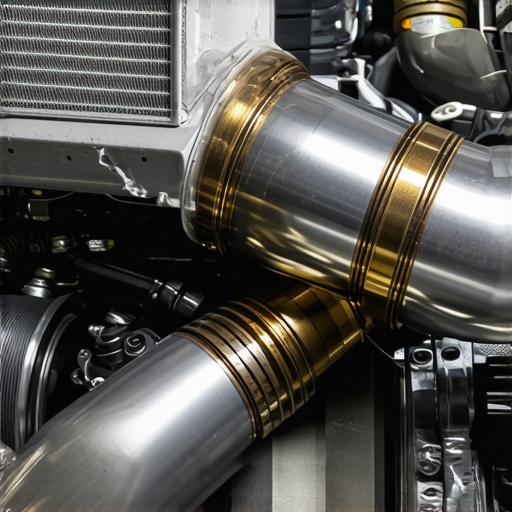
Modern forced-induction engines add another layer of complexity to the diagnostic puzzle. A ‘boost leak’—where pressurized air escapes through a tiny hole in a silicone coupler, a cracked intercooler end tank, or a loose clamp—sounds remarkably like a high-pitched tea kettle under acceleration. This sound only appears when the turbo is actively spooling and generating positive pressure. If the whistle is constant regardless of boost pressure or engine load, it might be the internal bearings of the turbocharger reaching their end of life. Learning how to diagnose a failing turbocharger can save you thousands in catastrophic engine damage, as a failed compressor wheel can send metal shrapnel directly into the combustion chamber, destroying valves and pistons instantly.
Is Your Alternator Harmonizing with Your Engine Speed?
Alternator diodes can fail in a way that creates an ‘electrical whistle’ or high-frequency whine that is audible through the vehicle’s speakers or directly from the engine bay. This harmonic interference often changes pitch in direct correlation with engine RPM and electrical load, such as when you engage the high beams or the rear defroster. According to technical data from AAA, electrical system noise is one of the most frequently misdiagnosed sounds in modern commuters because it mimics mechanical bearing failure. You can often stop your alternator from dying early by ensuring the casing is free of debris and the connections are tight, which reduces the electrical resistance that causes these audible harmonics.
Narrow Down the Source Without a Lift
For those still hunting the ghost in the machine, the ‘tape test’ remains the gold standard for aerodynamic isolation. Use high-quality painter’s tape to cover body gaps one at a time—starting with the windshield header and moving to the side mirrors—and drive the vehicle at the specific highway speed where the noise occurs. If the sound vanishes, you have successfully isolated the gap. If the whistling persists even with all external seals taped, the issue is likely internal, such as a vacuum leak or a drivetrain component reaching a resonant frequency. Have you successfully silenced a mystery whistle using this method? Share your success stories or the unique locations you have discovered leaks in the comments below to help our community of enthusiasts navigate these frustrating auditory puzzles.
The High-Pressure Whistle Hiding in Your Exhaust Manifold
Thermal cycles in the engine bay create a brutal environment for cast iron and stainless steel. Over time, the repeated expansion and contraction lead to microscopic stress fractures in the exhaust manifold. While a large crack results in a ‘puffing’ or ‘ticking’ sound, a pinhole leak under high load—like when you’re accelerating to pass on the interstate—can produce a piercing whistle as pressurized exhaust gases are forced through the narrow opening. This is often accompanied by a faint smell of raw fuel or combustion gases in the cabin. According to technical bulletins from the National Institute for Automotive Service Excellence (ASE), these manifold leaks are frequently misdiagnosed as turbocharger whine or intake leaks because the sound only manifests when the engine reaches specific operating temperatures and backpressure levels.
Why Does the Whistle Get Louder When the AC Is On?
It isn’t always the compressor causing the racket. High-speed driving introduces the ‘Ram Air Effect,’ where the forward motion of the car forces air into the HVAC intake at the base of the windshield with significant pressure. If your cabin air filter is partially obstructed or if the plastic frame of the filter has warped, this air is forced through a narrowed passage, creating a whistle that sounds like it’s coming from directly behind the dashboard. To test this theory, toggle your HVAC system to ‘Recirculate’ mode while driving at highway speeds. If the whistle changes pitch or disappears entirely, you’ve isolated the issue to the external air intake or the filter housing. Ensuring a proper seal here is part of essential car maintenance items that many owners overlook until the noise becomes unbearable.

Don’t Ignore the High-Pitch Warning from Your PCV System
The Positive Crankcase Ventilation (PCV) system is designed to evacuate gases from the crankcase and reintroduce them into the intake manifold for combustion. However, when the internal diaphragm of the PCV valve or the oil separator fails, it can create a massive vacuum leak that emits a constant, high-frequency scream. This is particularly common in European luxury vehicles where the PCV system is integrated into the valve cover assembly. When the diaphragm tears, the engine begins to suck air through the tiny breather hole in the PCV cap. At highway speeds, the engine is under constant load, and these vacuum fluctuations cause this hole to whistle like a high-pitched flute. If you notice the whistle is loudest at idle or when you first lift off the throttle at high speeds, try to carefully pull the oil dipstick or remove the oil fill cap while the engine is running. If the sound vanishes and you feel a strong suction at the opening, the PCV system has likely failed. Understanding advanced engine diagnostics can help you catch this before the excess vacuum pulls seals inward, causing major oil leaks.
The Harmonic Resonance of Worn Accessory Drive Belts
Even a slightly misaligned serpentine belt or a pulley with a dry internal bearing can harmonize with the engine’s rotation to create a whistle-like frequency that penetrates the cabin. Unlike wind noise, which is erratic and gust-dependent, or turbo whine, which is boost-dependent, a belt-related whistle usually follows the RPM curve perfectly regardless of vehicle speed. A simple diagnostic trick involves using a spray bottle of water to dampen the belt while the engine is idling; if the sound changes instantly, the belt’s surface tension or alignment is the culprit. However, at 70 mph, the centrifugal forces on the idler pulley are much higher. If your pulleys are over a decade old, you might want to examine the internal races for signs of heat discoloration before the bearing seizing creates a roadside emergency. When these bearings start to go, they produce a high-pitched ‘singing’ that is often confused with…
…wind noise or even electrical interference.
Why Your New Roof Rack Sounds Like a Flute
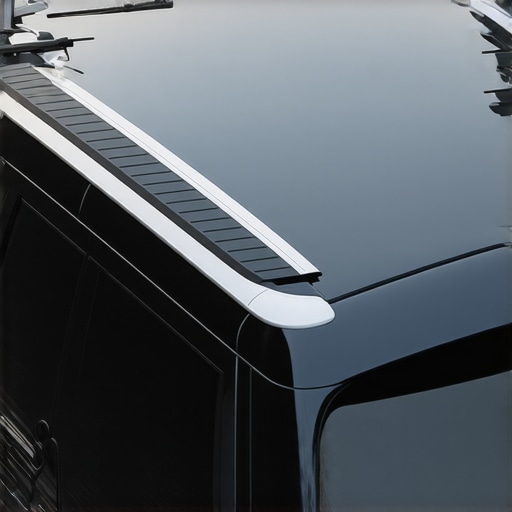
The trend of overland builds and roof-mounted storage has introduced a new variable to the highway whistle equation: vortex shedding. When air flows over a blunt object—like a square crossbar or an LED light bar—it creates a Karman vortex street, where swirling eddies of air detach from the object at regular intervals. This creates a rhythmic vibration that translates into a high-frequency whistle inside the cabin. Many owners don’t realize that a simple rubber strip, known as a ‘diffuser’ or ‘wind fairing,’ can disrupt this flow and silence the noise. If the whistle started shortly after an upgrade, you’re likely dealing with an aerodynamic footprint issue rather than a mechanical failure. This phenomenon is a classic example of how aftermarket additions can compromise the original NVH profile of a vehicle.
The Secret Whistle Hiding Inside Your Door Panel
Sometimes the source isn’t the outer seal, but the internal pressure within the door cavity itself. As vehicle speed increases, the air pressure outside the car drops relative to the pressure inside. This ‘suction’ effect can pull the window glass slightly away from the inner run channel. If the window regulator has even a millimeter of play, the glass can vibrate at a frequency that mimics a whistle. This is a common point of confusion during vehicle diagnostics because the sound seems to vanish if you apply even the slightest pressure to the window switch. It’s an internal mechanical tolerance issue manifesting as an external acoustic problem. Addressing this often requires removing the door card and ensuring the window tracks are properly lubricated and the mounting bolts are torqued to spec.
Can a Pinion Bearing Whine Disguise Itself as Wind Noise?
Mechanical failure in the rear or front differential is often mistaken for wind noise because both sounds scale with road speed. A worn pinion bearing creates a high-pitched ‘sing’ when it is under load or during deceleration. To differentiate, find a smooth, quiet stretch of road and gently weave the car within your lane. A wheel bearing or tire-related noise will often change pitch during lateral weight transfer, whereas a differential whine or wind whistle usually remains constant. According to data tracked by the National Highway Traffic Safety Administration (NHTSA), several manufacturers have issued service bulletins for drivetrain-related harmonics that owners initially reported as simple wind leaks. This highlights the necessity of checking technical service bulletins (TSBs) early in your search.
When Side Mirror Gaps Create High-Speed Harmonics
Mirror caps are another frequent offender in the search for high-speed anomalies. If the plastic housing around the side mirror has been bumped—even if there is no visible damage—the tiny clips inside can snap. This creates a gap as small as a human hair between the cap and the main mirror body. At 70 mph, this gap acts as a reed, vibrating at a frequency that sounds remarkably like a whistle coming from the A-pillar. You can easily test this by folding the mirrors in while driving (if safe to do so) or by applying a single strip of tape over the seam of the mirror cap. If the noise stops, a simple bead of clear silicone or a new mirror cap assembly is the definitive auto repair solution.
The Hidden Culprit in the Brake Ducting
Modern performance vehicles use specialized ducting to channel air directly toward the brake rotors for cooling. If a piece of road debris—a small pebble or a twig—becomes lodged in these narrow plastic channels, it can act as a whistle at high speeds. Similarly, if a brake pad shim has shifted and is vibrating against the rotor surface without the brakes being applied, it creates a ‘squeal-whistle’ that is notoriously hard to track. This requires a thorough inspection of the wheel wells and braking hardware to ensure nothing is obstructing the designed airflow pathways. These airflow disturbances can be elusive, often requiring a compressed air test in the shop to replicate the sound while the vehicle is stationary. Still hearing that phantom whistle? Drop a comment below with your car’s make and model, and our community can help you cross-reference known technical service bulletins to find the fix.
Advanced Diagnostics and Expert Considerations
How the Doppler Effect Helps You Localize Wind Noise
When performing vehicle diagnostics, the way a sound shifts in frequency as you move your head can reveal its origin point. If a whistle maintains a constant pitch regardless of your position in the cabin, it is likely a mechanical resonance. However, if the frequency changes based on your proximity to the door or windshield, it is an aerodynamic point-source. Mastering this auditory spatial awareness is one of the most effective ways to separate a drivetrain whine from a simple door seal issue.
Look Closer at the Leading Edge of A-Pillar Trim
Many technicians overlook the microscopic fatigue that occurs in plastic trim clips. At highway speeds, these clips can flex, allowing a tiny gap to open that acts as a reed. If you have already checked your weatherstripping, inspect the rigidity of your external trim pieces. Even a shaky side mirror or a loose plastic cowl can create enough turbulence to manifest as a high-pitched scream. These failures are often transient, appearing only at specific aerodynamic loads.
Why Negative Cabin Pressure Pulls Whistles Inward
A vehicle is a semi-sealed vessel. When you drive at high speeds, the air moving over the windows creates a low-pressure zone outside. If your internal ventilation is set to ‘fresh air,’ the pressure differential can actually force air out through microscopic gaps, whereas ‘recirculate’ mode might pull air in. If you hear a hissing sound under your dashboard, toggle your HVAC settings to see if the pressure change alters the sound. This is a critical step in isolating interior seal failures from external wind drag.
Curated Expert Resources
To further refine your diagnostic skills, I recommend exploring these professional-grade resources that delve into the physics of automotive acoustics. SAE International offers extensive technical papers on NVH (Noise, Vibration, and Harshness) that explain the fluid dynamics behind vortex shedding. I-CAR provides advanced training on structural alignment, ensuring that body panels meet the exact tolerances required to prevent air leaks. Finally, professional platforms like Mitchell 1 remain the gold standard for accessing Technical Service Bulletins regarding aerodynamic anomalies.
Refining Your Approach to High-Speed Whistles
Solving a high-velocity whistle requires more than just a quick glance; it demands a systematic evaluation of aerodynamics, mechanical harmonics, and pressure differentials. By integrating the tape test, pressure modulation, and structural inspections, you move beyond guesswork into high-level automotive troubleshooting. These persistent sounds are often the car’s way of signaling a minor misalignment before it becomes a major failure. To stay ahead of these issues, I encourage you to review our expert auto repair tips for 2025 to keep your vehicle operating with precision. Have you encountered a whistle that defied logic? Reach out with your findings to help our community build a better database of fixes for these elusive auditory ghosts.
#IMAGE_PLACE_HOLDER_E#