Why a Hissing Dashboard is More Than Just an Annoyance
To a seasoned technician, a vehicle is far more than a collection of metal and rubber; it is a complex, integrated symphony of mechanical, hydraulic, and pneumatic systems. When a new, unwanted sound enters the mix—specifically a persistent, ghostly hiss emanating from deep within the dashboard—it represents a fundamental break in that operational harmony. Far from being a mere cabin nuisance that can be drowned out by the radio, this sound often serves as the primary herald of a breach in the vehicle’s vacuum system or a critical failure within the HVAC (Heating, Ventilation, and Air Conditioning) refrigeration loop. Identifying the root cause requires a systematic approach to vehicle diagnostics, moving beyond surface-level symptoms to understand the pressurized environments hidden behind the intricate plastic panels of your interior. Professionals understand that ignoring these acoustic warnings often leads to cascading failures in air delivery or thermal management.
The Critical Role of Vacuum Systems in Cabin Comfort
Many modern and late-model vehicles still rely on engine vacuum pressure to operate the blend door actuators that precisely direct airflow between the floor, mid-level, and defrost vents. A microscopic crack in a vacuum line or a failing rubber diaphragm within an actuator can lead to a distinct hiss that changes pitch or disappears entirely when you manipulate the vent settings. If you notice your vents defaulting to the defrost position during heavy acceleration—a moment of low engine vacuum—you have discovered a significant vacuum leak. This isn’t just about cabin comfort; a vacuum leak in the HVAC circuit can actually influence engine performance by creating lean-out conditions or causing an erratic idle. For a deeper look at similar performance hiccups that might seem unrelated to your dash, you might explore why your car stutters at 40mph. Addressing these pneumatic leaks early via professional auto repair prevents the need for invasive dashboard removal later on.
Does the Noise Change When You Turn the Temperature Dial?
This is the definitive litmus test for dashboard acoustics and high-level troubleshooting. A hiss that fluctuates specifically with temperature adjustments, or one that sounds like rushing liquid, often points directly to the thermostatic expansion valve (TXV). As liquid refrigerant is forced through the small orifice of the TXV to become a gas, a failing valve or a low-charge state can create a distinct ‘snaking’ or hissing sound as the pressure drops. According to technical documentation from the Society of Automotive Engineers (SAE), maintaining precise refrigerant mass is vital for the lubrication and longevity of the AC compressor. If you’re experiencing temperature-related anomalies, such as a heater that only works while driving, the system may be struggling with air pockets or coolant flow issues alongside the pressure breach. If your dashboard has started ‘talking’ to you, don’t wait for a system-wide failure; contact our expert team to schedule a high-precision diagnostic session. Ensuring your vehicle receives a timely car service can save you from the immense cost of replacing a seized compressor or a ruptured evaporator core.
When the Hiss Persists After the Engine Dies
One of the most perplexing scenarios for a vehicle owner is hearing a distinct, fading hiss long after the key has been removed from the ignition. This isn’t a ghost in the machine; it is the physical manifestation of pressure equalization within the air conditioning loop. In a healthy system, the high-pressure liquid refrigerant and the low-pressure gas gradually balance out through the expansion valve or orifice tube. However, if this sound is accompanied by a significant drop in cooling efficiency, it may indicate that the internal seals of the evaporator core are beginning to weep. According to the Mobile Air Climate Systems Association (MACS), moisture contamination within the refrigerant loop can lead to the formation of hydrochloric acid, which eats through the aluminum of the evaporator from the inside out. If you have also noticed that your AC smells like old socks, the moisture buildup on that leaking core is likely breeding bacteria alongside the refrigerant breach.
The Fragile Connection Between Suction and Fuel Trims
A persistent hiss while driving often points to the vacuum-operated actuators that control the HVAC blend doors. These components rely on engine-generated suction to function, but a tiny crack in a rubber line creates a pathway for ‘unmetered air’ to enter the engine’s intake manifold. This forces the engine control module to adjust fuel delivery, often resulting in a richer mixture that burns more gasoline than necessary. This hidden vacuum leak is frequently the hidden reason your gas mileage just dropped without a corresponding check engine light. Expert technicians don’t rely on guesswork to find these microscopic breaches; they often utilize the 15-dollar tool that finds every vacuum leak in seconds, ensuring the repair is surgical rather than speculative. Addressing these leaks promptly preserves the delicate balance of your engine’s air-to-fuel ratio and prevents long-term catalytic converter damage.
Why Does Your Dashboard Sound Like a Running Creek?
Sometimes the noise is less of a hiss and more of a gurgle or sloshing sound. This acoustic signature typically indicates air pockets trapped within the heater core, the small radiator responsible for warming your cabin. If the cooling system isn’t properly bled or if there is a slow leak elsewhere in the engine bay, air replaces the liquid coolant, creating a ‘waterfall’ effect behind the dash when you accelerate. This air displacement is a major red flag for the health of your engine. Without a steady flow of liquid, the heater core cannot transfer heat, and more importantly, the engine may be at risk of localized hot spots. It is vital to learn how to spot a failing water pump before your engine overheats, as a gurgling dashboard is often the first warning of a cooling system under duress. Have you noticed a specific whistle when you accelerate or a gurgle after a long drive? Share your symptoms in the comments below, or see our guide on how to find reliable car service near you in 2025 to get a professional evaluation before a minor hiss turns into a major breakdown.
The Brake Pedal Hiss That Threatens Your Stopping Power
While we have focused heavily on the HVAC system, a common and often overlooked source of a dashboard hiss originates from the brake booster. This large, drum-like component sits behind the firewall, utilizing engine vacuum to multiply the force you apply to the brake pedal. When the internal rubber diaphragm develops a tear, air rushes into the vacuum side, creating a distinct, constant hiss that often changes or stops when you depress the pedal. This is not merely a comfort issue; it is a direct compromise of your vehicle’s braking efficiency. A significant leak here means the engine has to work harder to maintain vacuum, and you might find that the pedal feels ‘hard’ or requires much more effort to bring the car to a halt.
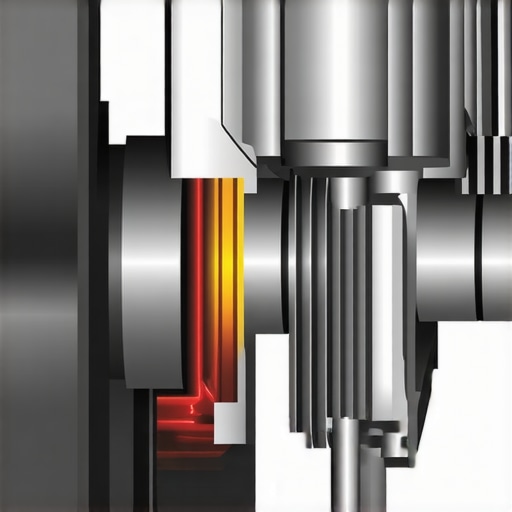
The relationship between the brake booster and engine health is symbiotic. According to safety data and technical bulletins from the National Highway Traffic Safety Administration (NHTSA), vacuum-related failures in the braking system are frequently cited in safety recalls because they simultaneously degrade stopping power and engine stability. If the hiss is located low in the footwell near the steering column, it is almost certainly a booster seal. This specific type of leak can throw off the mass airflow sensor’s calculations, as the engine is sucking in air that hasn’t been measured, leading to the same lean-running conditions discussed earlier. If you’ve felt your car idle roughly at a stoplight while hearing that faint ‘pssh’ sound near your feet, your brake system is likely crying for help.
Can a Vacuum Leak in the Dashboard Cause a Total Brake Failure?
It is a nuanced concern. While most modern vehicles have a check valve to maintain residual vacuum, a massive and sudden rupture in the booster diaphragm can lead to a significant loss of power assist. You won’t lose your brakes entirely—the hydraulic link remains—but the physical effort required to stop the vehicle can increase by four or five times, catching an unprepared driver off guard. This is why high-level vehicle diagnostics are essential; a technician doesn’t just listen for the noise, they use a vacuum gauge to measure the ‘inches of mercury’ (inHg) the system can hold. If the system cannot maintain a steady 18 to 22 inHg at idle, the safety margins are already shrinking.
Plastic Fatigue and the Perils of Extreme Temperature Cycles
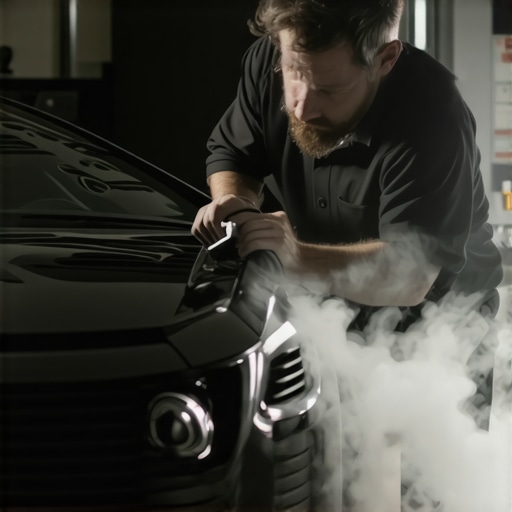
The materials used in dashboard construction are subject to brutal thermal expansion and contraction. Over years of being baked in the summer sun and frozen in winter, the small plastic ‘T-fittings’ and nylon vacuum lines become incredibly brittle. A hiss that only appears on cold mornings is a classic sign of ‘O-ring shrinkage’ or a hairline crack in a plastic line that expands just enough to leak until the cabin warms up. These intermittent noises are the most difficult to track down because they disappear by the time a customer reaches the repair shop. In these instances, we recommend leaving the vehicle overnight so we can perform a ‘smoke test’ on a cold system, which involves injecting pressurized smoke into the vacuum lines to see exactly where it escapes.
To ensure your car stays on the road longer without these phantom noises, it is crucial to stay proactive. If you suspect your vacuum system is failing, don’t wait for the brake pedal to get hard or the vents to stop moving. Our team can perform a comprehensive pressure test to find the leak before it causes more expensive damage. Beyond the dashboard, keeping your drivetrain in top shape is equally important, so consider checking out our guide on when to change transmission fluid to keep your entire vehicle as silent as your cabin should be.
The Ghostly Whistle of a Clogged Cabin Path
Sometimes the hiss isn’t a leak at all, but a restriction. High-velocity air being forced through a narrow opening creates a whistle, and in many late-model cars, this is caused by a cabin air filter that has become a literal wall of debris. When the blower motor tries to pull air through a filter matted with dust, leaves, and moisture, the resulting pressure differential creates a high-pitched ‘hissing’ or ‘whistling’ sound. This is often mistaken for a refrigerant leak because the sound originates from the same area—the evaporator housing. However, unlike a vacuum leak, this noise will vary directly with the blower fan speed.
When Engine Boost Bleeds into Your Interior Experience
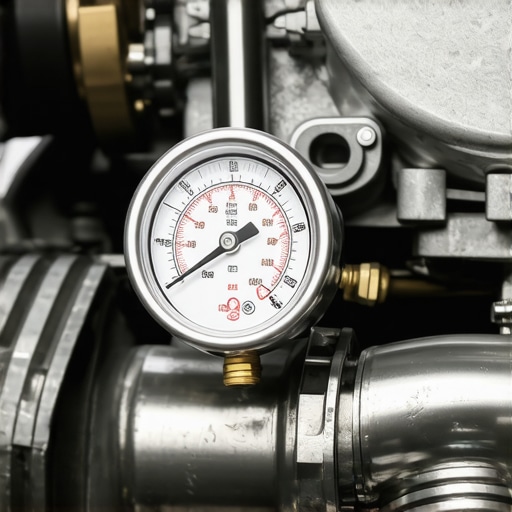
In the high-performance world of turbocharged vehicles, the line between an engine problem and a cabin nuisance often blurs. The firewall acts as a structural barrier, but it is also an acoustic conductor. When a charge air pipe or an intercooler hose develops a hairline fracture, the high-pressure air—often exceeding 18 PSI—can escape with a violent, high-pitched hiss that resonates directly through the cowl area. To the driver, this sounds like it is coming from behind the glovebox or the center console. Unlike a standard HVAC vacuum leak, this “boost leak” only appears when the engine is under load, such as during overtaking or climbing steep inclines. This is a critical distinction in vehicle diagnostics; a mistake here could lead you to dismantle a perfectly functional dashboard while the true culprit—a five-dollar rubber coupler—remains split under the hood. Professionals often use a boost leak tester to pressurize the entire intake tract, listening for that telltale whistle that robs your engine of its peak efficiency.
Is Your Dashboard Noise Actually a Performance-Robbing Turbo Leak?
Distinguishing between a harmless air vent hiss and a catastrophic boost leak requires a keen ear for timing. If the sound only manifests when your turbocharger spools up and is accompanied by a puff of black smoke or a stutter in acceleration, you are likely dealing with a breach in the forced induction plumbing. According to technical insights from Garrett Motion, even a minor leak in the charge air cooler system can force the turbocharger to overspeed, leading to premature bearing failure and eventual compressor wheel disintegration. If you suspect your hiss is tied to your car’s power output, it is imperative to seek auto repair before the turbocharger suffers irreversible damage. A simple smoke test can differentiate between a cabin air leak and an engine-side pressure loss, saving you thousands in unnecessary component replacements.
Stop Confusing Electronic Gear Failure with Vacuum Leaks
As we transition into the era of fully digitized vehicle interiors, the traditional vacuum-operated blend door is becoming a relic. Modern luxury vehicles and EVs utilize high-precision stepper motors to manipulate airflow. When these small electronic actuators fail, their internal nylon gears often strip or jump teeth, producing a rhythmic, high-frequency “clicking” or “hissing” sound as the motor tries and fails to reach its calibrated position. This electronic “hiss” can be incredibly deceptive because it sounds almost exactly like a pneumatic leak. However, a technician using an advanced OBD-II scanner can perform an “actuator sweep” to isolate each motor. If the noise occurs during a software-commanded movement, the problem is mechanical-electronic, not pneumatic. This evolution in technology means that vehicle diagnostics now require as much computer proficiency as they do mechanical intuition.
How Humidity Alters the Soundtrack of a Failing AC System
The physics of fluid dynamics dictates that the “hiss” you hear from your air conditioning system is actually the sound of refrigerant changing phase from a high-pressure liquid to a low-pressure gas. On extremely humid days, the evaporator core works significantly harder to dehumidify the air, which can actually alter the acoustic resonance of the expansion valve. If the refrigerant charge is even slightly off—either overfilled or underfilled—the resulting “slugging” or “starving” of the evaporator produces a distinctive, snake-like hiss that can vary in volume based on the ambient moisture in the air. This isn’t just a quirk of the weather; it is a sign that your system’s thermal efficiency is compromised. If your dashboard has started whistling a new tune as the seasons change, don’t ignore the warning signs. Reach out to our diagnostic specialists today to ensure your pressurized systems are sealed, calibrated, and ready for the road ahead. Proactive maintenance, like keeping an eye on your transmission fluid and HVAC levels, is the only way to ensure total vehicle longevity.
Expert Insights & Advanced Considerations
Treat Your Ears Like a Spectrum Analyzer
Experienced technicians don’t just hear a sound; they categorize it by frequency and timing. A high-pitched whistle that changes with engine load is fundamentally different from a low-frequency gurgle that tracks with coolant temperature. Mastering this distinction is the first step in high-level vehicle diagnostics. By isolating the exact moment the noise manifests, you eliminate hours of unnecessary dashboard disassembly.
Why Cheap Aftermarket Actuators Fail Twice as Fast
When a blend door motor fails, the temptation to buy a budget-friendly replacement is high. However, professional-grade auto repair prioritizes OEM-spec components for a reason. The internal gears in budget actuators are often made of inferior plastics that cannot withstand the extreme temperature cycles inside a dashboard, leading to a return of that annoying hiss within months.
Let Smoke Reveal What Your Ears Can’t Find
Visual confirmation is the gold standard for pneumatic integrity. Using a professional smoke machine allows you to see the exact point of failure in a vacuum line without removing a single plastic panel. If you aren’t sure where to start, you can use the 15-dollar tool that finds every vacuum leak in seconds as a preliminary check before investing in heavy diagnostic equipment.
#IMAGE_PLACEHOLDER_E#
Curated Expert Resources
SAE International Technical Papers: These documents provide the definitive engineering standards for refrigerant flow and acoustic dampening in modern HVAC systems, offering a deeper look at the physics behind the hiss.
ASE Certification Study Guides: These are essential for understanding the systemic relationship between engine vacuum and auxiliary component operation across different vehicle makes and models.
Diagnostic Network (Diag.net): This professional-only community allows master technicians to share real-world case studies on phantom dashboard noises and complex electronic failures that generic scanners often miss.
Final Expert Perspective
A dashboard hiss is rarely an isolated incident; it is a symptom of a system under stress, whether it be pneumatic, hydraulic, or electronic. Approaching these sounds with technical curiosity rather than frustration ensures you address the root cause rather than just the annoyance. Maintaining a rigorous schedule for car service prevents these minor breaches from escalating into total system failures. If your vehicle has started producing unexplained acoustics, don’t wait for a breakdown. Contact our expert team or search for a car service near you in 2025 to get a definitive answer today.