The pungent, vinegar-like aroma of “old gym socks” drifting through your vehicle’s vents is a definitive signal that your HVAC system has transitioned from a climate control tool to a biological reservoir. This phenomenon, often termed “dirty sock syndrome” in the automotive industry, occurs when moisture from the dehumidification process fails to drain, allowing opportunistic fungi and bacteria to colonize the evaporator fins. As an expert in auto repair, I have observed how neglecting this buildup leads to significantly decreased cabin air quality and potential respiratory irritation for occupants. While many drivers attempt to solve this with over-the-counter scented sprays, a truly professional car service requires a more surgical approach to eradicate the root cause of the microbial infestation. [image_placeholder_1]
The Biological Reality Behind That Vile Cabin Odor
Modern vehicle design prioritizes compact efficiency, often placing the evaporator core in a tightly sealed, dark housing behind the dashboard. When the vehicle diagnostics process identifies a lack of proper condensation drainage, it usually points to a buildup of organic matter or a physical blockage. The Environmental Protection Agency (EPA) notes that damp environments significantly contribute to biological pollutant growth. In an automotive context, the humid environment of the evaporator case becomes an accidental petri dish. Even if your transmission is shifting perfectly and your engine is humming, ignoring the vents can be a mistake; uncontrolled microbial growth can eventually corrode the aluminum fins of the evaporator, leading to expensive refrigerant leaks and system failure.
Could a Clogged Drain Line Be Totaling Your HVAC Efficiency?
A common inquiry among car enthusiasts in professional forums is whether a simple cabin filter change can eliminate deep-seated odors. The answer is rarely a simple “yes.” While a carbon-activated cabin filter helps mitigate airborne particles, the primary issue often lies in the “A-frame” design of the evaporator where moisture gets trapped. If the drain tube is obstructed by road debris or even small insects, gallons of water can remain stagnant inside the dash. This pool is what generates the swampy smell. Effective auto repair involves more than just checking fluid levels; it requires ensuring the exit path for condensation is completely clear. Experts often use a specialized flexible probe to ensure the path is unobstructed before applying a professional-grade antimicrobial foaming agent to the core itself.
Stop Masking the Stench and Start Sanitizing the Core
To truly resolve the issue, you must move beyond temporary “new car smell” aerosols. High-level maintenance involves a chemical decomposition of the biofilm attached to the evaporator. This is best achieved by injecting a pH-neutral foaming cleanser directly into the evaporator housing, often through the drain tube or the blower motor resistor opening. This foam expands to cover every square millimeter of the core, dissolving the mold and flushing it out through the vehicle’s drainage system. Selecting the right car service for seamless vehicle maintenance is critical here, as technicians must be careful not to short-circuit the sensitive electronics found in modern vehicle diagnostics systems during the application process. Furthermore, preventing recurrence involves a simple change in driving habits: turn off the AC compressor a few minutes before reaching your destination while keeping the fan on high to dry out the core. If you are struggling with persistent odors that refuse to budge despite your best efforts, feel free to contact us for a professional consultation on restoring your vehicle’s air purity.
The persistent nature of HVAC odors often stems from a failure to address the invisible components of the system, specifically the software logic that dictates airflow. While mechanical blockages in the drain line are a primary suspect, the integration of advanced vehicle diagnostics has revealed that electronic settings can inadvertently foster the very moisture problems we seek to avoid. For instance, many modern climate control systems are programmed to default to ‘recirculation’ mode to maximize cooling efficiency, yet this prevents the entry of dry, ambient air which is essential for evaporating residual moisture after the engine is turned off. If the smell you are experiencing is less like a locker room and more like a sweet confectionery, you should investigate why your car smells like maple syrup, as this typically points to a compromised heater core rather than biological growth.
Detecting Latent Failures Before the Smell Returns
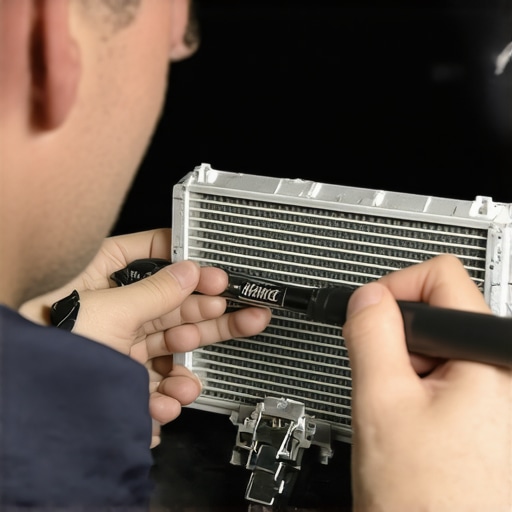
A sophisticated auto repair strategy involves the use of digital borescopes to inspect the ‘dark side’ of the evaporator core where standard visual inspections cannot reach. These specialized cameras allow technicians to spot early-stage fungal blooms before they become airborne. This level of car service is crucial because once a biofilm matures, it develops a protective matrix that resists standard aerosol treatments. Furthermore, the SAE International (Society of Automotive Engineers) has published extensive research on ‘after-blow’ logic, a feature in certain vehicle models that activates the blower motor several minutes after the car is parked to dry the evaporator. If your vehicle is equipped with this feature but it is disabled, you are effectively leaving a wet sponge in a dark box every time you park. Professionals can often use high-level vehicle diagnostics tools to re-enable or adjust these parameters, providing a permanent digital solution to a biological problem.
Does Your Cars Software Logic Invite Microbial Growth?
Understanding the interplay between humidity sensors and the Body Control Module is a hallmark of an expert technician. In high-humidity environments, a system that closes the fresh air intake door too early effectively traps saturated air against the cooling fins. When the temperature drops as the car cools down, this moisture condenses rapidly. We have seen cases where simply updating the HVAC control module software—a process often overlooked in general maintenance—completely eliminated recurring odor issues. This highlights the importance of staying updated on top auto repair techniques every car owner should know, as the solution is frequently found in a laptop rather than a wrench. If you find that your vents remain damp even after a long drive, it might be time to have a specialist look at the actuator door calibration through the hidden world of vehicle diagnostics to ensure your system is breathing correctly. Have you ever tried a software update to fix a mechanical-sounding problem? Share your experiences with digital car repairs in the comments below to help other owners navigate these complex systems.
The physical anatomy of the air intake system is your first line of defense against biological encroachment. Many vehicle owners overlook the cowl area—the plastic grate at the base of the windshield—which serves as the primary gateway for fresh air. When this area becomes a graveyard for decaying leaves, pine needles, or road salt, it creates a nutrient-rich slurry that eventually migrates into the HVAC plenum. This organic compost doesn’t just smell; it holds moisture directly against the metal surfaces of the evaporator, accelerating galvanic corrosion. In high-end car service, cleaning this area is as vital as the internal flush. If you’ve noticed a rattling sound in your fan or a musty scent that intensifies after rain, your auto repair professional should check for debris infiltration that might be bypassing the initial seals. 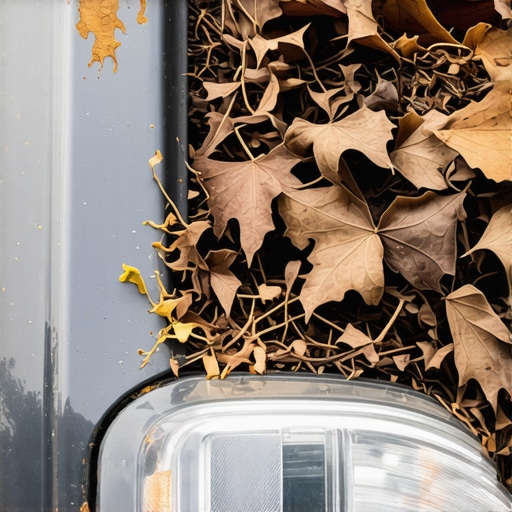
Can a Blocked Cabin Filter Lead to Ice on Your Evaporator?
The relationship between airflow and thermodynamics is a delicate balance that, when disrupted, can lead to mechanical failure. A severely restricted cabin air filter reduces the volume of air passing over the cold evaporator coils. Without enough thermal load from warm cabin air, the refrigerant temperature can drop below the freezing point, causing atmospheric moisture to turn into solid ice on the fins. This icing up phenomenon completely blocks airflow and can eventually lead to liquid slugging, where unevaporated refrigerant returns to the compressor, potentially destroying it. Utilizing vehicle diagnostics to monitor evaporator temperature sensors can catch this trend before the ice block forms. If you experience a total loss of airflow after an hour of driving, only for it to return after the car sits and thaws, your system is likely freezing due to restricted breathing.
The Engineering Behind High-Intensity Thermal Cleaning
While foaming agents are the industry standard, some persistent microbial colonies require a more aggressive thermal or electromagnetic approach. Professional technicians are increasingly looking toward industrial standards set by organizations like ASHRAE (American Society of Heating, Refrigerating and Air-Conditioning Engineers), which provides research on the effectiveness of specific environmental controls in neutralizing airborne pathogens. In the automotive world, this translates to specialized high-heat cycles or ozone treatments to penetrate the porous surfaces within the ductwork. This is a level of car service that goes beyond the surface, ensuring that even the most stubborn spores are neutralized. If your vehicle has a complex multi-zone system, the vehicle diagnostics module can sometimes be used to force the heater to maximum output through all vents simultaneously. This heat soak method can help dry out deep recesses of the plenum that remain perpetually damp during the summer months. Understanding these nuances is part of why choosing a specialized shop is better than a generalist for long-term air quality. Have you checked your windshield cowl for debris lately? It might save you an expensive trip to the shop and protect your health in the process. As we analyze the molecular impact of these cleaning agents, the focus shifts toward the long-term durability of the plastic components housing the core.The chemical interaction between potent biocides and the specialized polymers used in modern HVAC housings is a critical concern for long-term component integrity. While high-concentration alcohols or chlorinated compounds are effective at obliterating fungal spores, they can also strip the plasticizers from the plenum walls, leading to brittleness and eventual structural failure. A superior car service approach prioritizes pH-neutral, surfactant-based formulations that lift the biofilm without compromising the substrate. According to the Centers for Disease Control and Prevention (CDC), controlling moisture remains the most effective way to inhibit mold growth in any enclosed environment, and this is especially true for the microscopic crevices within your car’s dashboard. Utilizing specialized vehicle diagnostics to ensure the blower motor is moving sufficient CFM (Cubic Feet per Minute) can prevent the stagnant air pockets where these chemical reactions and biological blooms take hold.
Preserving Your Dash from Chemical Burnout
The selection of an antimicrobial agent is not merely a matter of fragrance but of material science. In many European luxury models, the evaporator casing is composed of glass-filled polyamides which react differently to solvent-based cleaners than the standard polypropylene found in economy vehicles. When performing auto repair on these systems, a technician must ensure the cleaning agent is compatible with the sealants used on the evaporator core itself. If an incompatible chemical degrades the foam gaskets, you may solve the odor problem only to create a massive air leak that prevents the vents from switching between the floor and the defrost settings. This is why a professional car service entails a meticulous review of the Technical Service Bulletins (TSBs) to match the cleaner to the specific vehicle architecture.
Does UV-C Radiation Provide a Permanent Shield Against Biofilms?
In the search for a permanent solution, some high-end auto repair shops are experimenting with portable ultraviolet germicidal irradiation (UVGI) units. By inserting a compact UV-C wand through the cabin filter slot, technicians can disrupt the DNA of pathogens on the evaporator surface without using liquid chemicals. However, this method requires a direct line of sight; any shadowed portion of the evaporator fins remains a potential breeding ground. This is where advanced vehicle diagnostics play a vital role, as sensors can detect the drop in cooling efficiency that suggests a physical obstruction remains. If you are tired of the constant cycle of cleaning and re-contamination, it might be worth investigating if your vehicle’s architecture allows for a semi-permanent UV-C installation or a more robust drainage upgrade. 
Future-Proofing Your Air Quality with Precision Sensor Suites
The integration of PM2.5 sensors into high-end climate control modules allows the vehicle to make real-time decisions about air intake. When these sensors detect high levels of particulate matter—which often serve as the physical ‘rafts’ for bacteria to enter the system—the system should ideally pivot to recirculation, but only if the internal humidity is low. Professional car service now involves calibrating these environmental sensors to ensure they aren’t inadvertently sealing the car into a ‘greenhouse’ state. Expert auto repair technicians must look beyond the physical wrench and understand the logic gates that control the fresh air door. If these parameters are set too conservatively, the system traps moisture, necessitating frequent cleaning cycles. Are you noticing a delay in how quickly your windshield defogs in the morning? This is often the first sign of a saturated system. Drop a comment below or ask our experts about the specific air-quality sensors in your model to see how we can optimize your cabin environment. As we analyze the molecular impact of these cleaning agents, the focus shifts toward the long-term durability of the plastic components housing the core.
Expert Insights & Advanced Considerations
Check the Blower Motor Resistor Opening for Direct Access
In many modern vehicles, the blower motor resistor sits directly in the path of the evaporator’s airflow. When treating for biological odors, removing this component provides a strategic entry point for a borescope or a cleaning wand. It allows for a direct visual of the upstream side of the core, where the most significant microbial matting usually occurs during a thorough car service. Ignoring this access point often means you are only treating half the problem, leaving deep-seated spores to multiply shortly after treatment.
Protect the Core from High-Pressure Water Damage
While it might be tempting to use a pressure washer to clear out debris from the exterior condenser, doing so on the interior evaporator is a recipe for disaster. The aluminum fins are incredibly delicate and will flatten under pressure, permanently restricting airflow and forcing an expensive auto repair. Instead, rely on low-pressure chemical expansion or specialized foaming agents that lift contaminants without physical force. This preserves the thermal efficiency of the system while ensuring the microbial biofilm is fully dissolved.
Use After-Blow Software Logic to Stay Dry
Advanced vehicle diagnostics often reveal hidden features like After-Blow, which keeps the fan running for several minutes after the car is turned off to dry the core. If your vehicle supports this feature, enabling it via a professional scan tool is the single best way to prevent the old gym socks smell from returning. This proactive digital adjustment is often more effective than repeated chemical treatments, as it addresses the root cause: stagnant moisture.
Curated Expert Resources
SAE International Technical Papers: These provide engineering-level data on how different evaporator coatings resist mold growth and the detailed thermodynamics of cabin moisture control.
MACS (Mobile Air Climate Systems Association): This is the primary authority for specialized HVAC knowledge, offering certifications and training modules specifically for mobile climate control professionals.
ASE HVAC Certification Guides: These are essential for any owner wanting to verify that their chosen car service provider has the necessary credentials to handle complex refrigerant and air-delivery systems.
EPA Guide to Biological Pollutants: This resource offers the scientific foundation for how mold impacts respiratory health, reinforcing why maintaining a clean cabin environment is a medical necessity rather than a luxury.
Final Expert Perspective
Maintaining a pristine cabin environment requires a shift from reactive masking to proactive management of your vehicle’s ecosystem. By recognizing that air quality is a product of both physical drainage and electronic logic, you can ensure long-term comfort. Mastering top auto repair techniques every car owner should know ensures your vehicle remains a sanctuary of clean air. Whether you are dealing with a simple drain clog or need a deep dive into the hidden world of vehicle diagnostics, the key is precision. If your car is exhibiting other environmental issues, such as a cooling fan that will not turn off, it is vital to address the electrical root cause alongside the mechanical symptoms. How has your vehicle’s air quality changed since you last addressed the evaporator? We invite you to share your results or contact us for specialized assistance in restoring your cabin’s air purity.