Suspension systems serve as the critical interface between a vehicle’s mass and the road surface, performing the complex task of dissipating kinetic energy while maintaining a stable tire contact patch. While the average car owner might only associate shock absorbers with comfort, an expert perspective reveals that these components are foundational to the vehicle’s active safety architecture. When dampers lose their ability to control oscillation, the resulting ‘unsprung mass’ movement can significantly interfere with anti-lock braking systems and electronic stability controls. Professional auto repair and vehicle diagnostics must therefore look past the superficial ‘bounce test’ to identify the subtle degradation of internal valving and hydraulic fluid viscosity.
The Hidden Cost of Dampener Fade on Modern Safety Systems
In the realm of high-end car service, we recognize that dampers are not binary—they do not simply ‘work’ or ‘fail.’ Instead, they undergo a gradual process known as dampener fade. Over approximately 50,000 miles, the internal piston travels millions of times, creating heat that eventually shears the hydraulic fluid molecules. This reduced viscosity means the strut can no longer provide the consistent resistance required for emergency maneuvers. According to technical standards maintained by SAE International, even a 50% reduction in damping efficiency can increase braking distances on uneven surfaces by several meters, a margin that often makes the difference between a near-miss and a collision.
Is it a Transmission Shiver or Simply a Blown Shock?
Diagnostic confusion often arises when a vehicle exhibits high-speed vibrations. A driver might suspect they are dealing with complex transmission failures or driveline imbalances when the actual culprit is a resonant wheel hop caused by a spent shock. If the damper cannot hold the tire against the tarmac, the wheel begins a micro-bounce that mimics a mechanical shudder. Differentiating these requires a systematic approach to vehicle diagnostics where technicians evaluate the frequency of the vibration relative to engine RPM versus road speed.
Your Tires Tell the Story Your Seat Tries to Hide
Experienced technicians often find the most reliable evidence of suspension failure by reading the tread. When a shock absorber is ‘spent,’ it fails to keep the tire pressed firmly against the road during small bumps. This results in ‘cupping’ or ‘scalloping’—distinctive valley-like wear patterns around the circumference of the tire. If you notice why your tires are wearing unevenly on the inside edge, it may be a combination of alignment issues and a failure to control vertical movement. This is why a comprehensive car service should always include a tactile inspection of the tread surface to feel for these rhythmic depressions.
Stop the Nose Dive Before It Compromises Your Braking Distance
Under heavy deceleration, the weight of the vehicle shifts forward. Functioning struts manage this weight transfer, preventing the front end from ‘diving’ excessively. If you feel the nose of your car dip sharply every time you apply the brakes, your dampers are likely incapable of managing the transient load. This isn’t just an ergonomic annoyance; it unloads the rear tires, reducing their traction and making the car prone to swerving. To ensure your vehicle remains composed, choosing the right car service for seamless vehicle maintenance is essential to catch these geometric shifts before they lead to hardware failure. Are you experiencing a ‘loose’ steering feel or noticing fluid misting on your strut bodies? Share your diagnostic findings in our expert forum or consult our professional guides to compare your symptoms with documented auto repair case studies.
In the world of high-performance auto repair, the presence of nitrogen gas in a mono-tube shock is not a luxury—it is a functional necessity. High-pressure nitrogen exerts force on a floating piston, which in turn keeps the hydraulic fluid under pressure, preventing the formation of air bubbles known as cavitation. When a shock loses its gas charge, the fluid effectively ‘boils’ under rapid oscillation, leading to a sudden loss of damping force during spirited driving or on rough terrain. If you find your car behaves well on short trips but becomes bouncy after thirty minutes of driving, you are likely experiencing fluid aeration. This is a nuance often missed during a standard car service because the vehicle is static during the inspection.
Can a Degraded Control Arm Bushing Mimic Strut Failure?
Expert vehicle diagnostics requires distinguishing between the damper itself and the rubber-to-metal interfaces that house it. A torn compliance bushing allows the entire suspension geometry to shift under load, creating a ‘clunk’ that sounds identical to a failed strut mount. However, while a blown shock affects vertical oscillation, a bad bushing often influences the horizontal plane. This instability can explain why your car pulls to one side even after an alignment, as the dynamic caster changes every time you accelerate or brake. Before committing to expensive auto repair, a technician should use a pry bar to check for excessive deflection in the control arm pivots, ensuring the dampening system isn’t being blamed for a structural failure. 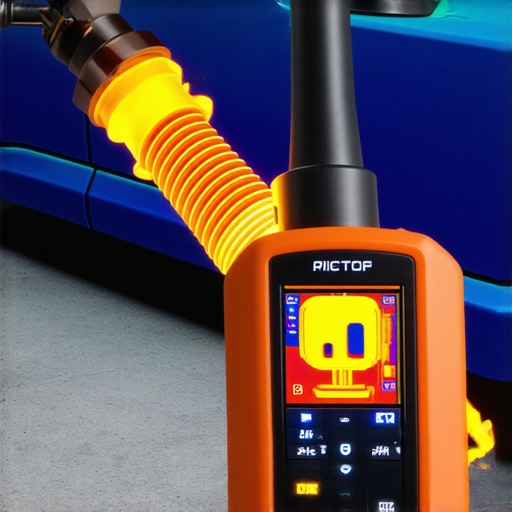
Thermal Diagnostics Beyond the Visual Leak
While most DIY guides focus on how to identify a leaking strut before the bounce test fails, top-tier shops now utilize infrared thermography. Since a shock’s primary job is to convert kinetic energy into heat, a working shock should be significantly warmer than the surrounding chassis after a rigorous test drive. If one shock remains cold while the others are warm, the internal valving has failed, regardless of whether it looks clean on the exterior. This scientific approach eliminates the guesswork inherent in the traditional ‘bounce’ method. According to technical bulletins from the Tire Industry Association (TIA), maintaining this balance is crucial because an asymmetrical damping rate across an axle can lead to unpredictable handling during emergency lane changes.
Stop Ignoring the Resonant Frequency Clues
When a vehicle develops a rhythmic thrumming at specific speeds, it is tempting to start identifying a bad wheel bearing before it becomes dangerous. However, a ‘tired’ strut that has lost its high-speed valving sensitivity can allow a tire to enter a resonant state. This isn’t a continuous vibration but one that peaks at exactly 55 or 60 mph. If you have already balanced your tires and the vibration persists, the strut’s inability to dampen the tire’s natural frequency is the most probable culprit. To help you narrow this down, we recommend checking the easy way to tell if your struts are actually blown which focuses on the secondary vibrations that standard tests overlook. Have you encountered a mystery vibration that disappeared after a suspension refresh? Share your experience below or let us know which diagnostic tool finally solved your handling issues.The subtle shift in a vehicle’s static height, often as small as 5–10 millimeters, can drastically alter the scrub radius and roll center. In professional auto repair, we often see enthusiasts ignore the fact that high-pressure gas shocks can slightly raise a car’s ride height, inadvertently affecting the suspension’s geometry. This isn’t just about how the car looks; it’s about how the suspension reacts under lateral G-loads. When the roll center is out of sync with the center of gravity, the vehicle may feel ‘tippy’ even with brand-new components. 
Your Cameras and Sensors Depend on Your Struts
Modern safety suites, specifically Advanced Driver Assistance Systems (ADAS), rely on a level platform to function correctly. If your struts allow excessive ‘pitch and dive,’ the pitch angle of the vehicle can move the focal point of the forward-facing camera outside of its programmed window. According to technical specifications from I-CAR, even a minor change in resting height or a failure to control dynamic pitch can necessitate a full ADAS recalibration to prevent the automatic emergency braking from engaging at the wrong moment. This is a critical factor in vehicle diagnostics that is frequently overlooked by generalist shops during a standard car service. To ensure your safety tech isn’t working against you, a post-installation scan of the steering angle sensor and camera alignment is mandatory.
Does a Performance Lowering Kit Require High-Valved Dampers?
Many drivers make the mistake of pairing stiff, lowering springs with stock-valved struts. This is a recipe for internal damage. Because a lowering spring reduces the available travel, a standard strut will constantly operate in its ‘bump’ zone, leading to rapid seal failure and a harsh, uncontrolled ride. True car service expertise dictates that if you change the spring rate or the ride height, you must match it with a damper specifically valved for that shorter, stiffer stroke to ensure the hydraulic circuit can still dissipate energy effectively without bottoming out.
When Electronic Dampers Go Dark
As we move into the realm of semi-active systems like MagneRide or adaptive valve technology, the auto repair process shifts from purely mechanical to electro-hydraulic. These systems utilize Magnetic Rheological (MR) fluid, which contains tiny iron particles that change viscosity in milliseconds when a magnetic field is applied. A common failure point in these high-tech systems isn’t a leak, but a breakdown in the wiring harness or a seized solenoid valve inside the strut body. If your dashboard displays a ‘Suspension Fault’ light, the first step in vehicle diagnostics should be a resistance check of the internal coils. Are you struggling with a dashboard light that appeared after a suspension swap? Describe your vehicle’s error codes in our community section or check our guide on sensor-integrated dampers. Unlike traditional shocks that slowly fade, an electronic damper can experience a ‘hard’ failure where the internal valving defaults to its stiffest setting—often referred to as ‘fail-safe’ mode—making the car feel like it has no suspension at all. This occurs when the Electronic Control Unit (ECU) detects an implausible signal from the ride height sensors or a break in the current loop. Professional technicians must use high-level vehicle diagnostics tools to monitor the amperage sent to each corner in real-time. If the current is fluctuating wildly, the issue might not be the strut itself, but a corroded ground wire or a failing body control module. This complexity is why specialized auto repair for modern high-performance vehicles requires a deep understanding of CAN-bus communication. When the magnetic fluid is subjected to constant electrical cycles, the particles can eventually…clump or ‘plate out’ on the internal solenoid surfaces. This chemical degradation effectively reduces the dynamic range of the damper, making the transition from ‘touring’ to ‘track’ modes feel indistinguishable. In high-stakes auto repair, simply swapping the hardware isn’t enough; the technician must verify that the software mapping for the new damping rates aligns with the vehicle’s VIN-specific configuration.
Why Micro-Friction Leads to Macro-Handling Failures
Internal valving depends on shim stacks—wafer-thin metal discs that flex to allow fluid bypass. Over time, these discs lose their spring tension or develop micro-fractures. This is the ‘ghost in the machine’ of auto repair; the strut looks perfect and has no leaks, yet the vehicle feels ‘loose’ at high speeds. According to research published by the National Highway Traffic Safety Administration (NHTSA), degraded suspension components significantly impede the effectiveness of Electronic Stability Control (ESC) by introducing lag between the sensor’s command and the tire’s actual contact pressure. This disconnect can cause the ESC to over-correct, leading to a jerky, unpredictable driving experience during emergency maneuvers.
Can Magnetic Rheological Fluid Actually Wear Out Without Leaking?
Absolutely. The iron particles suspended in synthetic oil are subject to mechanical shearing and permanent magnetization over hundreds of millions of cycles. As these particles collide under high-frequency oscillation, they lose their sharp edges and become rounded, which diminishes their ability to form the rigid structures required to stiffen the damper on command. This is why a high-mileage luxury vehicle may feel ‘floaty’ or unrefined even if the magnetic shocks are electronically functional and visually dry. Real-world vehicle diagnostics must include a subjective road test by a specialist who understands the intended ‘feel’ of a semi-active system.
Synchronize Your Chassis with the Virtual Steering Angle
Whenever you replace an electronic strut or even a control arm, the vehicle’s zero-point calibration is often disturbed. The car service isn’t finished until the Steering Angle Sensor (SAS) is reset and synchronized with the ride height sensors. If the car’s computer perceives a phantom lean because the sensors aren’t indexed, the active damping system will over-stiffen one side to compensate for a body roll that isn’t actually occurring. This creates a subtle but fatiguing ‘darting’ sensation on the highway where the car seems to hunt for a center line. 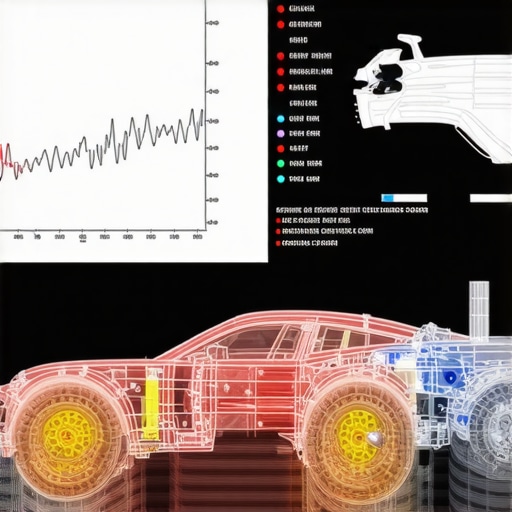
Don’t Let a Passive Component Sabotage Your Active Safety
The era of the generalist mechanic is rapidly closing; today’s auto repair requires a technician who is part mechanical engineer and part software coder. If your vehicle feels disconnected from the road or behaves unpredictably during mid-corner bumps, it is time to move beyond basic visual inspections and into the realm of data-driven vehicle diagnostics. Have you ever noticed your car’s handling change after a software update or a battery replacement? Tell us about your experiences with adaptive suspension glitches or share your diagnostic success stories in the comments below to help others identify these complex failures before they lead to costly hardware damage.
Expert Insights & Advanced Considerations
Why ADAS Calibration is the New Alignment
Every time you replace a strut or even adjust the ride height by a few millimeters, you are effectively moving the goalposts for your vehicle’s safety cameras. In the sphere of advanced vehicle diagnostics, we have seen that even a 1-degree shift in pitch can cause an Automatic Emergency Braking (AEB) system to miscalculate an object’s distance. It is imperative to treat any suspension work as a precursor to a sensor recalibration to maintain the integrity of the hidden world of vehicle diagnostics.
Shear Rates Matter More Than Leaks
A shock absorber that is visually dry can still be functionally dead. The hydraulic fluid inside is subjected to extreme thermal stress that shears the long-chain molecules, reducing its ability to resist movement. If your vehicle feels ‘loose’ during high-speed transitions but shows no signs of fluid loss, the fluid’s viscosity has likely broken down. Professional auto repair standards suggest that by 50,000 miles, the fluid has typically lost the consistency required for peak performance.
The Fail-Safe Trap in Active Suspension
Electronic dampers often have a default ‘hard’ mode for when the system detects a sensor fault. Many drivers mistake this extreme stiffness for a mechanical failure of the strut when it is actually a software-driven safety state. Using the $20 scan tool that does more than the dealership rig can help you differentiate between a seized valve and a simple communication error on the CAN-bus before you order expensive replacement hardware.
Stop Replacing Shocks for Bushing Failures
A frequent mistake in general car service is blaming a strut for a noise that actually originates in the control arm or subframe bushings. If you notice why your car pulls to one side even after an alignment, the issue is likely a lateral shift in the suspension geometry caused by a torn compliance bushing rather than a vertical damping failure. Always perform a loaded pry-bar test on all rubber interfaces before condemning the dampers. #IMAGE_PLACE_HOLDER_E#
Curated Expert Resources
SAE International Technical Standards
The Society of Automotive Engineers provides the foundational research on damping ratios and fluid dynamics that defines how modern vehicles handle. Their technical papers are the ultimate resource for understanding the math behind your car’s stability.
I-CAR Repairability Technical Support
For those focused on the intersection of structural integrity and safety tech, I-CAR offers detailed guides on how suspension changes affect sensor calibration and chassis alignment in late-model vehicles.
Tire Industry Association Training Materials
The TIA provides invaluable data on how suspension oscillation creates specific tire wear patterns, making them a primary source for diagnostic technicians who ‘read’ tread to find hidden faults.
The Reliable Auto Cares Technical Library
Our own repository of case studies focuses on real-world applications of auto repair theory, bridging the gap between factory manuals and garage-floor reality.
Final Expert Perspective
Modern suspension is no longer just a collection of springs and oil; it is an integrated network of hydraulic precision and electronic oversight. True mastery of auto repair in the current era requires looking beyond the obvious signs of wear to understand how damping rates influence everything from ADAS sensitivity to tire resonance. By prioritizing high-level vehicle diagnostics, you protect both the mechanical longevity of your car and the integrity of its safety systems. If you have encountered a suspension mystery that defied standard logic, we invite you to consult our latest expert auto repair tips for 2025 or share your findings with our technical community to help push the boundaries of DIY and professional maintenance.