Suspension Health Requires More Than Just a Physical Shove
In the realm of advanced vehicle diagnostics, the traditional bounce test—a method where a technician or owner pushes down on the vehicle’s corner to observe rebound—is increasingly viewed as a rudimentary screening tool rather than a comprehensive assessment. While a car that continues to oscillate after a single shove certainly indicates a catastrophic failure, this test often fails to detect early-stage degradation in modern auto repair scenarios. Precise dampening is critical for maintaining tire contact patches and ensuring that electronic stability control systems receive accurate data. Expert technicians understand that the hydraulic integrity of a strut often begins to fail long before the internal valving loses its ability to resist massive vertical displacement. Professionals look for more subtle indicators during a routine car service to prevent premature tire wear and compromised braking distances, which can be far more dangerous than a slightly uncomfortable ride.
The Visual Language of Hydraulic Failure
One of the most reliable ways to evaluate suspension health is through a meticulous visual inspection of the strut body. According to the Society of Automotive Engineers (SAE), hydraulic dampening consistency is paramount for vehicle safety and performance metrics. When a strut begins to leak, the internal oil—which is pressurized to provide consistent resistance—bypasses the upper seals. You might notice a light film of oil, often referred to as “misting,” on the upper portion of the strut housing. While a minor amount of misting can be normal over tens of thousands of miles, actual “weeping” where fluid has run down the side of the housing is a clear sign that a replacement is imminent. Determining if your struts are actually blown requires distinguishing between this normal operational residue and a total seal breach that compromises the component’s internal pressure.
How Does a Weak Strut Interfere with Your ABS?
Modern vehicles rely heavily on the suspension to provide a stable platform for sensors. When a strut begins to fail, the tire can experience micro-bounces that are invisible to the naked eye but easily detected by the Anti-lock Braking System (ABS) and Electronic Stability Control (ESC) modules. These systems may interpret the rapid change in wheel speed—caused by the tire leaving the pavement—as a loss of traction, leading to premature ABS activation or unnecessary throttle cutting. This phenomenon demonstrates why vehicle diagnostics must look beyond mechanical hardware and consider how suspension degradation affects the entire digital ecosystem of the car. If you notice your safety lights flickering on uneven pavement, it may be time to consult an expert for a professional assessment of your dampening system.
Sensory Cues Beyond the Visual Inspection
Experienced drivers often feel a failing strut before they see it. “Cupping” wear on tires—small, scalloped dips in the tread—is a classic symptom that the strut is no longer keeping the tire firmly planted on the pavement. Furthermore, a metallic “clunk” or “rattle” when traveling over expansion joints or small potholes often indicates that the internal mount or the strut itself has lost its ability to isolate road shocks. This isn’t just about comfort; it’s a critical component of car service that impacts the longevity of your steering rack and even transmission mounts, which can suffer from the increased vibration levels transferred through the chassis. For a deeper dive into modern troubleshooting and how to keep your vehicle at peak performance, explore the hidden world of vehicle diagnostics to understand how interconnected these systems truly are. Subtle changes in steering response or a slight drift during heavy braking are often the first signs that your hydraulic seals are no longer maintaining the necessary pressure to control the coil springs effectively.
Align the Geometry Before Blaming the Shocks
A common pitfall in high-level auto repair is diagnosing a suspension fault in isolation without considering the vehicle’s alignment geometry. When struts lose their dampening force, the ride height can slightly sag, which fundamentally alters the camber and toe settings. This shift often leads to a vehicle that feels unstable or hunts for center even on straightaways. Many drivers suspect a steering rack failure when their car pulls to one side even after an alignment, but the root cause is frequently a strut that no longer supports the dynamic weight transfer of the vehicle. Expert diagnostics require looking at the synergy between the suspension mounting points and the steering knuckle to ensure that the hardware isn’t fighting itself during every turn.
Can a Failing Strut Actually Kill Your Fuel Economy?
While most enthusiasts focus on the engine and transmission when discussing efficiency, the chassis plays a surprisingly vital role. According to the Car Care Council, poorly maintained suspension components can lead to irregular tire wear and increased rolling resistance, which forces the engine to work harder to maintain speed. Worn dampeners allow the wheels to oscillate excessively, causing the tires to scrub against the road surface rather than rolling cleanly. This parasitic drag is a significant part of the hidden reason your gas mileage just dropped without a corresponding check engine light. By stabilizing the vehicle’s vertical movement, you ensure that the tires maintain an optimal contact patch, reducing friction and preserving your fuel budget.
Spot the Subtle Telltales of Chassis Fatigue
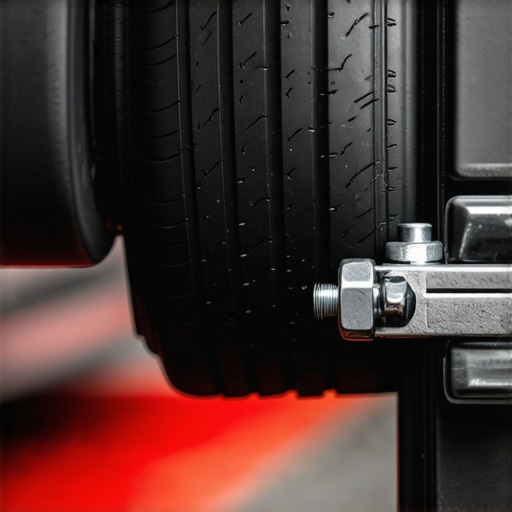
Identifying suspension failure isn’t always about fluid leaks; sometimes it’s about the frequency of vibrations transmitted to the cabin. If you find that your steering wheel shakes when you hit the brakes, it may not just be warped rotors—it could be worn-out strut bushings failing to absorb the initial bite of the calipers. This ripple effect can mask other issues, making it difficult to distinguish between mechanical wear in the hubs or the dampeners themselves. For instance, knowing the specific noise your wheel bearing makes before it fails is crucial because the low-frequency hum of a bearing can often be confused with the resonant tire roar caused by cupped tread from bad shocks. Advanced vehicle diagnostics involve a process of elimination where the technician must isolate these acoustic signatures to provide an accurate car service plan. We invite you to share your own experiences in the comments: have you ever had a noise you were certain was a wheel bearing, only to find out it was actually a failed strut mount?
The Digital Edge in Modern Component Testing
As vehicles become more integrated, the use of telematics and diagnostic software has moved from the engine bay to the chassis. A technician using the $20 scan tool that does more than the dealership rig can often access ride-height sensor data in real-time. By monitoring how quickly these sensors return to a baseline after a bump, a professional can mathematically determine the health of the dampening valves without even taking the wheel off. This level of precision is becoming the standard in modern shops, moving away from subjective ‘feel’ and toward data-driven maintenance. Have you tried using a dedicated OBD2 scanner to check your suspension’s performance? Let us know which tools have helped you stay ahead of your car’s maintenance needs.
Stop the Imbalance by Replacing Struts in Pairs
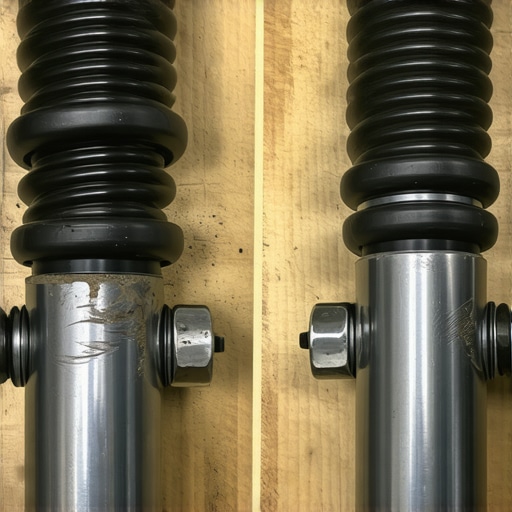
Precision in auto repair dictates that suspension components should never be treated as solitary actors. While it might be tempting to replace only the single leaking unit to save on immediate costs, this creates a dangerous “dampening asymmetry.” A new strut possesses significantly higher internal gas pressure and fresher hydraulic valving compared to its counterpart on the opposite side, which may have tens of thousands of miles of wear. This discrepancy leads to uneven weight transfer during cornering and erratic nose-dive under heavy braking. In high-performance vehicle diagnostics, we see this manifest as a car that turns more sharply in one direction than the other. To maintain the predictability required for emergency maneuvers, always service the axle as a complete unit.
Protect Your Driveline from Violent Road Vibrations
Most drivers do not realize that a failing suspension system sends a shockwave through the entire powertrain. When a strut loses its ability to isolate high-frequency road noise, those vibrations travel directly into the transmission and engine mounts. Over time, this accelerated “fretting” can cause the rubber in the mounts to crack or delaminate, leading to a harsh shifting sensation that many misdiagnose as an internal gearbox failure. A comprehensive car service should always evaluate the health of the dampeners before diving into expensive transmission diagnostics. By keeping the chassis stable, you are effectively shielding your most expensive mechanical components from the structural fatigue caused by poorly managed vertical acceleration.
Is the high cost of electronic active suspension actually worth it?
Owners of luxury and performance vehicles often face sticker shock when an adaptive or magnetic ride control strut fails. Unlike traditional hydraulic units, these systems use magnetorheological fluid or solenoid-driven valves to adjust damping rates hundreds of times per second. While the replacement cost is significantly higher, the safety and performance benefits are quantifiable. These systems can stiffen the outer struts in a millisecond during an abrupt swerve, preventing a potential rollover. However, vehicle diagnostics on these systems require specialized oscilloscopes and proprietary software to verify that the control module is sending the correct current to the actuators. If you are questioning whether to stick with OEM electronic units or “delete” them for standard struts, consider how much you value the car’s ability to adapt to varying road surfaces in real-time.
How Temperature Shifts Decimate Hydraulic Efficiency
The hydraulic fluid inside your struts is highly sensitive to ambient temperature changes, which fundamentally alters its kinematic viscosity. According to data from ASTM International standards for automotive lubricants, fluid that is too viscous in extreme cold cannot move through the internal valving orifices quickly enough, leading to a “harsh” ride that can actually damage the seals. Conversely, in extreme heat, the fluid thins out, reducing the strut’s ability to control spring oscillations. This is why high-end auto repair shops often recommend specific dampeners designed for regional climates. Understanding the chemistry of the fluid helps explain why your car might feel perfectly fine in the summer but like a “pogo stick” or a “brick” during the first freeze of winter. This thermal sensitivity is a primary reason for the eventual degradation of the internal shims and seals, as the fluid’s ability to maintain a consistent film strength vanishes when the mercury drops. If you’ve ever wondered why your car sounds more “mechanical” in January, the answer often lies in the changing flow rates of your dampening fluid. For more insights on seasonal maintenance, we recommend you book a seasonal inspection to see how your chassis is holding up against the elements.
Watch Out for Sagging Springs That Mimic Strut Failure
While much of the diagnostic focus rests on the dampening unit, the coil spring itself is the primary weight-bearing component. Over hundreds of thousands of compression cycles, the metallurgical integrity of the steel begins to fatigue, leading to a permanent loss in free height. This “spring sag” is often overlooked during a standard car service, yet it fundamentally alters the vehicle’s roll center and center of gravity. When the spring rate deviates from factory specifications, the strut is forced to operate outside its designed stroke range, which accelerates internal seal wear and can lead to frequent bottoming out. Precision vehicle diagnostics involve measuring the ride height at specific chassis points—not just looking for leaks—to ensure the entire structural assembly still meets the original manufacturer’s engineering tolerances.
Don’t Let Rattling Sway Bar Links Fool Your Diagnosis
Often, the “clunk” attributed to a failing strut is actually coming from a far less expensive, albeit critical, component: the stabilizer or sway bar link. These small ball-and-socket joints endure immense lateral stress during cornering. When the internal nylon seat wears down or the protective boot tears, the resulting metal-on-metal contact creates a rhythmic tapping that can vibrate through the floorboards. In the world of high-end auto repair, a common mistake is replacing expensive struts when a simple set of links would have restored silence. However, these links are more than just noise-makers; they are essential for managing body roll. According to the National Institute for Automotive Service Excellence (ASE), maintaining the integrity of the entire stabilizer system is vital for ensuring the vehicle reacts predictably during high-speed emergency lane changes.

How does a failing top mount bearing affect your steering effort?
The strut mount serves as the pivot point between the suspension and the chassis. Inside this mount sits a thrust bearing that allows the entire strut assembly to rotate as you turn the steering wheel. When this bearing becomes contaminated with road grit or the grease dries out, you may experience “memory steer”—where the car wants to keep turning after you’ve straightened the wheel—or a distinct “boing” sound as the coil spring jumps in its seat. This isn’t just an annoyance; it places massive torsional stress on your steering rack and transmission mounts. A sophisticated vehicle diagnostics approach always includes a “dry park” test to listen for these binding components, ensuring that the steering feel remains as fluid and precise as the day it left the showroom.
The Hidden Compromise of All-in-One Strut Assemblies
In the rush for a quick auto repair, many shops opt for “quick struts” or pre-assembled units. While convenient, these often utilize a “one-size-fits-most” spring rate that may not match the specific weight distribution of your vehicle’s engine and transmission combination. For a light-duty four-cylinder, a generic spring might be too stiff, causing a harsh ride; conversely, a heavy V6 or diesel may suffer from excessive nose-dive. True enthusiasts and meticulous technicians often prefer to rebuild the original housing with premium inserts to maintain the factory-tuned harmonics. If you are noticing a change in how your car handles mid-corner bumps, it may be time to consult our specialists to discuss whether a custom-tailored suspension solution is better for your driving style than a generic off-the-shelf part.
Expert Insights & Advanced Considerations
Valving Speed Dictates Real-World Stability
Technicians often obsess over total resistance, but the magic of a high-end strut lies in its high-speed valving. This allows the strut to react differently to a sharp pothole versus a long, sweeping turn. Without this precision, your vehicle loses its ability to stay settled during mid-corner bumps, a nuance that simple physical tests will never reveal.
Nitrogen Pressure Prevents Hydraulic Foaming
Many forget that struts are gas-charged for a reason. That nitrogen prevents the oil from aerating or foaming under intense use. If your car feels great for the first five minutes of a drive but becomes bouncy afterward, the gas has likely leaked, leading to oil cavitation as the temperatures rise and the components work harder.
The Hidden Connection Between Struts and Braking Efficiency
A strut that allows the nose to dive excessively increases the workload on the front brakes and shortens the life of your pads. It also confuses the brake proportioning valve by shifting too much weight too quickly. Ensuring your suspension is crisp is just as much a brake-related maintenance task as replacing the rotors or flushing the lines.
#IMAGE_PLACEHOLDER_E#
Curated Expert Resources
The SAE International Automotive Engineering Journal: This is the premier source for staying updated on emerging dampening technologies, chassis metallurgy, and the physics of vehicle dynamics.
ASE Test Prep Series (A4): Essential for any professional looking to bridge the gap between mechanical repair and digital diagnostics while maintaining the highest industry standards.
The Monroe Technical Training Portal: Offers specialized video tutorials and technical bulletins on identifying the Safety Triangle of steering, stopping, and stability components.
Final Expert Perspective
Achieving peak vehicle performance requires a commitment to comprehensive vehicle diagnostics that look beyond obvious fluid leaks. By understanding that a single worn strut can compromise your transmission health by allowing excessive driveline vibration and interfere with advanced safety sensors, you move from reactive maintenance to proactive preservation. When choosing your next car service, prioritize shops that utilize data-driven testing over outdated manual methods. If you are ready to restore that new car feel to your ride, reach out for a professional assessment or explore top auto repair techniques to stay ahead of the curve. Your chassis is the physical foundation of your safety—treat it with the technical respect it deserves.