The tactile feedback of a manual transmission provides a direct window into the mechanical soul of a vehicle. Unlike the buffered experience of an automatic, a manual gearbox relies on the physical synchronization of rotating components governed by fluid dynamics and mechanical leverage. When shifting becomes laborious, it is rarely a singular failure but rather a degradation of the delicate balance between friction, hydraulic pressure, and mechanical alignment. Mastering the nuances of this system requires moving beyond basic auto repair into the realm of sophisticated vehicle diagnostics to isolate the root cause before a simple resistance turns into a catastrophic failure. Professional car service experts recognize that a ‘notchy’ or ‘heavy’ shifter is the first warning sign of a transmission system under duress.
Why High Heat Destroys Your Shift Quality
Many drivers are misled by marketing terms regarding lubricant longevity, particularly the truth about lifetime transmission fluid claims. In reality, manual transmission fluid (MTF) is subject to extreme shear stress and thermal cycling. As the fluid breaks down, its viscosity index drops, leading to a thinner protective film. This is particularly noticeable as temperatures fluctuate. You may find that your transmission shifts hard when the engine is cold, which is often a result of fluid that has lost its ability to flow correctly at low temperatures or has accumulated microscopic metallic debris. Over time, this debris acts as an abrasive, accelerating the wear on internal components and making every gear gate feel like it is filled with sand.
Synchronizer Fatigue and the Physics of Gear Matching
The core of smooth shifting lies in the synchronizer rings. These components act as mini-clutches that match the speed of the gear to the speed of the input shaft before engagement. When these rings wear down or the frictional coefficient is altered by the wrong lubricant, they can no longer synchronize speeds effectively. According to technical research published by SAE International, the friction characteristics of synchronizer materials are highly sensitive to the additive chemistry in gear lubricants. If you are experiencing grinding during high-RPM shifts, you are likely witnessing the final stages of transmission failures decoded through physical resistance. Without the correct frictional properties, the gear teeth ‘clash’ rather than slide, leading to the dreaded crunching sound and physical pushback through the shift lever.
Is Your Clutch Actually Releasing Properly?
A common mistake in vehicle diagnostics is assuming the problem lies within the gearbox when it actually resides in the release mechanism. If the clutch does not fully disengage, the input shaft continues to spin even with the pedal to the floor, making it nearly impossible to force the shifter into gear—especially first and reverse. This is often caused by air in the hydraulic lines or a failing slave cylinder. It is essential to know how to diagnose a slipping clutch or a dragging pressure plate early on. If you’re experiencing unusual resistance, don’t wait for a total breakdown; investigate the deeper mechanics of vehicle diagnostics to identify the precise failure point.
Fix Your Shifter Linkage Before It Snaps
The physical connection between your hand and the transmission—the linkage—is often overlooked during a car service. Whether your vehicle uses solid rods or steel cables, these components are prone to stretching, bushing failure, or simple lack of lubrication. A worn bushing can create enough ‘slop’ in the system that the shifter no longer aligns perfectly with the internal shift rails. This misalignment manifests as a hard shift because the selector is hitting the edge of the gate rather than sliding through the center. Inspecting these external components is a low-cost entry point into auto repair that can often restore a factory-smooth feel without ever opening the gearbox casing.
A firm clutch pedal doesn’t always equate to a healthy hydraulic system. In many modern manual vehicles, the master and slave cylinders can develop internal leaks where fluid bypasses the internal seals without ever hitting the ground. This results in a ‘short stroke’ where the pressure plate never fully retracts, keeping the input shaft under slight load. This invisible drag is a nightmare for vehicle diagnostics because everything looks fine on the surface. If you’ve already checked your fluid levels, consider that the system might need a thorough purge. Learning how to flush your own brake lines without a helper provides the foundational skills needed to bleed a hydraulic clutch, as both systems rely on the same principle of eliminating compressible air to ensure a crisp, immediate release.
Stop Blaming the Gearbox When Your Mounts Are Shot
Sometimes the resistance you feel in the shifter has nothing to do with the internal gears and everything to do with where the transmission is sitting in the chassis. Engine and transmission mounts are designed to isolate vibration, but they also maintain the critical alignment between the shifter in the cabin and the gearbox underneath. When a rubber mount perishes, the entire drivetrain can sag or tilt. This subtle shift in geometry puts ‘preload’ on the shift cables or rods, making them bind as you move through the gates. Before committing to a costly rebuild, a smart auto repair strategy involves checking for excessive engine movement. A quick inspection of the bushings can reveal why a car service that only focuses on the oil fails to solve the physical struggle of finding third gear.
Could a Failing Pilot Bearing Be the Ghost in Your Machine?
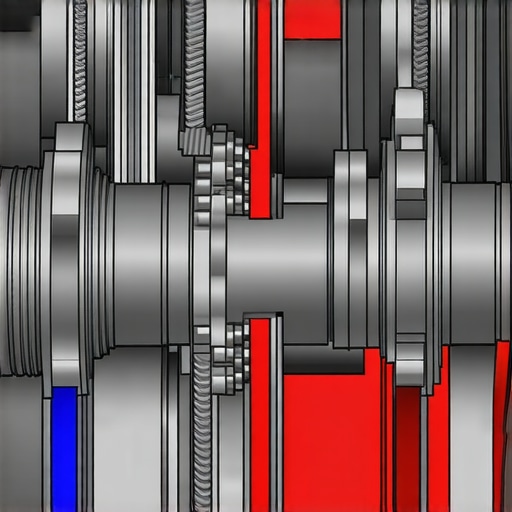
When you’re stopped at a light and first gear feels like a brick wall, the culprit might be the often-ignored pilot bearing. This tiny component supports the end of the transmission’s input shaft where it meets the crankshaft. If this bearing seizes or becomes ‘sticky,’ it will drag the input shaft along with the engine’s rotation even when the clutch is fully depressed. This creates a scenario where the synchronizers are fighting the full torque of the engine at idle. According to technical data from ZF Friedrichshafen, even a slight parasitic drag on the input shaft can increase synchronizer wear by over 40% during city driving. This is why professional vehicle diagnostics must include a check for shaft rotation during clutch disengagement to rule out these ‘ghost’ mechanical drags.
The Invisible Damage Caused by Shifter Resting
Expert mechanics often see premature wear on shift forks caused by a single bad habit: resting your hand on the gear lever while driving. While it feels natural, that slight pressure is transmitted directly to the shift fork, which then presses against the rotating synchronizer sleeve. This creates constant friction, heating up the fork and eventually thinning out the metal. This wear eventually leads to ‘play’ in the system, where the lever has to travel further to engage the gear, eventually making the transmission feel vague and difficult to slot into place. To avoid this, treat the shifter like a surgical tool—use it, then release it. If the damage is already done, you might need to look into the 10-minute fix for a loose shift linkage to see if the slack can be adjusted out before the fork fails entirely.
Navigating these mechanical hurdles requires the right equipment to verify your findings. While manual gearboxes are largely mechanical, the sensors that monitor gear position and speed are vital for modern ECU health. Utilizing the $20 scan tool that does more than the dealership rig can help you identify if a hard-shifting issue is triggering secondary sensor errors. Have you ever experienced a gear that suddenly became ‘forbidden’ during a road trip? Share your story in the comments below, or check out our guide on unlocking your car’s potential for more DIY diagnostic secrets.
When the Clutch Plate Sticks on the Splines
Beyond the hydraulic system lies a purely mechanical interface that frequently escapes notice during a standard car service: the input shaft splines. The clutch disc must slide freely along these splines to move away from the flywheel when the pedal is depressed. If these splines are bone-dry or contaminated with friction material dust and rust, the disc can ‘hang up,’ maintaining a faint but significant connection to the engine’s rotation. This results in a persistent transmission drag that makes selecting first gear at a standstill feel like pushing against a wall. A seasoned technician performing auto repair looks for ‘witness marks’ on the splines, which indicate where the disc has been binding. Applying a microscopic layer of high-temperature molybdenum disulfide grease during a clutch replacement is the only way to prevent this specific type of shift resistance.
Why Does Shift Resistance Vanish After the Gearbox Reaches Operating Temperature?
It is a common phenomenon where a vehicle feels recalcitrant in the morning but buttery smooth after twenty minutes of highway driving. This transition is governed by the thermal expansion coefficients of the gearbox case versus the internal shafts. As the aluminum housing warms up, it expands at a different rate than the steel gears and shafts, often increasing the internal clearances and allowing for smoother movement of the shift rails. Furthermore, the viscosity of the gear oil drops significantly as it reaches its optimal temperature, reducing the ‘drag’ on the synchronizer rings. If you find that your transmission shifts hard when the engine is cold, it might be a sign that your current fluid lacks the necessary cold-flow additives required for your specific climate.
Stop Using the Wrong Gear Oil in Brass Synchronizers
Selecting the correct lubricant is perhaps the most critical aspect of long-term transmission health, yet it is often where DIY auto repair goes wrong. Many modern manual gearboxes utilize brass or bronze synchronizer rings which are highly sensitive to chemical corrosion. According to the American Petroleum Institute (API) in their technical definitions for Service Category GL-4, these lubricants are specifically formulated for manual transmissions to ensure the ‘extreme pressure’ (EP) additives do not react negatively with yellow metals. In contrast, GL-5 fluids contain higher concentrations of sulfur-phosphorus compounds which, while excellent for protecting heavy-duty differentials, can actually strip the surface of brass synchronizers over time. This chemical wear leads to a gradual loss of frictional ‘bite,’ making every shift feel increasingly notchier until the gears begin to grind regardless of your shifting speed.
Master the Art of the Double-Clutch Diagnostic
When you are deep into vehicle diagnostics, you need a way to isolate internal mechanical wear from external linkage or hydraulic issues. This is where the old-school technique of double-clutching becomes a powerful diagnostic tool. By shifting into neutral, releasing the clutch, blipping the throttle to match the engine speed to the next gear, and then clutching back in to complete the shift, you are manually performing the job of the synchronizer. If the transmission slides into gear perfectly during a double-clutch but grinds during a normal shift, you have confirmed that your synchronizers are the primary failure point. This level of insight allows you to plan your car service more effectively, moving from guesswork to a targeted mechanical strategy. Before you pull the gearbox, take a moment to investigate the deeper mechanics of how these rotating masses interact under load.
Thermal management also plays a role in how the selector forks engage with the hub. If the gearbox has been run low on oil previously, the forks may have undergone slight heat-distortion. This distortion isn’t always enough to stop the car from driving, but it changes the ‘throw’ required to fully seat the gear…
Beyond the simple wear of friction materials, the structural integrity of the transmission case itself plays a pivotal role in shift quality. If the mounting bolts are unevenly torqued or if the case has suffered hairline stress fractures, the internal bores for the shift rails can lose their perfect parallelism. This microscopic deviation is enough to increase the sliding friction of the rails, making the gear selection feel heavy and imprecise even if the oil is fresh and the clutch is new. Professional vehicle diagnostics often overlook case distortion, but it is a primary factor in high-performance applications where the drivetrain is under immense structural load. Achieving mechanical perfection requires ensuring that every fastener is torqued to exact manufacturer specifications to maintain the geometric rectitude of the internal components.
Precision Torque and the Myth of ‘Good Enough’ Bolt Tension
In the world of auto repair, ‘hand-tight’ is often the precursor to mechanical failure. The interface between the engine block and the transmission housing must be perfectly flush. Even a half-millimeter gap caused by an improperly seated dowel pin or an over-torqued bolt can induce ‘case twist.’ When the housing twists, the input shaft and the main shaft are no longer perfectly concentric. This misalignment forces the synchronizer sleeves to engage at an angle, significantly increasing the effort required to move the gear lever. Expert car service involves using a calibrated torque wrench not just for the internal gears, but for every bellhousing and mount bolt to ensure the internal shafts remain in a state of perfect axial alignment.
Why Input Shaft Runout Is the Silent Gearbox Killer
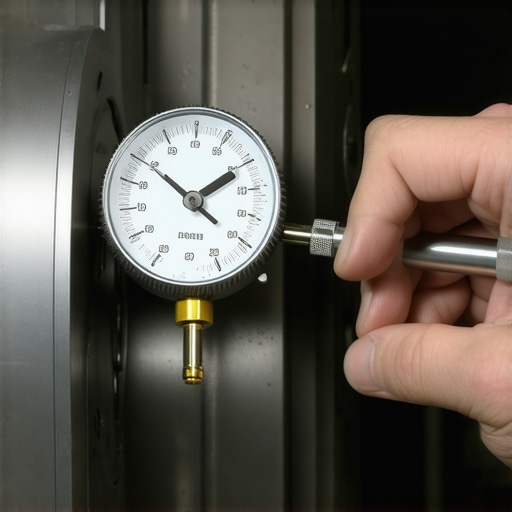
If you have replaced your clutch and still find yourself fighting the gear lever, you may be dealing with input shaft runout. This occurs when the shaft has a slight wobble, often caused by a previous bearing failure or a bent shaft from a botched installation. This wobble causes the clutch disc to vibrate even when the pedal is depressed, preventing it from stopping completely. This residual kinetic energy must be absorbed by the synchronizers, leading to a ‘notchy’ sensation that persists across all gears. Measuring runout requires a dial indicator and a steady hand, a level of vehicle diagnostics that separates master technicians from hobbyists.
Does Your Gearbox Suffer from Parasitic Internal Drag?
Parasitic drag is an invisible force that makes a transmission feel like it is submerged in molasses. It occurs when internal components—like the needle bearings under each gear—start to seize or lose their lubrication. Unlike a failing synchronizer which usually affects one specific gear, parasitic drag makes every shift feel sluggish and resistant. According to technical documentation from SKF on rolling bearings in automotive gearboxes, the choice of cage material and internal clearance is vital for minimizing the rolling resistance that can impede shift speeds. If your gear lever feels heavy even when the engine is off, the problem is likely mechanical friction within these internal bearing sets rather than a hydraulic or clutch-related issue.
When Chassis Flex Compresses Your Shift Geometry
Aggressive driving or aging chassis components can introduce ‘drivetrain lash,’ where the engine and gearbox move independently of the shifter’s mounting point in the cabin. Under hard acceleration or cornering, the engine twists on its mounts, pulling the shift cables taut or pushing the shift rods out of alignment. This dynamic change in geometry is why some cars shift perfectly on a lift but grind during a spirited drive. Upgrading to stiffer polyurethane mounts is a common auto repair solution to stabilize the drivetrain, ensuring that the shifter gate in your hand always matches the physical gate inside the transmission. Don’t let a sagging mount ruin your driving experience; precision starts with a stable foundation. Have you noticed your shifts getting harder during tight turns? Reach out to a specialist or explore our advanced guides to recalibrate your shift linkage for peak performance.
Expert Insights & Advanced Considerations
Why Micro-Scoring on Shift Rails Matters
While many technicians focus solely on the clutch, a seasoned veteran looks at the shift rails. Over hundreds of thousands of cycles, these hardened steel rails can develop microscopic burrs or scoring. These tiny imperfections create intermittent binding within the aluminum bores of the transmission case, a nuance of vehicle diagnostics that requires feeling for a ‘catch’ even when the engine is off. If the rail does not slide with zero resistance, no amount of fluid changes will restore that factory-smooth feel.
Stop Blaming Cold Weather for Old Fluid
It is easy to assume cold mornings are naturally hard on gears, but if your transmission shifts hard when the engine is cold, it is a definitive sign of fluid oxidation. As gear oil ages, its pour point increases, meaning it remains excessively viscous for longer after startup. This increased drag prevents the synchronizers from spinning up quickly, forcing you to exert more physical pressure at the lever. Fresh, high-quality manual transmission fluid is the most underrated auto repair for improving daily driveability.
The Hidden Danger of Yellow Metal Corrosion
Many owners mistakenly use modern gear oils thinking higher numbers are always better, but the truth about lifetime transmission fluid claims often masks the chemical reality of internal wear. Standard GL-5 lubricants can chemically attack the brass or bronze synchronizer rings in many gearboxes. Ensuring your car service uses a dedicated GL-4 fluid protects these ‘yellow metals’ from the aggressive sulfur additives found in heavy-duty differential oils that can eventually lead to gear clashing.
Curated Expert Resources
SAE International Technical Papers
For those seeking the physics behind gear matching, the SAE library offers peer-reviewed data on the frictional coefficients of carbon versus brass synchronizer linings. It provides the technical foundation for why specific fluid additives are required for smooth engagement.
ZF Friedrichshafen Service Manuals
As a global leader in gearbox engineering, ZF’s technical documentation is the gold standard for internal tolerances. Their guides on input shaft runout and bearing preload are essential for any complex transmission rebuild or diagnosis.
Reliable Auto Cares Diagnostic Library
Our deep-dive into the hidden world of vehicle diagnostics provides a practical framework for isolating mechanical gearbox failures from hydraulic system failures or electronic sensor interference.
A High-Level Look at Manual Gearbox Longevity
Solving a resistant transmission requires viewing the vehicle as a unified mechanical system rather than a collection of isolated parts. From the hydraulic integrity of the slave cylinder to the geometric alignment of the engine mounts, every millimeter of movement counts. True mastery in auto repair comes from recognizing that a heavy shifter is rarely a failure of the gear teeth themselves, but a breakdown in the synchronization of energy, heat, and friction. #IMAGE_PLACEHOLDER_E# Before you resign yourself to a full gearbox replacement, use these advanced vehicle diagnostics strategies to pinpoint the specific friction point. Do you have a gear that only grinds during high-speed downshifts or a specific temperature range? Join the conversation by sharing your diagnostic breakthroughs with our community of specialists.