The Critical Role of Hydraulic Purity in Modern Braking Systems
In the world of high-performance vehicle diagnostics and meticulous auto repair, the state of your brake fluid is a primary indicator of system health. Brake fluid is hygroscopic, meaning it actively absorbs moisture from the atmosphere, which significantly lowers its boiling point and introduces the risk of internal corrosion. When the brake pedal feels spongy after a long drive, it often signifies that water content has vaporized under heat, creating compressible gas pockets. A professional-grade car service requires a thorough flush to maintain the dry boiling point standards mandated by international regulations such as the SAE J1703 technical manual. Maintaining this standard ensures that your transmission and braking systems operate without thermal-induced fade.
The Advantage of Pressure Bleeding Over Traditional Methods
For those performing an unassisted flush, the pressure bleeder is considered the gold standard by field experts. Unlike the vacuum method, which can inadvertently pull air past the bleeder screw threads, a pressure bleeder forces fresh fluid from the master cylinder down through the lines under a constant atmosphere. This ensures that the delicate solenoids within the ABS modulator remain fully submerged and free of air locks. If you encounter mechanical resistance during the process, you might need to learn how to unstick a caliper before proceeding, as a frozen bleeder screw can compromise the entire procedure and lead to snapped hardware. This method also prevents the master cylinder piston from traveling into unused, potentially corroded areas of the bore, a common failure point in older vehicles during manual pedal-pumping sessions.
How Do Proportional Valves Impact Solo Bleeding Success?
Many modern vehicles utilize a proportioning valve to balance pressure between the front and rear axles. During a solo flush, if the pressure differential becomes too great between circuits, the valve may trip, centering itself and effectively blocking flow to one half of the system. Using a constant-pressure bottle set to roughly 10-15 psi prevents these pressure spikes. This level of precision is why advanced auto repair techniques emphasize controlled displacement over erratic manual inputs. If your vehicle exhibits uneven stopping power after a flush, it might be why your car pulls to one side only when braking, necessitating a full system recalibration or a secondary bleed to clear the proportional blockage.
Gravity Bleeding as a Low-Stress Alternative for Solo Operators
While significantly slower, gravity bleeding is an overlooked gem in the expert’s toolkit for maintaining hydraulic integrity. By simply opening the bleeder and allowing atmospheric pressure to do the work, you eliminate the turbulence that can break large air bubbles into tiny, hard-to-remove micro-bubbles. This is an excellent way to ensure your brake rotors last 100,000 miles by preventing the minor caliper drag often caused by old, thickened fluid that fails to retract the piston fully. Have you experimented with different solo bleeding kits in your shop? We invite you to contribute your professional insights or questions regarding check-valve reliability in our expert community forum below.
Avoid the DOT 5 Trap in Standard Systems
The chemical composition of your brake fluid is far more than a mere specification; it is a critical safety requirement that dictates how your system handles extreme thermal stress. While performance enthusiasts are often tempted by the high boiling points of DOT 5 silicone-based fluids, these formulas are fundamentally incompatible with the glycol-based systems found in the vast majority of passenger vehicles. Mixing the two can lead to catastrophic seal swelling and an eventual total hydraulic failure. If you ever notice the specific smell that tells you your brakes are dragging, it may not be a simple mechanical seize, but rather a chemical reaction where the fluid has caused the internal rubber components to expand, preventing the piston from retracting. Expert car service providers insist on matching fluid types exactly to the manufacturer’s reservoir cap markings to maintain the necessary lubricity and viscosity required for modern ABS valves.
Does Your ABS Module Require an Electronic Handshake?
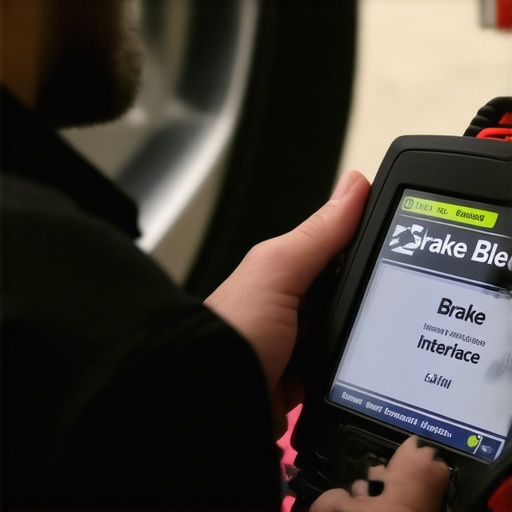
The introduction of Electronic Stability Control (ESC) has added a significant layer of complexity to the standard solo flush that many car owners overlook. According to the technical specifications in the Bosch Automotive Handbook (10th Edition), modern hydraulic units contain internal check valves and high-pressure accumulators that remain closed during a standard gravity or manual pressure bleed. Without a diagnostic tool to command these solenoids into ‘service mode,’ you are essentially leaving old, moisture-laden fluid trapped in the most sensitive part of your vehicle’s braking system. Utilizing the 20 dollar scan tool that does more than the dealership rig can bridge this gap, allowing you to cycle the ABS pump and ensure that every cubic centimeter of the hydraulic circuit is thoroughly refreshed. This process is the only way to eliminate that elusive ‘ghost’ soft pedal that persists even after air has been removed from the lines.
Save Your Bleeder Screws from a Corrosion Snap
The most common roadblock for any solo operator is the seized bleeder screw, a victim of years of road salt, moisture, and intense thermal cycling. Before applying the kind of torque that results in a snapped head and a costly caliper replacement, proactive intervention is essential. Implementing the simple move to prevent your brake lines from rusting out should always include the application of high-temperature anti-seize to the bleeder threads—though never the seat—to facilitate future maintenance. If you find the screw is already stubborn, employ the secret to removing stuck bolts without breaking them, which typically involves localized induction heating or specific vibrational impacts rather than raw, unyielding force. This disciplined approach ensures that your maintenance window is spent improving the fluid quality rather than drilling out broken hardware. Have you discovered a specific penetrating oil or technique that has saved you from a broken bleeder screw? We would love to hear your workshop ‘secret weapons’ in the comments section below.
Don’t Skip the Master Cylinder Bench Bleed
When your car service involves more than a routine flush—specifically when the master cylinder has been replaced—the standard at-the-wheel bleeding process is often insufficient for a rock-solid pedal. Attempting to clear a dry master cylinder while it is mounted on the vehicle can trap air in the rear of the bore, where the angle of the car prevents bubbles from migrating toward the lines. Professional technicians employ a bench bleeding technique, using short loop-back tubes that recirculate fluid from the outlet ports directly back into the reservoir. This ensures that the primary and secondary pistons are fully primed before the unit even touches the brake booster. By eliminating air at the source, you reduce the risk of chasing a ‘spongy’ feel through hours of fruitless pumping at the calipers. This is a foundational step in advanced auto repair techniques that separates a successful DIY job from a frustrating weekend project.
Can Micro-Bubbles Hide in Your Brake Lines?
Persistent softness in the pedal, despite clean fluid discharge at all four corners, often indicates entrained air or micro-bubbles. These tiny pockets of gas are frequently created by ‘turbulent’ bleeding—pushing the pedal too fast or using excessive pressure with a bleeder bottle. According to the Federal Motor Vehicle Safety Standard (FMVSS) No. 116, brake fluid must maintain specific kinematic viscosity levels to ensure the rapid dissipation of these bubbles. However, if your fluid is old or contaminated, the increased surface tension can trap these micro-bubbles against the interior walls of the brake lines, particularly at high points or near junctions. This phenomenon is why a slow, steady displacement is always superior to a rapid-fire pumping action. If you find yourself struggling with a pedal that just won’t firm up, consider a ‘gravity-assist’ rest period of thirty minutes to allow these bubbles to coalesce into larger, more manageable pockets before your final pass.
The Thermal Reality of Wet vs. Dry Boiling Points
Choosing the right fluid is not just about the brand; it is about understanding the thermal degradation of the hydraulic medium. Every bottle of glycol-based fluid lists a ‘Dry’ and a ‘Wet’ boiling point, and the gap between them can be startling. The dry boiling point refers to fresh fluid from a sealed container, while the wet boiling point is measured after the fluid has absorbed only 3.7% water by volume. In high-demand scenarios, such as towing or spirited mountain driving, your fluid can easily exceed 400°F. If your fluid hasn’t been changed in two years, its boiling point might have dropped below the safe threshold, leading to sudden and terrifying brake fade. Ensuring your brake rotors last 100,000 miles depends heavily on maintaining this thermal stability; when fluid boils, it fails to provide the necessary pressure to the pads, causing uneven heat spotting on the rotor surface. Have you checked the moisture content of your fluid recently with a dedicated refractometer?
Check the Pedal Travel Sensor for Phantom Faults
In modern vehicles equipped with regenerative braking or advanced brake-assist systems, the physical connection between your foot and the calipers is often monitored by a pedal travel sensor. This sensor tells the ECU exactly how much deceleration the driver is requesting. If you have successfully bled the system but still experience a ‘disconnected’ feeling or a delayed response, the issue may be electronic rather than hydraulic. A slight misalignment or a calibration error in this sensor can mimic the symptoms of air in the lines, leading many to keep bleeding a system that is already perfectly clear. Using the 20 dollar scan tool that does more than the dealership rig, you can often perform a zero-point calibration of the pedal sensor to ensure the computer is in sync with your physical inputs. This intersection of electronics and hydraulics is becoming the new frontier for solo mechanics, requiring a more holistic approach to troubleshooting that goes beyond the bleeder screw.
Why Moisture Is Not Your Only Hydraulic Enemy
While hygroscopic absorption is the primary focus of most car service schedules, the silent degradation of copper brazing within the lines is equally dangerous. As the anti-corrosion inhibitors in brake fluid deplete, an electrochemical reaction begins to leach copper into the system. This dissolved copper can eventually plate onto the ABS valves, leading to sticking or total hydraulic blockage. Field experts often utilize copper testing strips—not just moisture pens—to determine if the fluid has surpassed the 200 ppm (parts per million) threshold that signals an imminent risk to the internal components. This chemical shift is a lead indicator of system aging that precedes the visible darkening of the fluid.
Shift to DOT 4 LV to Save Your ABS Valves
The transition from standard DOT 4 to DOT 4 LV (Low Viscosity) is not merely a marketing gimmick; it is a mechanical necessity for vehicles equipped with Electronic Stability Program (ESP) or Traction Control. These systems rely on the rapid pulsing of solenoids at micro-second intervals to modulate pressure during a skid. According to the ISO 4925 Class 6 standard, low-viscosity fluids maintain a much thinner profile at sub-zero temperatures compared to traditional glycol formulas. Using a high-viscosity fluid in a system designed for Class 6 performance can lead to delayed ABS intervention times, particularly in cold climates. When you perform your next flush, verifying that the fluid meets these specific kinematic viscosity requirements is vital for maintaining the millisecond response times your safety electronics demand.
Can High-Performance Racing Fluid Actually Damage a Street Car?
A common misconception in the world of high-performance auto repair is that racing fluid is always superior. While these fluids offer incredibly high dry boiling points for track use, they often lack the long-term corrosion inhibitors and lubricity additives found in standard street-legal fluids. Racing fluids are designed to be changed after every event, not every two years. On a daily driver, the rapid degradation of these specialized formulas can lead to premature seal wear and internal scaling. For a reliable car service that balances performance with longevity, stick to a high-quality synthetic DOT 4 that provides a generous buffer for both wet and dry boiling points without the aggressive maintenance schedule of a dedicated racing medium.
Is a Vacuum-Locked Reservoir Starving Your Lines?
A frequently overlooked component during a solo flush is the master cylinder reservoir cap. These caps feature a tiny atmospheric vent designed to allow fluid to drop as the pads wear without creating a vacuum. If this vent becomes clogged with road grime or debris, the resulting vacuum can prevent fluid from entering the lines, making the pedal feel firm but leaving the calipers starved for pressure. This is often the culprit when a technician cannot get fluid to flow despite a clear bleeder screw and a functional pressure bleeder. Always clean the underside of the reservoir cap with a lint-free cloth and verify the vent is clear before initiating any displacement procedure.
Verify the Dynamic Response with a Panic-Stop Test
The final stage of any hydraulic service must go beyond a static test in the driveway. A dynamic panic-stop on a safe, secluded road is the only way to ensure the ABS pump cycles and any remaining air trapped in the secondary valves is purged. Listen for the characteristic rapid-fire thumping of the ABS module; a smooth, consistent vibration indicates a successful flush, while any sudden drop in the pedal height during the event suggests that internal air has finally been dislodged and requires one final pass at the bleeders. What specialized diagnostic tools have you found most effective for cycling the ABS pump during a solo service? Join the discussion in our technical forum and share your preferred sequence for complex electronic brake systems.
Expert Insights & Advanced Considerations
Why Your Moisture Pen Might Be Lying to You
While many technicians rely on conductivity pens to measure moisture, these tools often provide false negatives if the fluid has been contaminated by specific metal ions. A true expert utilizes a refractometer or copper test strips to identify the electrochemical breakdown of the internal lining of your brake lines. This level of vehicle diagnostics ensures you are addressing the chemical age of the fluid, not just its water content, preventing internal ABS pump corrosion before it starts.
Protecting the Master Cylinder Seal During High-Pressure Flushes
Applying more than 20 psi with a pressure bleeder can actually invert the primary seals in some older master cylinders. The key is to find the “sweet spot” where fluid moves steadily without stressing the internal rubber components. If you notice fluid bypass after a flush, it is a sign that the seal has been compromised, requiring you to unlock your car’s potential by rebuilding the master unit rather than simply bleeding it more. Controlled displacement is always superior to brute force.
The Hidden Impact of Rubber Expansion on Pedal Feel
If the pedal remains soft after a perfect bleed, the issue is often not air, but “ballooning” of old rubber brake hoses. Over time, the internal braiding weakens, allowing the hose to expand under pressure. Upgrading to stainless-steel braided lines eliminates this expansion, providing the direct mechanical feedback found in high-end auto repair techniques. This transition transforms a standard car service into a performance-oriented hydraulic overhaul.
#IMAGE_PLACE_HOLDER_E#
Why Bidirectional Scan Tools Are No Longer Optional
Modern stability control units have complex internal architecture that traps air in the secondary circuits. A professional-grade scan tool is the only way to cycle these valves electronically. Without this “digital handshake,” you are only servicing 80% of the system. This requirement is why finding a reliable car service near you in 2025 necessitates asking about their electronic diagnostic capabilities for ABS/ESP systems.
Tools and Documentation the Pros Actually Use
The Bosch Automotive Handbook: This is the definitive technical authority on hydraulic system design and electronic brake integration, used by engineers and master technicians globally. SAE International Technical Papers: For those seeking the raw data on fluid boiling points and chemical compatibility, SAE papers offer peer-reviewed research that surpasses any forum advice. Manufacturer Technical Service Bulletins (TSBs): These documents provide specific “fix” sequences for known air-trap issues in certain vehicle makes, often detailing bleeding patterns that differ from the standard “furthest-to-nearest” rule. Dedicated Refractometers: Unlike electronic pens, a refractometer uses light to measure the exact refractive index of the fluid, providing a pinpoint accurate reading of its thermal stability.
Elevating Your Maintenance Standards
Achieving a rock-solid brake pedal in the modern era requires a shift from simple mechanical pumping to a holistic understanding of chemical stability and electronic integration. By prioritizing hydraulic purity and utilizing the right diagnostic tools, you ensure that every car service provides maximum safety and performance. This disciplined approach is the foundation of professional vehicle care. We invite you to share your most challenging hydraulic troubleshooting stories or specific tool recommendations in the technical community below to help others refine their craft.