The Physics of Thermal Contraction in Modern Engines
Experiencing a rhythmic clicking or metallic ticking sound immediately after switching off your ignition is a phenomenon rooted deeply in thermodynamics rather than mechanical failure. As a seasoned technician, I often observe that vehicle owners mistake these sounds for internal engine damage. In reality, modern engines utilize a variety of materials—aluminum, cast iron, and high-grade plastics—each possessing a unique coefficient of thermal expansion. During operation, the exhaust system, particularly the catalytic converter, can reach temperatures exceeding 1,200 degrees Fahrenheit. Once the engine stops, these components begin to lose heat rapidly, leading to the molecular contraction of the metal. This thermal shift creates the characteristic ‘ping’ as heat shields and exhaust manifolds settle. To better appreciate how these components interact, one should delve into the hidden world of vehicle diagnostics to understand the precision required in modern manufacturing.
Metal Shrinkage and the Exhaust System Dynamics
The majority of post-shutdown noises originate from the exhaust hangers and the manifold itself. As the metal cools, it moves slightly against its mounting brackets. This is especially prevalent in high-performance or turbocharged vehicles where heat concentration is localized. While this is normal, persistent loud snapping could indicate a warped heat shield or a failing exhaust gasket. It is essential to distinguish these sounds from the rapid, consistent clicking of a relay or a failing electric motor. For instance, if you notice your car cooling fan will not turn off, the noise might be electrical rather than thermal. Research published by the Society of Automotive Engineers (SAE) highlights that thermal cycling is one of the primary stressors on engine longevity, yet the audible contraction is a byproduct of safety-engineered cooling rates designed to prevent stress fractures.
Why does my car keep clicking even after the block has cooled?
If the clicking persists long after the engine has reached ambient temperature, the source may shift from thermal physics to electronic components. Modern vehicles employ various ‘after-run’ systems. This includes electronic coolant pumps and evaporative emission (EVAP) leak detection pumps that cycle as part of the vehicle’s self-diagnostic routine. If the noise is accompanied by a struggle to restart later, you might be facing a battery or starter issue; in such cases, reviewing the causes of a clicking sound when you try to start it can help differentiate between a harmless cooling sound and a genuine electrical fault. High-end car service protocols often involve checking these after-run cycles to ensure sensors are correctly reporting temperature data to the ECU.
Differentiating Normal Ticks from Cooling System Warnings
While most clicks are benign, a ‘wet’ clicking or a persistent dripping sound could signal a serious issue like a coolant leak onto a hot manifold. If you suspect your vehicle is running hotter than usual before shutdown, it is vital to spot a failing water pump before the thermal stress causes permanent head gasket damage. A professional should always evaluate a car that emits a ‘metallic slap’ rather than a light tick, as this could indicate oil starvation or hydraulic lifters losing pressure. If you are unsure about the sounds your vehicle is making, don’t hesitate to reach out to our experts through our contact us page for a comprehensive diagnostic review. Maintaining a high standard of vehicle diagnostics ensures that these minor auditory cues do not evolve into a costly auto repair bill.
Pressure Shifts and the Fluid Equilibrium Phase
Once the mechanical heartbeat of the engine ceases, the fluids within—oil, coolant, and transmission fluid—don’t simply stop their interaction with the internal surfaces. There is a period of pressure equalization that occurs as the hot fluid settles into the lowest points of the system. In some cases, a faint gurgling or clicking might be heard as air pockets move through the heater core or as the transmission fluid drains back into the pan. This is why many manufacturers are moving away from the concept of ‘sealed’ units, as evidenced by the ongoing debate regarding the truth about lifetime transmission fluid claims. If the sounds are accompanied by a sharp smell, it may not be mere physics but a fluid leak hitting a hot surface, necessitating a closer inspection of your seals and gaskets.
Turbocharger Heat Soak and Bearing Protection
For those driving forced-induction vehicles, the clicking after shutdown can be significantly more pronounced. The turbocharger operates at rotational speeds exceeding 100,000 RPM and sustains incredible thermal loads. When you turn off the engine, the flow of oil that lubricates and cools the turbo bearings stops, unless your vehicle is equipped with an electric after-run pump. This ‘heat soak’ can cause the turbine housing to expand and contract audibly. It is critical to know how to tell if your turbo is failing, as a metallic grinding sound following the initial clicks is a red flag for bearing play. Modern synthetic oils are designed to resist coking during this phase, but the physical expansion of the manifold remains a constant.
Is your turbocharger screaming for mercy after a long drive?
If you have been driving aggressively and shut down the engine immediately, the intense clicking is actually the sound of the metal components desperately trying to dissipate heat without the aid of active oil flow. Professional organizations like the National Institute for Automotive Service Excellence (ASE) emphasize that allowing a turbocharged engine to idle for sixty seconds before shutdown can significantly reduce this thermal shock. This practice allows the temperatures to stabilize, potentially silencing some of the more violent ‘snapping’ sounds and extending the life of the internal seals. #IMAGE_PLACE_HOLDER_B# If you find yourself constantly worrying about these noises, a simple $20 scan tool can provide real-time data on coolant and oil temperatures to see if your car is actually running within safe parameters.
Vacuum Leaks and the Ghost in the Fuel System
Another silent contributor to post-shutdown noises is the Evaporative Emission (EVAP) system. This system is designed to trap fuel vapors and prevent them from escaping into the atmosphere. As the fuel in the tank cools, it creates a vacuum. The clicking you hear could be the purge valve or a vent solenoid cycling to balance this pressure. Interestingly, the $5 part that causes most evap leak codes is often a simple check valve that can become noisy as it ages. If these clicks are accompanied by a ‘whoosh’ when you open the gas cap, the system isn’t venting correctly. You can often diagnose these issues yourself using the $15 tool that finds every vacuum leak, which saves you from the guesswork of high-priced dealership diagnostics. Have you noticed these sounds becoming more frequent as the weather changes? Share your experience in the comments below, or let us know if a specific sound has you stumped so we can help you decode it.
Give Your Valvetrain Time to Bleed Down
Beyond the obvious external components like the exhaust manifold, some of the most intricate post-shutdown sounds emanate from deep within the engine block itself. Specifically, the valvetrain plays a quiet but significant role in the ‘cooling down’ symphony. Most modern engines utilize hydraulic lash adjusters—commonly known as lifters—which use oil pressure to maintain zero valve clearance. When you kill the ignition, the oil pump stops, and the residual pressure begins to dissipate. If the engine stops at a point where a camshaft lobe is depressing a valve spring, that lifter remains under significant tension. Over the next several minutes, oil is slowly forced out of the lifter’s internal reservoir, a process known as ‘bleed down.’ This can result in a faint, rhythmic mechanical click that sounds remarkably like a cooling manifold but possesses a slightly more muffled, internal resonance. If you are noticing a much louder ‘tappet’ sound upon restarting, you might be dealing with a component that is losing its prime too quickly, necessitating a look at specialized car service techniques to inspect oil viscosity and lifter integrity.
Stop Chasing Ghosts in the Relay Box
We often forget that a car doesn’t truly ‘sleep’ the moment the key is removed. Modern Engine Control Units (ECUs) and Body Control Modules (BCMs) initiate a complex power-down sequence that can last anywhere from thirty seconds to twenty minutes. During this window, you may hear various clicks and hums as high-current relays cycle off to preserve battery life. An aging relay with pitted contacts can sometimes ‘chatter’ as the voltage drops, creating a rapid clicking sound that mimics thermal contraction. This is a critical distinction for any DIY mechanic; while metal contraction is silent to the touch, a chattering relay will often produce a slight vibration you can feel if you place your hand on the fuse box cover. Understanding these electrical nuances is part of the precision required in modern manufacturing and diagnostics.
Does a rhythmic clicking pattern signal a failing ECU relay?
While an occasional click is standard, a consistent, metronomic rhythm usually points toward an electrical component rather than the irregular ‘pinging’ of cooling metal. If the clicking is perfectly timed—say, once every five seconds—it is likely an actuator or a solenoid failing to reach its ‘park’ position. This often happens with electronic throttle bodies or HVAC blend door actuators that are searching for a home position but are blocked by debris or a broken plastic gear. This type of noise is a precursor to a parasitic battery drain, which will eventually leave you stranded. If you suspect an electrical ghost is at play, using a multimeter to check for amperage draw during these clicking cycles is a vital step in advanced vehicle diagnostics. 
How Thermal Cycling Changes the Sound of Your Engine Over Time
The sounds your car makes today may not be the sounds it makes five years from now. As a vehicle ages, it undergoes thousands of thermal cycles, each one slightly altering the molecular structure of the exhaust components. According to research from ASM International (The Materials Information Society), repeated exposure to extreme temperature fluctuations leads to ‘thermal fatigue.’ This process can cause heat shields to warp slightly or mounting bolts to stretch. As these clearances change, the characteristic ‘ping’ of a cooling engine can become louder or more frequent. This isn’t necessarily a sign of impending failure, but rather the ‘aging’ of the metal. However, if the contraction sounds are joined by a sharp metallic ‘crack,’ it may indicate that a manifold bolt has finally snapped under the stress. This is particularly common in heavy-duty trucks and high-performance sedans where the heat loads are significantly higher. Have you noticed your car getting ‘noisier’ as the miles rack up? Highlighting these changes to your technician during your next car service can help them spot a cracked manifold before it turns into a massive exhaust leak.
The Interaction Between Active Grille Shutters and Heat Retention
In the quest for better aerodynamics and fuel efficiency, many recent models are equipped with active grille shutters. These slats close at highway speeds to reduce drag, but they also serve a secondary purpose: heat retention. By closing the shutters after you park, the car attempts to keep the engine warm for as long as possible to reduce emissions on the next start-up. This trapped heat creates a ‘kiln effect’ under the hood, which can actually intensify the thermal contraction sounds of the turbocharger and exhaust manifold. The concentrated heat has nowhere to go but up, often causing the underside of the hood or the plastic engine cover to expand and contract audibly against their rubber bump stops. If you’ve ever wondered why a modern car seems to ‘tink’ for much longer than an older vehicle, the answer lies in these efficiency-focused design choices that prioritize thermal management over silent cooling.
Hybrid Inverters Sing a Different Tune After You Park
The transition toward electrification has introduced a completely new acoustic profile to the post-shutdown phase. If you drive a hybrid, the clicking you hear might not be metallic contraction at all, but rather the internal logic of the power electronics cooling system. High-voltage inverters generate immense heat during regenerative braking and high-load acceleration. Once the vehicle is stationary, the dedicated electric coolant pump for the hybrid system may continue to pulse, creating a rhythmic ‘throb’ or a series of light clicks as electronic valves redirect fluid to stabilize temperatures. This is a critical safety feature; if the inverter remains too hot, it could degrade the sensitive semi-conductors within. 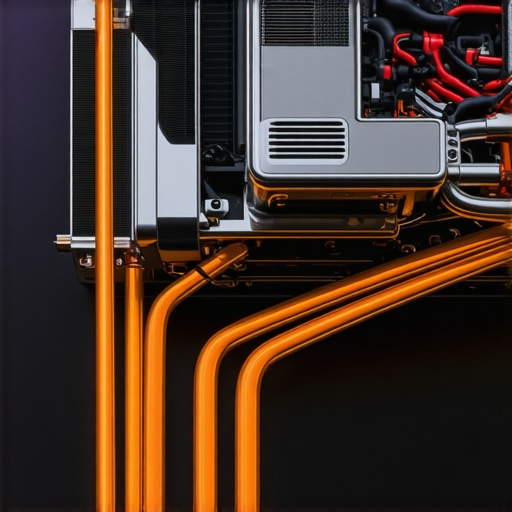 To understand how these systems differ from traditional setups, exploring the precision required in modern manufacturing reveals how integrated these cooling loops have become.
AWD Differentials Might Clunk While Shedding Latent Heat
While we often focus on the engine bay, the rear of the vehicle contains its own thermal micro-climates, particularly in all-wheel drive (AWD) configurations. The rear differential and the viscous coupling units are subjected to significant friction-induced heat. As the heavy cast-iron or aluminum housing of the differential begins to cool, the internal gears and the fluid settle. You might hear a distinct ‘clunk’ or a heavy ‘tink’ from the rear axle area. This is often the result of the differential mounting bushings—usually made of dense rubber or polyurethane—rebounding as the metal housing shrinks. If this sound is accompanied by a vibration during your drive, you might need to investigate the truth about lifetime transmission fluid claims, as degraded gear oil can lead to excessive heat and more violent contraction sounds.
Why do modern EVs still click when there is no internal combustion?
Even in a fully electric vehicle (EV), you will hear a series of loud, mechanical ‘clunks’ shortly after parking or during the charging process. These are the high-voltage contactors—heavy-duty relays that physically disconnect the battery pack from the rest of the car for safety. According to technical documentation from the Alternative Fuels Data Center (AFDC), these contactors are designed to handle hundreds of amps, and their engagement is a deliberate, forceful action that resonates through the chassis. Furthermore, the Thermal Management System (TMS) in an EV will often cycle valves to move refrigerant through the battery chiller, producing a suite of clicks and whirs that are entirely normal but can be startling to first-time owners accustomed to the silent nature of electric propulsion.
Fuel Tank Contraction and the Thump of Vacuum Relief
The fuel system is a pressurized environment that reacts sharply to ambient temperature changes. As the fuel in your tank cools, its volume decreases, creating a slight vacuum. In some vehicles, especially those with large plastic fuel tanks, the tank walls can actually ‘oil-can’—a term describing the slight inward popping of the plastic. This creates a muffled ‘thump’ or a series of clicks as the EVAP system’s vent valve opens to equalize pressure with the atmosphere. If you frequently notice these sounds, utilizing the $15 tool that finds every vacuum leak can help you ensure that your purge valves are operating within their specified parameters and not sticking, which could lead to more significant fuel system issues down the road.
Don’t Ignore the Metallic Rattle Near Your Rear Axle
In high-performance vehicles, the brake rotors themselves can contribute to the post-drive symphony. Cross-drilled or slotted rotors have a vast surface area that loses heat rapidly. The interaction between the hot rotor and the slightly cooler brake pads can cause a high-pitched ‘pinging’ sound as the metal surfaces microscopicly shift against one another. While usually harmless, if this is paired with a burning smell, your calipers may not be retracting fully. Have you heard a sound that seems to defy these explanations? Tell us about the specific rhythm and location in the comments below, and we’ll help you diagnose the ghost in your machine using our advanced car service expertise.
The Physics of Thermal Contraction in Modern Engines
Experiencing a rhythmic clicking or metallic ticking sound immediately after switching off your ignition is a phenomenon rooted deeply in thermodynamics rather than mechanical failure. As a seasoned technician, I often observe that vehicle owners mistake these sounds for internal engine damage. In reality, modern engines utilize a variety of materials—aluminum, cast iron, and high-grade plastics—each possessing a unique coefficient of thermal expansion. During operation, the exhaust system, particularly the catalytic converter, can reach temperatures exceeding 1,200 degrees Fahrenheit. Once the engine stops, these components begin to lose heat rapidly, leading to the molecular contraction of the metal. This thermal shift creates the characteristic ‘ping’ as heat shields and exhaust manifolds settle. To better appreciate how these components interact, one should delve into the hidden world of vehicle diagnostics to understand the precision required in modern manufacturing.
Metal Shrinkage and the Exhaust System Dynamics
The majority of post-shutdown noises originate from the exhaust hangers and the manifold itself. As the metal cools, it moves slightly against its mounting brackets. This is especially prevalent in high-performance or turbocharged vehicles where heat concentration is localized. While this is normal, persistent loud snapping could indicate a warped heat shield or a failing exhaust gasket. It is essential to distinguish these sounds from the rapid, consistent clicking of a relay or a failing electric motor. For instance, if you notice your car cooling fan will not turn off, the noise might be electrical rather than thermal. Research published by the Society of Automotive Engineers (SAE) highlights that thermal cycling is one of the primary stressors on engine longevity, yet the audible contraction is a byproduct of safety-engineered cooling rates designed to prevent stress fractures.
Why does my car keep clicking even after the block has cooled?
If the clicking persists long after the engine has reached ambient temperature, the source may shift from thermal physics to electronic components. Modern vehicles employ various ‘after-run’ systems. This includes electronic coolant pumps and evaporative emission (EVAP) leak detection pumps that cycle as part of the vehicle’s self-diagnostic routine. If the noise is accompanied by a struggle to restart later, you might be facing a battery or starter issue; in such cases, reviewing the causes of a clicking sound when you try to start it can help differentiate between a harmless cooling sound and a genuine electrical fault. High-end car service protocols often involve checking these after-run cycles to ensure sensors are correctly reporting temperature data to the ECU.
Differentiating Normal Ticks from Cooling System Warnings
While most clicks are benign, a ‘wet’ clicking or a persistent dripping sound could signal a serious issue like a coolant leak onto a hot manifold. If you suspect your vehicle is running hotter than usual before shutdown, it is vital to spot a failing water pump before the thermal stress causes permanent head gasket damage. A professional should always evaluate a car that emits a ‘metallic slap’ rather than a light tick, as this could indicate oil starvation or hydraulic lifters losing pressure. If you are unsure about the sounds your vehicle is making, don’t hesitate to reach out to our experts through our contact us page for a comprehensive diagnostic review. Maintaining a high standard of vehicle diagnostics ensures that these minor auditory cues do not evolve into a costly auto repair bill.
Pressure Shifts and the Fluid Equilibrium Phase
Once the mechanical heartbeat of the engine ceases, the fluids within—oil, coolant, and transmission fluid—don’t simply stop their interaction with the internal surfaces. There is a period of pressure equalization that occurs as the hot fluid settles into the lowest points of the system. In some cases, a faint gurgling or clicking might be heard as air pockets move through the heater core or as the transmission fluid drains back into the pan. This is why many manufacturers are moving away from the concept of ‘sealed’ units, as evidenced by the ongoing debate regarding the truth about lifetime transmission fluid claims. If the sounds are accompanied by a sharp smell, it may not be mere physics but a fluid leak hitting a hot surface, necessitating a closer inspection of your seals and gaskets.
Turbocharger Heat Soak and Bearing Protection
For those driving forced-induction vehicles, the clicking after shutdown can be significantly more pronounced. The turbocharger operates at rotational speeds exceeding 100,000 RPM and sustains incredible thermal loads. When you turn off the engine, the flow of oil that lubricates and cools the turbo bearings stops, unless your vehicle is equipped with an electric after-run pump. This ‘heat soak’ can cause the turbine housing to expand and contract audibly. It is critical to know how to tell if your turbo is failing, as a metallic grinding sound following the initial clicks is a red flag for bearing play. Modern synthetic oils are designed to resist coking during this phase, but the physical expansion of the manifold remains a constant.
Is your turbocharger screaming for mercy after a long drive?
If you have been driving aggressively and shut down the engine immediately, the intense clicking is actually the sound of the metal components desperately trying to dissipate heat without the aid of active oil flow. Professional organizations like the National Institute for Automotive Service Excellence (ASE) emphasize that allowing a turbocharged engine to idle for sixty seconds before shutdown can significantly reduce this thermal shock. This practice allows the temperatures to stabilize, potentially silencing some of the more violent ‘snapping’ sounds and extending the life of the internal seals. #IMAGE_PLACE_HOLDER_B# If you find yourself constantly worrying about these noises, a simple $20 scan tool can provide real-time data on coolant and oil temperatures to see if your car is actually running within safe parameters.
Vacuum Leaks and the Ghost in the Fuel System
Another silent contributor to post-shutdown noises is the Evaporative Emission (EVAP) system. This system is designed to trap fuel vapors and prevent them from escaping into the atmosphere. As the fuel in the tank cools, it creates a vacuum. The clicking you hear could be the purge valve or a vent solenoid cycling to balance this pressure. Interestingly, the $5 part that causes most evap leak codes is often a simple check valve that can become noisy as it ages. If these clicks are accompanied by a ‘whoosh’ when you open the gas cap, the system isn’t venting correctly. You can often diagnose these issues yourself using the $15 tool that finds every vacuum leak, which saves you from the guesswork of high-priced dealership diagnostics. Have you noticed these sounds becoming more frequent as the weather changes? Share your experience in the comments below, or let us know if a specific sound has you stumped so we can help you decode it.
Give Your Valvetrain Time to Bleed Down
Beyond the obvious external components like the exhaust manifold, some of the most intricate post-shutdown sounds emanate from deep within the engine block itself. Specifically, the valvetrain plays a quiet but significant role in the ‘cooling down’ symphony. Most modern engines utilize hydraulic lash adjusters—commonly known as lifters—which use oil pressure to maintain zero valve clearance. When you kill the ignition, the oil pump stops, and the residual pressure begins to dissipate. If the engine stops at a point where a camshaft lobe is depressing a valve spring, that lifter remains under significant tension. Over the next several minutes, oil is slowly forced out of the lifter’s internal reservoir, a process known as ‘bleed down.’ This can result in a faint, rhythmic mechanical click that sounds remarkably like a cooling manifold but possesses a slightly more muffled, internal resonance. If you are noticing a much louder ‘tappet’ sound upon restarting, you might be dealing with a component that is losing its prime too quickly, necessitating a look at specialized car service techniques to inspect oil viscosity and lifter integrity.
Stop Chasing Ghosts in the Relay Box
We often forget that a car doesn’t truly ‘sleep’ the moment the key is removed. Modern Engine Control Units (ECUs) and Body Control Modules (BCMs) initiate a complex power-down sequence that can last anywhere from thirty seconds to twenty minutes. During this window, you may hear various clicks and hums as high-current relays cycle off to preserve battery life. An aging relay with pitted contacts can sometimes ‘chatter’ as the voltage drops, creating a rapid clicking sound that mimics thermal contraction. This is a critical distinction for any DIY mechanic; while metal contraction is silent to the touch, a chattering relay will often produce a slight vibration you can feel if you place your hand on the fuse box cover. Understanding these electrical nuances is part of the precision required in modern manufacturing and diagnostics.
Does a rhythmic clicking pattern signal a failing ECU relay?
While an occasional click is standard, a consistent, metronomic rhythm usually points toward an electrical component rather than the irregular ‘pinging’ of cooling metal. If the clicking is perfectly timed—say, once every five seconds—it is likely an actuator or a solenoid failing to reach its ‘park’ position. This often happens with electronic throttle bodies or HVAC blend door actuators that are searching for a home position but are blocked by debris or a broken plastic gear. This type of noise is a precursor to a parasitic battery drain, which will eventually leave you stranded. If you suspect an electrical ghost is at play, using a multimeter to check for amperage draw during these clicking cycles is a vital step in advanced vehicle diagnostics.
How Thermal Cycling Changes the Sound of Your Engine Over Time
The sounds your car makes today may not be the sounds it makes five years from now. As a vehicle ages, it undergoes thousands of thermal cycles, each one slightly altering the molecular structure of the exhaust components. According to research from ASM International (The Materials Information Society), repeated exposure to extreme temperature fluctuations leads to ‘thermal fatigue.’ This process can cause heat shields to warp slightly or mounting bolts to stretch. As these clearances change, the characteristic ‘ping’ of a cooling engine can become louder or more frequent. This isn’t necessarily a sign of impending failure, but rather the ‘aging’ of the metal. However, if the contraction sounds are joined by a sharp metallic ‘crack,’ it may indicate that a manifold bolt has finally snapped under the stress. This is particularly common in heavy-duty trucks and high-performance sedans where the heat loads are significantly higher. Have you noticed your car getting ‘noisier’ as the miles rack up? Highlighting these changes to your technician during your next car service can help them spot a cracked manifold before it turns into a massive exhaust leak.
The Interaction Between Active Grille Shutters and Heat Retention
In the quest for better aerodynamics and fuel efficiency, many recent models are equipped with active grille shutters. These slats close at highway speeds to reduce drag, but they also serve a secondary purpose: heat retention. By closing the shutters after you park, the car attempts to keep the engine warm for as long as possible to reduce emissions on the next start-up. This trapped heat creates a ‘kiln effect’ under the hood, which can actually intensify the thermal contraction sounds of the turbocharger and exhaust manifold. The concentrated heat has nowhere to go but up, often causing the underside of the hood or the plastic engine cover to expand and contract audibly against their rubber bump stops. If you’ve ever wondered why a modern car seems to ‘tink’ for much longer than an older vehicle, the answer lies in these efficiency-focused design choices that prioritize thermal management over silent cooling.
Hybrid Inverters Sing a Different Tune After You Park
The transition toward electrification has introduced a completely new acoustic profile to the post-shutdown phase. If you drive a hybrid, the clicking you hear might not be metallic contraction at all, but rather the internal logic of the power electronics cooling system. High-voltage inverters generate immense heat during regenerative braking and high-load acceleration. Once the vehicle is stationary, the dedicated electric coolant pump for the hybrid system may continue to pulse, creating a rhythmic ‘throb’ or a series of light clicks as electronic valves redirect fluid to stabilize temperatures. This is a critical safety feature; if the inverter remains too hot, it could degrade the sensitive semi-conductors within. #IMAGE_PLACE_HOLDER_D# To understand how these systems differ from traditional setups, exploring the precision required in modern manufacturing reveals how integrated these cooling loops have become.
AWD Differentials Might Clunk While Shedding Latent Heat
While we often focus on the engine bay, the rear of the vehicle contains its own thermal micro-climates, particularly in all-wheel drive (AWD) configurations. The rear differential and the viscous coupling units are subjected to significant friction-induced heat. As the heavy cast-iron or aluminum housing of the differential begins to cool, the internal gears and the fluid settle. You might hear a distinct ‘clunk’ or a heavy ‘tink’ from the rear axle area. This is often the result of the differential mounting bushings—usually made of dense rubber or polyurethane—rebounding as the metal housing shrinks. If this sound is accompanied by a vibration during your drive, you might need to investigate the truth about lifetime transmission fluid claims, as degraded gear oil can lead to excessive heat and more violent contraction sounds.
Why do modern EVs still click when there is no internal combustion?
Even in a fully electric vehicle (EV), you will hear a series of loud, mechanical ‘clunks’ shortly after parking or during the charging process. These are the high-voltage contactors—heavy-duty relays that physically disconnect the battery pack from the rest of the car for safety. According to technical documentation from the Alternative Fuels Data Center (AFDC), these contactors are designed to handle hundreds of amps, and their engagement is a deliberate, forceful action that resonates through the chassis. Furthermore, the Thermal Management System (TMS) in an EV will often cycle valves to move refrigerant through the battery chiller, producing a suite of clicks and whirs that are entirely normal but can be startling to first-time owners accustomed to the silent nature of electric propulsion.
Fuel Tank Contraction and the Thump of Vacuum Relief
The fuel system is a pressurized environment that reacts sharply to ambient temperature changes. As the fuel in your tank cools, its volume decreases, creating a slight vacuum. In some vehicles, especially those with large plastic fuel tanks, the tank walls can actually ‘oil-can’—a term describing the slight inward popping of the plastic. This creates a muffled ‘thump’ or a series of clicks as the EVAP system’s vent valve opens to equalize pressure with the atmosphere. If you frequently notice these sounds, utilizing the $15 tool that finds every vacuum leak can help you ensure that your purge valves are operating within their specified parameters and not sticking, which could lead to more significant fuel system issues down the road.
Don’t Ignore the Metallic Rattle Near Your Rear Axle
In high-performance vehicles, the brake rotors themselves can contribute to the post-drive symphony. Cross-drilled or slotted rotors have a vast surface area that loses heat rapidly. The interaction between the hot rotor and the slightly cooler brake pads can cause a high-pitched ‘pinging’ sound as the metal surfaces microscopicly shift against one another. While usually harmless, if this is paired with a burning smell, your calipers may not be retracting fully. Have you heard a sound that seems to defy these explanations? Tell us about the specific rhythm and location in the comments below, and we’ll help you diagnose the ghost in your machine using our advanced car service expertise.
Expert Insights & Advanced Considerations
Distinguish Thermal Pings from Valvetrain Wear
It is vital for enthusiasts to recognize that thermal contraction is physically irregular and non-repeating, whereas valvetrain wear—like a collapsed lifter—is strictly metronomic and tied to engine RPM. If you hear a click that stays consistent while the engine is running and varies with throttle input, you are likely looking at a mechanical oil pressure issue rather than a benign cooling event. Distinguishing these early can save you from a catastrophic engine failure.
Thermal Cameras Reveal the Truth About Heat Shields
In high-level vehicle diagnostics, we often use infrared thermography to identify exactly which bracket or shield is expanding excessively. A component that emits a violent snap instead of a light ping is often under lateral stress from a misaligned mounting point. Readjusting these during a routine car service can silence those annoying post-drive noises permanently.
Software Updates Might Silence Your Solenoids
If your car clicks in a very specific pattern after shutdown, check for Manufacturer Technical Service Bulletins (TSBs). Engineers often release ECU updates that modify the duty cycle of purge valves or electronic throttle bodies to reduce wear and noise. What you perceive as a mechanical ghost may simply be a legacy software instruction that can be cured with a simple reflash at a specialized shop.
Curated Expert Resources
SAE International Technical Papers
The Society of Automotive Engineers provides peer-reviewed research on the thermal expansion coefficients of modern alloys. This is the definitive source for understanding why high-performance headers and catalytic converters behave the way they do under extreme thermal cycling.
ASE Study Guides & Diagnostic Frameworks
The National Institute for Automotive Service Excellence offers deep dives into electrical system diagnostics. These guides are invaluable for learning how to differentiate between the audible cycling of a relay and the physical snapping of cooling metal.
Mitchell 1 ProDemand Technical Library
This is a professional-grade database used by master technicians to track TSBs and factory-correct noise profiles for specific vehicle makes. It helps owners identify if their ‘clicking’ is a known characteristic of the model or a defect requiring attention.
Final Expert Perspective
Understanding why your car clicks after it is turned off requires a blend of physics and advanced vehicle diagnostics. While most ‘tinks’ and ‘pings’ are the harmless results of metal shedding heat, being able to identify electrical relay chatter or valvetrain bleed-down is what separates a casual driver from an informed owner. Regular car service ensures these thermal cycles don’t lead to fatigued components or loose heat shields. If you have a specific sound that seems to defy the laws of thermodynamics, we invite you to share your findings or reach out to our diagnostic team for a deeper investigation into your vehicle’s health.