High-speed deceleration is not merely a mechanical action but a complex energy conversion process where kinetic energy transforms into significant thermal loads. When you apply pressure to the pedal and feel a rhythmic oscillation through the steering column, you are experiencing a breakdown in the harmonic balance of your vehicle’s braking system. This shudder is often the first tactile warning of systemic failure, suggesting that the interface between your friction material and the rotating mass has been compromised. Rather than a simple part swap, resolving this issue requires a deep dive into vehicle diagnostics to differentiate between surface-level wear and deep-seated structural issues like lateral runout or hub assembly fatigue.
Stop the Shudder Before Your Rotors Warp Beyond Repair
The most frequent culprit for steering wheel vibration is Disc Thickness Variation (DTV), a condition often mislabeled as simple warping. In high-performance or heavy-duty driving scenarios, uneven deposits of friction material can bond to the rotor surface under extreme heat. This creates microscopic high spots that the brake pads skip over, sending a pulse through the hydraulic system and up the steering rack. To prevent this, understanding the secret to making your brake rotors last 100,000 miles involves consistent bedding-in procedures and ensuring that calipers do not hang up, which leads to localized overheating. Furthermore, if you notice a particular scent during these vibrations, you should investigate the specific smell that tells you your brakes are dragging, as persistent heat is the primary catalyst for rotor geometry distortion.
Why do most mechanics overlook the lateral runout measurement?
In many standard auto repair shops, the technician will simply replace the rotors without checking the hub flange for lateral runout. Even a brand-new, premium rotor will vibrate if it is mounted to a hub that has even 0.002 inches of deviation. Professional-grade diagnostics require the use of a dial indicator to measure the trueness of the hub assembly before the rotor is ever installed. According to research published by SAE International regarding brake system dynamics, mounting a rotor on a dirty or slightly bent hub flange can cause the rotor to oscillate as it turns, leading to uneven wear patterns that reappear just a few thousand miles after a service. This oversight is a classic example of why the hidden world of vehicle diagnostics is so critical for a long-term fix.
Thermal Distortions vs. Suspension Bushing Fatigue
While the rotors are often the source of the vibration, the steering wheel may only shake if the vehicle’s suspension is unable to dampen the oscillation. Worn control arm bushings or tie-rod ends can amplify a minor brake pulse into a violent shudder. When the rubber in these bushings degrades, it loses its ability to isolate the steering rack from the mechanical noise of the wheels. An expert technician must evaluate the entire front end to ensure that a simple brake job isn’t masking a broader suspension failure. If your vehicle feels unstable beyond just the braking phase, it may be time to consult our comprehensive guide on top auto repair techniques to identify if your bushings or ball joints are the silent contributors to your steering feedback. If you are experiencing these symptoms, don’t wait for a total component failure; seek a professional micrometer evaluation immediately to restore your vehicle’s safety and precision.
The interaction between a wheel bearing and the braking surface is more intimate than most drivers realize. If the bearing race has developed even microscopic pitting, the entire wheel assembly will oscillate under the load of the caliper. Learning how to diagnose a bad wheel bearing using a jack can save you from a costly misdiagnosis where you replace functional rotors but leave the root cause intact. When the bearing begins to lose its structural integrity, it allows the hub to tilt, creating an artificial runout that mimics a warped rotor perfectly. This is why you must also know how to identify a failing wheel bearing before the hub seizes up, as a total failure at highway speeds can lead to catastrophic wheel separation.
Why Your Steering Wheel Only Screams at 60 MPH
Resonance is the enemy of a smooth ride. Often, a driver will report that their vehicle is smooth at 40 mph and 80 mph, but becomes nearly undrivable in between. This harmonic peak is usually tied to tire balance or internal belt separation. If you are wondering why your steering wheel vibrates at exactly 60 mph, you are likely dealing with a weight distribution issue that only reaches its natural frequency at that specific rotational velocity. According to safety data from the National Highway Traffic Safety Administration (NHTSA), ignoring these rhythmic warnings can lead to premature wear on the steering rack seals, eventually requiring a full replacement of the power steering system.
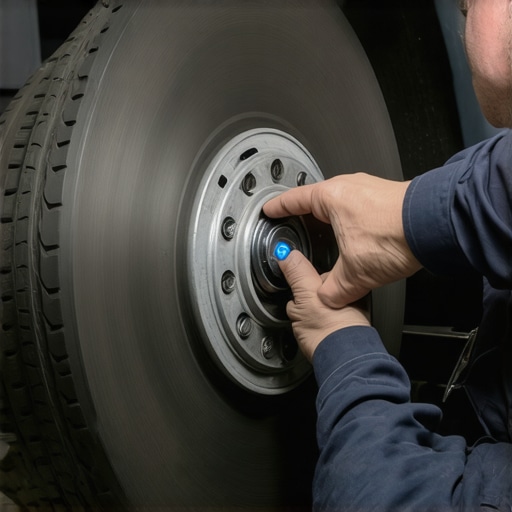
Can a $20 scan tool outsmart a dealership diagnostic rig?
While physical measurements are king for mechanical vibrations, modern vehicles use Electronic Stability Control (ESC) and ABS sensors that can provide data on wheel speed discrepancies long before you feel them. Many DIYers are finding that the $20 scan tool that does more than the dealership rig can access live data streams to identify which wheel is reporting an erratic signal. If the ABS sensor is picking up an erratic pulse, it might be reacting to the same mechanical wobble that is shaking your hands. By monitoring real-time sensor data, you can pinpoint the specific corner of the vehicle that is underperforming, which significantly narrows the scope of your mechanical inspection.
Don’t Blame the Brakes for a Failing Hub Assembly
A steering wheel shudder is rarely a solo act; it is often accompanied by a directional pull. If your car drifts toward the shoulder the moment you relax your grip, the vibration might be the result of a shifted tire belt rather than the brakes. Understanding why your car pulls to the left even after an alignment is essential for troubleshooting complex front-end issues. A tire with internal structural damage will often ‘waddle’ at low speeds and vibrate aggressively at higher velocities, potentially leading to a blowout. If you’ve recently hit a curb or a deep pothole, don’t just balance the tires—inspect the sidewalls for bulges and check the suspension for bent components. Have you experienced a vibration that suddenly changed its tone or intensity? Share your experience in the comments below or read our deep dive into drivetrain harmonics to stay ahead of your next repair bill.
Drivetrain Wobbles That Masquerade as Bad Brakes
While most drivers instinctively check their rotors when the steering wheel begins to dance, the culprit often lies deeper within the drivetrain. An inner CV joint that has developed internal wear grooves will not produce the rhythmic clicking associated with a failed outer joint during a tight turn. Instead, it creates a distinct side-to-side shudder that occurs primarily during heavy acceleration or when the vehicle is under load. This happens because the tripod bearings within the joint are forced into worn pockets of the housing, disrupting the smooth transfer of torque to the wheels. This mechanical imbalance can feel remarkably similar to a warped rotor, but the key diagnostic differentiator is the timing: if the vibration disappears the moment you lift your foot off the gas, your focus should shift from the braking system to the axles.
Eliminate High-Speed Shake With Road Force Diagnostics
Standard spin balancers can only tell you if a wheel is heavy on one side, but they cannot account for radial force variation—the technical term for hard spots in a tire’s sidewall. A tire might be perfectly balanced by weight, yet still cause a violent steering shake because it isn’t perfectly round or has inconsistent internal stiffness. Professional diagnostic facilities use Road Force Balancing technology, which applies a large roller to the tire to simulate the weight of the vehicle. This process, pioneered by companies like Hunter Engineering, identifies the exact point where the tire and rim should be matched to cancel out structural imperfections. 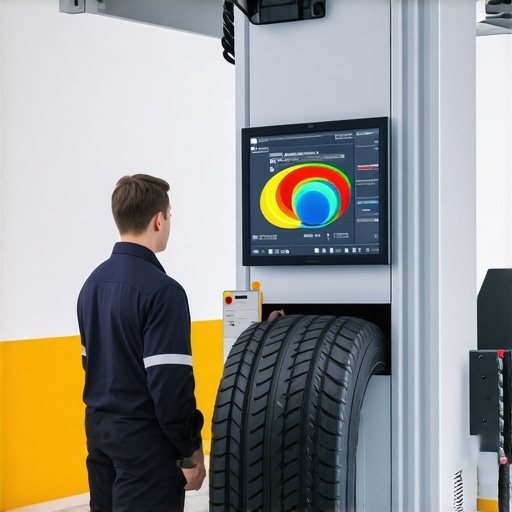
Why does the steering wheel buzz only under acceleration?
When you feel a high-frequency buzz or tingle rather than a heavy shake, you are likely dealing with high-order harmonics. According to technical bulletins from Auto Service Professional, this can often be traced back to the motor and transmission mounts. As the rubber in these mounts collapses or hardens over time, it loses its ability to isolate the cabin from the natural vibrations of the engine’s internal combustion process. In modern vehicles equipped with Electric Power Steering (EPS), this vibration can be even more pronounced. The EPS motor is mounted directly to the rack, and if the steering column’s isolation dampers have degraded, every micro-vibration from the subframe is transmitted directly into your palms. Identifying these ghost vibrations requires a diagnostic approach that looks at the vehicle as a holistic system rather than a collection of isolated parts.
Check Your Engine Mounts Before Tearing Down the Suspension
It is a common mistake to replace perfectly good tie rods and ball joints in a desperate attempt to solve a front-end vibration. However, a failing hydraulic engine mount—which is filled with specialized fluid to dampen specific frequencies—can allow the entire powertrain to oscillate at highway speeds. This oscillation travels through the CV axles and into the wheel hubs, manifesting as a steering wheel shudder that feels identical to a tire balance issue. If you’ve already balanced your wheels and the shake persists, inspect the mounts for signs of leaking fluid. Before you spend another dime on suspension components, take a moment to review our guide on how to test engine mounts with a brake-torque method to see if your powertrain is the true source of the instability. Addressing these structural failures early prevents the added stress from damaging the steering rack seals or the delicate sensors within the EPS system.
Beyond the structural integrity of engine mounts, the internal health of the steering rack itself often holds the key to persistent feedback that defies standard balancing. Internal gear lash or a failing spool valve within a hydraulic rack can introduce a minute ‘play’ that manifests as a high-speed shimmer. In these instances, the vibration isn’t a result of an external force like a warped rotor, but rather a failure of the steering system to maintain a rigid center. If you have replaced your rotors and balanced your tires only to find the steering wheel still dances at 70 mph, the problem may be an internal mechanical tolerance issue that requires a rack-and-pinion overhaul rather than another set of pads.
Stop Chasing Ghost Vibrations in Your Steering Rack
Many technicians overlook the impact of Electronic Power Steering (EPS) software logic on perceived mechanical vibrations. Modern vehicles use active dampening algorithms to filter out road noise, but when these systems are out of calibration, they can inadvertently amplify a minor mechanical oscillation. If the steering angle sensor or the torque sensor is sending noisy data to the EPS control module, the electric motor may ‘hunt’ for center, creating a rapid, artificial vibration that feels identical to a tire balance problem. This is why a simple software reset or a zero-point calibration is often the ‘miracle cure’ for steering shudders that mechanical inspections fail to find.
Does a steering angle sensor recalibration actually fix a shimmy?
While it may sound like a digital fix for a physical problem, recalibrating the steering angle sensor (SAS) is vital because the EPS motor uses this data to apply counter-torque. If the SAS is off by even a fraction of a degree, the system may struggle to stabilize the steering rack against the natural centrifugal forces of the wheels. According to technical documentation from Brembo, even the highest quality braking components cannot overcome a steering system that is digitally fighting itself. Identifying whether your vibration is a ‘commanded’ response from the EPS or a true mechanical failure requires advanced scan tool data logging of the rack’s torque command history. 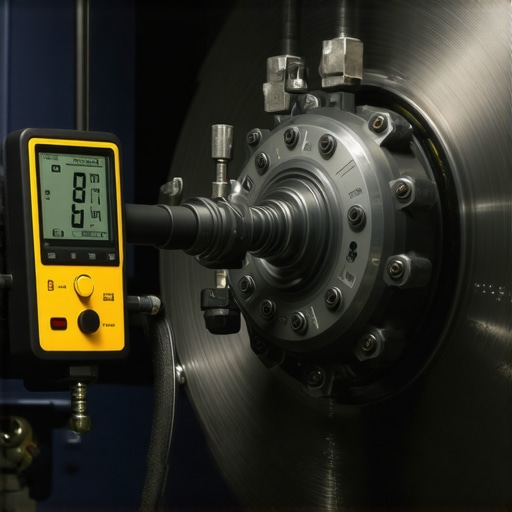
High-Performance Friction Isn’t Always Better for Daily Drivers
A common mistake among enthusiasts is upgrading to aggressive, track-ready brake pads that require high temperatures to operate effectively. On a daily commute, these pads never reach their optimal operating window, leading to ‘cold scouring.’ This process creates an abrasive, uneven wear pattern on the rotors that mimics the feeling of warping. If you prioritize stopping power over comfort, you must be prepared for the increased likelihood of Brake Torque Variation (BTV). For a smooth ride, sticking to premium ceramic pads designed for street use is often the better choice for preventing the rhythmic pulse that ruins a highway drive. If you suspect your pads are the problem, you should check for the specific smell that tells you your brakes are dragging, as this confirms a temperature issue is at play.
When Aerodynamic Buffeting Mimics a Mechanical Failure
At speeds exceeding 65 mph, air pressure becomes a powerful force that can exploit loose components. A loose plastic underbody shield or a missing fender liner clip can catch the wind and vibrate at a frequency that travels through the subframe and up the steering column. This ‘aerodynamic shimmer’ is frequently misdiagnosed as a wheel balance issue. Before you spend hundreds on specialized Road Force Balancing, perform a thorough visual inspection of the vehicle’s underside. Ensure all aero-shields are secured with the correct fasteners. If your steering wheel only vibrates when you are trailing a semi-truck or driving in high crosswinds, your problem is likely atmospheric, not mechanical. Have you noticed your vibration changes based on the wind speed? Contact us for a professional aerodynamic stability check to ensure your vehicle is cutting through the air as intended.
Expert Insights & Advanced Considerations
Clean the Hub or Expect a Comeback
Many technicians skip the critical step of using a wire brush or abrasive disc on the hub flange. Even microscopic corrosion buildup between the hub and the rotor creates a ‘runout’ effect that feels identical to a warped disc. This isn’t a parts failure; it’s a procedural one. Before you commit to a new set of parts, ensure you are familiar with the hidden world of vehicle diagnostics to catch these subtle mechanical interface issues. #IMAGE_PLACEHOLDER_E#
Your Impact Wrench Might Be Ruining Your Rotors
Over-torquing or unevenly tightening lug nuts is a leading cause of rotor distortion. If a technician hammers down one side with an air tool before the others, they can physically warp the rotor hat against the hub. Always demand a calibrated torque wrench and a star-pattern sequence to ensure even clamping force. If the shake persists even with perfect torque, you should investigate why your car pulls to one side only when braking to see if a sticking caliper is the true culprit.
Old Brake Fluid Can Mimic Mechanical Shudders
Moisture-contaminated fluid can boil under heavy braking, creating air pockets that lead to uneven piston pressure. This hydraulic imbalance can manifest as a rhythmic vibration that feels like a mechanical warp but is actually a failure of the fluid to transmit force evenly. To prevent this, following the secret to making your brake rotors last 100,000 miles must include a full system flush every two years regardless of mileage.
Curated Expert Resources
Hunter Engineering Road Force Manuals
These manuals provide the industry-standard framework for identifying radial force variation—the hidden ‘hard spots’ in tires that cause steering wheel vibration even when a tire is perfectly balanced by weight.
SAE International Technical Papers
For those seeking the mathematical reality of brake judder, SAE papers offer deep dives into the harmonics and thermal transfer characteristics of various friction materials and rotor alloys.
Brembo Technical Training Guides
As a leader in high-performance braking, Brembo’s resources are invaluable for distinguishing between Disc Thickness Variation (DTV) and actual thermal warping, providing clear visual benchmarks for professional diagnosis.
Final Expert Perspective
Solving a persistent steering wheel shudder requires moving beyond the ‘parts cannon’ approach and embracing high-level vehicle diagnostics. Whether the issue is a micro-deviation in the hub flange, a digital error in the EPS calibration, or a simple case of uneven lug nut torque, the key to a permanent fix lies in precision measurement. By integrating auto repair best practices with advanced tools like Road Force balancing, you can eliminate vibrations that standard shops often overlook. If you are struggling to find a technician who respects these tolerances, take the time to learn how to find reliable car service near you in 2025. We invite you to share your most difficult vibration diagnostic stories in the comments or reach out for a consultation on your specific drivetrain harmonics.