Maintaining a modern vehicle requires more than just reactive repairs; it demands a proactive, analytical approach to component wear. While professional car service is indispensable for complex mechanical failures, an owner’s ability to perform preliminary vehicle diagnostics can be the difference between a routine maintenance visit and a catastrophic failure on the road. Brake pads are among the most critical friction elements in the automotive assembly, yet they are often overlooked until the audible wear indicators begin their high-pitched protest. Understanding the metallurgy and wear patterns of these components allows for a more nuanced assessment of vehicle health before ever needing to jack up the chassis.
Reclaiming Control Over Critical Safety Components
The geometry of modern alloy wheels frequently provides sufficient visibility to inspect the outboard brake pads without the labor-intensive process of removing the wheel assembly. By utilizing a high-lumen flashlight and a basic understanding of the caliper’s architecture, one can observe the remaining friction material bonded to the metal backing plate. Industry standards from the National Highway Traffic Safety Administration (NHTSA) emphasize that routine inspections are the primary defense against braking distance degradation. While pads are often replaced at 3mm, the psychological peace of mind comes from knowing exactly where your vehicle stands before a long-distance haul. This visual triage serves as a vital first step in auto repair strategy, allowing for planned budgeting rather than emergency intervention.
How Much Pad Life Is Truly Remaining on Your Rotors?
When peering through the spokes, you are looking for the thickness of the pad—the dark material sandwiched between the shiny rotor and the steel backing plate. If this material appears to be less than 1/4 inch thick, you are entering the zone where heat dissipation becomes less efficient, potentially leading to brake fade or rotor warping. To refine your diagnostic skills, consider how various driving environments affect wear; heavy stop-and-go traffic accelerates degradation significantly compared to highway cruising. If you find your pedal feel is lacking despite having thick pads, you may need to investigate the difference between a soft brake pedal and a spongy one to identify potential hydraulic issues or air in the lines.
Integrating Visual Checks into Comprehensive Vehicle Diagnostics
A singular focus on brakes can sometimes blind an owner to other systemic issues. For instance, uneven wear across the same axle might indicate a sticking caliper or a failing brake hose, which requires immediate professional intervention. Furthermore, high-performance vehicles often utilize multi-piston calipers that may obscure the view, requiring a more tactical angle or a specialized inspection mirror. It is also wise to cross-reference your findings with professional maintenance schedules to ensure your braking system operates at peak efficiency. For those who want to dive deeper into total system health, understanding transmission failures and expert fixes is equally important to prevent costly drivetrain failures.
Identifying Friction Material Thickness Without a Lift
The process is surprisingly straightforward for most consumer vehicles. Align your line of sight parallel to the rotor and locate the caliper housing. The gap between the caliper and the rotor contains the pad. If you cannot see the pad clearly, you can use a simple depth gauge or even a common household item like a straw to estimate the thickness by inserting it through the wheel spokes. This method provides a data point that aids in discussing service needs with your mechanic, ensuring they don’t upsell you on unnecessary replacements. Take a moment to inspect your own vehicle today; if the pads look thin or the rotors show heavy grooving, it is time to act. Explore our specialized guide on how to check your own brake pads without taking the wheels off for a detailed step-by-step walkthrough.Friction material performance is not solely dictated by its remaining mass but by its structural integrity after multiple heat cycles. Expert technicians often identify ‘glazed’ pads—a condition where the binding resins in the friction material melt and solidify into a smooth, glass-like surface. This crystallization drastically reduces the coefficient of friction, meaning that even if you have 8mm of material left, your stopping distance is dangerously extended. This often occurs during aggressive bedding-in periods or prolonged downhill braking. If you have recently performed a swap and notice a burning scent, it is worth investigating why your brakes smoke after you’ve changed the pads to ensure you haven’t inadvertently compromised the material through excessive thermal stress. 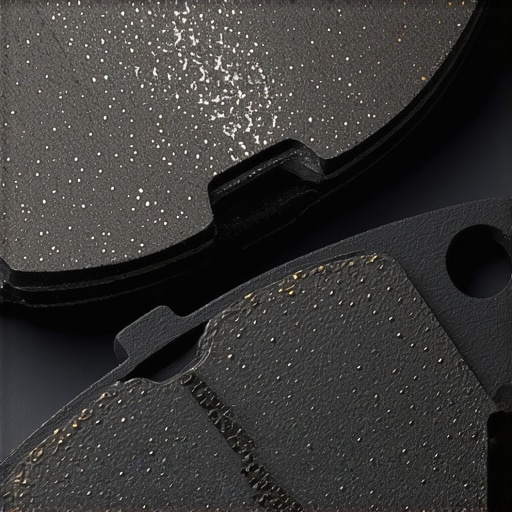
Is That Grinding Sound Normal After the Car Sits Overnight?
Many owners panic when they hear a raspy, grinding noise during the first few stops of a morning commute. In many cases, this is simply the pads ‘cleaning’ a thin layer of surface oxidation—flash rust—off the rotors. This is particularly common in high-humidity environments or after a vehicle has been stationary for several days. However, distinguishing between harmless surface rust and mechanical failure is key. If the sound persists after three or four applications of the pedal, the issue is likely deeper, potentially involving a seized slide pin or a collapsed piston seal. You can learn the best way to remove rust from your brake rotors to maintain a smooth contact patch, or read more on why your brakes grind only the first time you stop in the morning to better understand this seasonal phenomenon.
When Your Stopping Power Affects Your Steering Geometry
The braking system does not operate in a vacuum; it is intimately connected to the suspension and steering rack. A vehicle that tracks perfectly straight under cruise but darts to one side under heavy deceleration is communicating a specific failure. While many assume this is an alignment issue, it is often a hydraulic imbalance or a mechanical restriction in one of the front calipers. According to technical standards maintained by SAE International, brake torque variation can be a leading cause of steering instability. If you find your car diving toward the curb, it might be that your brake pads are wearing unevenly on one side, suggesting that one caliper is working harder than its counterpart. Furthermore, the electrical load placed on a vehicle during braking can reveal alternator or grounding weaknesses. It is a rare but insightful diagnostic find when an owner notices the real reason your headlights dim when you hit the brakes—often pointing toward a high-resistance ground wire rather than a brake fault itself. This level of systemic observation separates the casual driver from the expert owner. Have you encountered a persistent vibration or a strange pull that defied a standard alignment? Share your experience in the comments or tell us about a specific sound you’re hearing; our community thrives on solving these mechanical puzzles together. By investigating why your car pulls to the right even after an alignment, you can begin to narrow down if the culprit lies within the friction assembly or the control arm bushings.
Stop Ignoring the Fluid in Your Lines
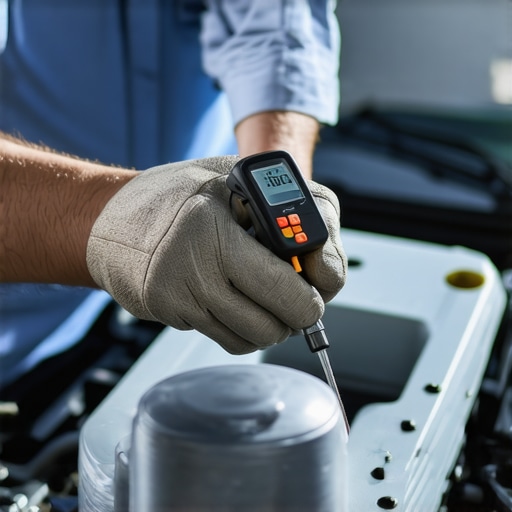
The hydraulic medium of your braking system—the fluid—is often the most neglected component in a maintenance schedule. Unlike the visible wear of a pad, brake fluid degrades chemically over time through thermal stress and atmospheric exposure. Most modern vehicles utilize glycol-based fluids, which are hygroscopic, meaning they actively absorb moisture from the air through microscopic pores in rubber hoses and the master cylinder reservoir cap. This water contamination lowers the fluid’s boiling point, a critical factor when descending steep grades or during emergency stops. If the fluid boils, it turns into a gas, which is compressible. This results in that terrifying “pedal to the floor” feeling known as vapor lock. The Brake Manufacturers Council suggests that fluid with just 3% water content can see its boiling point drop by over 100 degrees Fahrenheit, significantly compromising safety.
Does My Brake Fluid Really Need Testing with a Refractometer?
Testing for moisture isn’t just about color; dark fluid is a sign of oxidation, but clear fluid can still be dangerously saturated with water. Using a digital brake fluid tester or a specialized refractometer provides an empirical measurement of the boiling point rather than a visual guess. If you find your fluid is failing these tests, a complete system flush is non-negotiable. This isn’t just about stopping power; moisture in the lines leads to internal corrosion of expensive ABS pumps and master cylinder bores. When you notice a slight mushiness in the pedal, don’t just check the pads—look at the chemistry of the system.
Don’t Skip the Hardware That Keeps Your Brakes Quiet
A common mistake in DIY brake jobs is the reuse of old anti-rattle clips and shims. These components are designed to provide tension and dampen high-frequency vibrations that manifest as squealing. Over thousands of miles, these metal clips lose their spring tension due to constant heat cycles. Replacing them isn’t an upsell; it’s a requirement for a professional-grade repair. Furthermore, the choice of lubricant on the slider pins is vital for long-term reliability. Using a petroleum-based grease on rubber boots will cause them to swell and eventually seize, leading to the uneven wear discussed earlier. Always opt for a high-temperature silicone or ceramic-based lubricant to ensure the caliper can float freely across its range of motion.
Why the ABS Warning Light Might Not Mean Your Brakes are Failing
Modern vehicles rely on a suite of sensors to manage traction and stability. An ABS warning light can be triggered by something as simple as a cracked tone ring or a build-up of metallic dust on the magnetic sensor tip. This sensor debris often mimics the symptoms of a failing wheel bearing or a warped rotor during low-speed maneuvers. Before you commit to replacing a major component, perform a resistance test on the wheel speed sensors to see if the fault is electrical rather than mechanical. Have you ever felt your ABS kick in on dry pavement for no apparent reason? This often points to a sensor discrepancy that needs immediate attention. If you’re dealing with an intermittent light, it’s time to hook up a scanner and look at the live data stream while the wheels are in motion to isolate the culprit. Reach out to our technical community if you need help interpreting your OBD-II codes. However, even a perfect electronic signal cannot compensate for a mechanically compromised master cylinder, where internal pressure leaks—often called internal bypassing—can mimic air in the lines without any visible external drips. This internal failure usually manifests when…
The Silent Failure of Internal Seal Bypassing
Internal bypassing occurs when the primary or secondary seals within the master cylinder lose their hydraulic integrity, allowing fluid to sneak past the piston rather than being forced down the lines. This phenomenon is a diagnostic challenge because it leaves no external evidence—no puddles on the driveway and no drop in the reservoir level. It typically manifests when you are holding steady pressure at a stoplight; the pedal begins a slow, agonizing crawl toward the floorboards. This is not a failure of the pads or rotors, but a fundamental breach in the hydraulic circuit’s ability to maintain static pressure. Addressing this requires a high degree of precision, as replacing a master cylinder often involves complex ‘bench bleeding’ to ensure no air remains trapped in the internal galleries before installation.
Is Your Brake Pedal Sinking While You Wait at a Red Light?
If you experience this gradual descent, test the system by performing a ‘static pressure test’ with the engine off to deplete the vacuum assist. If the pedal still creeps down under consistent foot pressure, the internal seals are undoubtedly compromised. This condition is often exacerbated by old, contaminated fluid that has become abrasive, scoring the internal bore of the cylinder. According to technical bulletins from the Brake Manufacturers Council (BMC), neglecting fluid intervals is the leading cause of premature master cylinder failure.
Don’t Force That Rear Piston: The Electronic Parking Brake Trap
Modern vehicles equipped with an Electronic Parking Brake (EPB) have revolutionized convenience but added a layer of complexity to routine maintenance. Unlike traditional ratcheting calipers, EPB systems utilize an electric motor to drive the piston forward. Attempting to force these pistons back with a standard C-clamp without engaging ‘Service Mode’ or ‘Maintenance Mode’ through the vehicle’s infotainment system or an OBD-II scanner can lead to catastrophic gear failure within the caliper. This is an expensive mistake that transforms a simple pad swap into a multi-thousand-dollar electronic repair. Always verify the retraction procedure for your specific make and model before applying any mechanical pressure. 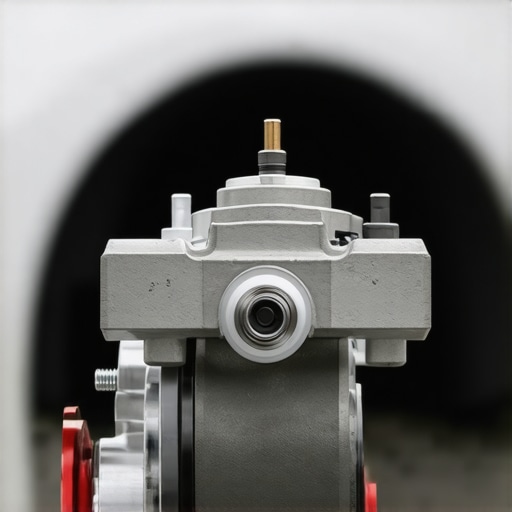
Beyond Rubber: The Case for Braided Stainless Steel Lines
For those seeking a more communicative pedal feel, the transition from factory EPDM rubber hoses to braided stainless steel lines is a significant upgrade. Standard rubber lines are subject to volumetric expansion—they literally swell under high pressure—which contributes to a ‘mushy’ pedal feel, especially as the rubber ages and softens. Stainless steel lines feature a PTFE inner liner wrapped in a stainless mesh, which virtually eliminates this expansion. The result is a more linear relationship between foot pressure and deceleration, providing the driver with much-needed feedback during threshold braking. This is particularly valuable in high-performance or heavy-towing applications where thermal loads are extreme. Have you ever felt your brakes become ‘wooden’ after a spirited drive or a long descent? Upgrading your plumbing might be the missing link in your vehicle’s safety profile. If you’re ready to elevate your car’s performance, start by evaluating the age of your current flex lines; if they are over six years old, they are likely ready for retirement. Contact us to learn more about advanced hydraulic upgrades or share your own diagnostic success stories in the forum below.
Expert Insights & Advanced Considerations
Match Your Pad Compound to Your Driving Reality
Choosing between ceramic and semi-metallic friction materials is not about which is ‘better’ but which fits your thermal operating window. Ceramic pads offer low dust and noise for daily commuting but can struggle with initial ‘cold bite’ compared to semi-metallics, which thrive in high-heat towing or performance scenarios. If you’ve ever wondered about the secret to getting a perfect brake pedal every time, it often starts with selecting a compound that matches your specific kinetic energy dissipation needs.
Stop Blaming the Rotors for Your Steering Wheel Shake
Many technicians misdiagnose ‘warped rotors’ when the actual culprit is lateral runout caused by corrosion on the hub mating surface. Even a microscopic layer of rust can throw the rotor off-center, causing an oscillation that feels like a mechanical failure. Before spending money on new parts, ensure your hub is wire-brushed to a mirror finish. This precision is a hallmark of high-level auto repair and prevents the recurrence of vibrations that often lead drivers to search for why the steering wheel shakes at 60 mph.
The Secondary Impact of Aging Brake Lines
Internal degradation of rubber brake hoses can create a ‘one-way valve’ effect, where fluid is forced into the caliper but cannot return to the master cylinder. This leads to a dragging brake that destroys new pads in weeks. Learning how to replace your own brake lines without making a mess is an essential skill for maintaining system balance. If you have noticed why your brake pedal feels spongy after bleeding the lines, it might be due to these aging, expanding hoses rather than air in the system.
#IMAGE_PLACE_HOLDER_E#
Curated Expert Resources
SAE International Technical Papers: These offer the most rigorous metallurgical data and friction coefficient testing protocols available to the public. Use these to understand the specific science behind modern heat dissipation.
Brake Manufacturers Council (BMC) Bulletins: A vital source for real-world failure mode data and installation best practices, particularly for complex electronic braking systems.
Reliable Auto Cares Diagnostic Suite: Our growing library features specialized walkthroughs, including how to free a seized brake caliper without replacing the whole unit, for those looking to repair rather than just replace.
Final Expert Perspective
Elevating your vehicle maintenance from simple part-swapping to true vehicle diagnostics involves a shift from reactive repairs to systemic analysis. Whether you are investigating the chemical stability of your fluid or the physical integrity of your hardware, every observation builds a safer driving experience. Don’t let minor symptoms evolve into major safety risks. If you have mastered the basics and want to refine your technical approach to automotive maintenance, continue checking your components regularly and contact our specialist team for advanced support on your journey to mechanical mastery.