Why 60 MPH Becomes the Threshold for Harmonic Resonance
The phenomenon of a steering wheel shimmy that manifests strictly within a specific velocity window—typically between 55 and 65 MPH—is a classic case of harmonic resonance. In the realm of advanced vehicle diagnostics, this vibration is rarely a random occurrence; it is the physical manifestation of a rotating component reaching its natural frequency. When the rotational speed of the wheel assembly aligns with the resonant frequency of the front suspension, the oscillation amplitudes spike. Expert technicians recognize that if the shake disappears at 70 MPH, you are likely dealing with a dynamic imbalance rather than a structural failure like a bent rim or a warped rotor. Precision auto repair tips for 2025 emphasize that identifying these specific frequency windows is the first step in avoiding the ‘parts cannon’ approach to maintenance.
Dynamic Imbalance and the Critical Role of Rotating Mass
A wheel that is perfectly balanced at a standstill can still exhibit significant lateral or radial force variation at highway speeds. This is often due to internal tire construction issues or ‘heavy spots’ that only exert enough centrifugal force to overcome suspension damping at specific RPMs. According to the Tire Industry Association (TIA), even a quarter-ounce discrepancy can generate several pounds of force when rotating at 60 MPH. If your vehicle feels unstable, it is imperative to seek a car service for seamless maintenance that utilizes Road Force Balancing, which simulates the weight of the vehicle on the tire to detect internal inconsistencies.
The Drivetrain Connection Beyond the Wheels
While tires are the primary suspects, the transmission and drivetrain components often play a secondary, more complex role in speed-sensitive vibrations. A worn inner CV joint or a failing torque converter can introduce a shudder that mimics wheel imbalance. These issues often correlate with engine load; if the shake persists at 60 MPH while accelerating but vanishes when coasting, the problem likely lies within the transmission system. This distinction is vital for accurate auto repair, as mistaking a drivetrain shudder for a tire issue can lead to costly and unnecessary wheel replacements.
How Does a Worn CV Axle Mimic Wheel Imbalance?
When the internal bearings of a constant velocity joint develop pits or ‘pockets,’ they allow the axle to oscillate slightly off-center. At 60 MPH, this oscillation matches the vehicle’s secondary harmonic, creating a distinct steering wheel shake. However, as the centrifugal force increases at 70 MPH, the axle may ‘center’ itself within the joint, causing the vibration to dampen. You can often diagnose a bad wheel bearing or axle issue by paying close attention to whether the noise changes during hard cornering versus straight-line driving.
If you have recently noticed an off-center steering feel alongside these vibrations, it may be time to investigate why your steering wheel is off-center to ensure your alignment geometry isn’t exacerbating the harmonic feedback. [image_placeholder_1]
Don’t let a minor vibration turn into a major mechanical failure; contribute your experiences with high-speed diagnostic challenges in our professional community forum or schedule an expert consultation today.
Worn Control Arm Bushings Are the Silent Multipliers of Road Vibration
A frequent oversight in high-speed troubleshooting is the failure to distinguish between the source of a vibration and its amplifier. While an out-of-round tire provides the initial oscillation, deteriorated rubber bushings in the lower control arms act as a magnifying glass for that energy. When these components lose their structural stiffness, they no longer isolate the cabin from the wheel assembly’s natural movements. This often explains why your car makes a clunking noise when you go over speed bumps at low speeds, only to transform into a violent shimmy once you hit the 60 MPH harmonic window. In the context of professional-grade vehicle diagnostics, inspecting the compliance of these bushings with a pry bar is often more productive than repeatedly re-balancing the same set of tires.
Can a Failing Steering Rack Masquerade as a Flat Spot?
Modern electric and hydraulic steering systems are designed to filter out “road noise,” but internal mechanical wear can create a feedback loop that feels remarkably like a tire issue. If the internal pinion gear or the rack-and-pinion bushings develop play, the steering wheel may vibrate as the tires hunt for a true center at highway velocities. This is particularly common in vehicles where the driver notices why your power steering is stiff in the morning but fine later, indicating that thermal expansion is temporarily masking mechanical tolerances. Experts should evaluate the slack in the steering column, as a loose universal joint or a failing rack mount can allow the entire steering geometry to oscillate when faced with the centripetal forces of high-speed travel.
Identify the Dragging Caliper Before It Destroys Your Hub
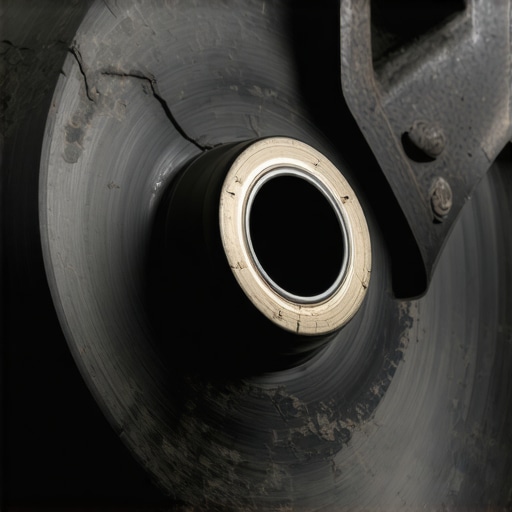
Brake-related vibrations aren’t always limited to the moment you press the pedal. A sticking brake caliper piston can cause a thermal shimmy that only appears after several miles of highway driving. As the pad maintains light, constant contact with the rotor, the resulting heat causes the metal to expand unevenly, leading to a temporary warp. This condition is often preceded by a subtle pulling sensation or, in extreme cases, explains why your brakes smoke after youve changed the pads due to improper piston retraction. To rule this out, perform a simple infrared thermometer check on your rotors after a highway run; a significant temperature delta between the left and right sides is a smoking gun for a mechanical drag. It is also wise to learn how to check your own brake pads without taking the wheels off to look for tapered wear patterns, which are indicative of a caliper that isn’t floating freely on its slide pins.
According to research by SAE International (specifically the J1441 standard for vehicle handling), the subjective perception of vibration is heavily influenced by the damping ratio of the entire chassis. This means that even a perfect tire can feel like it is failing if your struts are no longer capable of controlling the spring’s rebound. If you have successfully cured a high-speed shake by looking beyond the tires, share your diagnostic breakthrough in the comments or suggest a topic for our next deep-dive analysis of chassis dynamics.
Stop Hunting for Imbalance and Check Your Hub Rings
Many automotive enthusiasts overlook the critical interface where the wheel meets the hub, assuming that the lug nuts alone are responsible for centering the assembly. This is a fundamental misunderstanding of hub-centric versus lug-centric designs. If you are running aftermarket wheels without the correct hub-centric rings, the wheel may be offset by a fraction of a millimeter. At low speeds, this eccentricity is negligible, but at highway velocities, it translates into a massive radial runout. Vehicle diagnostics often reveal that a shimmy occurring strictly at 60 MPH is caused by the wheel ‘climbing’ the lug studs because it lacks the support of the hub’s center bore. Professional auto repair tips for 2025 emphasize that these rings are not mere spacers; they are essential load-bearing components that ensure the rotating mass stays perfectly concentric with the spindle.
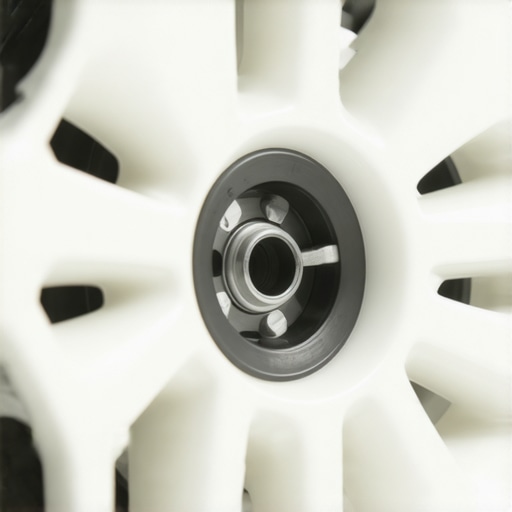
Even with OEM wheels, corrosion buildup on the mounting face can create an uneven mating surface. A thin layer of rust can prevent the wheel from sitting flush, mimicking a bent rim. Technicians should always use a wire brush to clean the hub surface and the back of the wheel during any car service for seamless maintenance. This ensures that the clamping force is distributed evenly across the entire mounting flange, preventing the secondary harmonics that often plague high-mileage vehicles.
How do I tell if my vibration is coming from the front or rear of the car?
Distinguishing the source of a vibration requires a keen sense of ‘seat-of-the-pants’ feedback. Generally, if you feel the vibration primarily through the steering wheel, the issue is located in the front suspension, steering rack, or front tires. However, if the steering wheel remains steady while the seat or floorboard shakes, the problem almost certainly originates from the rear axle, rear tires, or the driveshaft. This diagnostic shortcut is vital for narrowing down transmission system issues versus wheel-end failures. A rear-end vibration that oscillates at a higher frequency than the wheel speed often points toward a driveshaft imbalance or a failing universal joint, which requires a specialized approach to auto repair.
Fix Your Lug Nut Torque to Protect the Rotors
The method you use to tighten your wheels is just as important as the balance of the tire itself. Using an impact wrench to ‘zip’ on lug nuts without a torque stick or a calibrated torque wrench is a recipe for disaster. Uneven torque creates localized stress on the brake rotor hat, which leads to lateral runout over time as the metal heat-cycles. This isn’t a permanent warp but rather a ‘disc thickness variation’ that manifests as a steering wheel oscillation. According to the ISO 1940-1:2003 standards for balance quality requirements of rigid rotors, even minor deviations in mounting symmetry can shift a system from a G6.3 grade to a much coarser, more vibrant state. If you have recently had your tires changed and the shake appeared immediately after, the first step is to loosen and re-torque the lugs in a proper star pattern to the manufacturer’s specification. You might also want to investigate why your steering wheel is off-center if the shop didn’t follow these precision steps, as improper torque can subtly shift the hub’s alignment under load.
If you have ever felt your vehicle transform into a massage chair at 65 MPH despite multiple balances, it is time to look at the hub integrity. Take a moment to pull a wheel and inspect the hub face for corrosion or debris that might be ruining your ride quality. More complex issues involve the damping rates of your struts, which we will explore by looking at how worn shocks fail to mask minor tire flat spots.
Why Your Shocks Can’t Hide a Tiny Imbalance Anymore
When the damping fluid inside your struts loses its viscosity or the internal valving degrades, the suspension can no longer counteract the ‘rebound’ of the tire’s sidewall. Every tire has a specific spring rate, and without functional shock absorbers, even a micro-imbalance is allowed to cycle indefinitely. In advanced vehicle diagnostics, this is known as an under-damped system. While a new car might mask a 5-gram imbalance, a high-mileage vehicle will transmit that energy directly to the chassis through the strut towers. This loss of control is often why you might notice why your car makes a clunking noise when you go over speed bumps, as the internal components of the strut are bottoming out or losing their gas charge. Precision auto repair requires a holistic view; you aren’t just balancing a wheel, you are stabilizing a complex mass-spring-damper system that must remain in phase.
How Long Does It Take for Morning Flat-Spots to Disappear?
If your steering wheel shake only occurs during the first few miles of your commute and then magically vanishes, you are likely experiencing “temporary flat-spotting.” This occurs when the tires support the vehicle’s weight in a static position overnight, particularly in colder climates or with tires containing high concentrations of nylon in their internal belts. As the tires roll and generate internal friction, the rubber reaches its glass transition temperature and regains its true round shape. This phenomenon is distinct from a permanent flat spot caused by a locked brake during an emergency stop. If you notice why your power steering is stiff in the morning but fine later alongside this vibration, it suggests a combination of fluid viscosity issues and tire carcass deformation that requires a patient diagnostic approach rather than an immediate parts replacement.
#IMAGE_PLACE_HOLDER_D#
Don’t Ignore the Fluttering Belly Pan Under Your Engine
Aerodynamic excitation is the silent culprit behind many “untraceable” 60 MPH vibrations. Modern vehicles use extensive plastic under-trays to reduce drag and improve fuel economy. If the fasteners for these trays become loose or missing, the wind pressure at highway speeds can cause the plastic to vibrate at a high frequency. This vibration often translates through the subframe and steering column, feeling remarkably like a mechanical imbalance. According to technical standards from the National Highway Traffic Safety Administration (NHTSA) regarding steering and suspension integrity, loose aerodynamic components can even interfere with the cooling of the transmission system by disrupting directed airflow. Before tearing down your front end, ensure that every plastic shield and wheel well liner is securely fastened, as a $2 plastic clip can often solve a vibration that looks like a $500 wheel bearing failure.
Master the Geometry of Driveshaft Working Angles
In rear-wheel and all-wheel-drive platforms, the relationship between the transmission output shaft and the differential input is governed by universal joint working angles. If the vehicle’s ride height has been altered or if the transmission mounts have sagged, these angles can become unequal. This creates a non-constant velocity in the driveshaft rotation, leading to a “thrumming” vibration that peaks at specific road speeds and often disappears as the centrifugal force stabilizes the shaft. To differentiate this from a tire issue, try to diagnose a bad wheel bearing by listening for pitch changes during coasting; a driveshaft vibration usually maintains a higher frequency—roughly 3 to 4 times the wheel speed. Correcting these angles is a cornerstone of professional car service, ensuring that torque is transmitted smoothly without inducing secondary harmonic oscillations into the floorboards. Have you encountered a vibration that only appears under heavy load? Tell us about your chassis troubleshooting wins in the comments below or reach out for a specialized drivetrain evaluation to restore your vehicle’s factory-smooth ride.
Why 60 MPH Becomes the Threshold for Harmonic Resonance
The phenomenon of a steering wheel shimmy that manifests strictly within a specific velocity window—typically between 55 and 65 MPH—is a classic case of harmonic resonance. In the realm of advanced vehicle diagnostics, this vibration is rarely a random occurrence; it is the physical manifestation of a rotating component reaching its natural frequency. When the rotational speed of the wheel assembly aligns with the resonant frequency of the front suspension, the oscillation amplitudes spike. Expert technicians recognize that if the shake disappears at 70 MPH, you are likely dealing with a dynamic imbalance rather than a structural failure like a bent rim or a warped rotor. Precision auto repair tips for 2025 emphasize that identifying these specific frequency windows is the first step in avoiding the ‘parts cannon’ approach to maintenance.
Dynamic Imbalance and the Critical Role of Rotating Mass
A wheel that is perfectly balanced at a standstill can still exhibit significant lateral or radial force variation at highway speeds. This is often due to internal tire construction issues or ‘heavy spots’ that only exert enough centrifugal force to overcome suspension damping at specific RPMs. According to the Tire Industry Association (TIA), even a quarter-ounce discrepancy can generate several pounds of force when rotating at 60 MPH. If your vehicle feels unstable, it is imperative to seek a car service for seamless maintenance that utilizes Road Force Balancing, which simulates the weight of the vehicle on the tire to detect internal inconsistencies.
The Drivetrain Connection Beyond the Wheels
While tires are the primary suspects, the transmission and drivetrain components often play a secondary, more complex role in speed-sensitive vibrations. A worn inner CV joint or a failing torque converter can introduce a shudder that mimics wheel imbalance. These issues often correlate with engine load; if the shake persists at 60 MPH while accelerating but vanishes when coasting, the problem likely lies within the transmission system. This distinction is vital for accurate auto repair, as mistaking a drivetrain shudder for a tire issue can lead to costly and unnecessary wheel replacements.
How Does a Worn CV Axle Mimic Wheel Imbalance?
When the internal bearings of a constant velocity joint develop pits or ‘pockets,’ they allow the axle to oscillate slightly off-center. At 60 MPH, this oscillation matches the vehicle’s secondary harmonic, creating a distinct steering wheel shake. However, as the centrifugal force increases at 70 MPH, the axle may ‘center’ itself within the joint, causing the vibration to dampen. You can often diagnose a bad wheel bearing or axle issue by paying close attention to whether the noise changes during hard cornering versus straight-line driving.
If you have recently noticed an off-center steering feel alongside these vibrations, it may be time to investigate why your steering wheel is off-center to ensure your alignment geometry isn’t exacerbating the harmonic feedback. [image_placeholder_1]
Don’t let a minor vibration turn into a major mechanical failure; contribute your experiences with high-speed diagnostic challenges in our professional community forum or schedule an expert consultation today.
Worn Control Arm Bushings Are the Silent Multipliers of Road Vibration
A frequent oversight in high-speed troubleshooting is the failure to distinguish between the source of a vibration and its amplifier. While an out-of-round tire provides the initial oscillation, deteriorated rubber bushings in the lower control arms act as a magnifying glass for that energy. When these components lose their structural stiffness, they no longer isolate the cabin from the wheel assembly’s natural movements. This often explains why your car makes a clunking noise when you go over speed bumps at low speeds, only to transform into a violent shimmy once you hit the 60 MPH harmonic window. In the context of professional-grade vehicle diagnostics, inspecting the compliance of these bushings with a pry bar is often more productive than repeatedly re-balancing the same set of tires.
Can a Failing Steering Rack Masquerade as a Flat Spot?
Modern electric and hydraulic steering systems are designed to filter out “road noise,” but internal mechanical wear can create a feedback loop that feels remarkably like a tire issue. If the internal pinion gear or the rack-and-pinion bushings develop play, the steering wheel may vibrate as the tires hunt for a true center at highway velocities. This is particularly common in vehicles where the driver notices why your power steering is stiff in the morning but fine later, indicating that thermal expansion is temporarily masking mechanical tolerances. Experts should evaluate the slack in the steering column, as a loose universal joint or a failing rack mount can allow the entire steering geometry to oscillate when faced with the centripetal forces of high-speed travel.
Identify the Dragging Caliper Before It Destroys Your Hub
Brake-related vibrations aren’t always limited to the moment you press the pedal. A sticking brake caliper piston can cause a thermal shimmy that only appears after several miles of highway driving. As the pad maintains light, constant contact with the rotor, the resulting heat causes the metal to expand unevenly, leading to a temporary warp. This condition is often preceded by a subtle pulling sensation or, in extreme cases, explains why your brakes smoke after youve changed the pads due to improper piston retraction. To rule this out, perform a simple infrared thermometer check on your rotors after a highway run; a significant temperature delta between the left and right sides is a smoking gun for a mechanical drag. It is also wise to learn how to check your own brake pads without taking the wheels off to look for tapered wear patterns, which are indicative of a caliper that isn’t floating freely on its slide pins.
According to research by SAE International (specifically the J1441 standard for vehicle handling), the subjective perception of vibration is heavily influenced by the damping ratio of the entire chassis. This means that even a perfect tire can feel like it is failing if your struts are no longer capable of controlling the spring’s rebound. If you have successfully cured a high-speed shake by looking beyond the tires, share your diagnostic breakthrough in the comments or suggest a topic for our next deep-dive analysis of chassis dynamics.
Stop Hunting for Imbalance and Check Your Hub Rings
Many automotive enthusiasts overlook the critical interface where the wheel meets the hub, assuming that the lug nuts alone are responsible for centering the assembly. This is a fundamental misunderstanding of hub-centric versus lug-centric designs. If you are running aftermarket wheels without the correct hub-centric rings, the wheel may be offset by a fraction of a millimeter. At low speeds, this eccentricity is negligible, but at highway velocities, it translates into a massive radial runout. Vehicle diagnostics often reveal that a shimmy occurring strictly at 60 MPH is caused by the wheel ‘climbing’ the lug studs because it lacks the support of the hub’s center bore. Professional auto repair tips for 2025 emphasize that these rings are not mere spacers; they are essential load-bearing components that ensure the rotating mass stays perfectly concentric with the spindle.
Even with OEM wheels, corrosion buildup on the mounting face can create an uneven mating surface. A thin layer of rust can prevent the wheel from sitting flush, mimicking a bent rim. Technicians should always use a wire brush to clean the hub surface and the back of the wheel during any car service for seamless maintenance. This ensures that the clamping force is distributed evenly across the entire mounting flange, preventing the secondary harmonics that often plague high-mileage vehicles.
How do I tell if my vibration is coming from the front or rear of the car?
Distinguishing the source of a vibration requires a keen sense of ‘seat-of-the-pants’ feedback. Generally, if you feel the vibration primarily through the steering wheel, the issue is located in the front suspension, steering rack, or front tires. However, if the steering wheel remains steady while the seat or floorboard shakes, the problem almost certainly originates from the rear axle, rear tires, or the driveshaft. This diagnostic shortcut is vital for narrowing down transmission system issues versus wheel-end failures. A rear-end vibration that oscillates at a higher frequency than the wheel speed often points toward a driveshaft imbalance or a failing universal joint, which requires a specialized approach to auto repair.
Fix Your Lug Nut Torque to Protect the Rotors
The method you use to tighten your wheels is just as important as the balance of the tire itself. Using an impact wrench to ‘zip’ on lug nuts without a torque stick or a calibrated torque wrench is a recipe for disaster. Uneven torque creates localized stress on the brake rotor hat, which leads to lateral runout over time as the metal heat-cycles. This isn’t a permanent warp but rather a ‘disc thickness variation’ that manifests as a steering wheel oscillation. According to the ISO 1940-1:2003 standards for balance quality requirements of rigid rotors, even minor deviations in mounting symmetry can shift a system from a G6.3 grade to a much coarser, more vibrant state. If you have recently had your tires changed and the shake appeared immediately after, the first step is to loosen and re-torque the lugs in a proper star pattern to the manufacturer’s specification. You might also want to investigate why your steering wheel is off-center if the shop didn’t follow these precision steps, as improper torque can subtly shift the hub’s alignment under load.
If you have ever felt your vehicle transform into a massage chair at 65 MPH despite multiple balances, it is time to look at the hub integrity. Take a moment to pull a wheel and inspect the hub face for corrosion or debris that might be ruining your ride quality. More complex issues involve the damping rates of your struts, which we will explore by looking at how worn shocks fail to mask minor tire flat spots.
Why Your Shocks Can’t Hide a Tiny Imbalance Anymore
When the damping fluid inside your struts loses its viscosity or the internal valving degrades, the suspension can no longer counteract the ‘rebound’ of the tire’s sidewall. Every tire has a specific spring rate, and without functional shock absorbers, even a micro-imbalance is allowed to cycle indefinitely. In advanced vehicle diagnostics, this is known as an under-damped system. While a new car might mask a 5-gram imbalance, a high-mileage vehicle will transmit that energy directly to the chassis through the strut towers. This loss of control is often why you might notice why your car makes a clunking noise when you go over speed bumps, as the internal components of the strut are bottoming out or losing their gas charge. Precision auto repair requires a holistic view; you aren’t just balancing a wheel, you are stabilizing a complex mass-spring-damper system that must remain in phase.
How Long Does It Take for Morning Flat-Spots to Disappear?
If your steering wheel shake only occurs during the first few miles of your commute and then magically vanishes, you are likely experiencing “temporary flat-spotting.” This occurs when the tires support the vehicle’s weight in a static position overnight, particularly in colder climates or with tires containing high concentrations of nylon in their internal belts. As the tires roll and generate internal friction, the rubber reaches its glass transition temperature and regains its true round shape. This phenomenon is distinct from a permanent flat spot caused by a locked brake during an emergency stop. If you notice why your power steering is stiff in the morning but fine later alongside this vibration, it suggests a combination of fluid viscosity issues and tire carcass deformation that requires a patient diagnostic approach rather than an immediate parts replacement.
#IMAGE_PLACE_HOLDER_D#
Don’t Ignore the Fluttering Belly Pan Under Your Engine
Aerodynamic excitation is the silent culprit behind many “untraceable” 60 MPH vibrations. Modern vehicles use extensive plastic under-trays to reduce drag and improve fuel economy. If the fasteners for these trays become loose or missing, the wind pressure at highway speeds can cause the plastic to vibrate at a high frequency. This vibration often translates through the subframe and steering column, feeling remarkably like a mechanical imbalance. According to technical standards from the National Highway Traffic Safety Administration (NHTSA) regarding steering and suspension integrity, loose aerodynamic components can even interfere with the cooling of the transmission system by disrupting directed airflow. Before tearing down your front end, ensure that every plastic shield and wheel well liner is securely fastened, as a $2 plastic clip can often solve a vibration that looks like a $500 wheel bearing failure.
Master the Geometry of Driveshaft Working Angles
In rear-wheel and all-wheel-drive platforms, the relationship between the transmission output shaft and the differential input is governed by universal joint working angles. If the vehicle’s ride height has been altered or if the transmission mounts have sagged, these angles can become unequal. This creates a non-constant velocity in the driveshaft rotation, leading to a “thrumming” vibration that peaks at specific road speeds and often disappears as the centrifugal force stabilizes the shaft. To differentiate this from a tire issue, try to diagnose a bad wheel bearing by listening for pitch changes during coasting; a driveshaft vibration usually maintains a higher frequency—roughly 3 to 4 times the wheel speed. Correcting these angles is a cornerstone of professional car service, ensuring that torque is transmitted smoothly without inducing secondary harmonic oscillations into the floorboards. Have you encountered a vibration that only appears under heavy load? Tell us about your chassis troubleshooting wins in the comments below or reach out for a specialized drivetrain evaluation to restore your vehicle’s factory-smooth ride.
Expert Insights & Advanced Considerations
Look Beyond Balancing to Tire Radial Runout
Even a tire that balances perfectly on a standard machine can have structural inconsistencies. Experts look for radial runout—the degree to which the tire is not perfectly round under load. Mastering the hidden world of vehicle diagnostics involves realizing that a tire with high road force variation will always vibrate at 60 MPH, no matter how many lead weights you add to the rim.
Thermal Imaging Can Reveal Internal Friction
A professional technique for isolating ghost vibrations involves using infrared cameras. By scanning the hub, caliper, and tire sidewall after a highway stint, you can identify localized heat spikes that indicate a dragging brake or a failing internal belt. Utilizing top auto repair techniques every car owner should know, such as thermal mapping, saves hours of guesswork on the lift.
Update Electronic Power Steering Software First
In many modern vehicles, a 60 MPH vibration is actually an electronic feedback loop. If the EPS module is not calibrated to compensate for the natural harmonics of the steering rack, it can fight the driver’s input. Before replacing mechanical parts, check for TSBs (Technical Service Bulletins) regarding software updates that might eliminate harmonic oscillation through digital damping.
Curated Expert Resources
Hunter Engineering University
This is the definitive source for understanding Road Force Balancing technology. It provides deep technical dives into how tire uniformity—rather than just weight—impacts high-speed vehicle stability and ride quality.
SAE International Technical Papers
The Society of Automotive Engineers offers peer-reviewed research on chassis dynamics and harmonic resonance. These documents are essential for those looking to understand the physics of damping ratios and suspension geometry at a professional level.
TRNI Transmission Diagnostic Guides
The Transmission Rebuilders Network International provides specific case studies on preventing transmission troubles and how to save time and money by identifying torque converter shudders that mimic tire vibrations.
Final Expert Perspective
Navigating high-speed vibrations requires a transition from reactive parts replacement to precision vehicle diagnostics. Whether the culprit is a micro-imbalance magnified by worn bushings or a drivetrain frequency issue, the solution lies in understanding the harmonic relationship between every rotating component. Even if your car pulls to the right even after an alignment, the core issue may still be a tire uniformity problem that only manifests under load. Professional auto repair is about isolating the source from the amplifier. We invite you to share your most difficult diagnostic cases or learn how to tell if your struts are shot without a mechanic to further refine your vehicle maintenance strategy. Contact our expert team today for a comprehensive vibration analysis.