Automotive health is rarely a binary state of functioning or failure; rather, it is a gradual progression of wear that eventually reaches a critical threshold. To the seasoned technician, a vehicle is a complex feedback loop of thermal, mechanical, and chemical signals. When this loop is interrupted by anomalous acoustic frequencies, it indicates that the structural integrity of the powertrain is at risk. Mastering the identification of these ‘death rattles’ is the difference between a minor auto repair and a total vehicle write-off. Professional diagnostic protocols dictate that sound is one of the most reliable indicators of internal component distress, often preceding electronic fault codes.
Stop the Car When You Hear These Three Specific Mechanical Failures
Modern engines are engineered with incredibly tight tolerances, often measured in microns. When a component deviates from its intended path or loses its lubricating barrier, the resulting noise is a physical manifestation of energy being dissipated through friction and impact. Ignoring these signals bypasses the primary defensive layer of any car service protocol: early detection and intervention.
Why a Rhythmic Rod Knock Spells Imminent Bottom-End Disaster
Perhaps the most feared sound in any workshop is the deep, metallic ‘thud’ known as rod knock. This sound typically originates from the connecting rod bearings. When the thin film of pressurized oil that separates the bearing from the crankshaft fails, the resulting metal-on-metal contact creates a violent shockwave. Research from the Society of Automotive Engineers (SAE) highlights that even seconds of insufficient lubrication at high RPM can lead to catastrophic reciprocating mass failure, potentially throwing a rod through the engine block. If you hear this, utilizing the 30 dollar tool that lets you see inside your engine can confirm the structural damage, but immediate shutdown is the only way to preserve the core components.
Catch Metallic Screeching Before Your Ancillary Systems Fail
A high-pitched, piercing squeal often points to a seizing pulley or a failing serpentine belt. While this might seem less severe than internal engine damage, a seized water pump pulley will lead to instantaneous overheating, warping the cylinder head in minutes. Similarly, a failing alternator pulley can leave you stranded without power. You can often identify a dying alternator before your battery deserts you by listening for a change in pitch that correlates with electrical load. This high-frequency friction is a precursor to a total system freeze.
Why Grinding Gears Require Immediate Professional Intervention
When the noise resembles stones in a industrial blender, the transmission is likely undergoing severe mechanical distress. This grinding often indicates that the synchronizers or planetary gear sets are no longer being properly lubricated or aligned. In the realm of transmission troubles, the transition from a ‘whine’ to a ‘grind’ is the point of no return. Continuing to drive forces metal shavings into the delicate valve body, turning a manageable rebuild into a total replacement of the entire transaxle assembly.
How Can a Professional Diagnostic Sweep Prevent a Five-Figure Engine Swap?
Many drivers ask if they can simply ‘wait and see’ when a new noise appears. The reality is that modern vehicle diagnostics can catch microscopic fluctuations in oil pressure or timing advance that indicate these failures before they become audible to the human ear. Investing in a professional assessment ensures you are not making a high-stakes gamble with your car’s lifespan. If your vehicle is exhibiting any of these audible distress signals, contact our expert diagnostic team immediately to schedule a comprehensive evaluation.Mechanical intuition often starts at the fingertips before it reaches the ears. While noise is a primary indicator, the harmonic resonance felt through the chassis provides a deeper narrative of a vehicle’s internal health. A rhythmic vibration that persists regardless of road surface usually points to a rotational imbalance within the drivetrain. When these vibrations are ignored, they accelerate the wear of secondary components, leading to a cascading failure that can double your repair bill in a matter of weeks.
The Violent Shudder That Signals a Failing Driveline
When a car begins to shake under load, most owners instinctively check their tire pressure, but the reality is often buried deeper in the transmission or differential. A specific type of vibration, known as torque converter shudder, feels like driving over rumble strips for a few seconds during a gear change. This is a clear sign of friction material degradation or contaminated fluid. In many cases, we have seen that the 5 additive that stopped our shops worst transmission shudder can provide a temporary reprieve, but it is rarely a substitute for a full mechanical inspection.
Why Your Gearbox Trembles Only When You Turn a Corner
Centrifugal forces act as a stress test for failing internal components. If you notice a shudder or a slipping sensation specifically during lateral movement, it often indicates that fluid levels are low enough to expose the pickup screen or that internal seals are failing. Understanding why your transmission slips only when you turn a corner is vital for preventing a complete pump failure. This specific symptom is the gearbox’s final warning before the hydraulic pressure drops to zero, rendering the vehicle immobile. 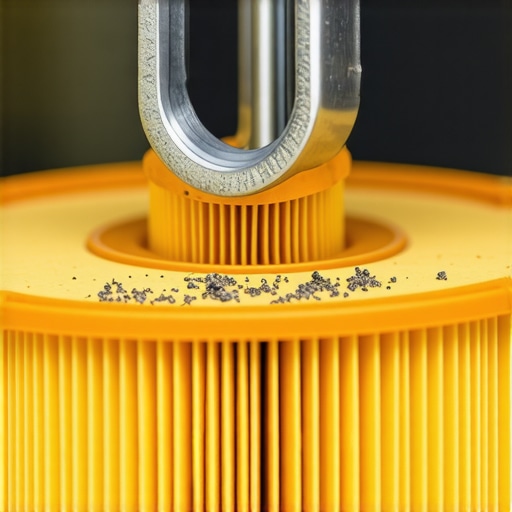
Does Your Oil Filter Hold the Evidence of a Dying Camshaft?
Many drivers treat oil changes as a routine chore, but for a diagnostic expert, the oil filter is a forensic archive. By cutting open the filter canister, we can identify ‘glitter’—microscopic metal flakes that indicate the engine is eating itself from the inside out. If you suspect your vehicle is aging prematurely, it is worth investigating how to tell if your mechanic actually changed your oil filter during your last visit. According to technical data from Blackstone Laboratories, a spectrometric analysis of your used oil can detect elevated copper and lead levels, which are definitive precursors to bearing shell fatigue long before a mechanical seizure occurs.
The Hidden Chemical Warfare Inside Your Cooling System
Beyond the mechanical sounds and physical tremors lies the chemistry of the engine. When the cooling system is neglected, the pH level of the coolant shifts, becoming acidic and eating away at head gaskets and heater cores. This chemical breakdown is often the real reason your gas mileage suddenly dropped, as the engine’s thermal management system can no longer maintain the optimal operating temperature. Furthermore, owners should be wary of aggressive flush procedures; the truth about transmission flushes and why they can be dangerous is that they can dislodge sludge that was actually helping to seal worn internal components. If you suspect your car is masking a serious mechanical issue behind a minor vibration, share your symptoms in the comments below or consult with a diagnostic specialist to prevent a total powertrain collapse.
Stop Relying on the Check Engine Light for Early Warnings
The modern Engine Control Unit (ECU) is a reactive system, not a predictive one. It is programmed with specific threshold parameters; as long as a sensor’s data remains within that narrow ‘safe zone,’ the dashboard remains dark. However, a seasoned technician knows that a vehicle can be in the throes of a mechanical crisis long before a fault code is logged. This gap between physical reality and electronic reporting is where most ‘unforeseen’ breakdowns occur. By the time a light illuminates, the component has often reached a state of critical failure. To truly protect your investment, you must learn to interpret the raw data that the ECU is trying to manage behind the scenes.
How Do Fuel Trims Mask a Dying Engine for Thousands of Miles?
Many drivers ask how an engine can run perfectly one day and seize the next. The answer lies in fuel trims. Your vehicle’s computer can adjust the air-fuel ratio by up to 25% to compensate for mechanical wear, such as a vacuum leak or a clogged injector. This ‘adaptive learning’ hides the symptoms of age. If your Long-Term Fuel Trim (LTFT) is consistently hitting double digits, your engine is working overtime to survive. You can uncover these hidden struggles by performing a deep vehicle diagnostics sweep using a live-data scanner. Ignoring these invisible adjustments is a high-stakes gamble that eventually leads to burned valves and melted pistons.
Don’t Let a Whistling Turbocharger Turn into a Shrapnel Shower
In the world of forced induction, silence is safety. A turbocharger operates at speeds exceeding 200,000 RPM, where the margin for error is non-existent. A faint, siren-like whine—often called the ‘death whistle’—is the sound of the compressor wheel blades making microscopic contact with the housing. This usually stems from shaft play caused by oil starvation or contaminated lubricant. According to technical documentation from Garrett Motion, the leading cause of turbo failure is not the unit itself, but issues within the engine’s oil supply system. If you hear this whistle, the clock is ticking. Once the shaft snaps, metal shrapnel is sent directly into the intake manifold, necessitating an entire engine replacement rather than a simple turbo swap. 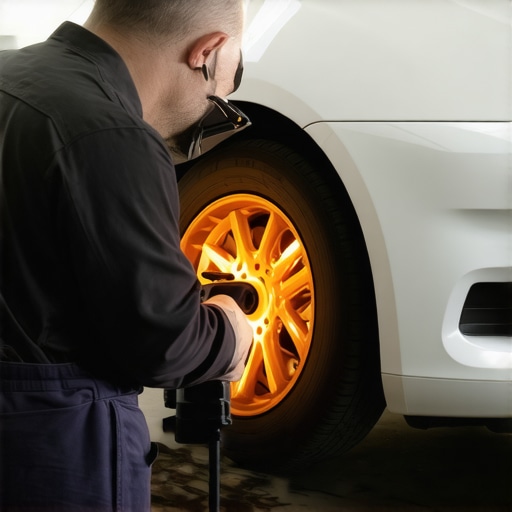
The Thermal Fingerprint of a Failing Hub Assembly
Mechanical friction always leaves a thermal signature. While your ears might not pick up the early stages of a wheel bearing failure, a professional-grade infrared thermometer can. By measuring the temperature of the wheel hubs after a highway drive, a discrepancy of more than 20 degrees Fahrenheit between the left and right sides indicates an internal race that is beginning to pit and gall. This thermal buildup is a precursor to a wheel lock-up or a hub separation. If you are sensing a vague instability in your steering, it is worth investigating the heat levels before the friction welds the bearing to the spindle. Using advanced thermal mapping is a hallmark of elite auto repair, allowing for intervention before the vehicle becomes a safety hazard.
Why Your Suspension Geometry Dictates More Than Just Tire Wear
When a vehicle’s alignment is slightly out of spec, the consequences extend far beyond needing new rubber. The modern multi-link suspension is a delicate balance of bushings, ball joints, and control arms. Even a minor deviation in caster or camber creates lateral stress on the CV axles and the differential output seals. If you find yourself constantly correcting the steering on a straight road, the chassis is fighting itself, generating heat in the drivetrain components that were never designed for those loads. This constant tension eventually leads to the failure of the power steering rack’s internal valving. If you’ve noticed a change in steering effort, book a specialized chassis evaluation before the secondary damage to your steering rack becomes irreversible. Moving beyond the chassis, the focus shifts toward the invisible pressure systems that keep your brakes and steering fluid in a state of equilibrium, where even a microscopic air bubble can…compromise the entire hydraulic circuit. When air enters the lines, it introduces a compressible element into a system that relies on the physical integrity of fluid pressure. This is the root cause of that unnerving ‘soft’ pedal feel. Beyond air, the chemistry of the fluid itself is a silent saboteur. Glycol-based brake fluids are hygroscopic, meaning they pull moisture through the microscopic pores of rubber hoses. According to technical bulletins from Brembo, even a 3% water content can lower the boiling point of DOT 4 fluid by over 100 degrees Celsius. This degradation remains invisible until a high-load event, such as mountain driving or emergency stopping, causes the fluid to boil, leaving you with zero mechanical leverage against the rotors.
Brake Fluid Chemistry Determines Your Survival on Steep Descents
A spongy pedal is more than an annoyance; it is a signal that your master cylinder is fighting a losing battle against gas pockets. As these bubbles expand under the heat of friction, the stroke of the pedal increases, often bottoming out before the pads can exert meaningful clamping force. This is why a simple “pad slap” is never a substitute for a comprehensive car service that includes a full pressure bleed. Professional workshops use pressure-bleeding equipment that forces out every microscopic pocket of air, a feat nearly impossible with the old “pump and hold” method. 
Can Contaminated Brake Fluid Actually Cause Your ABS Pump to Burn Out?
The short answer is a definitive yes. The Anti-lock Braking System (ABS) modulator is a marvel of micro-hydraulics, containing a labyrinth of valves and solenoids that pulse at millisecond intervals. When moisture-laden fluid sits in these channels, it initiates galvanic corrosion between the different metals used in the assembly. Over time, the internal pistons seize, or the debris clogs the microscopic orifices. Replacing an ABS pump is a four-figure endeavor that can be entirely avoided by maintaining fluid purity. If you haven’t tested your fluid’s copper content or moisture percentage in the last two years, you are essentially driving on a timed fuse. This is where advanced auto repair techniques move beyond the mechanical and into the realm of chemical preservation.
The Digital Ghost Hiding in Your Braking Logic
Modern vehicles utilize Electronic Brake-force Distribution (EBD) to balance the load between axles dynamically. If the wheel speed sensors provide erratic data due to road debris or magnetic interference, the ECU will default to a conservative braking map. This often increases stopping distances significantly without ever triggering a dashboard warning light. This subtle degradation of performance is why expert vehicle diagnostics are essential for late-model cars. Our technicians don’t just check for “faults”; they look for performance deviations in the data stream that suggest a component is operating outside its peak efficiency.
Don’t Ignore the Subtle Scent of Hot Friction
If you exit your vehicle and detect a faint, acrid smell similar to burning electronics or sulfur, your calipers may not be fully retracting. A “hanging” caliper creates constant friction, glazing the pads and crystallizing the rotor surface. This heat soak eventually transfers back to the wheel bearings, liquefying the grease and leading to the hub failures discussed previously. To ensure your safety isn’t compromised by these invisible hydraulic and electronic shifts, schedule a precision brake system analysis today. This proactive approach identifies the chemical and physical breakdown of your vehicle’s most critical safety system before a crisis occurs on the road. Moving into the interior environment, the focus transitions to the air we breathe and how a failing HVAC system is often the first sign of electrical load imbalances that…Compromise the entire electrical architecture. When the HVAC blower motor or compressor clutch begins to draw excessive amperage, it creates heat that can degrade the insulation on adjacent wiring harnesses. This subtle thermal stress is a silent precursor to localized circuit failures.
Expert Insights & Advanced Considerations
Why Electrical Load Peaks Reveal Hidden Mechanical Drag
When you engage your climate control system and feel a significant drop in power, you aren’t just experiencing a normal draw on the engine. In many cases, why your car bogs down when you turn on the air conditioner points to an aging compressor or a failing belt tensioner that has reached its friction limit. A healthy powertrain should compensate for this load in milliseconds; if it stumbles, you are witnessing a mechanical bottleneck that will eventually compromise your fuel economy. #IMAGE_PLACEHOLDER_E#
Chemical Forensic Profiles Beat Dashboard Warning Lights Every Time
Waiting for a Check Engine Light is a reactive habit that often leads to higher bills. By the time a sensor triggers a code, the physical hardware has likely already sustained measurable wear. Advanced vehicle diagnostics now involve analyzing the ‘DNA’ of your lubricants. This process can uncover the hidden reason your engine is consuming oil without a leak, such as fuel dilution or coolant entry, allowing for a surgical fix rather than a complete overhaul.
Look for the Grounding Path Before Swapping Expensive Sensors
Modern vehicles are rolling computer networks where voltage drop is the primary enemy of accuracy. We often see owners waste money on new sensors when the actual culprit is a corroded ground strap or a loose battery terminal. Mastering these top auto repair techniques every car owner should know starts with verifying the electrical foundation before condemning the hardware components.
Curated Expert Resources
For those seeking to move beyond basic maintenance into professional-grade oversight, these resources provide the necessary technical depth:
- SAE International Technical Papers: The premier source for understanding the metallurgical and thermodynamic limits of modern engine designs.
- Blackstone Laboratories Data Reports: An invaluable archive for comparing your engine’s internal wear metals against national averages.
- Brembo Technical Training: Specialized documentation into hydraulic thermal management and the physics of high-performance braking systems.
Final Expert Perspective
True automotive mastery is found in the synthesis of sensory feedback and data-driven analysis. Whether you are tracking a rhythmic vibration or investigating a subtle chemical shift, early intervention remains the only guaranteed way to avoid catastrophic loss. High-level auto repair is no longer about just fixing what is broken; it is about managing the lifecycle through precise vehicle diagnostics and proactive car service. If your vehicle is giving you even the slightest indication of distress, contact our specialist diagnostic team to secure its future.