Verify the Physical Evidence of a Recent Filter Exchange
The integrity of a lubrication system is the bedrock of engine longevity, yet the oil filter is frequently the most neglected component during a standard car service. In the realm of advanced vehicle diagnostics, we recognize that a failure to replace this critical element leads to the accumulation of abrasive particulates that compromise the boundary layer of lubrication between moving parts. While most technicians are diligent, the disparity between a billed service and actual mechanical execution can sometimes be wide, particularly in high-volume shops. Identifying whether your mechanic actually performed the swap requires a blend of forensic observation and a fundamental knowledge of hydraulic filtration. Neglecting this facet of auto repair can lead to a silent accumulation of sludge, eventually manifesting in more severe issues like transmission hunting or catastrophic bearing failure.
Detecting Tool Marks and Surface Disturbance
A professional technician usually employs a specific oil filter wrench or a socket-driven cap to remove a spent canister. Unless they are working with a modern cartridge-style housing, which is hidden inside a permanent plastic or metal enclosure, the exterior of a spin-on filter will almost always show slight abrasions or ‘bite marks’ where the tool made contact during installation. If you peer under the chassis and see a filter encrusted in road grime, salt, or dried coolant that matches the surrounding engine block, it is a definitive sign that the component was bypassed. A fresh filter, even if wiped down for presentation, will possess a distinct factory paint sheen and lack the baked-on thermal patina of a part that has undergone thousands of heat cycles. For those who want to master car maintenance, learning to spot these subtle visual cues is the first step toward technician accountability.
[image_placeholder_1]
Can You Rely on the Oil Color on Your Dipstick?
One of the most common misconceptions among vehicle owners is that amber-colored oil on the dipstick guarantees a new filter. In reality, modern detergent oils are engineered to hold soot and microscopic contaminants in suspension. According to the ISO 4548-12 standard for multi-pass testing of internal combustion engine filters, the primary role of the filter is to capture specific micron-sized particles that cause mechanical wear, not necessarily to maintain the fluid’s translucency. In diesel engines, for instance, fresh oil can turn jet black within minutes of operation due to residual carbon, regardless of whether a new filter was installed. Therefore, relying solely on fluid color is an unreliable diagnostic method. Instead, focus on the physical state of the filter housing and the presence of fresh lubricant around the gasket seal, which indicates a recent breach of the system.
Mark Your Territory Before the Next Service
The most effective way to ensure transparency is to discreetly mark the existing filter before dropping the vehicle off at the shop. A small, heat-resistant paint pen dot or a shallow, strategic scratch on the bottom of the canister provides irrefutable evidence. If the mark remains post-service, you have documented proof of a service failure. This proactive approach is part of a broader strategy for comprehensive vehicle diagnostics that every owner should adopt to protect their investment. Professionals who take pride in their craft will never be offended by an owner who is knowledgeable about their vehicle’s mechanical needs. If you suspect your current maintenance provider is cutting corners, it may be time to re-evaluate your choice of auto repair specialist and demand the level of precision your high-performance vehicle deserves.
The Dangerous Disconnect Between Service Orders and Shop Workflow
In high-volume environments, the pressure to maintain a high ‘car-count’ can lead to systemic oversights. A technician may drain the oil, get distracted by a phone call or a secondary task, and simply refill the crankcase without ever touching the filter. This is especially prevalent when consumers hunt for the lowest price point, often finding that choosing the right car service is more about technician quality than a coupon value. While the oil itself is renewed, the saturated filter continues to recirculate debris through the engine. This bypassed filtration can eventually lead to pressure spikes in the lubrication circuit, which, over time, mimics the symptoms of high-pressure fluid issues found in transmission failures. A truly professional shop utilizes a digital checklist that requires a photograph of the new part installed—an emerging standard in the industry to combat the ‘forgotten’ filter syndrome.
Why do budget oil changes often skip the most important steps?
Price-driven services often operate on razor-thin margins, meaning technicians are incentivized for speed rather than surgical precision. When a shop offers a price that seems too good to be true, they may be using bulk-grade filters with inferior bypass valves. According to SAE International (Society of Automotive Engineers) in their technical paper J1858, the efficiency and capacity of a filter are paramount to preventing abrasive wear on the crankshaft journals. Using a low-quality filter, or worse, leaving the old one in place, means the ‘new’ oil is immediately contaminated by the residual dirty fluid trapped in the old canister. If you want to avoid long-term damage, it is vital to verify the brand and model of the filter used to ensure it meets or exceeds your vehicle manufacturer’s specifications.
The Forensic Value of the Mating Surface and Gasket Residue
If you are performing a post-service audit, look closely at the base where the filter meets the engine block. A proper installation involves cleaning the mating surface and applying a thin film of fresh oil to the new gasket. On a newly serviced vehicle, you should see a faint, clean ring of oil around the edge of the gasket, free from the gritty, black sludge typically found on an old installation. If the area is bone-dry or covered in thick, oxidized grime, the filter was never removed. 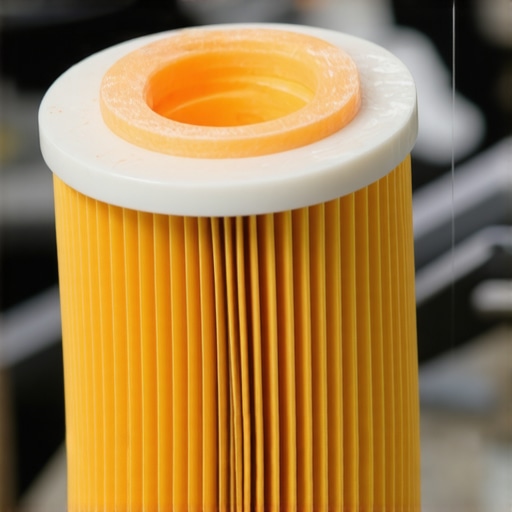 This level of scrutiny is essential for anyone who wants to uncover the hidden world of vehicle diagnostics and ensure their car is receiving the care it deserves. By inspecting the area with a high-lumen flashlight, you can also check for any ‘double-gasketing’—a common and dangerous mistake where the old rubber seal sticks to the engine, leading to a massive oil leak under pressure.
Does your vehicle’s onboard logic actually know when the filter is old?
Many modern cars feature ‘Oil Life Monitors’ (OLM), but it is a common misconception that these systems utilize a physical sensor to ‘see’ the filter’s condition. Most OLMs use complex algorithms based on engine revolutions, temperature, and operating hours. They cannot detect if a mechanic physically swapped the filter or merely reset the light. This is why manual verification is so critical. If you notice your engine sounds slightly louder at startup or experience a ‘ticking’ noise, it may be due to a restricted filter that was never replaced. In some cases, a clogged oil filter can even affect the performance of related systems, similar to how a clogged cooler can cause a transmission shudder. If you have questions about your recent service, feel free to share your experience in the comments or suggest a specific topic you’d like us to deconstruct in a future deep dive into automotive accountability.
The Bypass Valve Trap: When Dirty Oil Skips the Filter Entirely
Advanced lubrication theory dictates that a filter’s efficacy is not just about its mesh size, but its ability to handle flow under pressure. When a technician leaves a saturated filter in place, the internal bypass valve—a fail-safe mechanism—eventually stays permanently open. This means your engine is receiving 100% unfiltered lubricant, effectively turning your high-performance machine into a ‘total loss’ system for particulates. According to technical data from MAHLE Aftermarket in their technical bulletins on filtration physics, even a marginal increase in particle concentration can accelerate cylinder wall scoring by an order of magnitude. If you suspect your filter was skipped, listen for increased top-end noise during cold starts; it is the auditory signal of the bypass valve prioritizing volume over purity. This hidden failure mode is a nightmare for auto repair because it leaves no external leaks but causes internal erosion that only surfaces tens of thousands of miles later.
How can a clogged filter trigger a ‘Check Engine’ light without a sensor?
While most vehicles lack a dedicated ‘dirty filter’ pressure sensor, the downstream consequences of poor filtration frequently manifest as ‘P0011’ or ‘P0021’ diagnostic trouble codes related to Variable Valve Timing (VVT). These sophisticated systems rely on precise oil pressure to advance or retard camshaft timing via hydraulic actuators. Micro-debris from an unswapped filter can lodge in the incredibly fine mesh screens of the VVT solenoid, causing a lag in response that the Engine Control Unit (ECU) interprets as a mechanical timing failure. This is where vehicle diagnostics transitions into a forensic investigation. If your car begins throwing timing codes or experiencing a rough idle shortly after a suspicious car service, the root cause is often a sludge-filled filter that should have been disposed of. 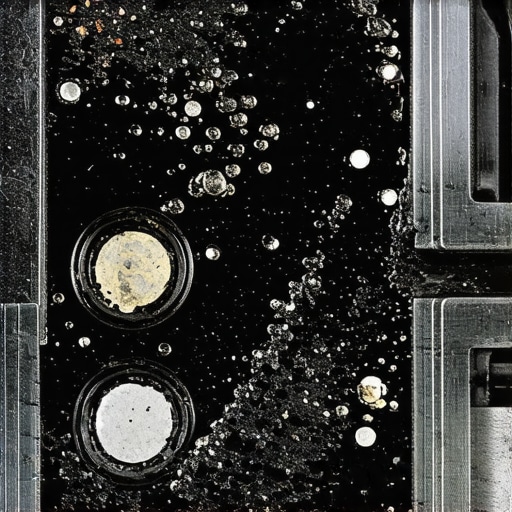
Cartridge Filters Offer No Place for a Dishonest Shop to Hide
Unlike the traditional metal ‘spin-on’ canisters that hide their internal elements from view, modern cartridge-style filters—predominant in European brands like BMW and Mercedes-Benz—require the technician to physically replace a pleated paper element within a permanent housing. To perform this auto repair correctly, a new rubber O-ring must be seated on the housing cap to prevent high-pressure leaks. A telltale sign of a skipped service is an O-ring that appears flattened, brittle, or coated in a thick ‘varnish’ that only develops over long periods of heat exposure. Furthermore, the plastic or aluminum caps on these housings often require significant torque to break loose; look for ‘witness marks’ or fresh tool engagement on the hex-head. If the accumulated road dust on the cap remains undisturbed, your technician never even accessed the assembly, meaning your ‘new’ oil is being strained through a used, collapsing element.
Stop the Stealth Damage Before It Reaches Your Valvetrain
Protecting your engine requires more than just paying the invoice; it requires an active partnership with your service provider. If you find yourself questioning the integrity of your recent maintenance, consider requesting the old parts be placed in a box for your inspection. While some may see this as overly cautious, a professional shop that prioritizes vehicle diagnostics and transparency will have no issue presenting the used filter for your review. This level of accountability is a hallmark of top-tier specialists, such as those highlighted in our guide on unlocking your car’s potential. The objective is to move beyond a simple transaction and into a state of mechanical stewardship where you understand the ‘why’ behind every component replaced. Even the smallest oversight in the lube bay can have cascading effects on the hydraulic lifters and sensitive turbocharger bearings that rely on laminar, contaminant-free flow to survive the extreme thermal loads of modern driving.
The Critical Role of Spectrometric Oil Analysis in Proving Neglect
If you are truly concerned that a series of oil changes were falsified, the most definitive proof lies in a laboratory. Spectrometric oil analysis, which follows the ASTM D6595 standard, can identify the exact concentrations of wear metals like lead, tin, and copper in your lubricant. An unusually high concentration of these metals, combined with high silicon (dirt) levels, provides a clear signature of filtration failure. When a shop fails to perform a full car service, the ‘fingerprint’ of the old oil remains, showing high levels of oxidation that shouldn’t exist in fresh fluid. This data-driven approach removes the guesswork from auto repair and provides you with the evidence needed to confront a service provider. Moving forward, understanding how these chemical markers fluctuate will help you better navigate the complexities of…”Building upon the chemical clarity provided by lab analysis, one must confront the mechanical reality of abrasive wear. High-performance engines operate with clearances so tight that a single grain of dust can act as a cutting tool against the journal bearings.
How Tiny Debris Shreds Your Cylinder Walls From the Inside Out
When a filter is bypassed or saturated, it fails to capture the ‘silt’—particles between 2 and 20 microns—that are the primary cause of abrasive erosion. These particulates circulate through the oil galleys, eventually scouring the polished surfaces of the camshaft lobes and cylinder liners. This isn’t just theory; it is a fundamental principle of tribology often overlooked during a routine car service. If the filter isn’t changed, the concentration of these micro-abrasives doubles every few thousand miles, drastically shortening the mean time between failures for your engine’s most expensive internal components.
What Happens When Synthetic Media Meets a Neglected Service Interval?
Many premium filters today utilize fully synthetic, glass-fiber media, which boasts a higher dirt-holding capacity than traditional cellulose. However, even the most advanced synthetic fibers cannot prevent the chemical degradation of the filter’s anti-drainback valve. Over time, the rubber gasket and internal seals become brittle due to the constant assault of acidic combustion byproducts. Leaving a ‘long-life’ filter in place for multiple oil cycles is a dangerous gamble that can lead to ‘dry starts,’ where the oil has drained out of the upper engine overnight, leaving the valvetrain unprotected for those crucial first seconds of operation. According to the ASTM D7596 standard for automatic particle counting and shape classification, these microscopic contaminants can be identified and tracked to predict component failure long before the driver notices a symptom. The transition from physical debris to chemical instability is swift. When a filter reaches its terminal loading point, the pressure differential across the media triggers the bypass valve, allowing raw, unfiltered oil to flood the engine. This is particularly hazardous for turbocharged vehicles, where the high-speed bearings require surgical-grade cleanliness to prevent seizing. Professionals who understand the hidden world of vehicle diagnostics know that a skipped filter isn’t just a missed part; it’s a breach of the engine’s primary defense system.
Put an End to Guesswork with a $20 Inspection Camera
In modern engine bays where the filter is buried beneath plastic shrouds or tucked behind the subframe, a physical inspection seems impossible. This is where a high-definition USB endoscope becomes an invaluable tool for the savvy vehicle owner. By snaking a semi-rigid camera cable into the recesses of the engine, you can capture clear images of the filter’s date code or your own security marks without ever lifting the car on a jack.  This level of forensic vehicle diagnostics provides the undeniable proof needed if you ever have to dispute a service with a shop manager. If you discover that your filter was skipped, do not settle for a simple refund; demand a full system flush to remove the contaminants that the old filter reintroduced into your clean oil. Ensuring your auto repair specialist follows through on every line item is the only way to guarantee your transmission and engine reach their maximum lifespan. If you have encountered a shop that routinely skips these steps, join our community discussion below and help other owners identify the red flags before they face a five-figure repair bill.
Expert Insights and Advanced Considerations
Thermal Imaging Reveals Filter Flow Without Disassembly
One of the most advanced ways to verify a filter’s health without getting your hands dirty involves using a high-resolution thermal camera. A new filter will heat up uniformly as warm lubricant circulates through the media during operation. If you see cold spots or an uneven thermal gradient across the canister after a recent car service, it typically suggests internal blockage or a bypass valve that has failed in the open position. This non-invasive technique is a staple in high-level vehicle diagnostics to ensure the lubrication circuit operates within factory parameters.
Why You Should Demand an Oil Sample During Every Drain
Don’t just take the shop’s word for it; ask for a mid-stream sample of the old oil in a clean container. Sending this fluid to a certified lab provides a chemical snapshot of your engine’s internal health that no visual check can match. If the lab report shows high levels of soot or metal particulates despite a supposedly new filter, you have scientific proof of a failed maintenance cycle. This proactive step is essential for those who want to master car maintenance and avoid long-term mechanical degradation.
Stop Falling for the Long Life Synthetic Filter Trap
Marketing terms like “20,000-mile protection” are often misleading to the average consumer. While the synthetic media might technically hold its structure, the rubber seals and internal anti-drainback valves degrade much faster under the extreme thermal cycles of modern engines. An auto repair specialist knows that a filter’s mechanical integrity is just as important as its micron rating. Replacing the filter at every 5,000 to 7,500-mile interval is the only way to prevent the bypass valve from opening and allowing raw, unfiltered contaminants to circulate. [image_placeholder_2]
How Post-Service Inspections Extend Your Engine’s Lifecycle
A quick five-minute inspection after a car service can save you thousands in catastrophic repairs. Checking for tool marks, fresh lubricant around the gasket, and the physical cleanliness of the housing ensures that your engine isn’t being starved of clean oil by a bypassed component. This level of scrutiny prevents issues that often mimic transmission failures or top-end engine ticking, keeping your vehicle in peak condition for years.
Curated Expert Resources
ASTM D7596 Particle Counting Standards
This technical standard defines how to classify the size and shape of particulates in lubricants using automatic particle counters. It is the gold standard for anyone looking to understand the true efficacy of their filtration system through laboratory analysis rather than visual guesswork.
SAE J1858 Efficiency Metrics
The Society of Automotive Engineers provides this rigorous framework for testing the multi-pass efficiency of oil filters. It’s a vital resource for comparing different brands of filters to see which ones actually meet your specific engine’s requirements and pressure profiles.
Blackstone Laboratories Technical Guides
These guides provide deep dives into oil chemistry and what specific metal concentrations mean for your engine’s internal wear. They help you interpret results from a professional car service audit with the precision of a forensic scientist.
Final Expert Perspective
Maintaining a vehicle in 2025 requires more than just following a schedule; it demands a forensic mindset that bridges the gap between the service invoice and the actual mechanical work performed. By integrating advanced vehicle diagnostics and verifying the physical evidence of every car service, you transform from a passive consumer into an active steward of your machine. If you want to dive deeper into protecting your engine or have specific questions about recent maintenance, we invite you to contact our team or explore our latest insights on unlocking your car’s potential. Your vigilance is the ultimate defense against mechanical neglect.