The Science of Thermal Equilibrium at a Standstill
Automotive thermal management represents a sophisticated balance between kinetic energy heat rejection and active cooling system efficiency. When a vehicle is in motion, the radiator benefits from high-velocity ambient airflow, which often masks underlying cooling system deficiencies. However, the moment you stop at a red light, the engine transitions from passive atmospheric cooling to a total reliance on forced convection. If your temperature gauge begins to climb in these static moments, it indicates a failure in the system’s ability to maintain equilibrium without the aid of forward motion. Professional vehicle diagnostics are essential here, as the root cause could range from electrical fan failure to degraded coolant viscosity.
Why Static Airflow is the Weak Link in Your Cooling Loop
In a stationary state, the radiator must rely on electric or mechanical fans to pull air through the cooling fins. A common culprit for temperature spikes is a malfunctioning fan motor or a brittle fan relay. If the fan fails to engage at the manufacturer-specified temperature threshold, the coolant trapped in the radiator cannot shed heat effectively, leading to a rapid rise in cylinder head temperatures. For those looking to troubleshoot this at home, utilizing the DIY method for testing a cooling fan motor can provide immediate clarity on whether the hardware is receiving the necessary voltage to operate. According to research published by SAE International, efficient heat exchange at idle is heavily dependent on the volumetric flow rate of the fan and the cleanliness of the radiator core.
Does Your Water Pump Lose Its Efficiency at Low RPM?
Another technical dimension to consider is the mechanical efficiency of the water pump. At idle, the engine runs at its lowest RPM, meaning the water pump impeller is spinning at its slowest speed. If the impeller blades have suffered from cavitation or corrosion, they may not circulate enough fluid to keep the engine block cool when the car isn’t moving. This is often exacerbated if you have neglected choosing the right car service for regular system flushes. When the flow rate drops below a critical threshold, heat soak occurs rapidly. This phenomenon is a primary reason why your engine temperature spikes only in stop-and-go traffic, as the cooling system lacks the ‘reserve capacity’ to handle the heat load without the help of higher engine speeds.
Verify Your Thermostat is Not Stuck in a Partial State
A thermostat that is partially stuck can allow enough flow for highway cruising but fail to provide the wide-open throughput needed during the high-stress environment of idling in summer heat. It is vital to verify your thermostat is actually opening fully to ensure the entire volume of the radiator is being utilized. If the valve only opens 50%, the restricted flow path creates a bottleneck that manifests most clearly when the vehicle is stationary. If you suspect your cooling system is struggling, do not wait for a total breakdown; reach out to a professional for an auto repair consultation to prevent permanent engine warping or head gasket failure.
Air Pockets Trap Heat Where Sensors Can’t See It
One of the most overlooked causes of erratic temperature spikes at idle is the presence of trapped air within the cooling galleries. Unlike a liquid, air is highly compressible and acts as an insulator, preventing the coolant from making contact with the cylinder head walls or the temperature sending unit. This often occurs after a recent service where the system wasn’t properly ‘burped.’ When you are driving, the higher water pump pressure can sometimes force these bubbles through, but at a standstill, they migrate to the highest point in the engine, creating a localized hotspot. To ensure your system is completely purged of air, it is vital to check for the the hidden drain plug most people miss during a radiator flush, which is often located on the engine block itself to facilitate a total evacuation of old fluid and trapped gasses.
Why Your Air Conditioning Actually Sabotages Idle Cooling
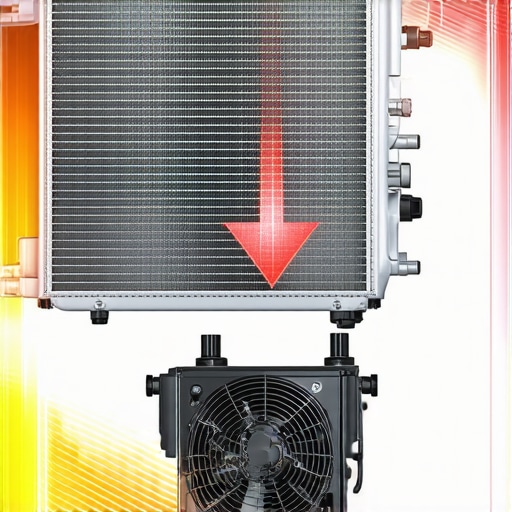
Your vehicle’s air conditioning system is a secondary heat source that many drivers fail to account for during a diagnosis. The AC condenser is physically located directly in front of the radiator; as it strips heat from the cabin, it dumps that thermal energy into the air stream before it ever reaches the radiator. In a stop-and-go scenario, the radiator is essentially ‘breathing’ pre-heated air. If your cooling fan is even slightly degraded, it will lack the static pressure required to pull air through both the dense condenser and the radiator fins. This is exactly why your car only overheats when the AC is running. Professional technicians often use an anemometer to measure airflow behind the fan shroud to ensure the motor is still meeting its original CFM (cubic feet per minute) specifications. If the airflow is insufficient, the heat soak from the AC will inevitably drive the engine temp into the red zone.
Is a Weak Alternator Starving Your Cooling Fans of Power?
An expert-level diagnostic step involves checking the system voltage while the engine is at its lowest RPM. Electric cooling fans are heavy current consumers, often requiring 20 to 40 amps to run at full speed. At idle, your alternator is spinning at its minimum threshold, producing significantly less amperage than it does at highway speeds. If the voltage regulator is failing or the battery is nearing the end of its life, the fan may only spin at 60% or 70% of its required velocity. You must investigate how to tell if your alternator is killing your new battery to see if a charging system deficiency is the root cause of your cooling woes. According to technical data from the Car Care Council, nearly 25% of vehicles on the road have cooling system components that are operating below factory efficiency due to secondary electrical or chemical issues.
Chemical Integrity and the Dangers of Coolant Sludge
The chemical composition of your coolant plays a massive role in heat transfer coefficients. Over time, the corrosion inhibitors in the fluid break down, leading to the formation of silicate or organic acid ‘dropout’—a sludge that coats the internal tubes of the radiator. This sludge acts as a thermal barrier, significantly reducing the efficiency of the heat exchange process. This is why it is critical to consult the coolant color guide before topping off your reservoir; mixing incompatible chemistries like IAT (Inorganic Additive Technology) and OAT (Organic Acid Technology) can cause the fluid to gel, effectively clogging the narrow passages in your radiator. If you’ve already noticed a drop in performance, you should also learn how to spot a failing water pump before your engine overheats to determine if internal blockages have already damaged the mechanical seals. If you have experienced a mystery temperature spike recently, leave a comment below with your vehicle’s make and model, or explore our other guides to stay ahead of expensive repairs.
Don’t Ignore the Fan Shroud’s Role in Directional Airflow
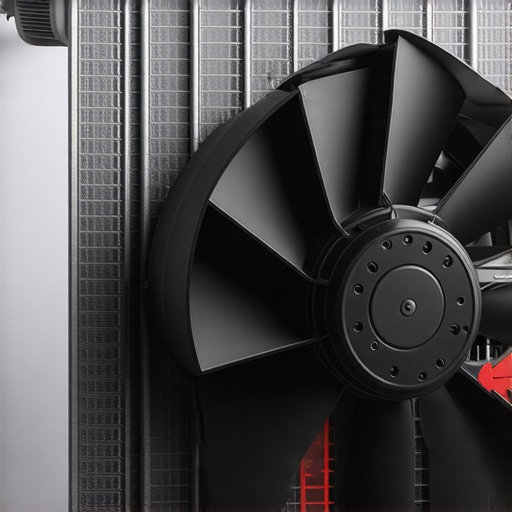
The shroud is not just a safety guard; it is a critical aerodynamic component that ensures the fan pulls air through the entire surface area of the radiator. Without a properly sealed shroud, the fan creates a vacuum that pulls air from the easiest path—the gaps between the fan and the radiator—rather than through the restrictive fins themselves. This bypass effect renders even a high-speed fan largely ineffective at a stop. If you notice a gap or a missing piece of plastic after a minor front-end collision or a previous repair, the resulting loss in static pressure will cause the temperature to creep up rapidly during a long idle. Even a small crack in the shroud can decrease cooling efficiency by as much as 20% by breaking the vacuum seal required for optimal heat rejection.
Can a Blown Head Gasket Cause Overheating Only When Stationary?
This is a nuanced diagnostic challenge that often baffles DIY mechanics. A “micro-leak” in the head gasket can allow high-pressure combustion gases to enter the cooling jacket. At highway speeds, the high flow rate of the coolant can sometimes sweep these small gas bubbles to the expansion tank where they dissipate safely. However, at idle, the flow is sluggish, allowing the gas to collect in high spots like the cylinder head. These gas pockets act as insulators, preventing coolant from touching the metal, which leads to localized overheating and a rising gauge that seemingly stabilizes once you start moving again. Utilizing a chemical block tester to check for CO2 in the radiator is a professional-grade step that can save you from a catastrophic engine failure. According to the technical training standards from the National Institute for Automotive Service Excellence (ASE), identifying these early-stage combustion leaks requires precise pressure testing and gas analysis of the cooling system while the engine is under varied load conditions.
Clean the Debris Hiding Behind Your Bumper
While internal clogs are a major concern, external blockages are equally detrimental to a car’s thermal health. Over time, road debris, plastic bags, and even layers of dead insects can accumulate in the narrow space between the AC condenser and the radiator. This “debris sandwich” is often invisible from a cursory glance under the hood. As the vehicle sits at a stoplight, the fan struggles to pull air through this physical barrier, leading to a spike in temperature that clears once the ram-air effect of driving takes over. It is a wise move to inspect this area periodically and use low-pressure compressed air or a specialized fin comb to restore airflow. If you find your cooling system is still struggling despite a clean exterior, you may need to look closer at the internal flow rates or contact a specialist for a professional diagnostics check.
Why the Heater Core is Your Emergency Heat Sink
If you find yourself stuck in traffic with a rising needle, one of the most effective emergency maneuvers is to turn your cabin heater to the maximum setting with the fan on high. The heater core is essentially a miniature radiator; by engaging it, you are adding extra surface area to the cooling loop. While uncomfortable in the summer, this can provide the 5 to 10 degrees of cooling necessary to keep the engine out of the “danger zone” until you can safely pull over. This tactic reveals the interconnected nature of the vehicle’s thermal management. If this provides immediate relief, it further confirms that your main radiator or its airflow path is the primary point of failure. Understanding the role of the engine’s control module in these scenarios is the next critical step for a total resolution.
How Modern PWM Fans Alter the Diagnostic Landscape
Newer vehicles have moved away from simple on/off relays to Pulse Width Modulation (PWM) fan controllers. These allow the ECU to vary fan speed from 1% to 100% based on exact cooling needs. A common failure point in these systems is the fan control module itself, which can fail in a way that allows the fan to spin, but never at the high speed required for stationary cooling. Unlike older systems where a fan was either working or not, a PWM-controlled fan might look fine while underperforming. To accurately test these, a technician must use a bidirectional scan tool to command specific fan speeds and monitor the actual RPM. If the fan cannot reach its target speed, the internal resistance within the motor or a failing module is likely the culprit, leading to those frustrating spikes when the car isn’t moving.
The Thermal Burden of Lean Fuel Mapping at Idle
Modern Engine Control Units (ECUs) prioritize fuel economy by maintaining lean air-fuel ratios during idling. While this reduces emissions at the tailpipe, lean mixtures generate significantly higher internal combustion temperatures. This localized heat load is easily managed when a vehicle is moving, but in a stationary state, it places an immense burden on the latent heat capacity of the cylinder head. If the cooling system is even slightly compromised, this lean-burn strategy can push the temperature into a critical zone before the cooling fans can reach their peak CFM output. Furthermore, many high-performance vehicles utilize heat-shielding around the intake manifold that can trap radiant heat near the fuel rail, leading to a secondary issue known as vapor lock, which further destabilizes the idle and increases thermal stress.
Combatting the Heat Soak of Stop-Start Systems
Vehicles equipped with automatic Stop-Start technology face a unique mechanical challenge: thermal shock. When the engine shuts down at a traffic light, the belt-driven water pump ceases circulation immediately. This causes the coolant trapped inside the engine block to absorb massive amounts of residual heat from the cylinder walls, a phenomenon known as ‘heat soak.’ Without active fluid movement, the temperature of this stationary coolant can spike by 20 to 30 degrees in seconds. High-end manufacturers mitigate this with auxiliary electric water pumps that continue to circulate fluid after the engine stops. If your car lacks this feature or if the auxiliary pump has failed, you may experience rapid overheating the moment you resume driving. 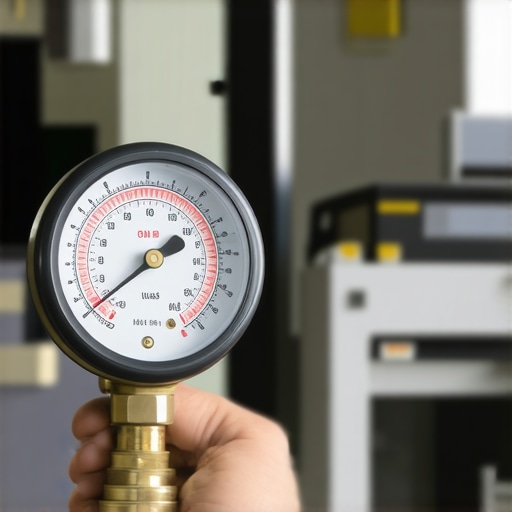
Can a Failing Radiator Cap Cause Overheating Only at a Standstill?
It is a frequent diagnostic error to overlook the radiator cap, which is actually a calibrated pressure relief valve. For every pound of pressure (PSI) maintained in the system, the boiling point of the coolant rises by approximately 3 degrees Fahrenheit. If the spring-loaded seal in the cap weakens, the system cannot maintain its required 15-18 PSI, causing the coolant to boil at a much lower temperature. This is most noticeable at a standstill because the lack of ambient airflow allows the fluid to reach its atmospheric boiling point prematurely, creating steam pockets that displace liquid coolant. According to technical bulletins from Stant, a leader in cooling system components, a cap that fails to hold rated pressure can reduce the total cooling capacity by 10% or more, often being the sole reason a car overheats while idling but stays cool on the highway.
Why Your Engine Oil is the Unsung Hero of Stationary Cooling
The relationship between engine oil and the cooling loop is often underestimated. In modern turbocharged or high-compression engines, an oil-to-coolant heat exchanger is standard equipment to maintain proper oil viscosity. If your engine oil is degraded or has lost its thermal conductivity, it will transfer more heat into the coolant than the radiator was designed to dissipate at low RPMs. This creates a compounding failure where the coolant must work double duty to manage both combustion heat and lubricating oil temperatures. If you have recently upgraded your vehicle’s performance or frequently drive in extreme summer heat, ensuring your oil remains at peak chemical integrity is just as important as the coolant itself. Professional vehicle diagnostics can help identify if your oil temperatures are contributing to these stationary spikes.
Stop the Heat Soak Before It Destroys Your Cylinder Head
Proactive maintenance is the only way to prevent the catastrophic warping that follows a severe overheating event. If you have addressed the fans and thermostat but the needle still climbs at a stoplight, it is time to perform a pressure decay test on your radiator cap and a flow test on your auxiliary pumps. Do not wait for the warning light to flash; a system that struggles at idle is one that is on the verge of a total failure. Reach out to a specialist for a comprehensive auto repair assessment to ensure your thermal management system is prepared for the stressors of modern traffic. If you’ve noticed your temperature gauge fluctuating in a specific pattern, leave a comment below or share your vehicle details for more tailored advice.
Mastering the Nuances of Idle Thermal Loads
Vacuum-Fill the System to Eradicate Air Pockets
In modern cooling circuits with multi-stage thermostats and complex heater cores, gravity-filling is no longer sufficient. Professional technicians use vacuum-filling tools to create a negative pressure environment, ensuring that every milliliter of air is evacuated before the coolant enters. This eliminates the localized hotspots that lead to erratic behavior. If you’ve recently performed maintenance and the gauge is still climbing, check if you need the 20 fix for a rough idle that mechanics overlook, as air pockets and unstable RPMs often go hand-in-hand during stationary stress tests.
Duty Cycle vs. Actual RPM: The PWM Trap
Do not assume a spinning fan is a working fan. Pulse Width Modulation (PWM) controllers can command a fan to 100%, but internal motor resistance might limit the physical blades to 30% of their required speed. To solve this, use a non-contact laser tachometer to verify the actual RPM matches the ECU’s commanded duty cycle. If the electrical system is starving the fan, you must how to find reliable car service near you in 2025 to get a professional scope test of the fan’s power and ground signals.
The Latent Danger of Internal Radiator Scaling
Even if a radiator looks clean and flows water, calcium and magnesium deposits on the internal tubes act as thermal insulators. This ‘scaling’ allows the fluid to pass through quickly but prevents it from actually dumping heat into the aluminum fins. When you are moving, the excess air compensates for this inefficiency; at a stop, the system fails instantly. Performing a chemical flush with a high-quality chelating agent is often the only way to restore the heat transfer coefficient without replacing the entire core.
#IMAGE_PLACEHOLDER_E#
Industry-Standard Technical References
For those seeking to deepen their mechanical expertise beyond the basics, these resources are essential for professional-grade diagnostics:
- SAE J2702 Standards: The definitive technical documentation regarding the thermal management of modern internal combustion engines and their heat rejection requirements at various duty cycles.
- ASE Advanced Engine Performance (L1) Training: Provides the specific diagnostic logic required to troubleshoot complex interactions between the ECU, PWM fan controllers, and fuel mapping.
- Manufacturer Technical Service Bulletins (TSBs): Essential for identifying specific year-make-model flaws, such as brittle plastic impeller designs or faulty fan relay batches that affect stationary cooling.
The Final Verdict on Stationary Heat Management
The reality is that why your engine temperature spikes only in stop-and-go traffic usually traces back to a breakdown in the system’s ability to create artificial airflow or maintain fluid velocity without the help of high engine speeds. Whether it is a failing PWM module, internal scaling, or a micro-leak in the pressure cap, these issues require a systematic diagnostic approach rather than part-swapping. If your vehicle is struggling to stay cool in the summer heat, do not risk a warped cylinder head. Reach out to us through our contact us page to schedule a comprehensive thermal audit. We invite you to share your specific diagnostic findings in the comments below to help other enthusiasts troubleshoot these complex cooling failures.